
Loose cardboard, waste paper, plastic film, and PET bottles can take up valuable space in recycling facilities. Frequent manual handling, inefficient storage, and high transportation costs can also reduce overall operating efficiency.
A horizontal hydraulic baler can help solve these problems by compressing suitable materials into dense, manageable bales. But how much it improves your operation depends on your material type, daily volume, feeding system, and existing production bottlenecks.

Many recycling facilities face the same daily struggle. Loose materials pile up. Workers spend hours on manual handling. Trucks leave half empty. These problems add up to real money lost. At Jukun, our engineering team has over 20 years of experience manufacturing recycling equipment. We have seen how the right machine changes an operation. But we have also seen buyers choose the wrong model. This guide explains how a horizontal hydraulic baler can improve efficiency. It shows you how to measure the gains. If you want to understand how these machines work first, read our guide on how a horizontal hydraulic baler works. Send us your material type and daily volume on WhatsApp for a configuration recommendation.
How Does a Horizontal Baler Improve Recycling Productivity?
A busy recycling plant struggles with slow throughput. Material piles up. Workers fall behind. The whole line waits. This problem has a clear cause and a clear fix.
A horizontal baler can improve recycling productivity by reducing loose-material volume, simplifying handling, and supporting more consistent material flow. However, installing a higher-capacity baler does not automatically increase total line output. Sorting speed, conveyor feeding, compression cycle time, and bale handling must all work together.
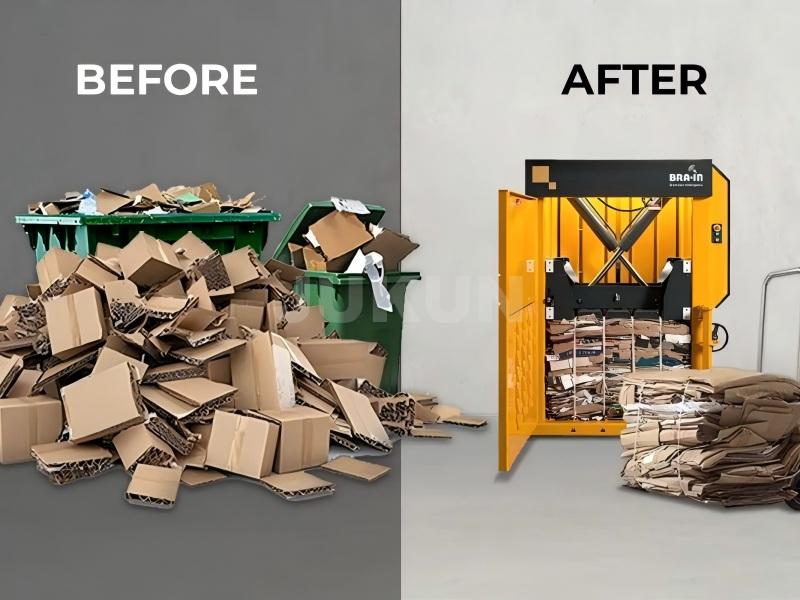 Different recyclable materials have different compression and handling characteristics. Cardboard and waste paper generally require suitable chamber dimensions, bale weight, and tying configurations. Plastic film needs a feeding and compression system that can handle flexible materials. PET bottles may require air-release equipment. Always confirm material compatibility through a test using your actual recyclables. For a detailed comparison of machine types and capacities, see our horizontal baler buying guide. Here are the main productivity gains.
Reduce Loose Material Volume and Storage Space
Loose cardboard and waste paper take up a lot of room. A horizontal baler compresses these materials into dense bales. Your warehouse becomes cleaner and more organized. You can store more material in the same space. The actual volume reduction depends on the material and the machine's compression power. Paper and cardboard compress well. Plastic film also compresses well. Metal scrap may require a dedicated metal baler designed for that specific material. Test your material before you buy.
Improve Truck Loading and Transport Efficiency
Dense and uniform bales stack easily. Trucks load faster. You may save on transport costs. But there is a detail you must check. Dense bales help when loose material is limiting the load by volume. If your truck reaches its legal weight limit first, higher density may not reduce trips. Here is an illustrative calculation. Suppose 60 cubic meters of loose cardboard is reduced to 12 cubic meters of finished bales for the same material weight. The volume reduction is 80 percent. This is an illustrative calculation, not a guaranteed performance figure. Actual results depend on cardboard condition, moisture content, feeding method, bale dimensions, and machine configuration.
Improve Material Handling and Production Flow
Manual handling wastes time. Workers lift and load all day. A conveyor and automatic tying reduce these tasks. Your team can focus on sorting and quality control. But here is the key point. A baler does not work alone. The whole line must work together. Consider this illustrative example.
| Production Stage | Capacity (Illustrative) | Result |
|---|---|---|
| Sorting System | 3 t/h | Upstream capacity |
| Conveyor | 3 t/h | Feeding capacity |
| Horizontal Baler | 5 t/h | Higher rated capacity |
The actual line output is still limited by the 3 t/h upstream capacity. You must also consider bale discharge, forklift movement, and bale storage after the baler. Balance the entire recycling production line, not just the baler. These figures are for demonstration only, not Jukun machine specifications.
Produce Consistent Bales for Downstream Buyers
Your buyers want bales that meet their specs. Consistent weight and density matter. A good baler produces stable bales every cycle. The tying system must hold the bale tight. If the bale falls apart, your buyer may reject the load. That costs you money and trust. We can provide material testing and performance records for applicable machine configurations. You should ask your supplier for the same test data.
What Factors Determine Real Baler Performance?
I often see buyers focus on one number. They ask for the highest pressure or the fastest cycle. But real performance comes from several factors working together. The machine must fit your material and your line.
Real baler performance depends on compression force, chamber design, material preparation, feed control, tying quality, and maintenance. No single factor guarantees good results. You must match the machine to your material and test it under real conditions before you buy.
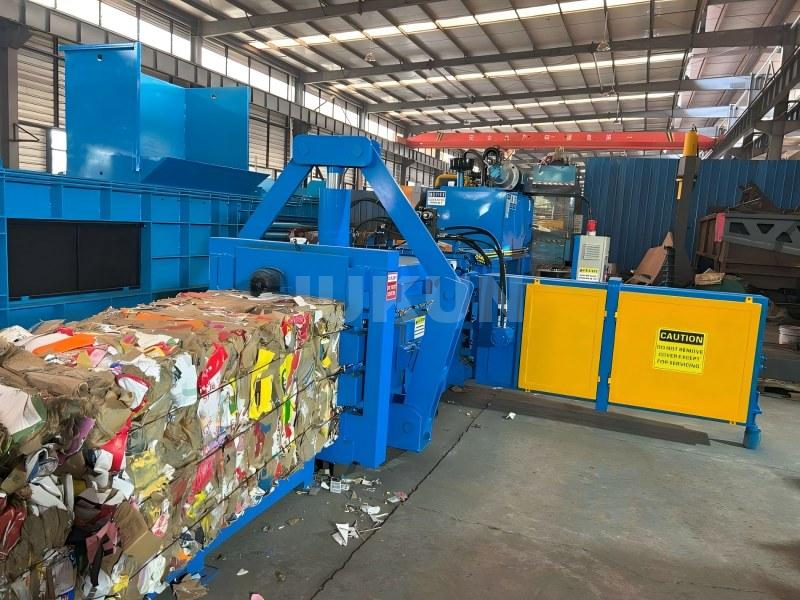 Bale density is not just about pressure. Hydraulic pressure is the oil pressure in the system. Compression force is the actual push on the material. You can calculate compression force with this formula:
Compression Force = Hydraulic Pressure × Effective Piston Area
Bale density is the final result. Chamber size, material type, moisture, feed method, and machine design all affect it.
Choose the Right Compression Force and Chamber Design
Higher pressure does not always mean higher density. Chamber size matters. Material type matters. Moisture matters. Feed method matters. Machine design matters. Ask your manufacturer to test your actual material. The test should report finished bale weight, dimensions, and density. Do not accept general promises. A good supplier will provide real test data. Also, only adjust compression cycle and holding time within the manufacturer's approved settings. Do not modify machine parameters on your own to chase higher density. That can damage the machine and void the warranty.
Improve Material Preparation and Feeding
Material preparation makes a big difference. Flatten large cartons before loading. This helps the ram compress evenly. For plastic bottles, a perforator can puncture intact bottles to release trapped air. Whether this equipment is necessary depends on bottle condition, feeding requirements, target bale quality, and the baler's design. Test representative bottles before deciding. For plastic film, the chamber design and tying arrangement must prevent slipping. Overfilling the chamber creates uneven bales. A steady feed rate helps the ram work efficiently.
Optimize Tying and Preventive Maintenance
The bale must stay tight after it leaves the machine. Wire strength, spacing, and tension must match the material. Too few wires and the bale expands. Too much tension and the wire may break. Keep the machine in good shape. Check hydraulic oil, filters, seals, and cooling systems. A well-maintained machine holds density better. A poorly maintained one loses performance over time.
Why Is Bale Density Not the Only Performance Measure?
Higher bale density is not always the best operating target. The finished bale must also meet the material buyer's specifications for weight, dimensions, stability, and processing requirements. Excessive compression may increase cycle time and energy consumption without providing enough additional business value. Instead of maximizing density alone, optimize bale quality, production speed, tying reliability, and operating cost together.
| Factor | Effect on Density | Action |
|---|---|---|
| Compression force | Pushes material together | Match force to material type |
| Chamber design | Shapes the bale | Choose correct chamber size |
| Material preparation | Helps even compression | Flatten, perforate, or sort |
| Feed control | Prevents uneven bales | Use steady feeding system |
| Tying system | Keeps bale tight | Use correct wire and tension |
How Can Automation Reduce Labor Costs and Improve ROI?
Labor is a big cost in recycling. Workers lift, load, and tie all day. Fatigue grows. Mistakes happen. Automation can help. But you must measure the gain.
Automation can reduce labor by cutting manual feeding and tying tasks. It can help maintain steadier production flow. To see the real value, compare labor hours per ton before and after. Then calculate your payback period using actual savings.
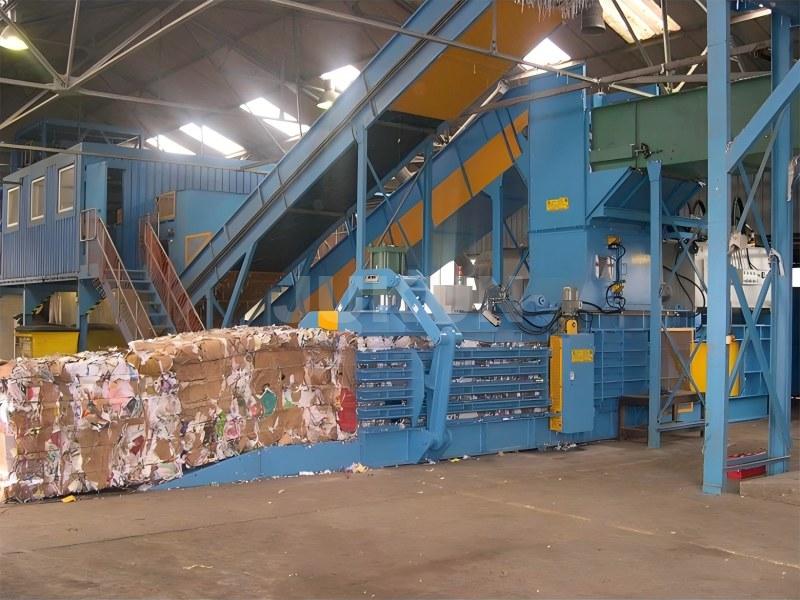
Automated feeding and tying can reduce some repetitive manual handling tasks. But proper machine guarding, operator training, and safety procedures are still essential. Also, automation levels vary. You must confirm exactly which parts are automated. For a full comparison of machine types, read our guide on automatic vs. semi-automatic horizontal balers.
Understand the Different Automation Functions
Automatic tying does not mean automatic feeding. A conveyor does not always mean the bale discharge is fully automated. Ask your supplier to confirm each part clearly.
| Automation Part | Configuration to Confirm |
|---|---|
| Feeding | Manual feeding or conveyor feeding |
| Compression | Automatic or operator-controlled cycle |
| Tying | Manual tying or automatic tying |
| Bale discharge | Manual handling or automatic discharge |
An automated feeding and tying system can reduce repetitive manual handling. It can help maintain more consistent production flow. However, the actual improvement depends on material supply, conveyor design, machine cycle, tying system, and downstream bale handling. Evaluate the complete line rather than assuming higher automation always produces higher output.
Calculate Labor Savings and Payback Period
The key metric is labor hours per ton. Include all workers involved in feeding, tying, and moving bales, not just one operator. Use this formula.
Annual Labor Savings = (Old Labor Hours per Ton − New Labor Hours per Ton) × Annual Tons × Hourly Labor Cost
Then calculate your annual net savings.
Annual Net Savings = Labor Savings + Verified Other Savings − Additional Operating Costs
Additional operating costs should include new electricity use, wire consumption, maintenance, spare parts, service, and downtime. Only count savings you can truly attribute to the new machine. Do not double-count. Finally, calculate your simple payback period.
Payback Period = Additional Equipment Investment ÷ Annual Net Savings
Use real shift schedules, staffing levels, and local labor rates. We can help you build this estimate for your operation.
| Evaluation Factor | What to Compare | Why It Matters |
|---|---|---|
| Labor cost per ton | Current vs. automated process | Shows direct savings |
| Processing capacity | Tons per hour | Determines throughput |
| Energy per ton | kWh used ÷ tons processed | Adds to operating cost |
| Downtime hours | Lost production time | Reduces efficiency |
| Maintenance cost | Routine parts and service | Impacts long-term value |
How to Measure Recycling Efficiency After Installation?
A new machine does not guarantee better results. You must measure the change. Real data proves if the investment paid off. This is the most important step that many buyers skip.
Measure throughput, labor hours per ton, bale density, energy use per ton, transport cost per ton, and machine uptime. Record these before and after installation. Keep material type and conditions consistent for a fair comparison. Real data proves if your investment paid off.
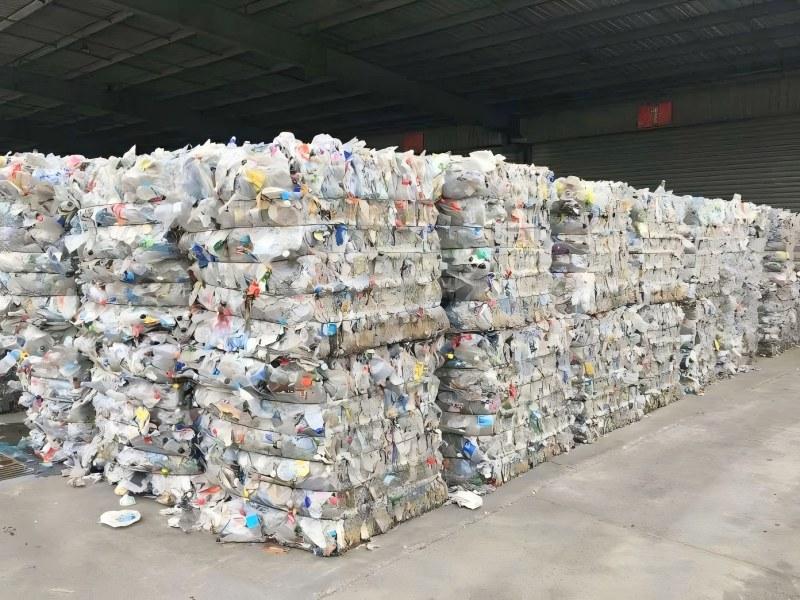 Start by recording your current operating data before installation. Track daily material volume, labor hours, energy consumption, bale specifications, storage space, transportation expenses, and machine downtime. After installing the new baler, measure the same indicators under comparable conditions. Keep material type, moisture level, bale specs, and working hours as consistent as possible.
What Should a Real Material Test Record?
At Jukun, we recommend recording the following data during a material test. The table below is a template. It is not a set of guaranteed results. Actual figures must come from testing your specific material on a specific machine.
| Measurement | What to Record | Why It Matters |
|---|---|---|
| Material condition | Material type, moisture, contamination | Ensures comparable test conditions |
| Machine configuration | Model, feeding and tying system | Identifies the test equipment |
| Test input | Total material weight and test duration | Confirms test scale |
| Throughput | Net tons ÷ running hours | Measures actual processing speed |
| Bale quality | Bale weight, dimensions, and density | Measures finished bale quality |
| Energy consumption | Baler-line kWh ÷ net tons | Evaluates energy cost per ton |
| Labor input | Total labor hours ÷ net tons | Evaluates labor efficiency |
| Downtime | Stop time and reasons | Identifies production bottlenecks |
| Storage utilization | Stored volume ÷ material tonnage | Evaluates storage use |
| Transport cost | Hauling cost ÷ tons transported | Evaluates logistics cost |
When you measure throughput, distinguish between two figures. Active throughput equals net tons processed divided by actual baler running hours. Effective line throughput equals net tons processed divided by scheduled production hours. The first shows how fast the baler runs when active. The second includes stoppages and shows what the plant actually achieves. Both matter. A supplier who cannot provide test data is asking you to take a risk. We can provide material testing and performance records for applicable machine configurations.
Frequently Asked Questions
How Much Storage Space Can a Horizontal Baler Save?
There is no single storage-space reduction percentage that applies to every facility. The result depends on material type, moisture content, feeding method, chamber design, and finished bale specifications. To calculate your actual space savings, compare the storage volume of the loose material with the total volume occupied by the finished bales for the same material weight.
Can a Horizontal Baler Reduce Transportation Costs?
A horizontal baler can reduce transport costs when loose material is limiting your load by volume. Dense bales let you fit more material per truck. But if your truck already reaches its legal weight limit, higher density may not reduce trips. Check your load limit before you estimate savings.
Which Materials Can a Horizontal Hydraulic Baler Process?
A horizontal hydraulic baler can process waste paper, cardboard, plastic film, PET bottles, and other suitable recyclable materials. Metal scrap may require a dedicated metal baler. Always confirm material compatibility through a test with your actual recyclables.
How Do You Measure the Actual Throughput of a Horizontal Baler?
Measure net tons processed divided by actual operating hours. Record material type, moisture level, and bale specifications. Do this over several shifts for a reliable number. Compare the result with the machine's rated capacity. Actual throughput is often lower than the rated figure because of feeding, sorting, and handling bottlenecks.
Conclusion
A horizontal hydraulic baler can reduce storage space, improve transport efficiency, and boost productivity. But you must measure the gains with real data. Choose the right machine for your material and volume. Send Jukun your material type, daily processing volume, and target bale size on WhatsApp to get a configuration recommendation and factory quotation.