
Choosing between a semi-automatic and a fully automatic horizontal baler affects your operation. The right machine cuts manual work. It improves efficiency. It controls long-term costs. But which one fits your business?
Choose a semi-automatic horizontal baler for moderate volume and a lower budget. Choose a fully automatic horizontal baler for high volume and continuous production. Always confirm which functions are truly automatic on the quoted machine.
 A semi-automatic horizontal baler usually needs manual bale tying. This fits moderate production and a limited budget. A fully automatic horizontal baler uses an automatic tying system. It can work with conveyor feeding for large, continuous lines. In this guide, we compare the working steps, pros and cons, costs, labor needs, and uses for cardboard, waste paper, and plastic bottles. At Jukun, we build both types. Our team helps buyers compare them every day.
What Is the Difference Between Automatic and Semi-Automatic Horizontal Baling Machines?
The word "automatic" can mean different things. Some suppliers call a machine automatic when only the compression is automatic. The tying still needs a worker. Buyers must check each step.
A semi-automatic horizontal baler compresses material automatically but usually needs an operator to tie the bale by hand. A fully automatic horizontal baler uses automatic wire tying to reduce manual work during bale production.
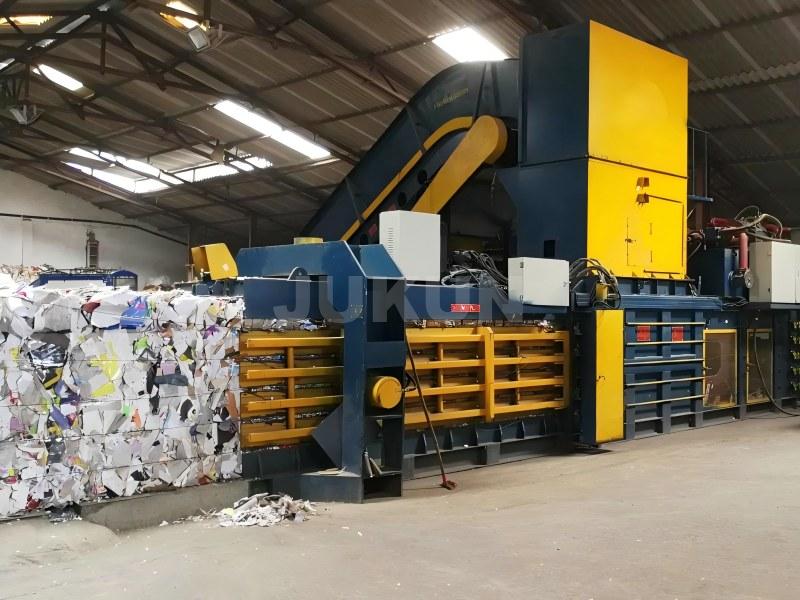 The machine has four main steps. They are feeding, compression, tying, and discharge. Some suppliers say "automatic" but only mean compression. Other suppliers include automatic tying but not a conveyor. The table below shows the typical setup. These are common configurations, not universal industry standards. Some semi-automatic balers include automatic feeding and bale ejection. Some fully automatic systems still need manual material handling. Buyers should ask the supplier to confirm the exact functions included in the quotation.
| Machine Function | Semi-Automatic (Typical) | Fully Automatic (Typical) |
|---|---|---|
| Feeding | Manual or optional conveyor | Often integrated conveyor |
| Compression | Automatic hydraulic cycle | Automatic hydraulic cycle |
| Bale Tying | Usually manual | Automatic wire tying |
| Bale Discharge | Manual or hydraulic, depending on model | Often automatic or hydraulic |
| Operator Involvement | More manual intervention | Less manual intervention |
Ask the supplier to include a written list of automatic and manual functions in the quotation and purchase contract. This helps prevent misunderstandings about the delivered machine configuration. A manual-tie horizontal baler and an auto-tie horizontal baler can look similar on the outside. The real difference is in the tying system and the control logic.
How Can You Identify a Fully Automatic Horizontal Baler?
Some suppliers use the word "automatic" loosely. A PLC system is common on many balers. But a PLC only controls the machine sequence. It does not make a machine fully automatic.
A fully automatic horizontal baler typically uses automatic wire tying to reduce manual work. Depending on its configuration, it may also include automatic feeding, bale-length control, door operation, and bale discharge. Not every model includes all these functions as standard.
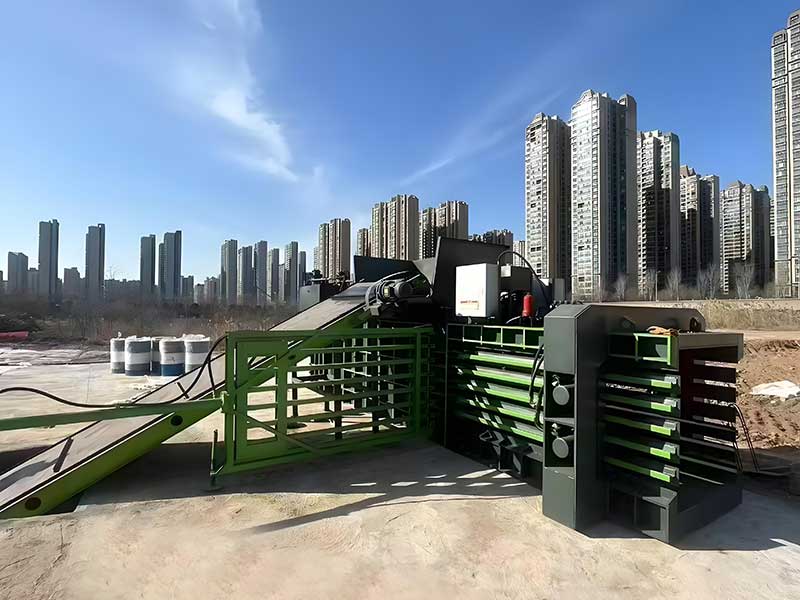 At Jukun, we check the real automation level before recommending a machine. We ask the supplier to list every automatic function. We ask for a full video. The video must show feeding, compression, tying, and discharge. We watch the wire feed, tension, twist, and cut. If the video only shows compression, the machine is not fully automatic. Some machines automate only compression and tying. Feeding and material handling still need a worker. That is fine. But the buyer must know the real level of automation before paying. Ask about the discharge method too. Manual discharge is simple. Hydraulic discharge is faster. The quote must state which one is included. Put this list in the purchase contract. It prevents disputes later.
What Are the Advantages and Disadvantages of Automatic and Semi-Automatic Balers?
Manual tying can become a bottleneck. A line can stop every few bales. The worker may be good. But the stops still cost output. The right machine depends on volume and labor cost.
A semi-automatic baler costs less and is simple to run, but it needs more operator time. A fully automatic baler costs more, but it cuts manual tying and supports continuous production with lower labor per bale.
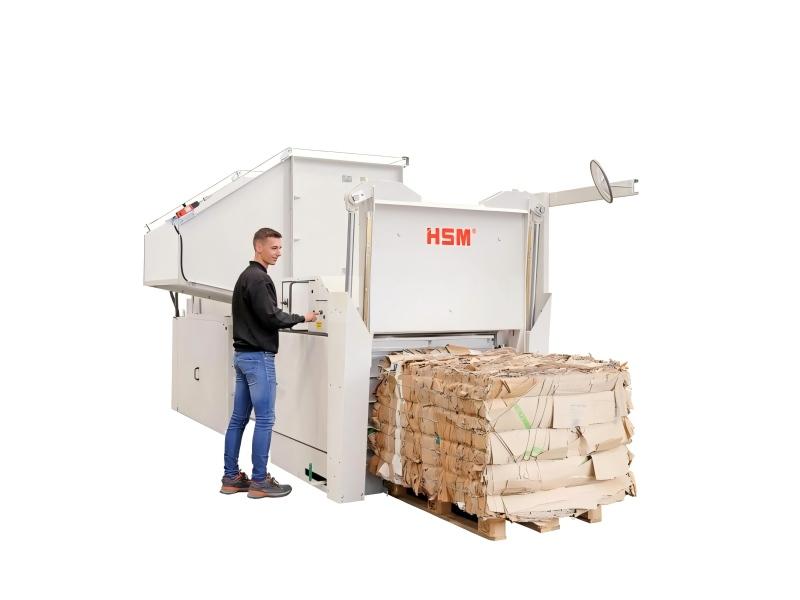 Labor is the first point to check. Manual tying is a repeated task. It takes time. It depends on the operator. A semi-automatic baler is fine when volume is moderate. The operator can feed material and tie bales without a bottleneck. A fully automatic baler is better when the line runs long hours. The automatic tying system keeps the cycle moving. The table below shows the simple view.
| Buying Factor | Semi-Automatic Baler | Fully Automatic Baler |
|---|---|---|
| Initial price | Lower | Higher |
| Operator work | More manual tying | Less manual tying |
| Best volume | Medium | High and continuous |
| Maintenance | Simpler system | More complex system |
| Fit with line | Batch or semi-continuous | Continuous recycling line |
Maintenance is the second point. A semi-automatic machine has fewer automatic parts. Troubleshooting is often easier. A fully automatic machine has more sensors and moving parts in the tying system. It needs proper adjustment and care. This does not mean it is bad. It means the buyer needs a good maintenance plan. Ask the supplier for a spare parts list and a training video. Ask how often the tying needles need adjustment. A clear answer builds trust. Also ask about local support. A local agent can help with small repairs. If there is no agent, ask for remote video support.
Compare Labor, Maintenance, and Operating Efficiency
Labor and maintenance decide the real operating cost. A cheap machine with high labor needs can cost more over time. A complex machine with poor support can stop the line.
Semi-automatic balers need more operator time for tying but are simpler to maintain. Fully automatic balers reduce tying labor but need more maintenance skill. Compare both costs per ton, not just the purchase price.
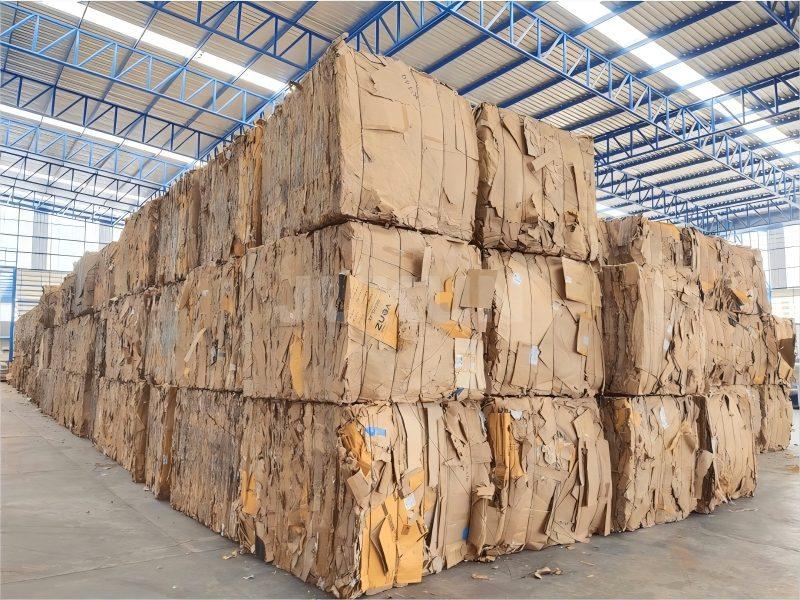 At Jukun, we recommend evaluating labor and maintenance costs based on actual operating data. Record the workers needed per shift. Record the tying time per bale. Record the maintenance hours required each month. Then multiply by local wages. This gives a real labor and maintenance cost. A semi-automatic baler may need one or two workers for feeding and tying. A fully automatic baler may need one worker to monitor the line. But the real number depends on the conveyor setup, sorting needs, bale handling, and line layout. Do not use a general staffing estimate. Ask the supplier for an operator plan based on your real production setup.
| Comparison Item | Semi-Automatic | Fully Automatic |
|---|---|---|
| Maintenance Complexity | Generally simpler | More control and tying components |
| Maintenance Skills | Basic machine operation and maintenance | May require additional electrical and tying-system skills |
| Spare Parts Cost | Depends on configuration | Depends on configuration |
| Tying Labor per Bale | Higher | Lower |
| Training Time | Shorter | Longer |
Which Baler Is Better for Your Business?
Many buyers read the pros and cons. They still do not know which machine to pick. A simple decision table gives a first direction.
Match the baler to your business situation. Pick semi-automatic for moderate volume, irregular supply, or a limited budget. Pick fully automatic for high continuous throughput, high labor costs, or a full recycling line.
This table is a guide. It is not a strict capacity line. Buyers still need to test the real machine with their material. At Jukun, we ask three questions before recommending a model. First, what is the daily tonnage? Second, how many hours per day does the line run? Third, what is the local labor cost? These three answers shape the choice more than any brochure. A plant with steady high volume needs automatic tying. A warehouse with uneven cardboard supply may waste money on a full automatic line. The machine would sit idle. Check floor space too. A full automatic line may need more room for conveyors and discharge equipment. Check the power supply. A large automatic baler may need a different voltage. These details affect installation cost and downtime.
| Your Business Situation | Recommended Option | Main Reason |
|---|---|---|
| Moderate daily volume | Semi-automatic | Lower initial investment |
| Irregular material supply | Semi-automatic | More flexible batch operation |
| High, continuous throughput | Fully automatic | Supports continuous production |
| High labor costs | Fully automatic | Reduces manual tying |
| Limited investment budget | Semi-automatic | Lower upfront cost |
| Integrated recycling line | Fully automatic | Better integration with conveyors |
| Limited floor space | Compare machine layouts | Automation may need more auxiliary equipment |
Still unsure which baler fits your operation? Send us your daily material volume and working hours. Our team can help you compare the two configurations. Talk to our team on WhatsApp.
What Affects the Cost of a Fully Automatic vs. Semi-Automatic Horizontal Baler?
A low machine price can hide extra costs. Shipping, conveyor, and installation can change the budget. Buyers should always ask for a full quote. They should ask what is included and what is not.
A fully automatic horizontal baler usually costs more than a semi-automatic model because it adds automatic tying, PLC controls, and often conveyor feeding. The real price depends on capacity, configuration, and delivery terms.
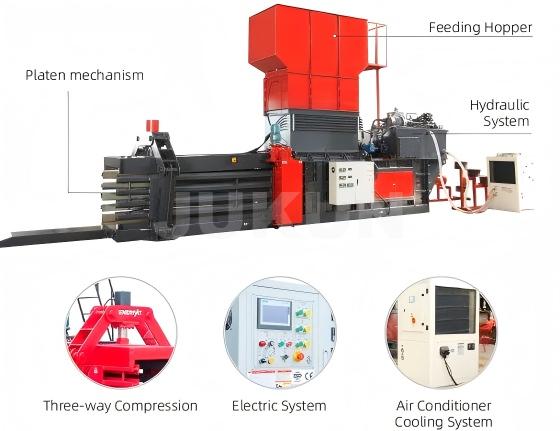
The table below shows the cost structure. It does not list fixed prices. Prices change with press force, chamber size, and options. A large semi-automatic model can cost more than a small automatic model. So buyers must compare machines with similar capacity. Ask if the price is EXW, FOB, or CIF. This changes the total cost.
| Comparison Item | Semi-Automatic | Fully Automatic |
|---|---|---|
| Initial investment | Generally lower | Generally higher |
| Automatic tying | Usually not included | Usually included |
| Conveyor system | Optional or configured | Often integrated |
| Installation complexity | Generally simpler | Usually more complex |
| Total project cost | Depends on machine size and options | Depends on line integration and capacity |
The actual price depends on compression force, processing capacity, bale specifications, feeding equipment, automation level, and delivery terms. For a detailed price breakdown, see our horizontal cardboard baler price guide or request a customized quotation from Jukun. Buyers should also count the other costs. Add shipping and insurance. Add import duty and customs clearance. Add installation and electrical work. Add hydraulic oil and spare parts. Add operator training. These costs are real. They affect the total investment. Compare the cost per ton. Do not compare only the purchase price.
Compare Initial Investment and Equipment Configuration
Two machines with the same price can have very different configurations. The cheaper quote may leave out the conveyor, the automatic tying, or the installation.
Compare the full equipment configuration, not just the machine price. Check if the quote includes the conveyor, automatic tying, bale discharge, installation, and training. A low price with missing items is not a real saving.
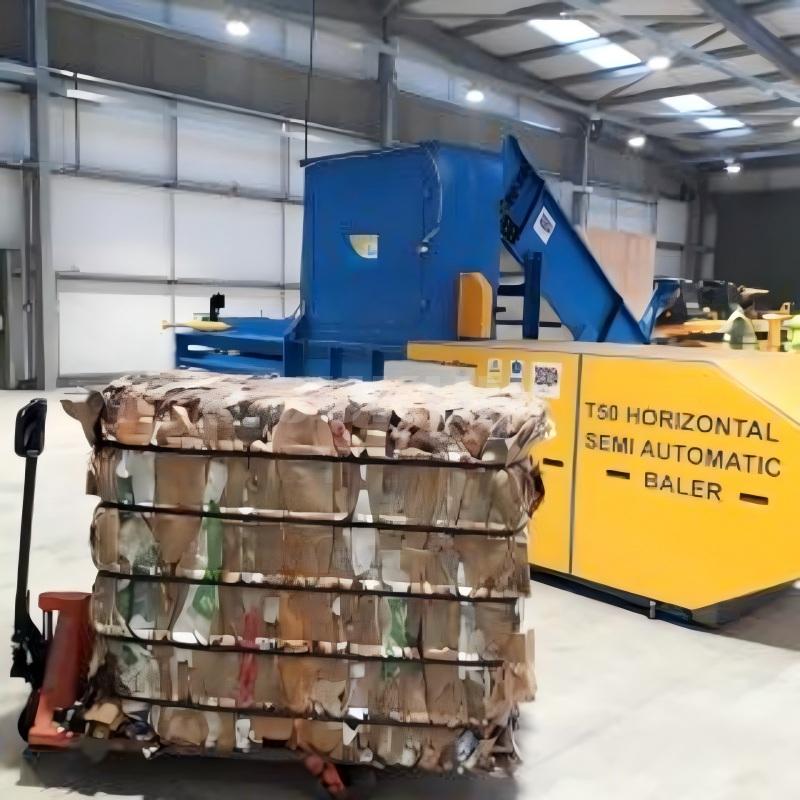 At Jukun, we use a simple checklist for every quote. We ask for a quote with and without the conveyor. We ask for a quote with and without automatic discharge. We compare the delivery term. We compare the payment terms. We compare the warranty. We compare the spare parts list. This gives a fair comparison. A supplier who hides extra costs will look cheap at first. But the final bill will be higher. Ask for a written quote with clear line items. Do not accept a single total price. A clear quote protects the buyer. It also shows the supplier is professional.
How to Calculate the Payback Period of an Automatic Baler
A fully automatic baler costs more upfront. The extra money must come back through savings. Buyers should calculate the payback period before they decide.
To calculate the payback period, divide the extra cost of the automatic baler by the yearly net savings in labor and operating costs. Subtract extra maintenance and spare parts costs from the yearly saving first.
Here is a clear example. A fully automatic baler costs $30,000 more than a semi-automatic model. The automatic system saves $14,000 per year in labor and other operating expenses. But it needs an extra $2,000 per year in maintenance and spare parts. So the annual net saving is $14,000 minus $2,000, which equals $12,000. The simple payback period is $30,000 divided by $12,000, which equals 2.5 years. This is only an example. Real savings depend on local wages, running hours, material supply, machine use, and maintenance costs. Do not count total revenue as savings. Count only the extra money saved by the automatic function. A short payback period can make an automatic baler more attractive. But there is no universal payback target for every recycling business. Compare the additional purchase and installation costs with the actual annual net savings. Use your own operating data to decide if the investment makes financial sense.
Which Baler Is Better for Cardboard, Waste Paper, and Plastic Bottle Recycling?
The best baler depends on both material type and production volume. Semi-automatic and fully automatic models are available for different recycling applications. But the feeding system, compression chamber, tying method, and pre-processing needs must match the material.
Semi-automatic and fully automatic horizontal balers are available for cardboard, waste paper, and plastic bottles. The right choice depends on the material, daily volume, and required bale density. Always test the machine with your real material before buying.
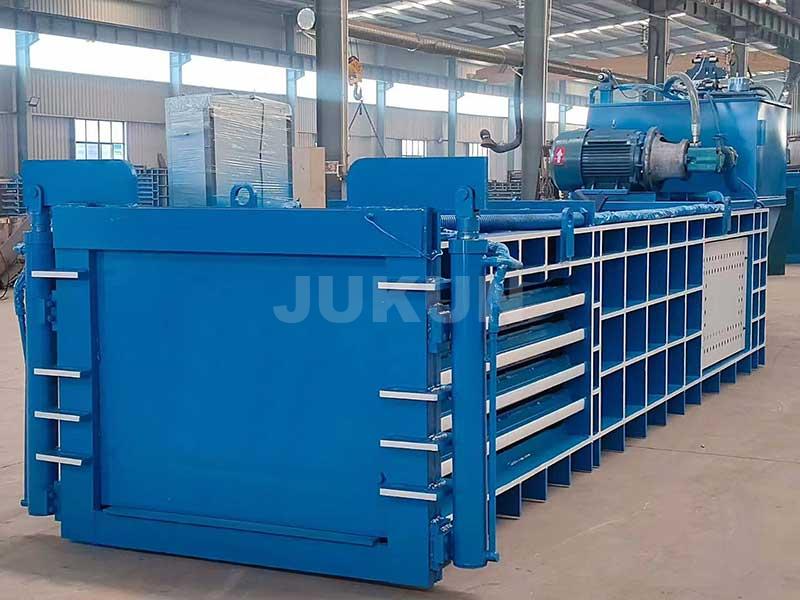 Material type is the first check. Cardboard is common. A semi-automatic cardboard baler works well for warehouses and packaging factories. A fully automatic cardboard baler works well for large distribution centers. Waste paper is similar. Small paper recycling shops can use semi-automatic machines. Paper mills with long shifts need automatic tying. Plastic bottles need more care. PET bottles are light. They trap air. A bottle perforator may be needed before compression. The feeding method and bale density must be confirmed. For PET bottle recycling, request a material test to confirm whether the selected baler requires a perforator or other pre-processing equipment. Also check bale weight and bale size. These details affect truck loading and storage.
| Material | Semi-Automatic Fit | Fully Automatic Fit |
|---|---|---|
| Cardboard | Moderate volume, lower budget | Large OCC volume, continuous line |
| Waste paper | Small to medium paper recycling | Paper mills and large plants |
| Plastic bottles | Medium volume with correct setup | Large PET plant with pre-processing |
How Does Material Type Affect Baler Selection?
Material type changes the machine setup. This is more important than the automation level alone. A full automatic line for PET bottles can still produce loose bales if the setup is wrong.
Material type affects chamber design, feeding method, pre-processing needs, and target bale density. PET bottles often need air release or perforation before compression. Cardboard and paper mainly need the right bale weight and tying method.
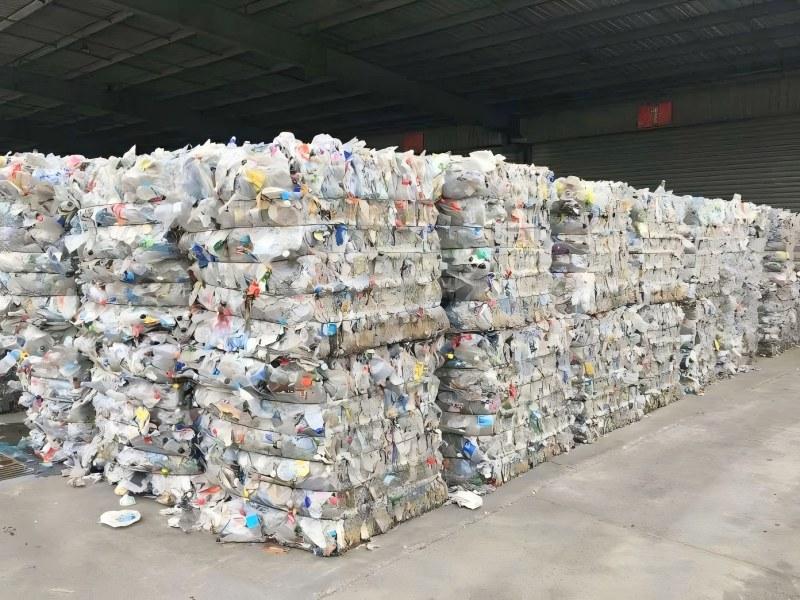
For cardboard and waste paper, check daily tonnage, bale weight, bale size, and tying method. These four points cover most of the choice. For PET bottles, add three more checks. Check the bottle condition. Whole bottles trap more air. Check if a perforator is needed. Check the target bale density. Some chambers work better for PET than others. Ask the supplier for a test with the real material. A video with the real bottle type is best. Also check moisture. Wet paper is heavier. It can change the bale weight. Check contamination too. Mixed material can jam the tying system. A clean, single material flow works best with automatic tying. A mixed or dirty flow may need more manual checks. This is why a full automatic line is not right for every buyer.
What Should You Check Before Ordering a Fully Automatic Horizontal Baler?
Many buyers do not know what to confirm before they pay. A missing detail can cause a delay. A wrong voltage can stop installation.
Before ordering a fully automatic horizontal baler, confirm the feeding system, tying method, bale size, electrical system, safety system, spare parts list, and installation plan. Get each item in writing on the quotation.
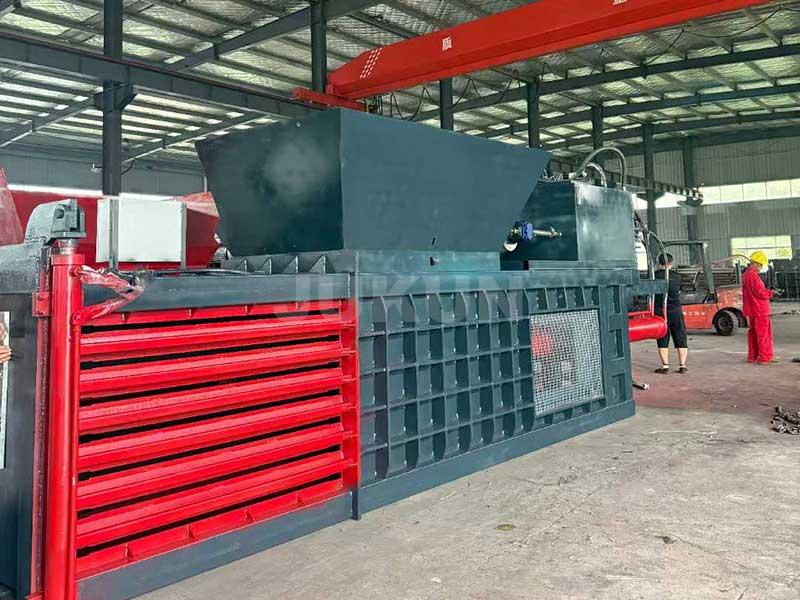 The table below is a simple order checklist. It saves time and prevents disputes.
| Item | What to Confirm | Why It Matters |
|---|---|---|
| Feeding system | Conveyor or manual loading | Determines material flow |
| Automatic tying | Wire type and tying method | Ensures stable bales |
| Bale size | Length, width, height | Matches logistics needs |
| Electrical system | Voltage, frequency, phase | Ensures site compatibility |
| Safety system | Guards and emergency stops | Protects operators |
| Spare parts | Sensors, wire system parts | Supports maintenance |
| Installation | Layout and commissioning | Reduces setup problems |
Ask for a test video. The video must show the full cycle. Ask for the test material. Ask for the bale weight in the video. Ask for the tying time per bale. These numbers show the real capacity. Do not trust a brochure number alone. Check the wire too. Automatic tying systems use a specific wire type. The wrong wire can jam the system. Confirm the wire size and supply source. Ask if the wire is available in the buyer's country. This small point can stop production. Ask about training. A good supplier gives a training video and a manual. Some suppliers send an engineer. Confirm the cost of that service. Put all answers in the order contract.
Compare Jukun Semi-Automatic and Fully Automatic Baler Models
Jukun builds both semi-automatic and fully automatic horizontal hydraulic balers. Our team tests each model with real material before delivery. The table below shows what buyers should compare when they review two models side by side.
When comparing Jukun semi-automatic and fully automatic models, check the compression force, motor power, feed opening, bale size, bale weight, tying method, feeding system, and rated throughput. Ask for real test data, not only brochure numbers.

| Specification | Jukun Semi-Automatic | Jukun Fully Automatic |
|---|---|---|
| Tying Method | Manual wire tying | Automatic wire tying |
| Compression Force | Model dependent | Model dependent |
| Motor Power | Model dependent | Model dependent |
| Bale Size | Customizable | Customizable |
| Feeding System | Manual, hopper, or conveyor | Conveyor or automated feeding |
| Bale Discharge | Manual or hydraulic | Often automatic or hydraulic |
| Operator Plan | Based on line layout | Based on line layout |
| Throughput | Depends on material and model | Depends on material and model |
The best comparison uses the same material, similar bale specs, the same test conditions, and the same time period. This shows the real difference. For example, how much labor the semi-automatic model needs for tying. How long the automatic tying cycle takes. How many tons per hour each machine handles. These numbers are more useful than a generic pros and cons list. Our team can share real test data and a working video for both models. We can also share customer feedback from similar recycling operations. For a model-specific comparison, send us your material type and daily tonnage. Request a Jukun model comparison.
Frequently Asked Questions
What is the main difference between a semi-automatic and fully automatic horizontal baler? A semi-automatic baler compresses automatically but usually needs manual bale tying. A fully automatic baler uses automatic wire tying and often includes conveyor feeding and automatic discharge.
Does a semi-automatic horizontal baler need manual wire tying? Yes, most semi-automatic models need an operator to thread and tie the wire by hand. Some models offer optional tying aids, but the task is still manual.
Is a fully automatic baler worth the extra investment? It depends on volume and labor cost. If the automatic system saves more per year than the extra cost spread over the payback period, it is worth it. Calculate the payback period with real operating data before deciding.
Can a fully automatic horizontal baler process cardboard and PET bottles? Some fully automatic horizontal balers can be configured for both cardboard and PET bottle applications. But the machine design and feeding system must suit the material. PET bottles may require air-release or perforation equipment. Cardboard generally needs different feeding and bale specifications. Before purchasing, ask the manufacturer to test each material separately and confirm the suitable machine configuration.
How many workers are needed to operate a fully automatic horizontal baler? The number depends on the machine configuration, feeding system, processing capacity, and line layout. A fully automatic baler can reduce manual tying work. But operators may still be needed to monitor the machine, manage material flow, handle finished bales, and perform routine checks. Ask the manufacturer for an operator plan based on the real production setup.
What information should I provide when requesting a baler quotation? Provide the material type, daily volume, target bale weight, bale size, local voltage, and destination country. These details help the supplier give an accurate quote.
Conclusion
Pick the baler by volume, labor cost, and material. Semi-automatic saves upfront cash. Fully automatic saves manual tying time.
Ready to compare real models? Send us your material type and daily tonnage. Our team will help you choose the right configuration and give you a clear quotation. Contact Jukun on WhatsApp.