
A horizontal hydraulic baler is an industrial machine that uses hydraulic power to compress loose materials into tight, easy-to-handle bales. It presses cardboard, paper, plastic bottles, and other recyclables.
The machine feeds material into a horizontal chamber. A hydraulic cylinder pushes a ram forward. The ram compacts the material. The machine repeats this until the bale reaches the right size. Then it ties the bale and pushes it out.
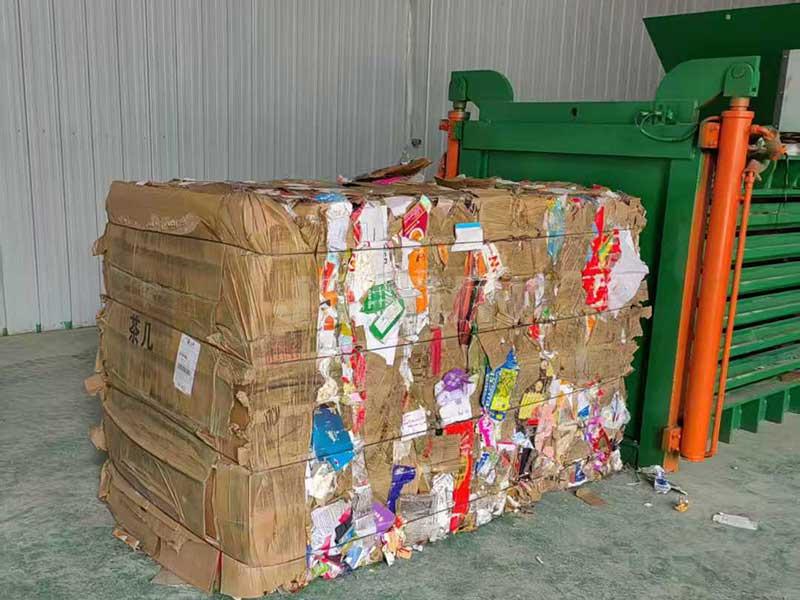
I work at a baler factory in China. I test machines in our workshop every week. I also talk to buyers in Canada, Europe, and Asia. Many of them ask one simple question first. How does this machine really work? They want the steps. They want to know what parts do what. This guide answers that. It explains the hydraulic system. It shows the main parts. It walks through each working step. It also covers materials and cost factors. By the end, you will know if this machine fits your site and your waste.
What Is a Horizontal Hydraulic Baler?
You may see many machine types online. Vertical balers. Horizontal balers. Manual and automatic models. The names can confuse you. But the core idea is simple.
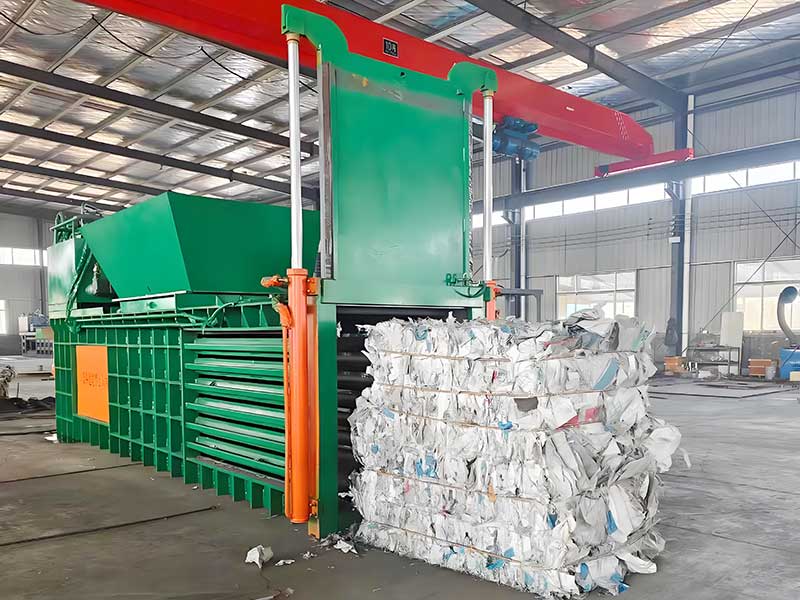
A horizontal hydraulic baler is a machine that uses oil pressure to press waste into a bale. The compression chamber sits flat, not upright. This flat design lets you feed large volumes with a conveyor. It also fits long, bulky material like cardboard boxes.
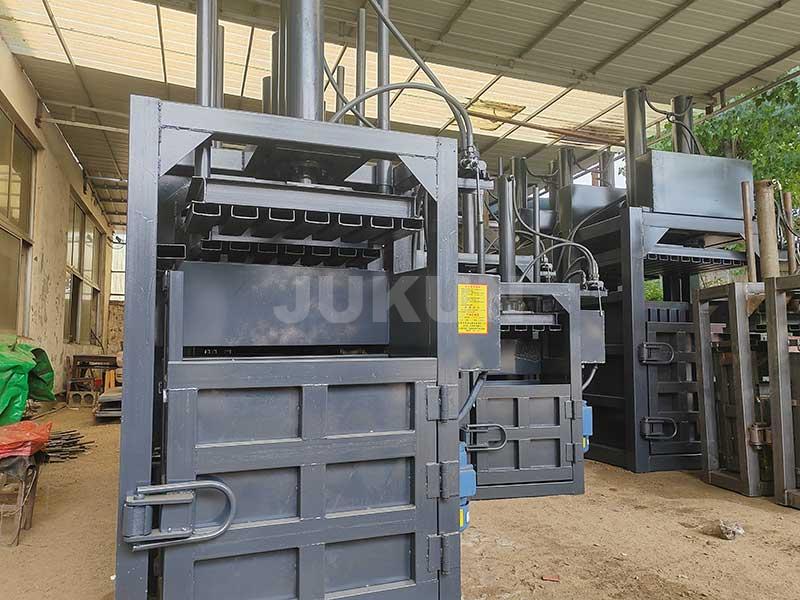
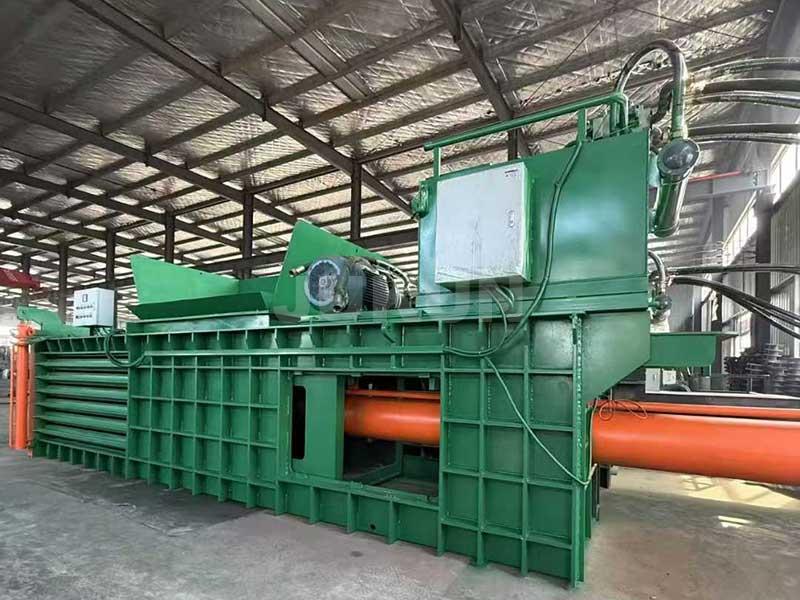
I explain this to buyers with a simple picture. Think of a vertical baler as a box that presses down. Think of a horizontal baler as a tube that presses sideways. The flat chamber makes feeding easier. It also makes the machine longer. So you need more floor space. Here is how the two types compare:
| Feature | Vertical Baler | Horizontal Baler |
|---|---|---|
| Chamber position | Upright | Flat, horizontal |
| Feed method | By hand, small volume | Conveyor or hand, large volume |
| Bale size | Smaller | Larger and heavier |
| Daily volume | Low | Medium to high |
| Floor space | Small footprint | Needs a long floor area |
| Best for | Retail, small shops | Warehouses, recycling centers |
A horizontal baler fits sites with steady, large waste flow. A vertical baler fits sites with small, batch waste. Check your daily tonnage and floor space before you choose. Do not pick by price alone. Pick by your real work flow.
How Does the Hydraulic System Work in a Horizontal Baler?
You may wonder how oil pressure turns into such strong force. The answer lies in the cylinder. Hydraulic pressure acts on the piston area. That pressure creates the pushing force. This is the heart of the machine. If you understand this, you understand the baler.
Hydraulic pressure is converted into mechanical force inside the main cylinder. When pressurized oil acts on the effective area of the piston, it creates a force that moves the ram forward. In simplified form:
Force = Hydraulic pressure × Effective piston area
The actual ram speed depends on hydraulic flow, cylinder dimensions, the control circuit, and the machine's operating settings. Compression force and cycle speed are related to different aspects of the hydraulic system. Neither should be judged by motor power alone. A relief valve caps the pressure at a safe limit.
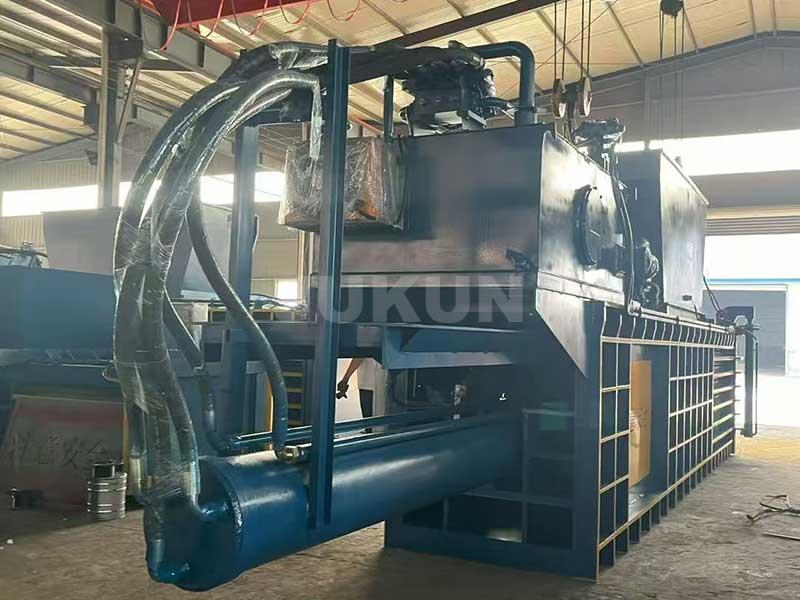
The exact hydraulic circuit varies by model. Ask the manufacturer for a hydraulic diagram and a full-cycle video of the machine configuration you intend to buy. Here is what each part does:
| Hydraulic Part | Main Job | What It Affects |
|---|---|---|
| Electric motor | Drives the pump | Total power and running cost |
| Hydraulic pump | Moves the oil | Ram speed and cycle time |
| Control valve | Directs the oil flow | Sequence and safety |
| Main cylinder | Pushes the piston | Compression force |
| Ram | Presses the material | Bale density and shape |
| Relief valve | Limits max pressure | System safety and part life |
| Oil tank and cooler | Stores and cools the oil | Oil life and steady cycle |
After each stroke, the ram pulls back. Then the cycle repeats. It stops when the bale reaches the target length or density. A good factory shares the diagram and the video. A weak one hides the details.
How Does a Horizontal Hydraulic Baler Work Step by Step?
You may think a baler just crushes waste. It does more. Each step affects your output. A slow feed or a slow tie cycle costs you hours every day.
Many horizontal balers follow a similar process: feeding, hydraulic compression, repeated pressing, bale tying, and discharge. The exact sequence depends on the machine design and automation level. Some models need manual tying or bale removal. Fully automatic systems link these steps into one line.
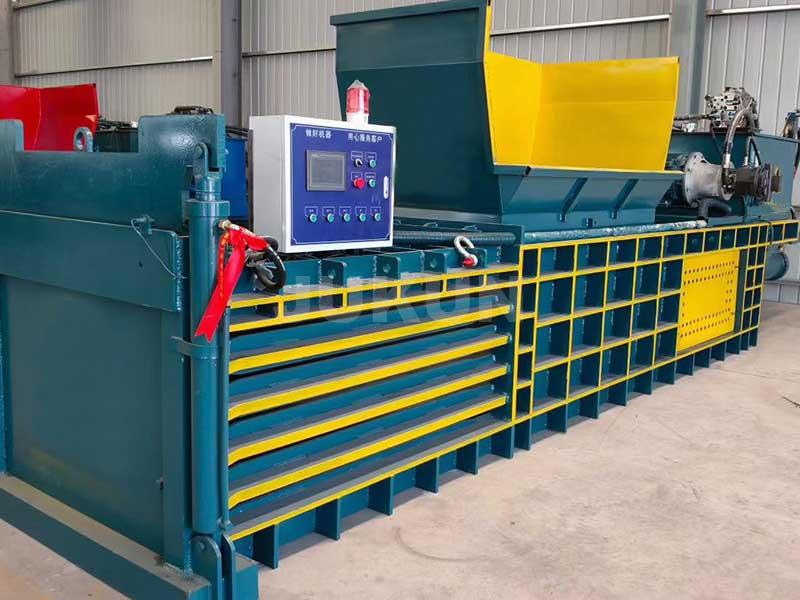
I time each step when I test a machine. Feeding is often the bottleneck. A wide chamber and a steady conveyor cut feed time. The pump and cylinder set the press speed. The tying system sets the end time. Here are the five steps and what affects each one:
| Step | What Happens | What Affects Speed |
|---|---|---|
| 1. Feed | Material enters the chamber | Chamber width, conveyor speed, box size |
| 2. Compress | The ram pushes material | Pump flow, cylinder size, valve setting |
| 3. Repeat | More material feeds and presses | Feed method, operator skill |
| 4. Tie | Wire or strap wraps the bale | Manual or auto tying system |
| 5. Discharge | The bale leaves the chamber | Ramp, push-out system, forklift path |
Real cycle time in seconds sets your hourly output. Ask the factory for this number. Ask if it includes feed and tie time. A strong pump with a slow feed still gives low output. Ask for a full-cycle video before you pay.
What Are the Main Components of a Horizontal Hydraulic Baler?
You may know the machine presses waste. But you should know the parts by name. This helps you check quality. It also helps you talk to the factory with clear words. A buyer who knows the parts asks better questions.
A horizontal hydraulic baler has seven main parts. The hydraulic power unit drives the system. The main cylinder creates the force. The ram presses the material. The compression chamber holds the waste. The feed hopper or conveyor brings material in. The control system runs the sequence. The tying system secures the bale.
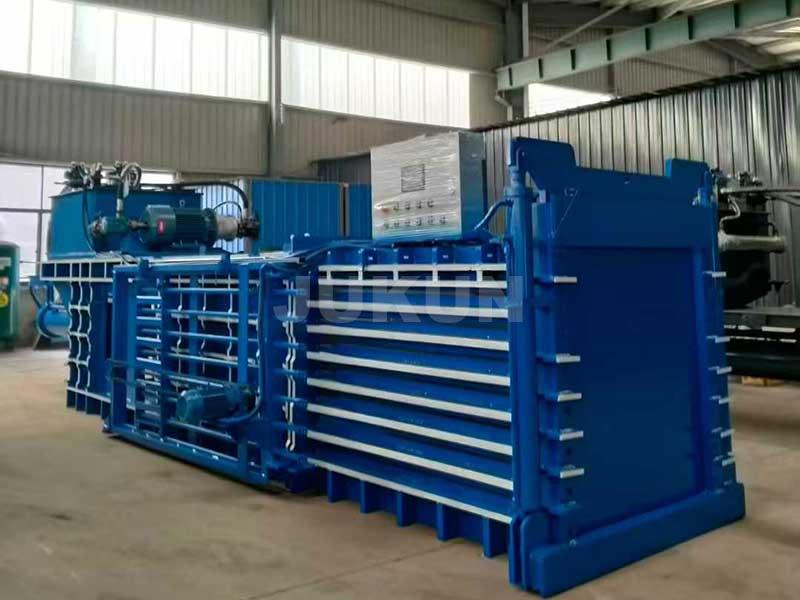
I show these parts to every buyer who visits our factory. I point to each one. I explain what to check. Regularly inspect hydraulic oil condition, pump noise, external leaks, cylinder seals, and the condition of the ram guides. Follow the maintenance schedule specified for the machine. Keep the electrical cabinet clean and dry. Check the connections, ventilation, and enclosure condition according to the manufacturer's maintenance instructions. Here is a simple parts list with what to check:
| Component | What It Does | What to Check |
|---|---|---|
| Hydraulic power unit | Drives the oil | Pump brand, motor power |
| Main cylinder | Pushes the ram | Weld quality, seal brand |
| Ram | Presses the material | Guide wear, surface flatness |
| Compression chamber | Holds the waste | Steel thickness, weld quality |
| Feed hopper or conveyor | Brings material in | Width, speed, jam points |
| Control system | Runs the sequence | Brand of electric parts |
| Tying system | Secures the bale | Manual or auto, wire type |
Ask the factory for a labeled photo of the model you plan to buy. Ask for the brand of the pump and the seals. A good factory shares this. A weak one gives general answers. The parts list tells you more than the price tag.
What Determines the Real Output of a Horizontal Hydraulic Baler?
You may see a high force rating and think output will be high. That is not true. Force and output are different things. Real output depends on several factors that work together.
Real output depends on material density, moisture, feed continuity, ram speed, cycle time, and the tying and discharge method. A machine with high force can still run slow if the feed jams or the tie cycle takes too long. Check the full work flow, not just one number.
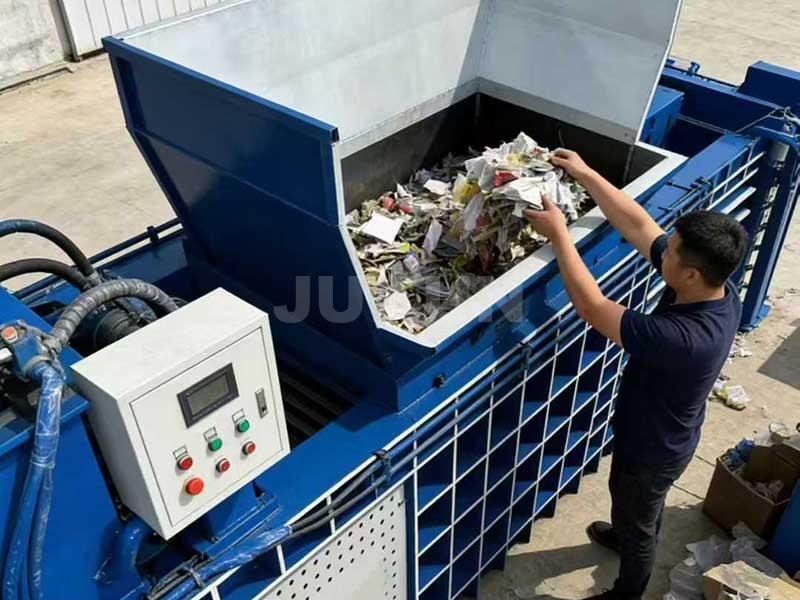
Here is the test record we use when we test a machine for a buyer. We fill in only the numbers we actually measure:
| Test Item | What We Record |
|---|---|
| Material | The exact board type or plastic tested |
| Machine configuration | Model, pump, cylinder, and automation level |
| Test duration | Continuous run time in minutes |
| Material input | Total weight fed during the test |
| Completed bales | Number of bales finished |
| Average throughput | Calculated tons per hour |
| Test conditions | Moisture, feed method, and any stops |
We do not fill in numbers we did not measure. If a field is empty, it stays empty. This rule keeps the data honest. Ask your supplier for the same record. A factory that shares real test data is easier to trust. A factory that gives only a brochure number is harder to check. This table also helps you compare models on the same basis. Use it when you request quotes.
What Materials Can a Horizontal Hydraulic Baler Process?
You may plan to bale cardboard only. But your waste stream may change. A machine that fits one material may fail on another. Check material fit before you buy.
Horizontal hydraulic balers press cardboard, waste paper, PET bottles, plastic film, textiles, and some metal scrap. Each material needs the right chamber, force, and feed setup. Cardboard and plastic bottles behave very differently under pressure.
One buyer tried to bale bulky plastic in a paper machine. The feed jammed every hour. The bales came out loose. He lost a full week of output. Now I ask for samples first. I ask for photos and short videos. I test the material in our workshop. Then I send the result. Here is how the main materials compare:
| Material | Compression Ease | Main Challenge | What to Check |
|---|---|---|---|
| Cardboard, OCC | Easy | Bulky feed, moisture | Wide chamber, steady feed |
| Waste paper | Easy | Light and dusty | Dust control, feed speed |
| PET bottles | Medium | Spring back, low density | Perforation option, strong ram |
| Plastic film | Medium | Wraps around parts | Feed design, cleaning |
| Textiles | Medium | Soft, uneven bales | Tie strength, bale shape |
| Metal scrap | Hard | Needs high force | Dedicated metal baler only |
Do not assume one machine fits all. Tell the factory your main material and your second material. Ask if the same setup works for both. A good factory tests the material. A weak one says yes to everything without proof.
What Is the Difference Between Semi-Automatic and Fully Automatic Balers?
You may think automatic always wins. It does not. An automatic baler costs more and needs more space. If your volume is low, you pay for speed you never use.
Semi-automatic balers need hands for feed and tie. Fully automatic balers use a conveyor, auto tying, and auto discharge. The real difference is which steps run without an operator. Check your daily tonnage and labor cost before you choose.
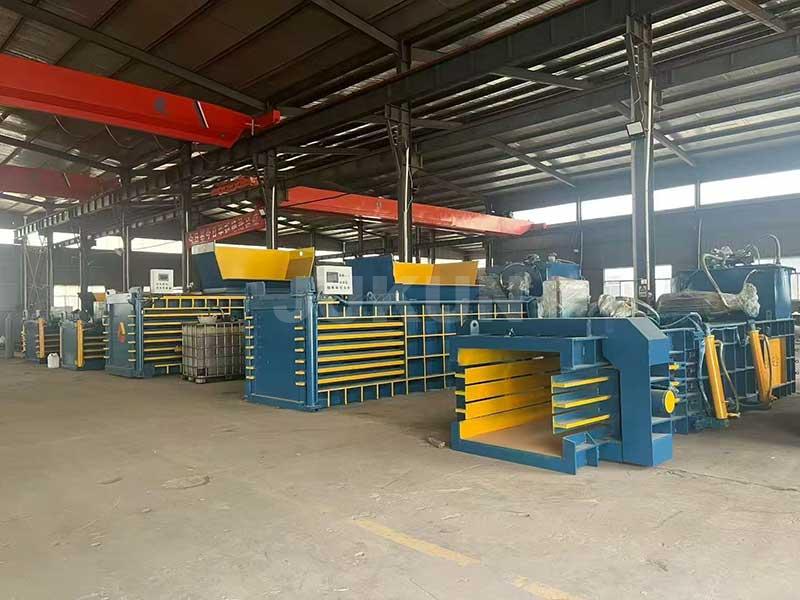
A mid-size depot once asked me about a full automatic line. They ran only four hours a day. The extra cost would never pay back. They chose a semi-automatic model with a small conveyor. It fit their space and budget. Another customer ran three shifts a day. He chose full automation. His labor cost dropped fast. Here is the function comparison:
| Function | Basic Semi-Automatic | Semi-Automatic with Auto Tying | Fully Automatic |
|---|---|---|---|
| Feeding | By hand | By hand or small conveyor | Full conveyor |
| Pressing | Automatic | Automatic | Automatic |
| Tying | By hand | Automatic | Automatic |
| Discharge | By hand | By hand or ramp | Automatic |
| Operator need | High | Medium | Low |
Choose by your real work flow. Check your run hours and your labor cost. Ask for a test video with your material. The best machine fits your floor, your team, and your daily tonnage. It is not always the biggest or the cheapest.
How Much Does a Horizontal Hydraulic Baler Cost?
You may see a low quote and feel ready to pay. But shipping, power, parts, and labor add up fast. A cheap baler can cost more over five years.
Price depends on compression force, capacity, automation level, chamber size, and feed system. A small semi-automatic model costs less. A large automatic line with a conveyor and auto tying costs more. Bale size, voltage, and safety options also change the quote.
For a full cost breakdown with real price ranges, read our detailed horizontal baler price guide. This article focuses on how the machine works. I will keep the cost part short here. But I will share one rule I use with every buyer. Compare total cost of ownership, not just the sticker price. Add five years of power, oil, parts, and labor. One customer chose the cheapest quote. His pump failed twice in one year. The downtime cost more than the savings. Here is what to compare:
| Cost Item | What to Ask | Hidden Risk |
|---|---|---|
| Machine price | Full spec sheet and included options | Missing options raise later cost |
| Shipping | Door-to-door quote with port fees | Port fees surprise you |
| Power use | Motor kW and run hours per day | High power drains profit |
| Spare parts | Price list and stock levels | Rare parts cause long stops |
| Labor | Operators per shift and tying time | Manual tying needs more hands |
For Canadian buyers, confirm voltage and frequency first. Confirm spare parts arrive fast. A low price with slow parts is a bad deal. The best value is the machine that runs every day with little downtime.
Need Help Choosing a Horizontal Hydraulic Baler?
Send us your material type, daily tonnage, bale size, voltage, floor space, and door width. Our team at Jukun will review your case and suggest a machine setup. You will get three things. First, a machine setup that fits your material and tonnage. Second, a test video or test record for the model we suggest. Third, a clear parts price list and a full quote range. Contact us before you order.
Conclusion
A horizontal hydraulic baler uses oil pressure to press waste into tight bales. Learn the hydraulic parts, the working steps, and the material fit. Then check the total cost, not just the price.