
Many businesses spend more than necessary on waste collection, cardboard disposal, and transport. Loose cardboard fills space fast. Trucks leave half empty. You pay for air.
A horizontal baler reduces waste disposal costs by compressing loose material into dense bales. This cuts storage space, lowers collection frequency, and improves transport efficiency. Baled material may also earn recycling revenue. Your actual savings depend on your waste contract and material type.
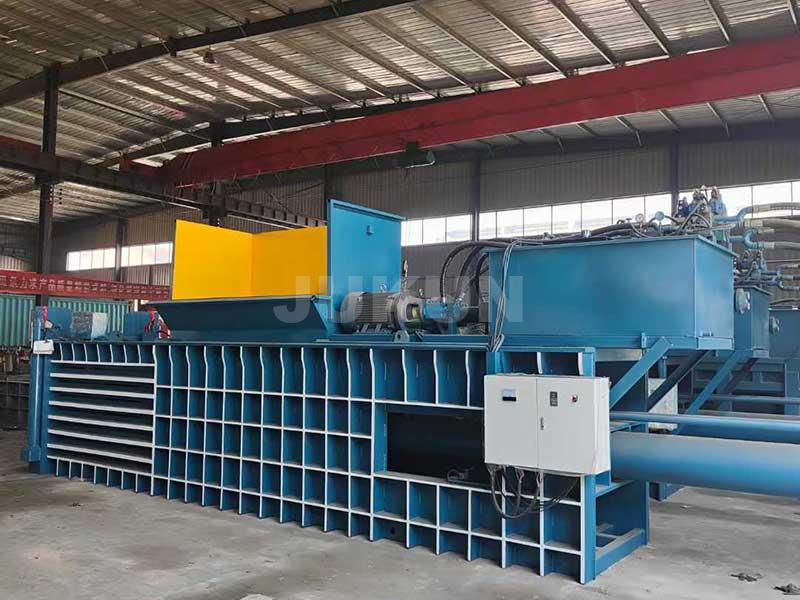
But can a horizontal baler actually reduce your monthly waste bill? The answer depends on your waste volume, material type, collection fees, and transport setup. This guide shows you how to calculate the real savings.
Get a waste cost review for your baler
How Does a Horizontal Baler Lower Waste Disposal Costs?
You may see waste as a cost. But waste is often lost value. Loose cardboard is air and space. You pay to move it. You pay to store it.
A horizontal baler lowers waste disposal costs by reducing material volume. Smaller volume means fewer collections, less storage space, and more efficient transport. The exact savings depend on your waste contract and material type.
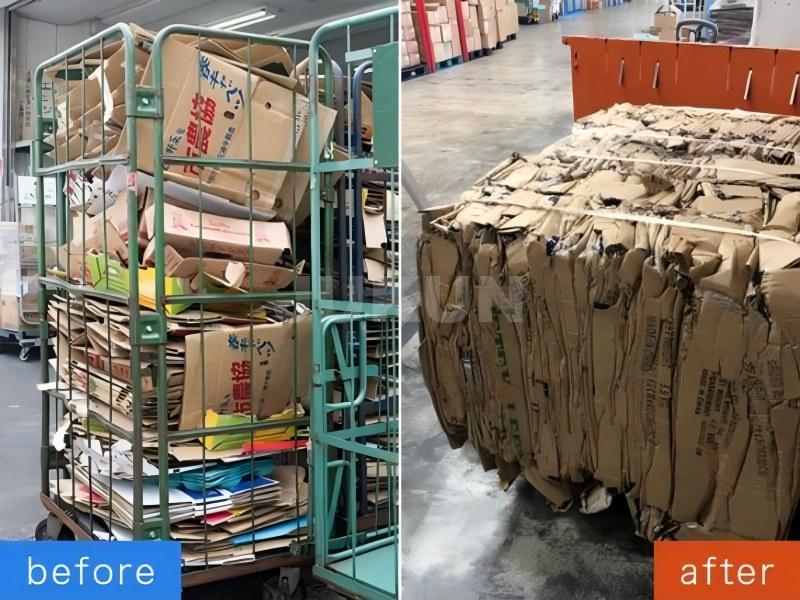
Volume reduction is the first benefit. Loose boxes take space. Bales take less. A full waste area becomes an organized storage zone.
The second benefit is collection frequency. If your container fills slower, you call for pickup less often. But this only works if your contract charges by volume or pickup. A fixed monthly fee may not drop right away. Check your contract first.
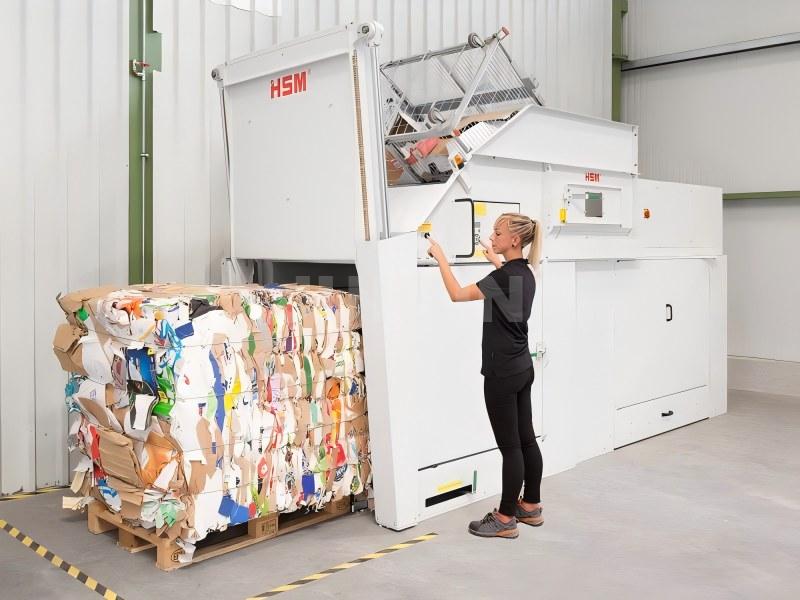
The third benefit is floor space. Waste areas eat valuable floor space. Bales stack neatly. Forklifts move them fast. Your team works cleaner.
| Benefit | What Changes | What to Check |
|---|---|---|
| Volume | Less space per ton | Real volume reduction for your material |
| Collections | Fewer pickups | Your waste contract terms |
| Floor space | More free area | Bale storage and forklift access |
Do not expect the same result for every material. Cardboard compresses well. Plastic film is light. Wet material reduces poorly. Test your material before you trust a savings claim.
How Do Waste Disposal Contracts Affect Your Baler Savings?
You may assume a baler always cuts your bill. This is not true. Your savings depend on how your waste contractor charges you.
A horizontal baler does not automatically reduce every waste disposal bill. Savings depend on your contract. You save easily with per-pickup or per-volume pricing. You may not save with a fixed monthly fee or weight-based pricing. Review your contract before you buy.
Review your contract carefully. Check the pickup fee. Check the container rental. Check the weight-based charge. Check the minimum service fee. Check any recycling credit. These details decide if baling saves you cash.
| Contract Type | Easy to Save? | Why |
|---|---|---|
| Per Pickup | Usually yes | Fewer pickups mean lower fees |
| Per Container / Volume | Usually yes | Smaller volume means less container cost |
| Per Ton | Not always | Baling does not change material weight |
| Fixed Monthly Fee | Not always | The fee may not change with volume |
If you pay per pickup, fewer collections may lower your bill. If you pay by container size, smaller waste volume may cut rental or collection charges. If you pay a fixed monthly fee, baling may improve your site but not your bill.
Ask your contractor one question. "How is my charge calculated?" The answer tells you if a baler can save you money.
Ask us to review your waste cost case
How to Compare Waste Disposal Costs Before and After Installing a Baler
Before you buy a baler, compare your current costs with your expected costs. Use real invoices and real quotes. Do not guess.
Compare your waste collection fees, container rental, transport costs, incremental recycling revenue, and baler operating costs before and after baling. Monthly Net Financial Benefit = Avoided Waste Disposal Costs + Transport Savings + Incremental Net Recycling Revenue − Baler Operating Costs.
Record these figures for your business.
| Cost Item | Before Baling | After Baling |
|---|---|---|
| Waste collection fees | Your invoice data | Your estimate |
| Container rental | Your invoice data | Your estimate |
| Transport costs | Your invoice data | Your estimate |
| Incremental net recycling revenue | Your current income | Your new estimate |
| Baler operating costs | $0 | Your estimate |
Incremental Net Recycling Revenue means the additional net income generated after installing the baler, compared with your current recycling arrangement. Do not count existing recycling income twice.
Use actual invoices, recycling buyer quotes, and machine operating estimates. This makes your decision more reliable than a general savings percentage.
How Much Can You Save on Transport with a Cardboard Baling Machine?
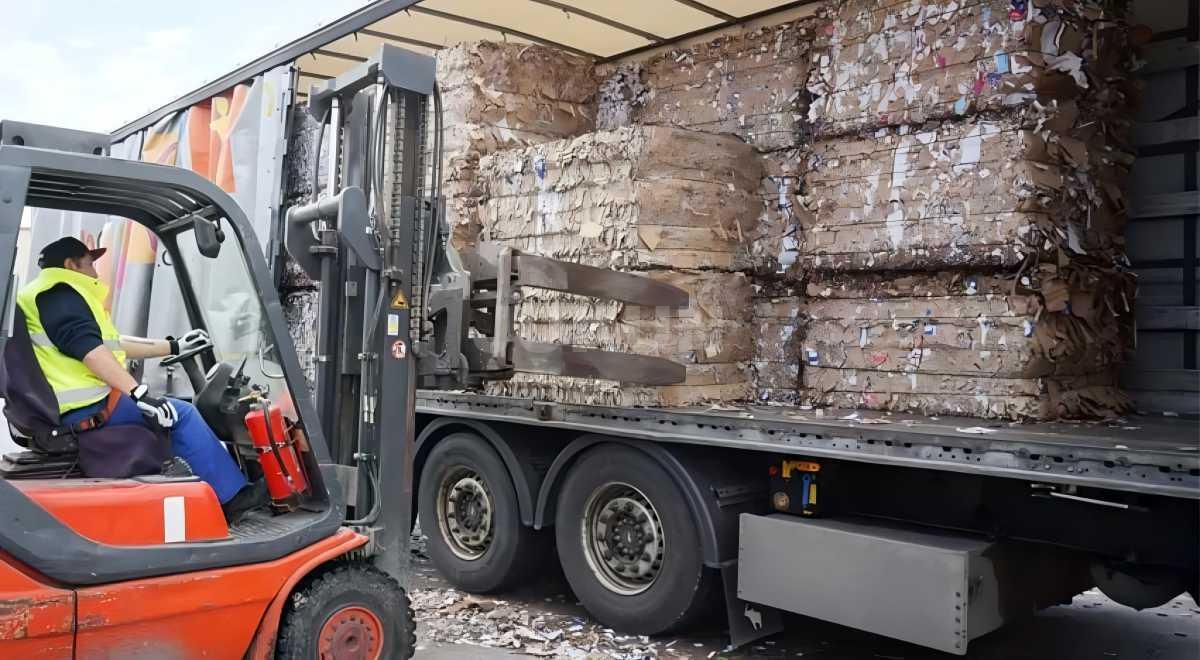
You may pay per truck trip. Loose cardboard fills the truck before it reaches the weight limit. You pay for empty air.
A cardboard baling machine cuts transport costs by loading more material per trip. Dense bales use truck space better. Fewer trips mean lower fuel, driver, and vehicle costs. Savings depend on bale size, payload limits, and your transport contract.
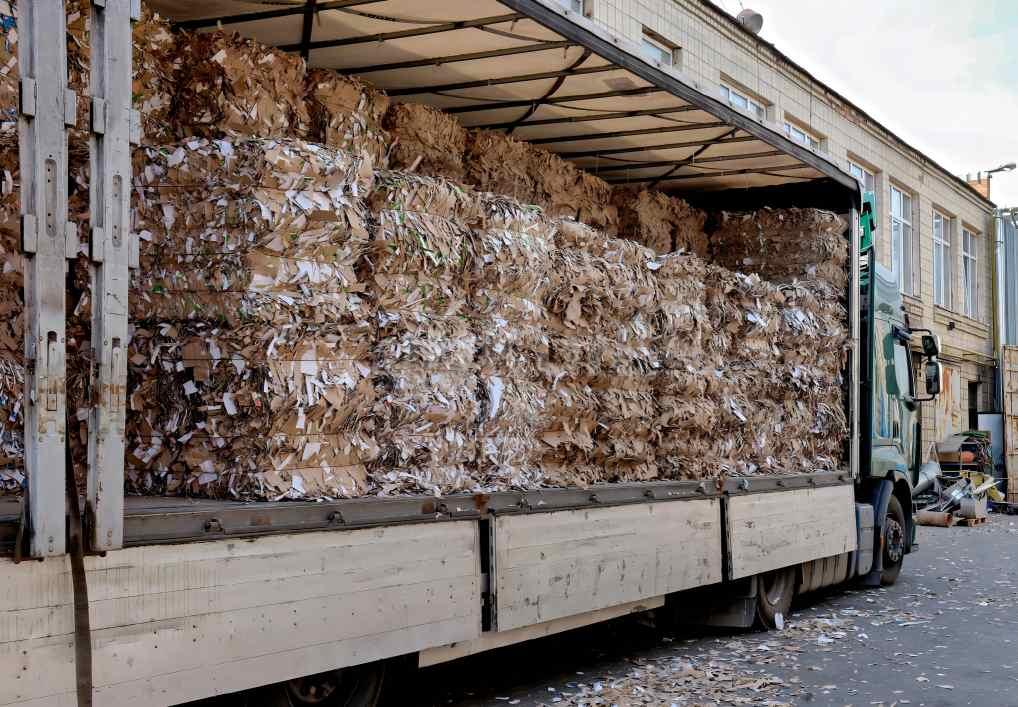
This example assumes one key condition. Loose cardboard fills the truck before it reaches the legal payload limit. If your truck is already weight-limited, baling may improve loading and handling. But it may not reduce the number of trips.
Here is a simple example. These are only planning numbers. Suppose each truck trip costs $180. You ship loose cardboard 12 times a month. After baling, you need only 5 trips.
| Item | Before Baling | After Baling |
|---|---|---|
| Monthly trips | 12 | 5 |
| Cost per trip | $180 | $180 |
| Monthly transport cost | $2,160 | $900 |
Your estimated monthly saving is $1,260. Your yearly saving is $15,120.
To estimate your real savings, compare the average material weight per truckload before and after baling. Check how your carrier charges. Some charge per trip. Some charge per ton. Some charge a fixed fee. Higher bale density does not always mean fewer trips if the truck is already at its legal payload limit.
Calculate your transport savings with us
Can a Horizontal Baler Generate Revenue from Cardboard, Paper, and Plastic?
You may treat recyclables as trash. But buyers pay for clean, sorted bales. A baler helps you prepare material for sale.
A horizontal baler can generate revenue by turning cardboard, paper, and plastic into saleable bales. Revenue depends on local prices, material quality, contamination, and buyer requirements. A baler prepares material, but it does not create demand.
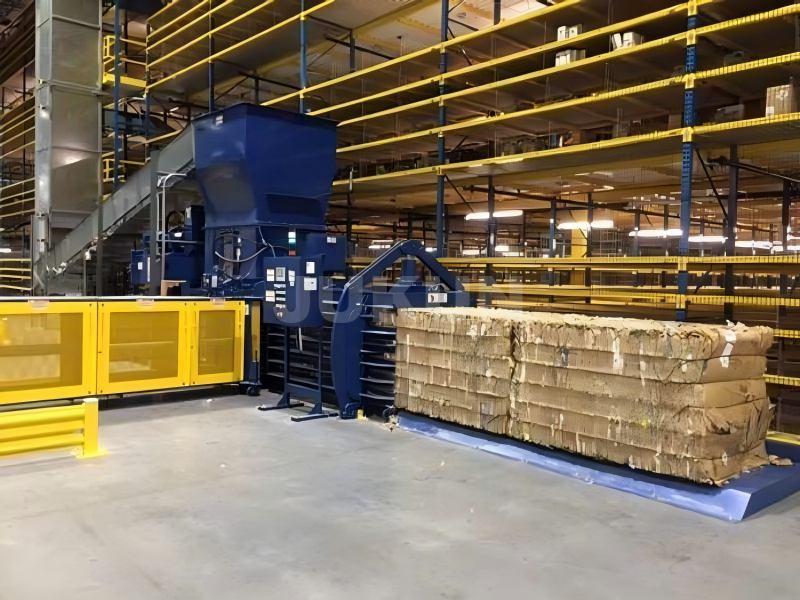
Cardboard and OCC are traded every day. Clean, dry, well-tied bales sell better. Wet or mixed bales lose value. Waste paper needs sorting. Keep paper dry. Remove plastic and tape. Plastic needs separation. PET, HDPE, and film are not the same.
Revenue formula: Monthly Revenue = Monthly Saleable Quantity × Selling Price per Ton.
Here is a simple example. These are only planning numbers. Suppose you sell 30 tons of cardboard per month. The local price is $70 per ton. Your gross revenue is $2,100.
But gross revenue is not profit. You must subtract sorting, storage, loading, and transport costs. You must also keep recycling revenue separate from avoided disposal costs. Do not count the same collection or transport saving twice.
| Money Type | What It Means | Example |
|---|---|---|
| Gross recycling revenue | Material sales before costs | $2,100 |
| Net recycling revenue | Sales after handling costs | Lower than $2,100 |
| Avoided disposal cost | Bill you no longer pay | Separate line item |
Good sorting matters as much as compression. A clean bale sells. A dirty bale becomes a cost.
How Do You Calculate the ROI and Payback Period of a Horizontal Baler?
You may want to buy a baler. But you need numbers. ROI and payback period show if the machine pays for itself.
Calculate ROI and payback by adding total investment cost, monthly savings, recycling revenue, and operating costs. Payback Period = Initial Investment ÷ Monthly Net Benefit. Use real cash savings, not theoretical gains.
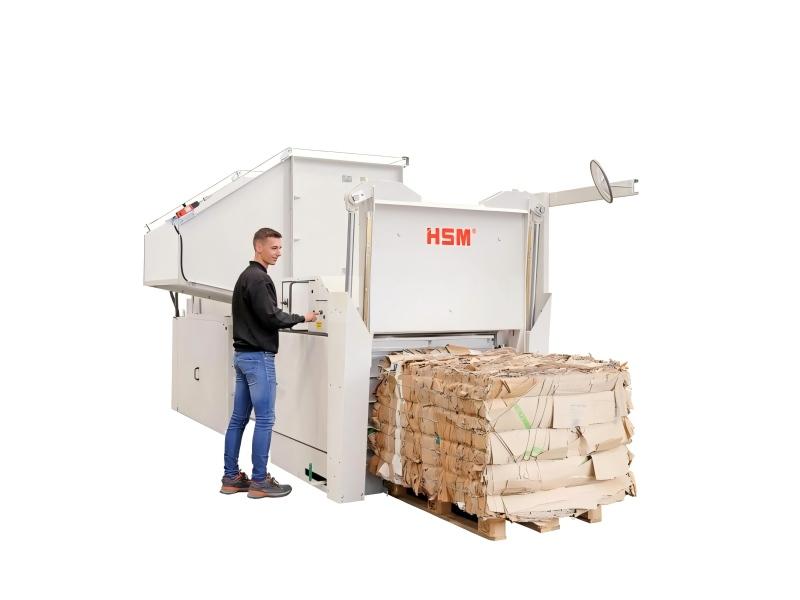
The ROI example below uses separate illustrative assumptions. It is not based on the cardboard sales example above. It is not a promise of results for your business.
Step one is the total investment. Add the machine price. Add shipping and insurance. Add import duties. Add installation and electrical work. Add spare parts. The total is your starting cost.
Step two is monthly benefits. Break the number into parts. Do not use one large guess. Use separate lines for disposal savings, transport savings, and incremental recycling revenue.
| Benefit Source | Example Amount | Your Data |
|---|---|---|
| Disposal cost savings | $1,000 | Fill in your number |
| Transport cost savings | $1,000 | Fill in your number |
| Incremental recycling revenue | $1,500 | Fill in your number |
| Total monthly benefits | $3,500 | Add your lines |
These are illustrative amounts, not customer data. Step three is monthly operating costs. Add electricity. Add labor. Add hydraulic oil and filters. Add tying wire. Add maintenance.
Step four is monthly net benefit. Monthly Net Benefit = Monthly Benefits − Monthly Operating Costs.
Step five is payback period. Payback Period = Initial Investment ÷ Monthly Net Benefit.
Step six is annual ROI. Simple Annual Cash ROI = (Annual Net Cash Benefit ÷ Initial Investment) × 100%.
Here is a simple example. These are only planning numbers. Suppose your total investment is $30,000. Your monthly benefits are $3,500. Your monthly operating costs are $650. Your monthly net benefit is $2,850. Your payback period is about 10.5 months. Your annual net benefit is $34,200. Your annual ROI is about 114%.
This simplified calculation does not include financing costs, taxes, depreciation, or working capital changes. It assumes stable monthly benefits and costs for 12 months.
Use real cash savings. Do not count potential savings as cash. If your team saves time but you do not reduce wages or move the worker to useful work, that is not cash savings. If you free up floor space but do not rent it out or expand production, that is not cash savings either.
Send us your data for an ROI review
What Should You Check Before Buying a Baler to Reduce Waste Costs?
You may like the savings math. But you must check the real setup before you pay.
Check your daily waste tonnage, your waste contract, your material type, your bale target, your installation cost, and a real material test. These checks confirm if the savings are real for your site.

Check your daily waste tonnage first. Measure it for one week. Do not guess. Check the material mix. Cardboard, paper, and plastic behave differently. Check your waste contract again. Confirm the pricing method.
Check the machine configuration. Confirm the bale size and weight. Confirm the feeding method. Confirm the tying system. Check the installation cost. Check the electrical work. Check the spare parts list.
Ask for a material test. Ask for a video with your material. Ask for the bale weight and cycle time. A real test beats a brochure.
| Check Item | What to Confirm | Why It Matters |
|---|---|---|
| Daily waste tonnage | Real weight per day | Sizes the machine correctly |
| Waste contract | Pickup, volume, or weight pricing | Shows if savings are possible |
| Material test | Bale weight and cycle time | Confirms real performance |
For related reading, see our guide on horizontal baler recycling efficiency and our cardboard baler ROI guide.
Get a machine configuration recommendation
Frequently Asked Questions
How Much Can a Horizontal Baler Reduce Waste Volume?
It depends on the material. Cardboard and paper compress well. Plastic film compresses less by weight. Wet material reduces poorly. Ask for a material test to see the real volume reduction for your waste.
Is a Horizontal Baler Worth the Investment?
It can be worth it if you produce enough recyclable waste. The machine must cut disposal or transport costs, or create saleable bales. Run a payback calculation with your real numbers before you decide.
Can I Sell Baled Cardboard and Plastic?
Yes, if local buyers accept the material. Check the accepted grades, bale size, weight, and contamination rules. Clean, dry, well-tied bales sell better than mixed or wet bales.
How Long Does It Take to Recover the Baler Cost?
The payback period depends on your initial investment, waste volume, disposal fees, transportation costs, recycling revenue, and operating expenses. Calculate your monthly net financial benefit using actual business data before estimating when the machine will pay for itself.
What Size Horizontal Baler Do I Need to Reduce Waste Disposal Costs?
The right horizontal baler size depends on your daily waste volume, material type, operating hours, target bale weight, and available installation space. A machine that is too small may create processing bottlenecks. An oversized machine may increase your initial investment unnecessarily. Share your waste volume and material details with the manufacturer to determine a suitable configuration.
Conclusion
A horizontal baler can cut disposal costs, transport costs, and create recycling revenue. Check your contract first. Then run the numbers with real data.
Jukun Machinery manufactures horizontal hydraulic balers for cardboard, waste paper, and plastic recycling. Share your daily waste volume, material type, and target bale weight with our team. We can help you evaluate a suitable machine configuration.
Contact Jukun Machinery for a horizontal baler solution tailored to your waste management needs.