
Manual handling slows output. Production gaps bleed profit. Industrial automation stops both.
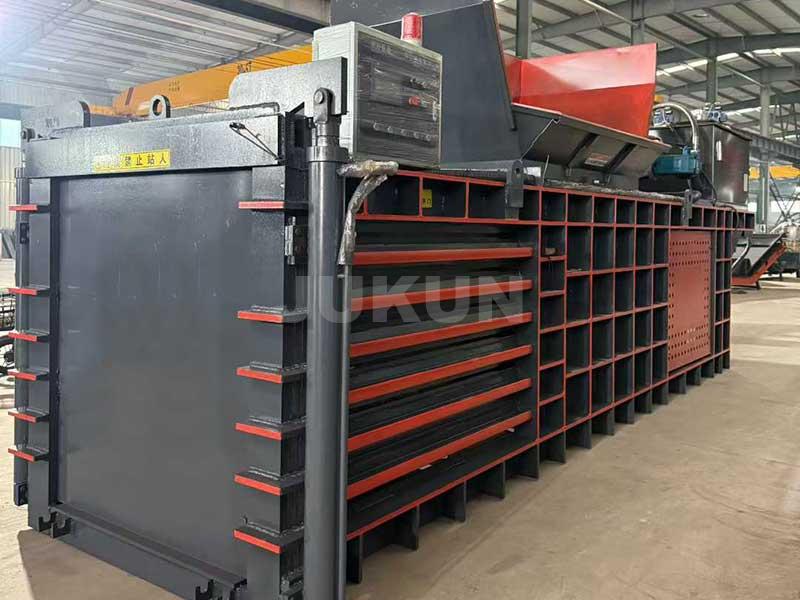
Horizontal hydraulic balers dominate high-volume recycling with continuous processing, strong hydraulic compression, and automation integration—dramatically increasing bale output while reducing labor and logistics costs for maximum operational efficiency.
Transform your material handling today.
What Makes Horizontal Balers Essential for High-Volume Recycling Plants?
Batch processing creates bottlenecks. Manual operations strain teams. Continuous flow solves both.
Industrial horizontals achieve 98% uptime through conveyor feeding, auto-tying systems, and powerful hydraulics—processing 20+ tons/hour while eliminating production gaps for constant material flow and reliable output.
Performance comparison:
| Capability | Vertical Baler | Horizontal Baler | Industrial Advantage |
|---|---|---|---|
| Daily Throughput | 3-8 tons | 15-30 tons | 400% capacity increase |
| Automation Level | Manual loading | Continuous feeding | 80% labor reduction |
| Bale Density | 450-600 kg/m³ | 750-850 kg/m³ | 40% higher yield |
| Material Flexibility | Limited types | Mixed waste streams | Enhanced versatility |
| Footprint Efficiency | Small | Optimized transport | 5x space savings |
Non-stop operation proven: Our Toronto client reduced processing backlogs by 78% after installing two 25-ton models. Key design feature: synchronized hydraulic compression maintains uniform density. Critical specification: always choose chamber widths exceeding feed conveyor size to prevent jams.
How Do They Increase Throughput and Automation Efficiency?
Human pauses cause output drops. Inconsistent pacing strains equipment. Machine synchronization solves both.
Auto-cycle systems handle 5-second feeding intervals—cutting cycle times below 80 seconds—PLC controls adjust compression based on chamber volume—increasing throughput while lowering hydraulic stress 32%.

Automation process:
| Stage | Manual Operation | Horizontal Automation | Impact |
|---|---|---|---|
| Material Feeding | Shovel/forklift | Sensor-triggered conveyors | 70% faster |
| Compression Cycle | Button activation | Timed hydraulic sequencing | 44-sec average |
| Tying Operation | Worker insertion | Robotic wire placement | Zero delay |
| Ejection Control | Manual release | Pressure-triggered kicker | 17-sec process |
| Jam Response | Line stoppage | Auto reverse functions | 98% uptime |
Singapore facility case: Their horizontal balers now process 28-ton shifts with one operator. Integration tip: demand CAN-BUS interfaces for automated material tracking. Structural essential: reinforce base frames with minimum 14mm steel to handle accelerated cycles.
How Much Operating Cost Reduction Do They Provide?
Labor expenses drain budgets. Warehouse space costs increase. Transport inefficiency wastes fuel.
Typical plants realize 37% lower costs through automated horizontal systems—reducing labor to 0.5 workers/shift—cutting storage needs 60%—and lowering monthly truck fleets by 25%.
Cost breakdown:
| Expense Category | Before Horizontal Baler | After Installation | Annual Savings |
|---|---|---|---|
| Labor Cost | $182,000 | $48,000 | $134,000 |
| Storage Space | 30,000 sq ft | 11,000 sq ft | $108,000 |
| Transport Trucks | 8 trucks/day | 6 trucks/day | $66,000 |
| Maintenance Labor | $34,000 | $11,000 | $23,000 |
| Compressed Air Use | $8,200 | $3,700 | $4,500 |
| Total Cost | $335,500/year |
Phoenix recycling center case: 18-month payback period proved through bale revenue growth. Hydraulic selection tip: dual-pump systems provide 21% faster cycles without energy spikes. Contract clause: insist on liquidated damages for efficiency guarantees.
How to Choose the Right Industrial-Grade Horizontal Baler?
Off-spec machines jam constantly. Underpowered hydraulics choke production. Precision matching prevents failures.
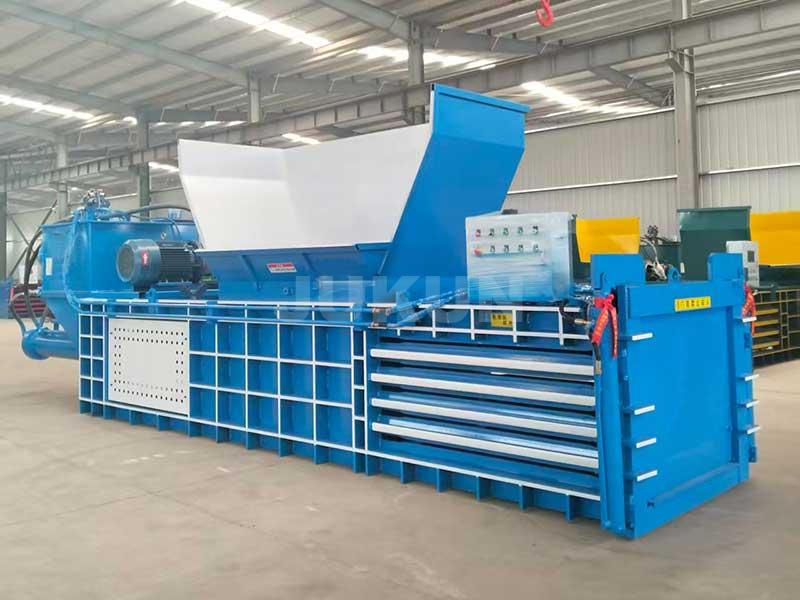
Match bale size to truck dimensions—demand 15% surplus pressure capacity—verify conveyor widths—require PLC diagnostics—validate weld X-ray reports—and test-run your specific waste materials at minimum 75 cycles.
Technical specification matrix:
| Requirement | Small Plant | Medium Plant | Large Plant | Verification Method |
|---|---|---|---|---|
| Pressure Rating | 18-22 tons | 22-30 tons | 30-45 tons | Third-party load testing |
| Chamber Width | 1.0m | 1.2-1.5m | 1.6-2.0m | Material trial videos |
| Daily Capacity | 5-10 tons | 12-20 tons | 25-40 tons | Energy monitoring tools |
| Steel Quality | ST37 | ST52 | Hardox 450 | Mill certificates |
| Response SLA | 24 hours | 12 hours | 4 hours | Contract penalties |
Chicago buyer lesson: Their 28-ton system paid off faster by matching baler width to roll-off containers. Critical feature: moisture sensors automatically adjust compression force for wet cardboard. Avoid trading companies: genuine manufacturers provide hydraulic schematics and ISO audit trails.
Conclusion
Horizontal balers maximize recycling efficiency through automation and continuous processing while significantly lowering operational costs plant-wide.