
Waste piles up daily in your facility? Costs spiral while space disappears? We compress chaos into manageable bales, cutting expenses instantly with industry-leading balers.
Horizontal balers are essential because they turn huge volumes of cardboard, plastic, and textiles into dense bales using hydraulic power. This slashes storage needs, cuts transport costs by up to 70%, and reduces labor hours dramatically. Their continuous operation handles industrial recycling demands effortlessly.
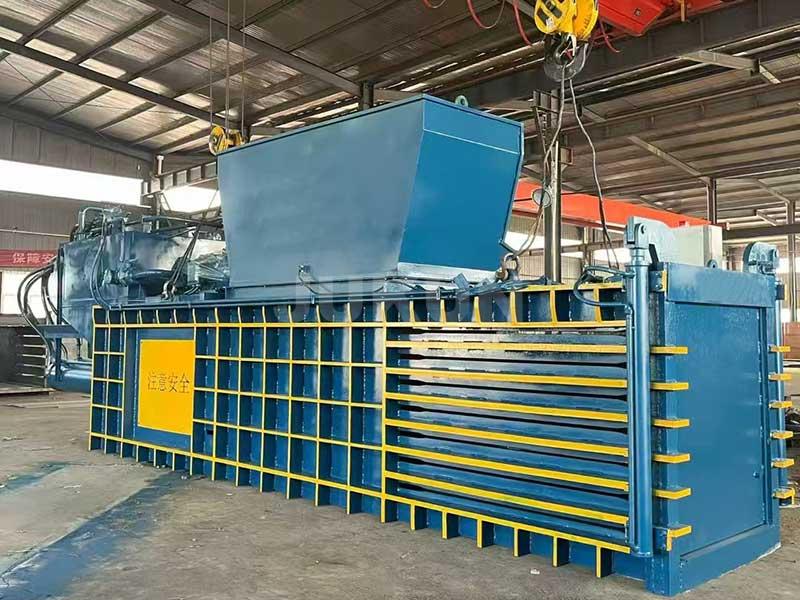
Understanding why these machines transform operations requires deeper exploration into their mechanics and real-world advantages. Several key aspects determine their impact across facilities.
What Is a Horizontal Baler and How Does It Work?
Struggling with overflowing cardboard at your loading dock? Our horizontal balers ingest materials constantly, eliminating stoppages while working.
A horizontal baler is a hydraulic recycling machine where materials enter a compression chamber horizontally. Pressure forces reach tons per square inch, compacting paper, plastics or metals automatically before tying the bale for transport.
Core Working Process
Understanding these steps clarifies efficiency:
| Stage | Action | Industrial Impact |
|---|---|---|
| Feeding | Material fed via conveyor or manual input | Uninterrupted workflow vs. vertical models |
| Compression | Horizontal hydraulic ram generates pressure | Achieves 4x higher density than manual packing |
| Tying | Automatic wires or straps secure bale | Reduces labor by 2 workers per shift |
| Ejection | Finished bale rolls out for storage | Clear workspace reduces accident risks |
The horizontal design eliminates constant operator attention. Unlike vertical counterparts, material flows continually through the chamber without reload breaks. Over my two decades at Jukun, I've seen warehouses processing eight tons of cardboard daily transform it into eighteen compact bales measuring 80x90x120 cm. This design thrives in high-volume environments because the hydraulic system works non-stop while your team focuses elsewhere. Customizations like auto-tiers or specialized rams adapt to unique material types without slowing throughput.
How Do Horizontal Balers Improve Recycling Efficiency and Reduce Operating Costs?
Seeing recyclables fill dumpsters despite value? Horizontal balers pay for themselves within eighteen months.
Horizontal balers boost efficiency by automating labor-intensive compression and producing transport-ready bales continuously. They reduce operating costs through 60% lower freight fees, 50% less storage space, and minimal labor requirements.
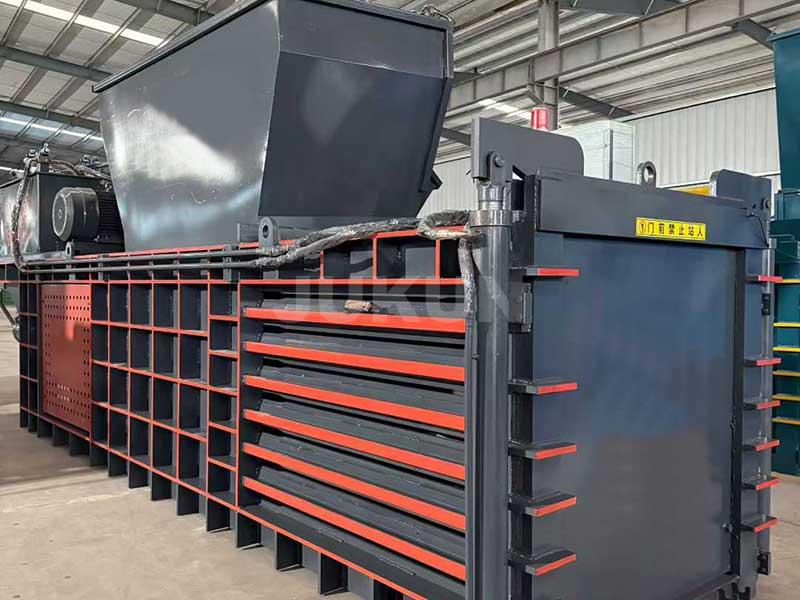
Financial and Operational Breakdown
Four key mechanisms drive savings:
| Cost Area | Traditional Handling | With Horizontal Baler |
|---|---|---|
| Transportation | Frequent half-empty trucks | Fewer fully-loaded trips |
| Storage | Bulky loose materials | Compact stackable bales |
| Labor | Manual stacking & loading | Automated ejection systems |
| Revenue | Low-grade mixed recyclables | Premium sorted bales |
The density difference alone creates striking savings. Baling old textiles increases weight-per-truckload by 400%, immediately lowering fuel and transport costs for Canadian distributors like Jacky. Automation also reduces workplace injuries - a bottling plant we supplied decreased waste-handling accidents by 90%. When downtime means lost revenue, horizontal models operate eight hours straight without maintenance pauses. Choose models with self-diagnosing hydraulic systems to preempt failures.
Which Industries Benefit Most from Horizontal Balers?
Dealing with mixed recyclables in profit-draining ways? These industries transform waste into revenue streams weekly.
Industries generating daily recyclable volumes benefit most: recycling plants, logistics hubs, manufacturing sites, supermarkets. Their continuous waste flow justifies the investment through faster processing and higher bale value.
Sector-Specific Applications
Optimizing requires understanding key users:
| Industry | Waste Streams | Key Baler Features |
|---|---|---|
| Logistics | Cardboard, plastic wrap | High-volume throughput (5+ tons/hr) |
| Manufacturing | Textile scraps, metal offcuts | Heavy-duty compression (300+ tons) |
| Supermarkets | Plastic packaging, OCC | Conveyor feed systems |
| Recycling Centers | Mixed materials | Customizable bale dimensions |
Distribution centers exemplify perfect use cases. Walmart DCs bundle cardboard into 500kg bales selling directly to paper mills. In recycling plants, balers handle metal shavings or PET bottles requiring special force settings I customize at Jukun. The tipping point arrives when daily waste exceeds two cubic meters - below this, semi-automatic vertical balers may suffice. Ensure compatibility by analyzing material friction levels; slippery plastic films need specialized compression plates.
How to Choose the Best Horizontal Baler for Your Recycling Business?
Overwhelmed by technical specifications? Match these seven points to your operations for maximum ROI.
Choose based on material types, daily volume requirements, available floor space, automation level, bale density needs, manufacturer certifications (CE/ISO), and post-purchase support.
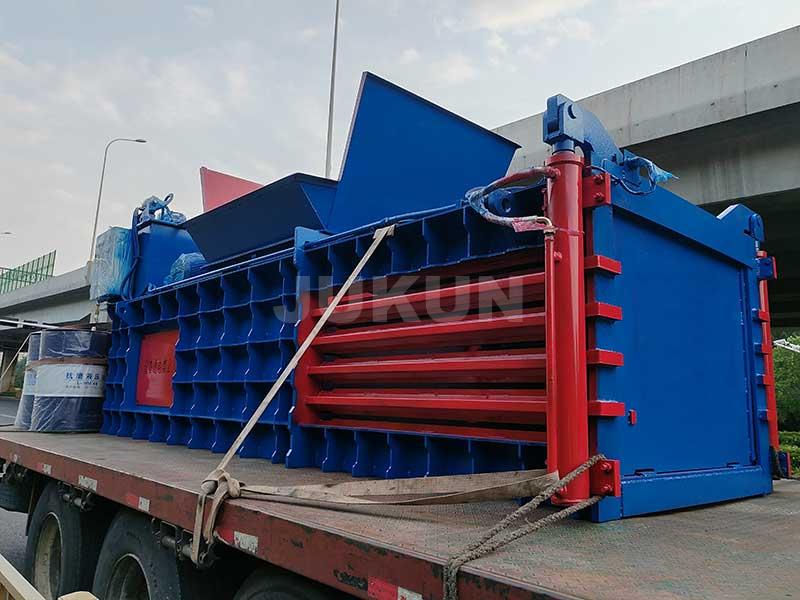
Decision Framework
Avoid costly mismatches with this matrix:
| Factor | Why It Matters | Red Flags to Avoid |
|---|---|---|
| Capacity | Underloading wastes investment | Machines requiring 24/7 operation for target volume |
| Hydraulic PSI | Insufficient pressure creates soft bales | Generic ratings unverified by third-party testing |
| Brand Reputation | Quality impacts lifespan | Manufacturers refusing factory visits |
| Tying Systems | Manual tying slows output | Non-standard wiring requiring proprietary replacements |
Capacity oversizing causes maintenance issues. A Toronto client saved $28,000 annually by selecting a 2-ton/hour baler instead of pushing a 5-ton model at partial capacity. Certificates demand verification - at Jukun, we provide live video verifications of CE testing to address global buyers’ forgery concerns. Remember to include electrical requirements; 220V vs 380V compatibility ensures seamless deployment. Finally, demand 24-hour technical support contracts to prevent production halts during critical seasons.
Conclusion
Horizontal balers drive waste management profits by maximizing recyclable values while cutting logistics costs dramatically. We implement measurable sustainability improvements daily with Jukun engineering excellence.