
Are you struggling to keep up with the growing volume of recyclable waste at your facility?
Horizontal waste balers are essential for large-scale recycling operations because they process high volumes continuously, produce dense bales that drastically cut transport costs, reduce manual labor through automation, and turn waste materials into profitable commodities for end markets.
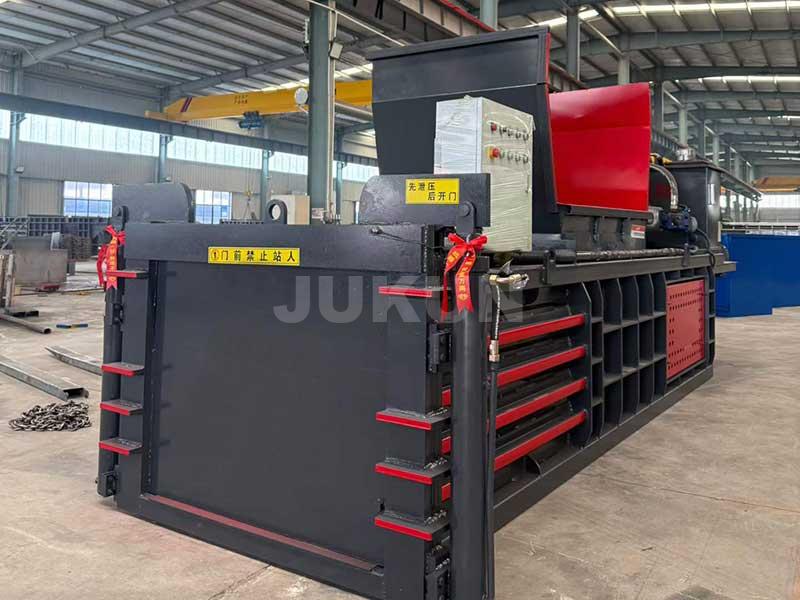
Large-scale recycling is a numbers game. The more material you process, the more pressure you feel to keep costs down and output up. I have visited facilities where loose waste piled up faster than they could handle it. It created safety hazards, slowed down operations, and ate into profits. A horizontal baler solves these problems by creating a smooth, continuous flow from waste intake to finished bales ready for sale.
What Makes Horizontal Waste Balers Ideal for High-Volume Recycling?
What specific features make horizontal balers the go-to choice for facilities processing dozens of tons of waste every day?
Horizontal balers are ideal for high-volume recycling because of their continuous feed capability, large compression chambers, high hydraulic pressure for dense bales, automated tying systems, and the ability to integrate with conveyors and sorting lines for seamless material flow.
Let me break down the specific features that make these machines work so well for large operations.
Continuous feed and non-stop operation
This is the biggest advantage. A horizontal baler keeps running as long as material is fed into it. You are not waiting for a bale to be tied and removed before starting the next cycle. For a facility processing 20 tons per day, this continuous operation means hours of extra productive time each week.
Large compression chambers
Horizontal balers have bigger chambers than vertical models. You can feed more material per cycle. This means faster processing and fewer cycles to reach your daily target. The large chamber also accommodates bulky items that would not fit in a vertical baler.
High hydraulic pressure
Horizontal balers are built with powerful hydraulic systems. The compression force often exceeds 150 tons. This pressure creates dense, heavy bales that mills want. Denser bales also mean more material per truck and lower transport costs.
Automated tying systems
Tying bales by hand is slow and dangerous. Horizontal balers have automatic systems that use wire or straps. The system operates without human intervention. The bale is tied, and the machine moves on to the next one without stopping.
Integration capabilities
Horizontal balers work seamlessly with conveyor systems, sorting lines, and shredders. This integration creates a smooth material flow. Waste moves from intake to sorting to baling without manual handling. This is how large facilities achieve efficiency at scale.
Consistent bale quality
The automated process produces uniform bales every time. This consistency matters when you sell to mills. They want bales that meet specifications. A horizontal baler delivers that consistency.
Industries That Benefit Most from Horizontal Waste Balers
Which industries get the most value out of horizontal waste balers in their daily operations?
The industries that benefit most include large recycling centers, municipal waste facilities, paper mills, plastic processing plants, distribution and logistics centers, manufacturing plants, and retail chains with high volumes of cardboard and plastic packaging waste.
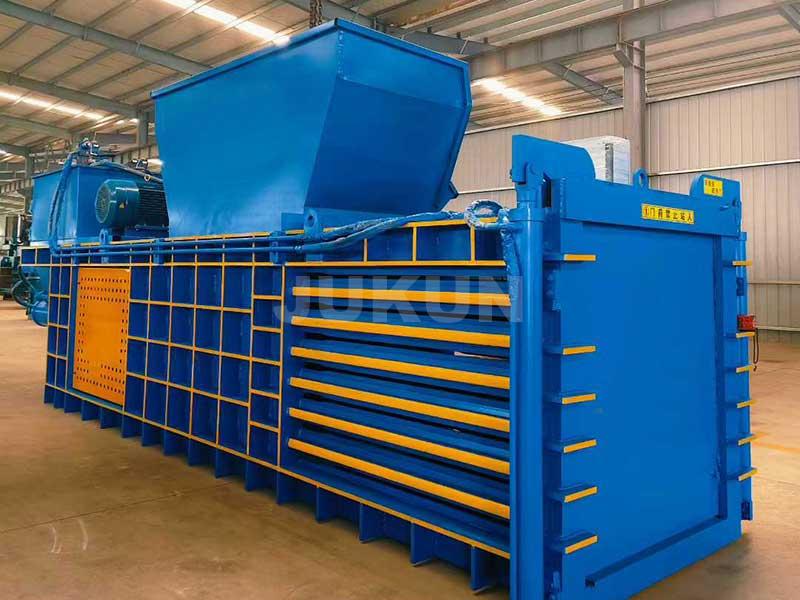
These industries share a common challenge: they generate large, consistent streams of recyclable waste. Horizontal balers are the solution.
Large recycling centers
These facilities take in waste from multiple sources. The material volume is high and the mix is diverse. Horizontal balers handle this variety while maintaining high output. They are the backbone of any large recycling center.
Municipal waste facilities
Cities generate massive amounts of recyclable waste. Horizontal balers help municipalities meet recycling targets. The dense bales are easier to store and transport to processing facilities.
Paper mills and plastic processing plants
These operations generate their own waste and also buy baled material. Horizontal balers help them process internal waste while producing bales that meet their own quality standards.
Distribution and logistics centers
These facilities deal with cardboard and plastic packaging. The waste volume is high and consistent. A horizontal baler turns this waste into a revenue stream instead of a cost.
Manufacturing plants
Factories generate a mix of waste materials. Horizontal balers handle this mix while freeing up floor space. The bales are easy to manage and ship.
Retail chains
Large retailers generate tons of cardboard from packaging and plastic from various products. Horizontal balers help them manage this waste cost-effectively.
Textile recycling operations
Fabric waste is bulky and hard to manage loose. Horizontal balers compress it into manageable bales that transport efficiently.
I have worked with clients in each of these industries. The ones who adopted horizontal balers consistently reported lower waste management costs and new revenue streams from selling bales.
How Horizontal Balers Improve Recycling Efficiency and Reduce Costs
How exactly do horizontal balers improve efficiency and cut costs in recycling operations?
Horizontal balers improve efficiency by automating the baling process, reducing labor needs, enabling faster throughput, and creating denser bales. They reduce costs through lower transport expenses, less storage space, and turning waste into sellable material, often achieving payback within 12 to 24 months.
Let me give you a detailed look at how the savings add up.
Labor savings
This is one of the most tangible benefits. A horizontal baler with automatic tying reduces the need for workers to monitor the machine constantly. One facility operator told me he went from three people managing waste to one person after installing a horizontal baler. He redeployed the other two to higher-value work. The labor savings alone covered half the machine payment.
Transport cost reduction
Loose waste is expensive to haul. The cost per ton of shipping loose cardboard is significantly higher than shipping baled cardboard. A truck full of loose cardboard carries about 2 tons. The same truck can carry 20 to 25 tons of baled cardboard. You do the math. Fewer trips mean lower fuel costs, lower emissions, and less wear on your vehicles.
Space savings
A horizontal baler reduces your waste footprint by up to 90%. This frees up valuable floor space for other activities. You can store bales outside if needed. The bales stack neatly and do not create a mess.
Revenue generation
This is the shift from cost to income. Loose waste is an expense. You pay to have it hauled away. Baled material is a commodity. You sell it to recyclers and processors. The difference can be dramatic. One client went from paying $20,000 per year for waste removal to earning $15,000 per year by selling bales. That is a $35,000 swing.
Faster throughput
Processing speed matters when you handle large volumes. Horizontal balers are faster than vertical models. The continuous operation and larger chambers mean you process more material in less time.
Reduced downtime
Horizontal balers are built for continuous operation. They have fewer moving parts that fail. When maintenance is needed, the design makes it easy to access key components. This minimizes downtime and keeps your operation running.
Key Factors to Consider Before Purchasing a Horizontal Waste Baler
What should you evaluate before making a significant investment in a horizontal waste baler for your facility?
Before purchasing a horizontal waste baler, you need to assess your daily waste volume, material types, available floor space, power supply, labor availability, and budget, while also verifying the supplier's quality control, certifications, warranty terms, and after-sales support to ensure a reliable long-term investment.
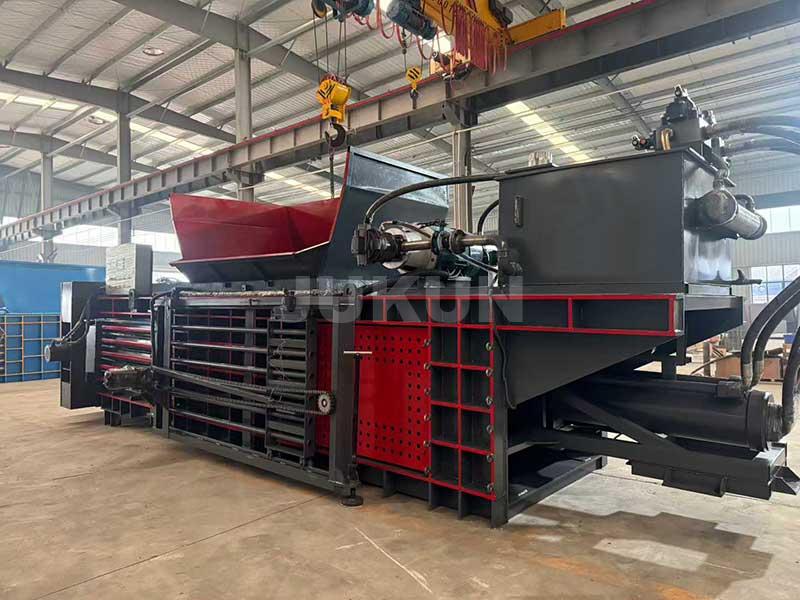
I have seen buyers rush into a purchase and regret it. Here is a thorough checklist to help you make the right decision.
Assess your waste volume accurately
Do not guess. Weigh your waste for at least a week. Get an accurate daily average. This determines the machine size you need. Undersized machines cause bottlenecks. Oversized machines waste capital.
Understand your material mix
Are you processing one material or many? Different materials require different baling configurations. Cardboard is straightforward. Mixed plastics may need a pre-crusher. Metal scrap requires higher pressure. Match the machine to your material mix.
Evaluate floor space and layout
Horizontal balers need more floor space than vertical ones. Measure your space carefully. Also consider the workflow. Do you have room for a conveyor? Where will finished bales be stored? Plan the entire layout before purchasing.
Check your power supply
Horizontal balers require significant electrical power. Most need three-phase power. Check your voltage and amperage. You may need to upgrade your electrical system. This adds to the total cost.
Consider labor availability
Automated balers require less labor. But they still need someone to operate and maintain them. Do you have skilled workers who can run the machine? If not, factor in training time and cost.
Set a realistic budget
The purchase price is not the only cost. Include shipping, installation, training, and ongoing maintenance in your budget. A cheaper machine may have higher operating costs. Look at the total cost of ownership.
Verify supplier quality
This is critical. Ask about steel thickness, weld quality, and hydraulic components. Request ISO and CE certification. Visit the factory if possible. Check the machine's build quality yourself.
Demand material certificates
Ask for certificates that show the steel used in the machine meets quality standards. This is a sign of a reliable supplier. Suppliers who cannot provide certificates may be cutting corners.
Check warranty and after-sales support
A three-year parts warranty is a good standard. Ask what is covered and what is not. Also ask about technical support availability. Can you reach them easily if you have a problem? Do they have a service agent in your country?
Read reviews and request references
Ask the supplier for contact details of previous customers. Call them and ask about their experience. Was the machine reliable? Was the delivery on time? Was support helpful? This is the most valuable information you can get.
Request a test run
If possible, send some of your material to the supplier and ask them to run it through the machine. This confirms the machine works with your specific waste type. If you are buying from overseas, request a video of the test.
Conclusion
Horizontal waste balers are essential for large-scale recycling because they enable continuous high-volume processing, significantly reduce costs, and turn waste into revenue for various industries.