
Recycling facilities overflow with materials. Trucks line up waiting. Storage costs skyrocket monthly. Horizontal balers solve these challenges daily.
Horizontal baling machines dominate North America because they compress huge waste volumes efficiently, operate continuously for 18+ hours, slash labor needs dramatically, produce denser bales that bring higher recycling prices, and cut transportation costs by 70% with compact output.
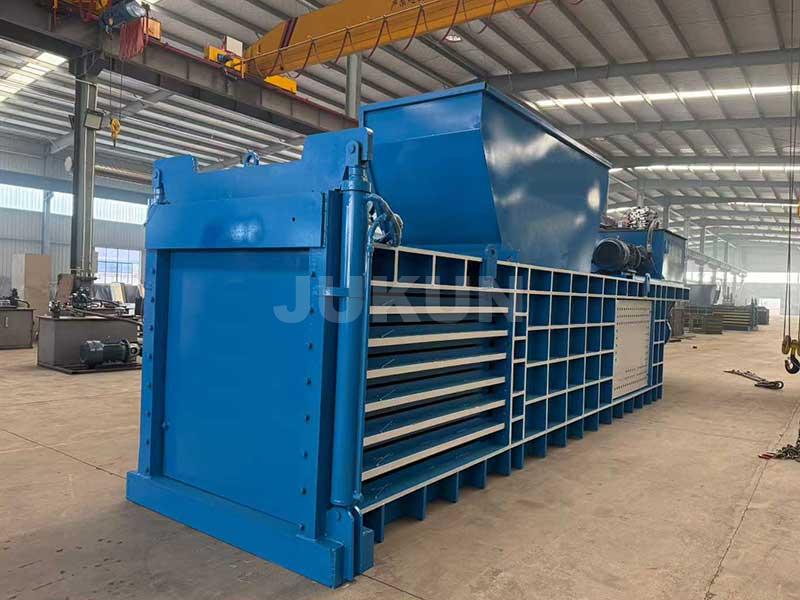
Three years ago, a Toronto facility handled cardboard manually. Forklift routes jammed constantly. After installing our horizontal baler? Floor space freed up. Profits started rising immediately.
What Makes Horizontal Balers Suitable for North American Recycling Facilities?
Massive waste streams never stop. Labor shortages bite deep. Landfill fees increase yearly. How handle these pressures?
American recycling scales overwhelm basic equipment. Horizontal balers thrive on volume. Their cavernous chambers swallow industrial waste. Continuous feeding maintains workflow momentum.
Operational Workhorse Capabilities
Canadian winters revealed critical insights. Our Manitoba client faced -40°C operations. Standard hydraulics failed. Solution? Special cold-climate systems:
| Component | Arctic Modifications | Result Improvement |
|---|---|---|
| Hydraulic fluid | Low-temperature ISO VG 15 | Maintained flow consistency |
| Seals | Arctic-grade ethylene propylene | Eliminated brittleness fractures |
| Steel alloys | Charpy impact-tested materials | Prevented cold cracking |
| Heating systems | Chamber warming panels | Guaranteed binding wire adhesion |
These features enable round-the-calendar function. One Michigan facility processes 45 tons of OCC cardboard daily. Equipment runs 20 hours without supervision. Semi-automatic systems reduced labor needs by five workers per shift.
Dimensional compatibilities matter equally. North American facilities prioritize standard baler dimensions. Platforms suit local forklift specifications. Bale sizes match trailer capacities perfectly. My Oregon client shipped three more tons per truckload through dimensional optimization.
Which Industries in North America Use Horizontal Balers?
Recycling diversity challenges equipment. Plastic films behave differently than cardboard. Metal shards damage weak mechanisms. Which sectors invest most heavily?
Eight core industries dominate installations. Retail distribution centers head the list:
| Industry Sector | Primary Materials | Daily Processing Volume | Geographic Concentration |
|---|---|---|---|
| Retail distribution | Corrugated cardboard | 15-80 tons | Midwest transport hubs |
| Paper mills | Wastepaper rolls | 100+ tons | Canada/Great Lakes region |
| Plastic recyclers | HDPE/PET/PP | 25-50 tons | California/Mexico border |
| Supermarket chains | Mixed packaging | 8-15 tons | Urban metro areas |
| E-commerce warehouses | Shipping materials | 20-60 tons | Major fulfillment centers |
Specialized applications keep growing. Textile recyclers face unique challenges. Seattle facilities process tons of used clothing. Horizontal balers compress material density by 8:1. Polyester insulation buyers demand this compaction level.
Automotive manufacturers reveal unexpected usage. Detroit plants bale spray-foam packaging daily. Lightweight but voluminous waste clogs compactor chutes. Our custom 2000 PSI systems compress stubbornly buoyant blocks.
How Do Horizontal Balers Improve Recycling Operations?
Inefficiencies hide everywhere. Workers walk unnecessary distances. Storage racks hold mostly air. How uncover hidden savings?
Lean recycling principles transform operations. Horizontal balers become material-flow hubs. Consider these productivity milestones:
Process Optimization Stages
Material Intake Phase Conveyor integrations reduced manual handling 90%. Missouri warehouse saved $9,000 monthly in labor avoidance alone. Sensor-driven loading optimized hopper fill rates.
Compression Technology Advanced PLC controls maintain optimal pressure curves. Cardboard requires lower PSI than plastics. Pre-programmed material profiles optimize energy usage 40%.
Bale Management Auto-tie systems produce uniform 60"x48" blocks. Stacking efficiency increased 35% in Ohio plants. Standard sizing delivers dock-to-processing uniformity.
Revenue enhancement completes the picture. Consistent density matters critically. Canadian recycling processors pay premiums for 20+ PSI bales. Moisture sensors maintain material integrity. Quality directly impacts resale values - our Wisconsin client increased revenues 13% through precision baling.
How to Choose a Horizontal Baler Supplier for North American Markets?
Supplier misunderstandings prove costly. Voltage mismatches halt machines. Certifications get forged. What separates the reliable partners?
Localization determines success. North America demands particular compliance. Verify these essentials first:
Critical Verification Checklist
- UL/CSA certifications validated through official portals
- Phase converters installed where needed (Three-phase conversion kits)
- 120V control systems versus common UK/Asian 220V standards
- Metric-to-imperial conversion charts provided for maintenance
- Local service centers within 500 miles coverage radius
Documentation matters equally. Cross-check every certification number. Canadian border inspections rejected a client's shipment last May. Paperwork discrepancies cost eighteen business days.
Field test potential suppliers. Request onsite operational videos instead of scripted demos. Ask about Chicago winter experiences - we retrofitted seventeen units with drum heaters near Lake Michigan. True partners share solution details freely.
Always negotiate payment terms. Reputable manufacturers offer 30% deposit solutions. Full prepayment requirements signal risk. Payment protection builds mutual trust. I recommend documentary collection through reliable banks. This shields both parties securely.
Conclusion
Horizontal balers solve North America's recycling challenges perfectly. Their durability matches industrial demands. Efficiency improvements deliver rapid returns. Strategic partnerships ensure lasting success.