
Cluttered waste costs money. Recycling inefficiency shrinks profits. Baler machines resolve both permanently.
Baler machines crush recyclables into compact blocks using hydraulic force. They compress cardboard, metals, plastics, or textiles into dense, transportable bales—reducing volume 90%, cutting waste costs up to 70%, turning trash into revenue sources.

Transform your waste stream.
What Is a Baler Machine and How Does It Work in Industrial Recycling Operations?
Bulky waste slows workflows. Manual compression wastes labor. Hydraulic systems solve both powerfully.
Workers feed materials into steel chambers. Hydraulic rams apply 20-500 tons of pressure. The waste becomes dense blocks tied by steel wire. Completed bales get stacked for transport to recycling centers.
Physics drives savings:
Hydraulic compression science
Industry standards explained:
| Stage | Force Applied | Duration | Density Achieved | Failure Point |
|---|---|---|---|---|
| Pre-pressing | 50-90 tons | 20-40 sec | 120 kg/m³ | Misaligned plates |
| Main Compression | 100-500 tons | 30-100 sec | 380+ kg/m³ | Oil temperature >70°C |
| Tying Phase | Locking force kept | 10-15 sec | Binding integrity | Weak wire tension |
| Ejection | 5-10 tons pressure | <8 sec | Clear path | Sensor misalignment |
Pressure equals profit. Jukun balers maintain exact force control ensuring 95% bale uniformity—Quebec recycler earns $20/ton premium. Safety focus: light curtains halt operation if users get too close. Critical maintenance: replace hydraulic oil every 1,000 hours preventing pump failures.
What Are the Different Types of Baler Machines Used in Waste Recycling Industry?
Mismatched machines underperform. Limited designs restrict growth. Balanced selection prevents both.
Vertical balers handle 0.5-5 tons/day—horizontal models manage 5-50 tons—automatic systems replace labor—two-ram balers crush metals—closed-end balers maximize density while open-top designs allow fast loading.

Machine specialists defined:
Type selection matrix
Operation-focused guidelines:
| Type | Capacity | Key Applications | Cost Efficiency | Jukun Model Range |
|---|---|---|---|---|
| Vertical | Up to 5 tons/day | Retail stores | <2 year payback | VP Series |
| Horizontal | 10-50 tons/day | Recycling plants | Best long-term ROI | HP Series |
| Automatic | 18+ tons/day | Logistics hubs | 70% labor savings | AutoBale Pro |
| Two-Ram | 30+ tons/day | Scrap yards | Heavy-metal processing | DualForce Line |
| Closed-End | Max density | High-value recyclables | Transport optimization | Densifier Series |
Automation pays dividends. Our AutoBale Pro reduces labor needs 80% for facilities exceeding 15 tons/day. Size matters: measure clearance height and infeed space before purchase. Upgrade path: modular hydraulic packs enable capacity increases avoiding full replacements. Vancouver warehouse saved 40% by choosing expandable HP70X.
Which Industries Use Baler Machines for Waste Management and Recycling Efficiency?
Dedicated solutions beat compromises. Industry-tailored designs create dominance.
Recycling plants process 100+ tons daily—manufacturers save 60% waste costs—e-commerce hubs cut containers from 12 to 3 weekly—textile mills reclaim 80% storage space—retail chains earn rebates on compacted waste.
Leaders profiled:
Adoption benchmarks
Profit-focused analysis:
| Industry | Waste Stream | Primary Baler Type | Annual Savings | Case Study Proof |
|---|---|---|---|---|
| Recycling Plants | Mixed recyclables | Horizontal | $120k+ transport cut | Winnipeg facility |
| Manufacturing | Packaging waste | Automatic | $58k labor reduction | Ontario auto plant |
| E-commerce | Cardboard | Auto-tie horizontal | 12 → 3 shipments | Seattle DC |
| Textile Mills | Fabric scraps | High-pressure balers | 80% space recovery | Montreal factory |
| Retail Chains | Displays/cartons | Vertical | $18k rebate income | Grocery chain QC |
Space savings convert revenue. Toronto retailer transformed 200m² waste area into sales floor earning $300k/year. Rebate guidance: compressed OCC cardboard trades at $45-95/ton—plastic bottles fetch $120-150/ton. Certification edge: our recycling partners hold WRAP certifications for scrap exports.
How to Choose the Right Baler Machine for Your Business, Material Type, and Capacity?
Incorrect sizing causes breakdowns. Poor matching wastes investment. Strategic decisions prevent both.
Measure daily waste volume precisely—test material resistance—demand pressure validation reports—require ≥10-year parts guarantees—verify CE/ISO at source—calculate footprint constraints—confirm 48-hour downtime responses for factories.
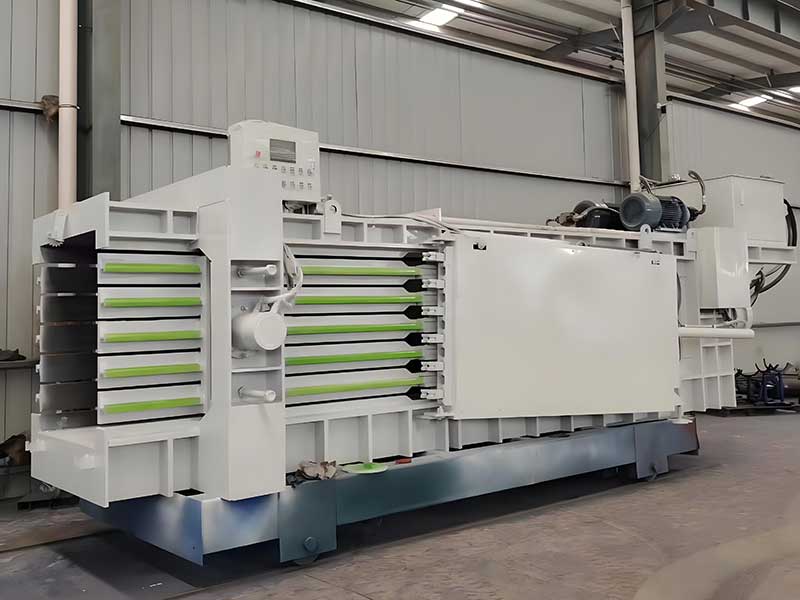
Procurement protection:
Specification matching system
Cost-avoidance checklist:
| Factor | Verification Method | Acceptance Standard | Risk Penalty | Jukun Assurance |
|---|---|---|---|---|
| Material Type | Crush resistance test | Hydraulic force ≥3X resistance | Premature wear | On-site trials |
| Daily Volume | 30-day waste logs | Machine capacity ≥130% needs | Downtime losses | Installation audits |
| Space Limits | Blueprint review | Minimum clearance margins | Structural damage | 3D modeling |
| Certification | Database validation | Physical CE/ISO markings | $50k customs reject | Factory access |
| Support | SLA documentation | 4-hour remote troubleshooting | $900/hour downtime | Contractual penalties |
Pressure certification matters. Real sensor readouts prove claims—Calgary buyer exposed 30% power gap saving crisis. Future-proofing: modular controllers handle AI upgrades without hardware changes. Essential clause: performance bonds covering bale density protect your purchase. Lead time requirement: max 72-hour spare delivery prevents operation halts.
Conclusion
Baler machines revolutionize waste handling—delivering unmatched cost control, space optimization, and recyclable value impossible through outdated methods.