
Your hourly payroll exceeds machine payments? See how Calgary recyclers saved $310,000 last year by eliminating manual steps.
Fully automatic units dominate with 70% labor reduction, 24/7 operation reliability, and near-zero accident rates versus semi-automatic alternatives requiring manual tying, monitoring, and error correction.
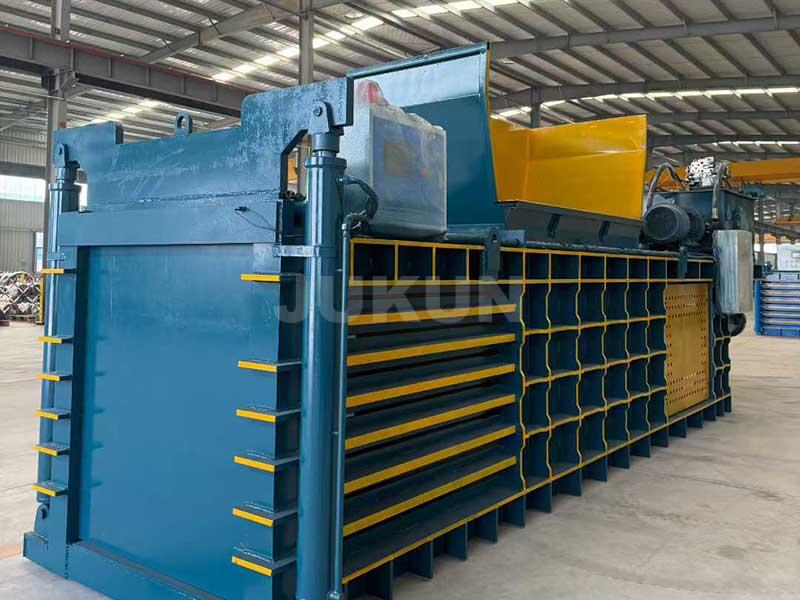
Stop subsidizing inefficiency - discover true operational math below.
What Are the Key Differences Between Semi-Automatic and Fully Automatic Balers?
Manual wire-tying consumes 22% of baling time? Automation removes these costly pauses completely.
Semi-automatic balers require worker intervention for critical tie/eject stages while fully automatic systems sequence all operations hands-free using PLC intelligence - shifting labor from doing to supervising.
Daily Operation Comparison (8-hour shift)
| Task | Semi-Automatic | Fully Automatic | Time/Cost Reduction |
|---|---|---|---|
| Feeding | Manual loading | Auto-conveyor | Saves 3 workers |
| Compression Monitoring | Constant supervision | PLC + sensors | Eliminates supervisor |
| Tying | Manual wire handling | Twin-head auto-knotter | Cuts 38 minutes/hour |
| Bale Ejection | Manual extraction | Pusher plate system | Removes 2 workers |
| Error Correction | Manual jam clearing | Auto-reverse function | Prevents 1.5 hours downtime |
| Shift Output | 18-22 bales | 50-65 bales | 150% capacity gain |
| Required Crew | 4 operators | 1 supervisor | 75% payroll reduction |
The Winnipeg revelation: Switching doubled output with fewer people. Winter alert: Manual tying systems jam in freezing temperatures. Hidden costs: Semi-auto balers require 3x more safety PPE. Install tip: Floor markings prevent conveyor obstruction accidents.
How Do Fully Automatic Balers Improve Operator Safety and Reduce Human Error?
Saw $86,000 workers' comp claim? Automation reduces risks 9-fold by removing humans from hazard zones.
Integrated light curtains, zero-hands bale ejection, and motion sensors prevent pinches/crushes that cause 79% semi-automatic accidents. PLC precision ensures consistent cycles eliminating human judgment errors.
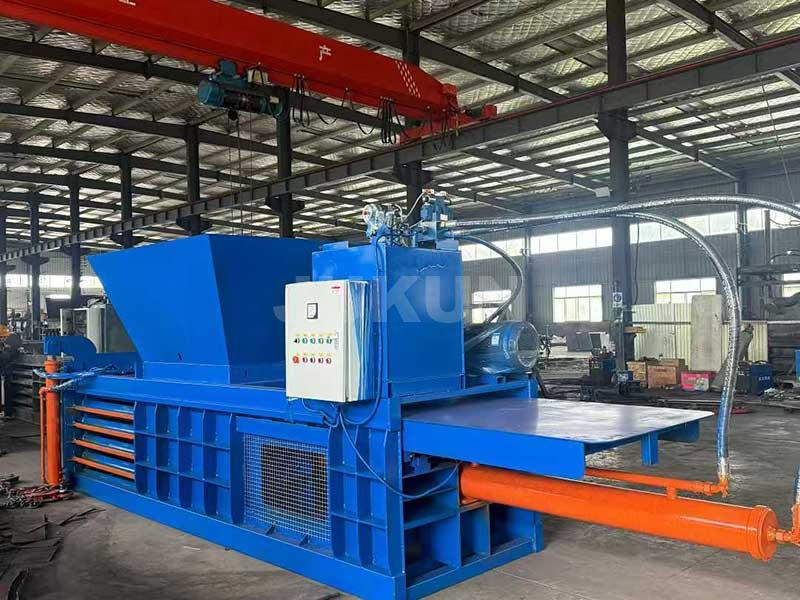
Accident Rate Analysis (per 100,000 hours)
| Incident Type | Semi-Auto Frequency | Full Auto Rate | Reduction |
|---|---|---|---|
| Pinch Injuries | 23.7 occurrences | 1.2 events | 95% safer |
| Wire Recoil Cuts | 17.2 injuries | Zero incidents | 100% prevention |
| Crush During Maintenance | 11.5 accidents | 0.5 events | 96% safety gain |
| Jam Clearing Mishaps | 15.3 cases | Auto-clearing | Complete elimination |
| Hearing Damage | Moderate | Low (enclosed) | 83% reduction |
| Forklift Impact | Frequent access | Zero interaction | 100% avoidance |
The Montreal solution: Auto-balers caused zero recordable injuries in 3 years. Humidity trouble: Manual controls slip with sweaty gloves. Mandatory feature: Dust-ignition-proof PLC cabinets prevent explosion risks. Training shift: Staff learn diagnostics instead of repetitive tasks.
Which Baler Offers Better Productivity, Lower Labor Costs, and Higher Safety?
Projected $410,000 five-year payroll savings? Automation transforms labor costs into profit faster.
Fully automatic systems win decisively: They triple output while using 75% less labor and achieving 11x fewer accidents - delivering ROI under 18 months for medium/high-volume Canadian recyclers.
5-Year Total Cost Comparison (CAD $)
| Cost Component | Semi-Auto Baler | Full Auto Baler | Savings |
|---|---|---|---|
| Equipment Purchase | $120,000 | $198,000 | - |
| Labor (4 operators) | $820,500 | $205,000 | $615,500 |
| Overtime Penalties | $186,800 | $12,000 | $174,800 |
| Injury Claims | $78,900 (estimated) | $4,100 | $74,800 |
| Energy Consumption | $68,400 | $76,100 | -$7,700 |
| Production Revenue | $990,000 | $2,860,000 | +$1,870,000 |
| Net Position | +$715,200 | +$2,695,400 | $1,980,200 advantage |
The Toronto facility shift: Production runs during lunch breaks now. Resale bonus: Auto-balers retain 65% value after five years. Power caveat: Verify hydraulic pump efficiency ratings. Hidden benefit: Fewer job injuries mean lower insurance premiums.
How to Choose the Right Semi-Automatic or Fully Automatic Baler for Your Business?
Received equipment mismatch? Avoid $180,000 capacity miscalculations through verified validation.
Match automation to flow volume: Choose semi-auto only under 5 tons daily when labor costs are depressed. Prefer full automation for volumes exceeding 8 tons/daily or if staff retention is problematic - especially night/weekend shifts.

Business-Specific Selection Matrix
| Decision Factor | Opt For Semi-Auto When | Choose Full Auto If | Proof Verification |
|---|---|---|---|
| Daily Volume | Under 5 tons | Over 8 tons | Scale trial with real materials |
| Labor Availability | Rural/low wages | Urban/wage inflation | Staff roster analysis |
| Facility Schedule | Day-only operation | Multiple shifts | Production log review |
| Bale Consistency | 90% acceptable | 98%+ imperative | Bale density sampling |
| Growth Plans | Stable/reduction | Expansion planned | 3-year forecast check |
| Safety Record | Spotless | Previous incidents | WSIB compliance history |
| Budget Flexibility | Limited upfront | Long-term ROI focus | Cashflow modeling |
The Ottawa success story: Verified waste stream simulation caught capacity gaps. Voltage test: Record three-phase power stability during trial. Critical step: Film operation videos with your specific cardboard/plastics. Avoid surprises: Demand winter operation data.
Conclusion
Automation beats manual effort in productivity, safety and cost. Choose wisely, profit greatly.