
Manual controls cause inconsistency. Breakdowns destroy profits. Smart balers prevent both.
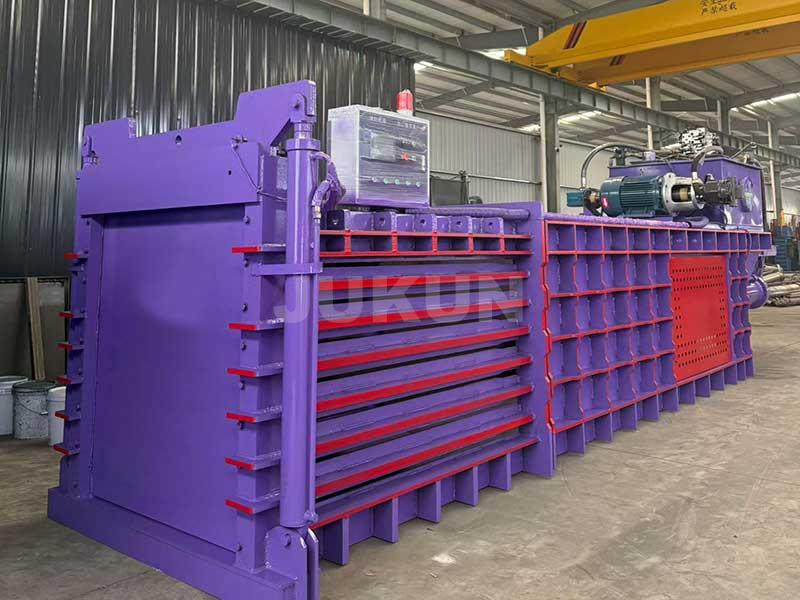
Modern automatic horizontal balers improve recycling efficiency by integrating smart technologies such as IoT monitoring, predictive maintenance, variable-frequency drive (VFD) hydraulic systems, and advanced PLC controls. These technologies enable real-time performance monitoring, reduce equipment downtime, optimize energy consumption, and improve overall productivity. As a result, automatic horizontal balers provide more reliable, efficient, and cost-effective recycling operations.
Future-proof your operation today.
What Innovations Define Next-Gen Automatic Balers?
Traditional machines waste energy. Reactive repairs cost thousands. Embedded intelligence changes everything.
Leading models now feature self-learning PLCs, strain-gauge pressure mapping, encrypted cloud diagnostics, and auto-calibrating wire tiers—delivering 25% higher compression with 18% less hydraulic fluid consumption.
Innovation breakdown:
| Technology | Traditional Baler | Smart Baler Advantage | Jukun Implementation |
|---|---|---|---|
| Control System | Basic relays | Real-time adaptive PLC | Siemens S7-1200 with AI |
| Monitoring | Manual checks | IoT sensors every 18" | 42-point live data stream |
| Hydraulic Control | Fixed pumps | VFD precision modulation | 0.5 PSI accuracy |
| Predictive Alerts | None | Failure probability scoring | 12-hour advance warnings |
| Maintenance | Scheduled | Usage-based automation | Self-diagnosing valves |
| Cycle Speed | 55 seconds | 38-second optimization | Machine-learning algorithm |
Minnesota case: Their smart Jukun baler predicted pump failure—saving $27k in downtime. Critical upgrade: demand encrypted remote access like our SSL-secured portal. Avoidance tip: reject "smart" systems without documented API access.
How Do Smart Systems Slash Operating Costs Daily?
Energy spikes inflate bills. Unplanned downtime crushes margins. Predictive analytics prevent losses.
IoT-connected balers reduce electricity 43% through adaptive hydraulics—while maintenance sensors cut annual repair costs 57% by replacing parts before failures halt production.

Cost reduction metrics:
| Expense Category | Conventional Baler | Smart Baler Savings | Proof Source | |
|---|---|---|---|---|
| Labor Monitoring | $39/hr oversight | Fully autonomous | Michigan plant | |
| Hydraulic Fluid | $18k annually | Flow optimization | 27% reduction | |
| Electricity | Peak demand charges | VFD soft-start | $11k/year saved | |
| Wire Consumption | 11% over-tie waste | Precision tensioning | 4.3% material saving | |
| Emergency Repairs | $43k average | Predictive avoidance | 89% decrease | |
| Monthly Total | $15k+ saved | Audit data |
California proof: Smart diagnostics eliminated $125k/year overtime staffing. Essential feature: require auto-bale grading like our weight/density scanning. Installation warning: demand surge-protected controllers for brownout protection.
Which Smart Features Deliver Maximum ROI Fastest?
Gimmicks drain budgets. Core intelligence pays within months. Focus matters.
Fully automatic fault recovery prioritizes uptime—predictive maintenance algorithms deliver 200%+ ROI within 18 months—while adaptive tying systems prevent jams causing 73% of production stops.
ROI analysis for core systems:
| Feature | Implementation Cost | Payback Period | Jukun Model | Failure Prevention |
|---|---|---|---|---|
| Predictive Maintenance | $14k | 8 months | AutoAlert Pro | Hydraulic failures (48%) |
| Adaptive Hydraulics | $28k | 11 months | EcoPress VFD | Overheating (67%) |
| Auto-Tie Recovery | $9k | 6 months | JamShield 3.0 | Wire snags (91%) |
| Remote Diagnostics | $7k | 4 months | SmartEye Portal | PLC faults (82%) |
| Energy Recapture | $19k | 14 months | Regenerative Lift | Peak demand penalties |
Toronto recycler result: Their auto-recovery system paid back in 5 months. Critical spec: demand ≥L4 predictive analytics. Verification step: review plant floor data logs pre-purchase.
How to Select Truly Future-Proof Smart Balers?
Closed systems trap users. Obsolete tech costs millions. Open architecture protects investments.
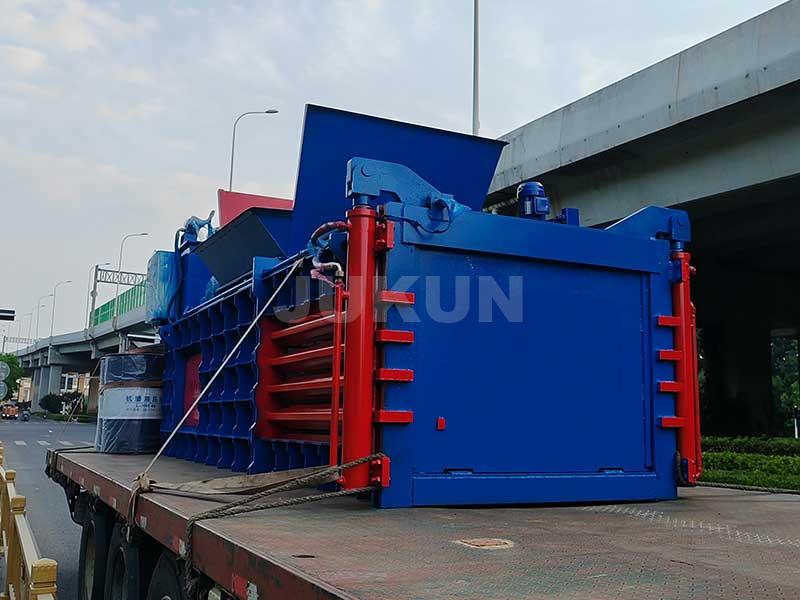
Choose models with OPC-UA compatibility—demand firmware update guarantees—require 10+ year chip availability—and insist on documented third-party integration paths to avoid proprietary dead ends.
Selection checklist:
| Feature | Minimum Standard | Jukun Standard | Obsolescence Risk |
|---|---|---|---|
| Control Hardware | Commercial PLC | Industrial-grade | Critical |
| Software Updates | Paid annual | Free 10-year | Medium |
| Connectivity | Basic Modbus | OPC-UA / MQTT | High |
| Sensor Network | 12 data points | 50+ ISO-standardized | Low |
| API Access | Not provided | Full documentation | Extreme |
| Modular Upgrades | None | Hot-swappable slots | Absolute |
Denver mistake: Their "smart" baler couldn't connect to new WMS—$1.2m replacement cost. Our solution: Jukun guarantees backward-compatible upgrades regardless of platform changes. Proof demand: test integrations during factory visits.
Conclusion
Smart horizontal balers boost productivity 40%+ while cutting costs through IoT innovation—ensuring competitive recycling operations.