
Choosing the wrong baler can increase operating costs. Loose cardboard takes up space. Trucks leave half full. You lose money on every load. I can help you avoid common buying mistakes.
Choose a horizontal waste paper baler by matching daily volume, bale target, and labor plan. Use semi-automatic for medium output. Use fully automatic for high output. Confirm the bale spec from your paper mill before you buy.
 I have worked with recycling equipment for many years as part of the Jukun technical team. I have seen buyers make costly mistakes. I have also seen careful buyers build strong businesses.
Which Type of Horizontal Baler Is Best for Waste Paper and Cardboard?
Waste paper is light. Loose cardboard takes up space. A weak baler makes loose bales. The machine should match your daily throughput and material supply.
The right type depends on volume and automation. A semi-automatic horizontal baler suits medium volume. A fully automatic horizontal baler suits large, continuous plants. A vertical baler may work for small, irregular supply.

Semi-Automatic Horizontal Balers for Waste Paper
A semi-automatic horizontal baler compresses material with hydraulic power. Depending on the configuration, the operator typically handles the tying step. This setup works well for medium daily volume. It costs less than a fully automatic line. It is simple to run and easy to maintain.
Consider an illustrative example. A medium-volume packaging plant used a small vertical baler. Workers spent too much time tying bales. The bales were light. Trucks left half full. The owner moved to a semi-automatic horizontal baler. The bales became denser. Loading became faster. The change could reduce handling and transportation costs, depending on the actual bale specs and operating conditions.
You should think about your material type. OCC cardboard is thick. Mixed paper is thin. Newsprint is light. Each material compresses in a different way. A machine that works well for OCC may not work well for mixed paper. You should ask the factory to test your real material. Compare bale weight and density. Then you can decide with facts.
You should also think about tying. Manual tying needs more labor. Automatic tying saves time. The right type depends on your labor cost and volume. Do not buy the biggest machine. Buy the machine that fits your real daily flow.
Fully Automatic Horizontal Balers for Waste Paper
A fully automatic horizontal baler can integrate automatic feeding, compression, bale-length control, wire tying, and bale discharge, depending on its configuration. Before purchasing, confirm which functions are included in the quoted machine and which are optional.
This setup works best for large plants. It needs a steady supply of paper and cardboard. It costs more at the start. But it can lower labor cost per ton. A fully automatic line needs more space. It needs stable power. It needs a bigger budget. It works best when paper arrives all day. You should not buy automation if your material supply is irregular.
Open-End vs. Closed-End Horizontal Balers
You should understand the two main chamber designs. This is different from the automation choice. It is also different from the vertical vs. horizontal choice.
A closed-end horizontal baler uses a chamber with a door. The door closes during compression. The operator usually ties the bale by hand. This design works well for medium volume and batch processing.
An open-end horizontal baler uses a continuous chamber. It is sometimes called a channel baler. The ram pushes material through the chamber. It often works with automatic tying. This design suits large volume and steady feed.
| Baler Design | Main Features | Suitable Applications |
|---|---|---|
| Closed-End Horizontal Baler | Closed chamber, usually manual tying | Medium-volume batch processing |
| Open-End / Channel Baler | Continuous compression, often automatic tying | Large-volume recycling plants |
Some factories use different names for these designs. You should confirm the chamber type, the tying method, and the discharge method with the supplier. Do not rely only on the product name.
When Should You Consider a Vertical Baler?
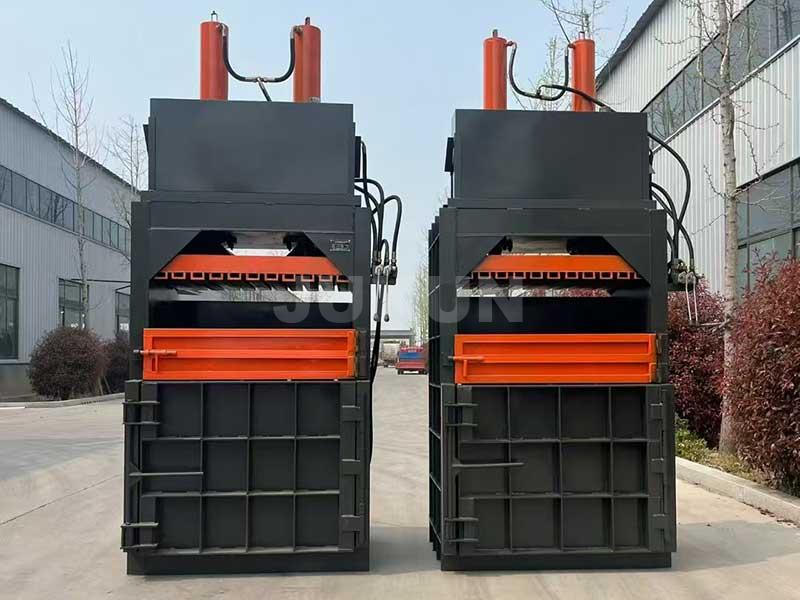
A vertical baler may be the better choice for small operations. If your daily volume is low, a horizontal baler may be too much machine. A vertical baler costs less. It takes less floor space. It works well for small shops and warehouses with irregular supply.
| Machine Type | Main Advantage | Suitable Applications |
|---|---|---|
| Horizontal Baler | Higher throughput, conveyor integration | Large recycling operations |
| Vertical Baler | Smaller footprint, lower investment | Small shops and warehouses |
Which Waste Paper Materials Can a Horizontal Baler Process?
Different paper grades behave in different ways. Your machine choice should reflect the material you handle most often.
| Material Type | Main Characteristics | Selection Considerations |
|---|---|---|
| OCC Cardboard | Corrugated cartons and boxes | Feed opening and bale dimensions |
| Mixed Paper | Different paper grades mixed together | Material consistency and bale specs |
| Newspaper | Lightweight paper | Feeding stability and bale density |
| Shredded Paper | Small loose paper particles | Hopper and feeding system |
This table is a selection guide. It does not mean one material can only use one machine type. The final model should be confirmed by a real material test.
How Does a Horizontal Waste Paper Baler Work?
A horizontal baler uses hydraulic force. It presses loose paper into a dense block. The block is then tied with wire. The finished bale is easy to store and ship.
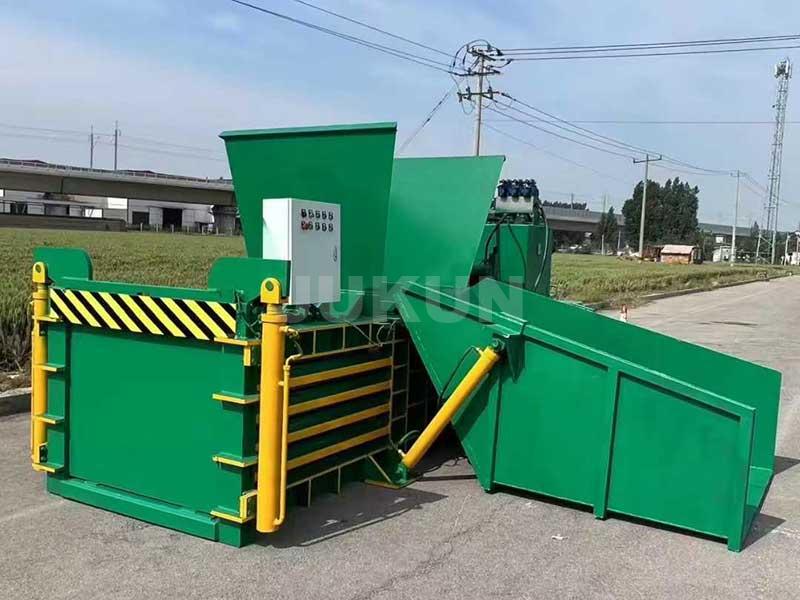
A horizontal waste paper baler works in five steps: feeding, hydraulic compression, bale formation, wire tying, and bale discharge. The hydraulic ram compresses material inside the baling chamber. Depending on the design, the material is compacted against a closed chamber or within a continuous channel.
The Five-Step Baling Process
Step one is feeding. Loose paper enters the chamber. You can load by hand or by conveyor. Step two is compression. The hydraulic pump sends oil to the cylinder. The ram moves forward. It compresses the paper inside the chamber.
Step three is bale formation. The cycle repeats. The bale grows longer. Step four is tying. Wire wraps around the bale. Step five is discharge. The finished bale leaves the machine.
When you evaluate a horizontal baler, look at the loaded cycle time, rated compression force, and chamber dimensions together. These specs affect production performance. But actual throughput must also be checked by a material test. A short cycle time alone does not guarantee high output.
Key Components and Safety Features
The hydraulic system is the heart of the machine. When you evaluate it, check the pump and valve brands. Check the cylinder specifications. Check the working pressure. Check the oil cooling system. Check the filtration system. Ask the manufacturer how the machine performs during extended operation. Ask what maintenance is required. A good system is built for continuous duty. It should not overheat under normal load.
The control system matters too. A PLC control manages the cycle. It can link to a conveyor. It can run automatic tying. It reduces operator error. You should ask if the PLC is included or optional.
Safety features are not optional. Check for emergency stop buttons. Check for guards on moving parts. Check for safety interlocks on the door. These features protect your workers. They also protect your business from accidents.
How to Calculate the Required Capacity of a Waste Paper Baler
A small baler slows your line. A huge baler wastes cash. You need real numbers. You should not guess.
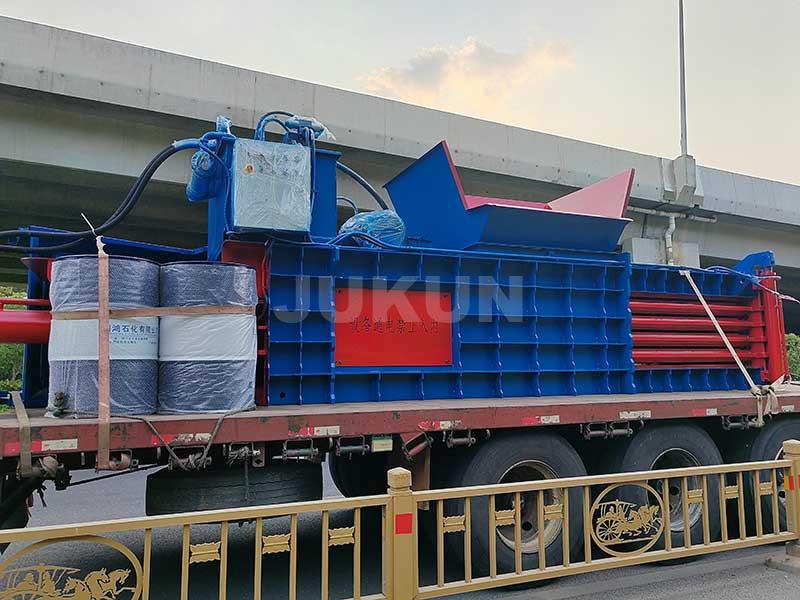
Calculate capacity by hourly throughput, not bale weight alone. Divide daily tons by working hours. Add a utilization factor for breaks and downtime. Confirm rated tons per hour with the factory before you buy.
Calculate Your Daily and Hourly Volume
Start by tracking your material for one week. Weigh the paper each day. Record the daily total. Record your working hours. Record any major stops. These figures will help you plan.
Here is a full example. A facility processes 20 tons of cardboard per day. The plant runs 10 hours per day. The average required throughput is 2 tons per hour. But your line will stop. Workers take breaks. Trucks arrive late. You should add a utilization factor. Assume 80% effective working time. Divide 2 by 0.80. The result is 2.5 tons per hour. You should look for a machine rated at or above this level. Then you should test with your real material.
The 80% figure is a planning assumption. It is not a universal standard. You should adjust it to your site. The assumed rate should reflect your actual schedule, material supply, maintenance needs, and expected downtime.
Understand Rated Capacity vs. Actual Throughput
The rated capacity of a waste paper baler is not always the same as its actual processing output. Throughput depends on the material grade, bulk density, moisture content, feeding method, bale size, and machine operating cycle.
Cycle time is one input. But a shorter cycle does not automatically mean higher material throughput. Actual hourly output also depends on the weight of each charge, feeding speed, bale length, tying time, and discharge process.
For example, loose OCC cardboard, mixed paper, and shredded paper may perform differently on the same machine. Their actual processing rates should be tested separately. Do not use one general capacity figure for all materials.
Before purchasing, ask the manufacturer to test your actual material. Request the hourly throughput, finished bale weight, bale dimensions, and test operating conditions. This gives you a more reliable basis for comparing different baler models.
| Daily Paper Volume | Working Hours | Preliminary Rated Capacity at 80% Utilization |
|---|---|---|
| 8 tons per day | 8 hours | 1.25 tons per hour |
| 12 tons per day | 8 hours | 1.875 tons per hour |
| 20 tons per day | 10 hours | 2.5 tons per hour |
These figures are planning estimates. Actual machine capacity should be checked with waste paper tests under your own conditions.
How to Calculate Operating Costs and Payback Period
Machine price is only one part of the cost. Labor, power, wire, and downtime add up. You need to see the full picture.
Operating cost per ton equals total operating costs divided by actual tons processed. Total costs include labor, electricity, wire, maintenance, consumables, and downtime. The simple payback period shows how long extra savings take to recover the extra investment.
What Labor Data Should You Collect Before Comparing Balers?
You should count the workers on each shift. You should count the minutes lost on tying. You should count the bales per hour. These numbers let you compare machines on the same basis.
| Cost Factor | What to Measure | Why It Matters |
|---|---|---|
| Labor | Workers per shift | Determines staffing costs |
| Tying Time | Minutes spent per bale | Shows manual labor requirements |
| Electricity | kWh per operating hour | Measures energy consumption |
| Maintenance | Annual service expenses | Estimates maintenance costs |
You should separate daily operating cost from total cost of ownership. Daily cost covers labor, power, wire, and allocated maintenance. Total cost covers purchase price, installation, financing, and depreciation. Compare both before you choose.
Estimate Your Cost per Ton and Payback Period
You can use a simple formula. Add labor cost, electricity cost, maintenance cost, and wire cost. Divide the total by the tons processed in the same period.
Suppose a plant runs 8 hours per day. It processes 12 tons per day. Labor costs $200 per day. Power costs $80 per day. Wire costs $40 per day. Allocated maintenance costs $30 per day. The total is $350 per day. Divide $350 by 12 tons. The cost per ton is about $29.17. This is an illustrative calculation. Real costs depend on local wages, power prices, machine setup, and uptime.
Baling wire is an ongoing operating expense. The wire spec, number of wires per bale, and bale size affect consumption. Before buying, ask the manufacturer to confirm the recommended wire diameter, wire material, number of tying lines, and estimated wire use per bale. Also check whether standard wire sizes are available in your local market.
You can also estimate the simple payback period. Suppose a fully automatic baler costs $30,000 more than a semi-automatic model. It saves $12,000 per year in labor and other costs. Divide $30,000 by $12,000. The payback period is 2.5 years. The simple payback period shows how long it takes for the extra savings to recover the extra investment. This is only an example. Use your own quote, wage rate, and output data.
| Cost Item | Example Daily Cost | Notes |
|---|---|---|
| Labor | $200 | Based on workers per shift |
| Electricity | $80 | Based on motor power and hours |
| Wire and consumables | $40 | Based on bales per day |
| Allocated maintenance | $30 | Average wear part and service cost |
How Does Automation Affect Cost per Ton?
A semi-automatic machine has a lower purchase price. It needs manual tying. It depends more on worker speed. It works well for batch processing.
A fully automatic machine has a higher initial cost. It uses automatic feeding and tying. It needs less manual input. It works best for continuous production. But it needs a steady material supply.
Do not assume a fully automatic machine always saves money. The investment pays off only when machine use is high, labor cost is high, and output can reach the rated level. You should run the numbers for your own site.
What Technical Specifications Should You Check Before Buying?
Buyers often compare only price. Price hides many details. You need to check the machine specs. You need to check the build quality.
Check compression force, hydraulic pressure, feed opening, bale size, bale weight, bale density, throughput, tying system, and wire consumption. These specs control output, transport cost, and labor needs. Ask for real test data with waste paper, not just a product brochure.

Compression Force, Bale Weight, and Bale Density
Compression force is an important factor when selecting a waste paper baler. But higher force does not automatically guarantee higher bale density. The final result also depends on chamber dimensions, material type, feeding method, and machine configuration.
Compression force and hydraulic pressure are related. But they are not the same spec. Hydraulic pressure describes the oil pressure inside the system. Compression force refers to the pushing force of the cylinder. You should check both when you compare models.
Bale weight is the weight of each finished bale. It affects loading and transport. A heavy bale means fewer bales per truck. But a bale that is too heavy may be hard to handle. You should match bale weight to your forklift and truck limits.
Bale density is weight per unit of volume. It is often shown as kg/m³. You can calculate it with a simple formula: bale density = bale weight (kg) ÷ [length × width × height (m)]. For example, a 500 kg bale at 1.2 × 0.8 × 0.9 m gives about 579 kg/m³. This is a demo, not a machine guarantee. You should ask for density data from a real paper test.
Higher bale density is not always the only goal. The finished bales should meet the paper mill's specs for size, weight, density, handling, and processing. Check the mill's written requirements first.
Feed Opening, Bale Size, and Tying System
The feed opening is the size of the material inlet. A wide opening takes bigger loads. A narrow opening may slow feeding. You should match the opening to your feeding method. A conveyor needs a different opening than manual loading.
Bale size is the final size of each bale. It affects storage and shipping. You should check the length, width, and height. You should check if the bale fits your truck and warehouse.
The tying system affects labor and speed. Manual tying needs more hands. Automatic wire tying saves time. You should ask how many wires the system uses. You should ask how long a tie cycle takes.
| Specification | What to Check | Why It Matters |
|---|---|---|
| Compression Force | Rated cylinder force | Evaluates compression capability |
| Hydraulic Pressure | Working pressure | Compares hydraulic system specs |
| Feed Opening | Width and height | Determines feeding compatibility |
| Bale Size | Length, width, height | Affects storage and transport |
| Bale Weight | Actual finished weight | Helps plan loading and shipping |
| Bale Density | kg/m³ | Compares bale compactness |
| Throughput | Actual tons per hour | Determines production capacity |
| Tying System | Manual or automatic | Affects labor requirements |
| Wire Diameter | Recommended wire size | Determines compatibility |
| Number of Tying Lines | Wires used per bale | Affects bale stability |
| Wire Consumption | Estimated use per bale | Helps calculate operating costs |
Check the Bale Specifications Required by Your Paper Mill
Your baler must make bales that your paper mill will accept. Do not focus only on machine specs. Check the mill's requirements first.
A baler compresses waste paper into bales. But it does not improve material quality. Your sorting process controls the composition and contamination level of the finished bales. Before buying, get the acceptance requirements from your paper mill. Make sure your recycling line can meet them.
| Bale Requirement | Why It Matters | What to Confirm |
|---|---|---|
| Bale Dimensions | Storage and transport | Length, width, height |
| Bale Weight | Loading efficiency | Target weight |
| Bale Density | Storage and handling | Buyer's density requirements |
| Moisture Content | Recovered paper quality | Mill's accepted moisture limit |
| Contamination Level | Recycling quality | Plastic, metal, and other impurities |
| Bale Stability | Safe handling | Wire tying and bale integrity |
Check Your Factory Layout and Installation Requirements
Before buying a horizontal waste paper baler, check whether your facility has enough space for the machine and its supporting equipment.
A complete baling line may include the main baler, feeding conveyor, material storage area, bale discharge area, and forklift access. You should also check the factory's ceiling height, floor conditions, electrical supply, and maintenance access.
For automatic horizontal balers, the conveyor length and feeding position are especially important. The finished bale must also have enough space for discharge, stacking, and transportation.
Ask the manufacturer for a complete installation layout drawing before placing your order. This helps prevent installation problems and unexpected modification costs.
| Installation Factor | What to Check | Why It Matters |
|---|---|---|
| Floor Space | Machine and conveyor dimensions | Ensures enough installation area |
| Ceiling Height | Available overhead clearance | Prevents installation restrictions |
| Material Feeding | Manual feed or conveyor layout | Ensures smooth material flow |
| Bale Discharge | Bale outlet and forklift access | Prevents handling problems |
| Power Supply | Voltage, phase, frequency | Matches local electrical conditions |
| Maintenance Access | Space around the machine | Allows inspection and servicing |
What Should a Waste Paper Baler Material Test Include?
Before finalizing the machine configuration, ask the manufacturer to conduct a material test using your actual waste paper. Agree on the test material, operating conditions, target bale dimensions, and expected throughput in advance. Record the results so both parties can use the same acceptance criteria.
| Test Item | What to Record | Acceptance Purpose |
|---|---|---|
| Material Type | OCC, mixed paper, or newspaper | Confirms material compatibility |
| Processing Rate | Actual tons per hour | Checks capacity |
| Bale Weight | Actual kg per bale | Checks buyer requirements |
| Bale Dimensions | Length, width, height | Checks transport requirements |
| Bale Density | kg/m³ | Compares compaction performance |
| Wire Consumption | Amount per bale | Estimates operating costs |
A real material test is more useful than a general capacity claim. It shows how the machine performs with your paper grade, your moisture level, and your target bale.
What Factors Affect the Price of a Horizontal Waste Paper Baler?
The purchase price is only one part of the investment. A lower-priced machine may have higher labor, maintenance, or downtime costs. Compare machines by specs, real paper performance, and long-term operating cost.
Price depends on compression force, capacity, automation level, bale size, feeding system, and extras. A small manual machine and a full automatic line are not the same product. Ask for a factory quote based on your daily tons and bale target.
What Factors Affect Baler Prices?
The pressing force changes the price. A stronger frame costs more. A larger chamber costs more. A bigger motor costs more. Automatic controls cost more. A full line with a conveyor and sorting system costs more.
You should not compare a small manual machine with a full automatic line. They are not the same product. You should compare machines with similar specs.
You should ask what is included. Ask about the conveyor. Ask about the hopper. Ask about the wire tying system. Ask about spare parts. Ask about installation support. These details change the total cost.
How to Compare Machine Quotes and Total Costs
You should prepare a clear request. List your material. List your daily tons. List your target bale weight. List your power supply. List your country. Then the factory can quote the right model.
You should compare quotes on the same basis. Check the rated capacity. Check the bale size. Check the included extras. Check the warranty. Check the after-sales support. A low price with no support can cost more in the long run.
| Price Factor | Main Impact | What to Confirm |
|---|---|---|
| Compression Force | Frame and hydraulic system | Force and cylinder setup |
| Capacity | Production output | Real paper throughput |
| Automation | Feeding and tying | Conveyor and auto tying |
What Should You Ask a Waste Paper Baler Manufacturer Before Buying?
You should ask about the factory. You should ask about the test process. You should ask about after-sales support. A good supplier answers these questions with proof.
Ask for real waste paper test data, factory photos, and certificate proof. Ask about spare parts, installation support, and warranty terms. Ask for a clear quote with all included items. A supplier who hides details is a risk.
You should ask for a video of the machine running with cardboard. You should ask for the bale weight in that video. You should ask for the names of the hydraulic parts. You should ask for the warranty terms. You should ask for the lead time. You should ask for the shipping terms.
Our team can help you evaluate the right machine configuration. We offer machine testing before shipment. We provide installation and commissioning support. We provide spare parts support according to the machine configuration and customer requirements. We offer clear warranty terms. We provide technical support after delivery. We share verified customer references on request. We also share real test videos with waste paper and cardboard. These are the things that matter when you buy from overseas.
Frequently Asked Questions
Can a horizontal baler compress loose cardboard without pre-shredding? Yes, it can. Most horizontal balers take whole boxes and loose cardboard. But large, rigid boxes may need some flattening first. You should test with your real material.
What is the ideal bale weight for waste paper? There is no single ideal weight. It depends on your forklift and truck limits. It also depends on your paper mill's spec. Many plants target bales that one forklift can handle safely. Ask your mill first.
What Is OCC in Waste Paper Recycling? OCC stands for Old Corrugated Containers. It mainly refers to used corrugated cardboard boxes and similar packaging materials collected for recycling. OCC is commonly processed in horizontal cardboard balers to reduce storage space and improve transport efficiency. The suitable baler depends on material condition, daily volume, and buyer's bale specs.
Can One Horizontal Baler Process Both OCC and Mixed Paper? Many horizontal balers can process different types of waste paper, including OCC, mixed paper, and newspapers. However, actual throughput and bale density may vary by material type. Ask the manufacturer to test the main materials you handle before choosing the final configuration.
How many tons of waste paper can a horizontal baler process per hour? The hourly capacity depends on the machine model, compression force, feeding system, material grade, moisture content, and bale specs. Small horizontal balers serve lower-volume operations. Heavy-duty automatic models handle much larger volumes. Ask the manufacturer for rated throughput and actual test results using the same type of waste paper you process. Confirm the test conditions, bale weight, and cycle time.
Is a semi-automatic or fully automatic waste paper baler better? It depends on your volume and labor cost. Semi-automatic suits medium volume. Fully automatic suits high, steady volume. Compare total operating cost, not just purchase price.
What information is needed to get a waste paper baler quotation? Send your material type, daily tons, working hours, target bale weight, power supply, and country. Also send your mill's bale spec if you have it. The factory can then quote the right model.
Conclusion
Match the baler to your real paper volume, labor plan, and mill's bale spec. Verify the factory. Ask for test proof. Then buy with confidence.
Need help choosing the right waste paper baler? Send us your material type, daily volume, working hours, target bale weight, and automation needs. Our team can help you select a suitable horizontal hydraulic baler and provide a customized quotation. Contact us on WhatsApp: https://wa.me/8619953746039.