
You need a baler. But the price makes you nervous. A cheap machine may break fast. A costly one may not pay back. I hear this every week.
A horizontal hydraulic baler costs about USD 25,000 to 45,000 for a small semi-automatic model. A mid-range automatic system runs USD 50,000 to 80,000. A large industrial line can pass USD 150,000. Price depends on size, automation, and included equipment.
 I work at a baler factory in China. I quote machines to buyers in Canada, Europe, and Asia every day. Buyers often compare one number from one supplier and another number from a second supplier. The numbers do not match. The reason is simple. The machines are not the same. This guide shows you what drives the price. It uses reference ranges from our own recent export records. It helps you compare quotes on the same basis. By the end, you will know what to ask and what to check before you set your budget.
How Much Does a Horizontal Baler Cost for Cardboard and Paper Recycling?
Online prices can run from USD 15,000 to USD 150,000. That range is too wide to be useful. The number depends on the machine class. A small unit and a full automatic line are not in the same class.
The price ranges below are reference quotations for the standard export configurations listed in this guide. They are based on our own quotation records, not a market-wide average or a guaranteed offer. Prices vary by model, material, throughput, automation level, included equipment, and quotation date. Higher-capacity open-end or two-ram systems may fall outside these ranges.
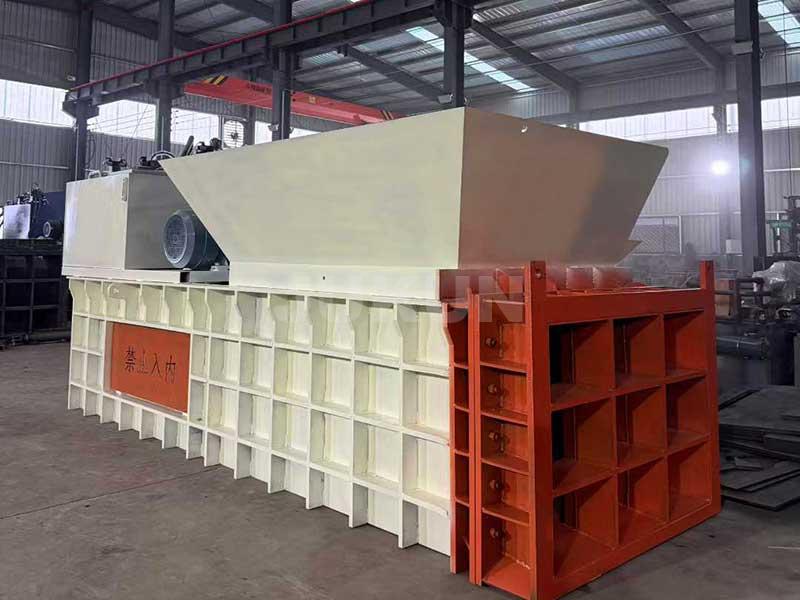 I ask every buyer the same question first. What is your daily tonnage? The answer sets the class. But tonnage is not the only factor. Run hours, feed method, bale size, and the tying system all change the machine fit. Here are the three classes we quote most often:
| Machine Type | Included Equipment | Reference Price (USD) |
|---|---|---|
| Small semi-automatic horizontal baler | Main machine, manual feed, manual or auto tying option | 25,000 to 45,000 |
| Mid-range fully automatic horizontal baler | Main machine, conveyor feed, auto tying, control panel | 50,000 to 80,000 |
| Large industrial automatic baling line | Full line, conveyor, auto tying, auto discharge, site setup | 90,000 to 150,000+ |
These ranges are for standard export setups. They do not include shipping, import duties, or site work. Bale size, voltage, safety options, and trade terms change the final quote. Ask what is included in every quote. Compare a bare machine price with a full line price only when both lists match.
What Do Our Actual Models Cost?
You may want a real number tied to a real machine. Generic price ranges are hard to check. Real model data is easier to trust. Here are three models from our line. The prices are reference ranges for standard export setups, not fixed offers.
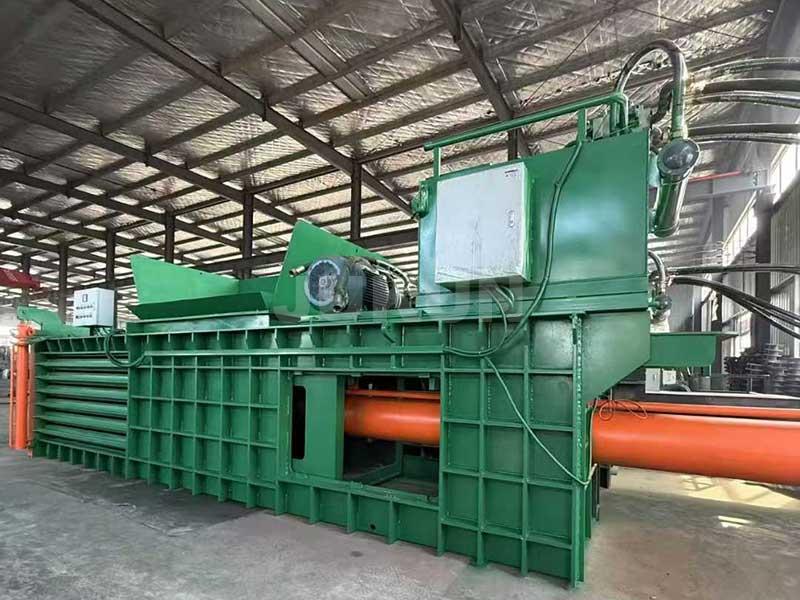 |
Specification | HBM-60 | HBM-100 | HBM-160 |
|---|---|---|---|---|
| Compression force | 60 tonnes | 100 tonnes | 160 tonnes | |
| Motor power | 11 kW | 22 kW | 37 kW | |
| Bale size | 1100 x 800 x 700 mm | 1100 x 800 x 900 mm | 1200 x 900 x 1100 mm | |
| Bale weight (cardboard, dry) | About 250 kg | About 400 kg | About 550 kg | |
| Workshop test rate (dry board, steady feed) | About 1.5 t/h | About 3 t/h | About 5 t/h | |
| Reference price (USD) | 28,000 to 38,000 | 45,000 to 65,000 | 75,000 to 110,000 |
The workshop test rate is measured with dry board and steady feed. It does not include long stops, tying delays, or bale removal time. Real output on your site will be lower. Ask the factory for a full-cycle test record. It should list the material type, test duration, input weight, and number of bales. We share this record with every buyer.
These model prices do not include the conveyor, auto tying, or shipping. Add those options to the quote before you compare. A bare HBM-100 and a full HBM-100 line are not the same price.
How Much Does an Automatic Horizontal Baler Cost Compared to a Semi-Automatic Baler?
The automatic model can cost two to three times a semi-automatic model. The extra money buys speed and less hand work. The real question is not which is cheaper. The real question is which saves more over five years.
A semi-automatic baler costs less because it needs hands for feed and tie. A fully automatic baler costs more because it adds a conveyor, auto tying, and auto discharge. The payback depends on run hours and local wages.
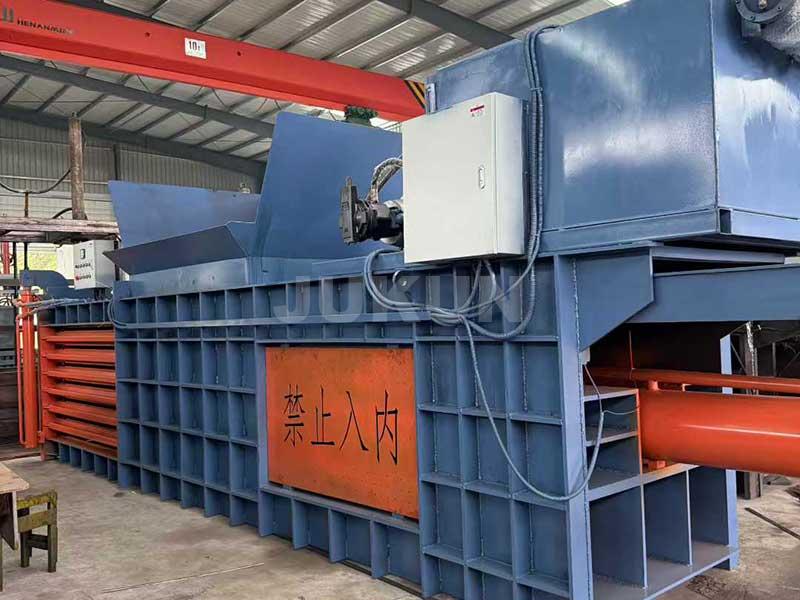 Here is an illustrative payback example. The numbers are for method only, not a real customer quote. A recycling facility compares two setups. The semi-automatic model costs USD 38,000. The full automatic line costs USD 95,000. The equipment gap is USD 57,000. Add the shipping and setup gap of USD 4,000. The total initial gap is USD 61,000. The full line cuts annual labor cost by USD 12,000 across the year. The simple payback is about 5.1 years before power and maintenance.
This simple payback only compares the initial gap and the labor saving. It does not include higher power and parts cost on the automatic line. Once those costs are added, the real break-even point is longer than five years. Actual results depend on run hours, wage rates, and downtime. Calculate your own numbers before you choose. Here is how the two compare:
| Cost Factor | Semi-Automatic | Fully Automatic |
|---|---|---|
| Machine price | Lower | Higher |
| Labor per shift | One or two operators | Fewer hands needed |
| Tying | Manual or auto option | Auto standard |
| Feeding | By hand or small conveyor | Full conveyor |
| Best for | Moderate volume, short shifts | High volume, long shifts |
A cheap machine with high labor cost can lose money. A costly machine with low labor cost can win. Ask your supplier to help with a simple payback estimate. A good supplier shows the math. A weak one only gives a price.
What Factors Affect Horizontal Baler Prices?
Two quotes can show a big gap. The gap is not random. Several factors drive the price. Each one changes the final quote. A change in one factor can move the price by thousands of dollars.
The main cost factors are compression force, processing capacity, automation level, material type, bale size, extra equipment, and shipping terms. Compression force is measured in tonnes or kN. Processing capacity is measured in tonnes per hour. A higher force does not always mean a higher hourly output.
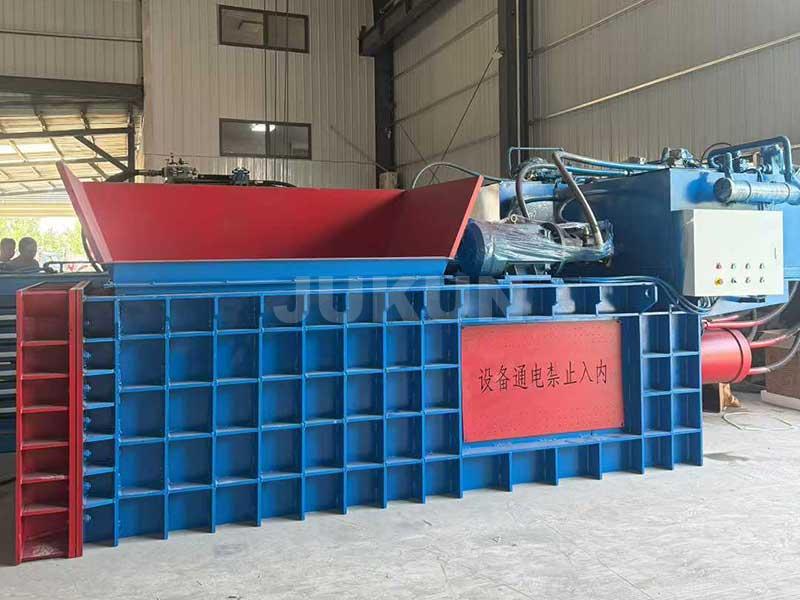 A full spec sheet with every quote helps the buyer see what is included. Here is the list I use:
| Factor | What It Changes | Cost Impact |
|---|---|---|
| Compression force | Ram power and structure | Higher force costs more |
| Processing capacity | Chamber size and pump size | Higher capacity costs more |
| Automation level | Feed, tie, and discharge systems | More automation costs more |
| Material type | Chamber and feed design | Special materials cost more |
| Bale size | Chamber and cylinder size | Larger bales cost more |
| Conveyor and feeding | Feed speed and labor need | Each option adds cost |
| Shipping terms | EXW, FOB, CIF, DAP, or DDP | What the seller pays changes |
The total cost of ownership matters most. Add power, oil, parts, and labor over five years. One customer chose the cheapest quote. His pump failed twice in one year. The downtime cost more than the savings. A low price is not the same as low cost. Ask for the parts price list. Ask for the warranty terms. Ask for the power rating.
What Is Included in a Horizontal Baler Quote?
Two quotes can look far apart. The reason is often simple. The two quotes do not include the same parts. Always ask for a clear list in writing.
A good quote lists the main machine, the hydraulic system, the control panel, the tying system, the warranty, and the spare parts. A weak quote lists only a total price.
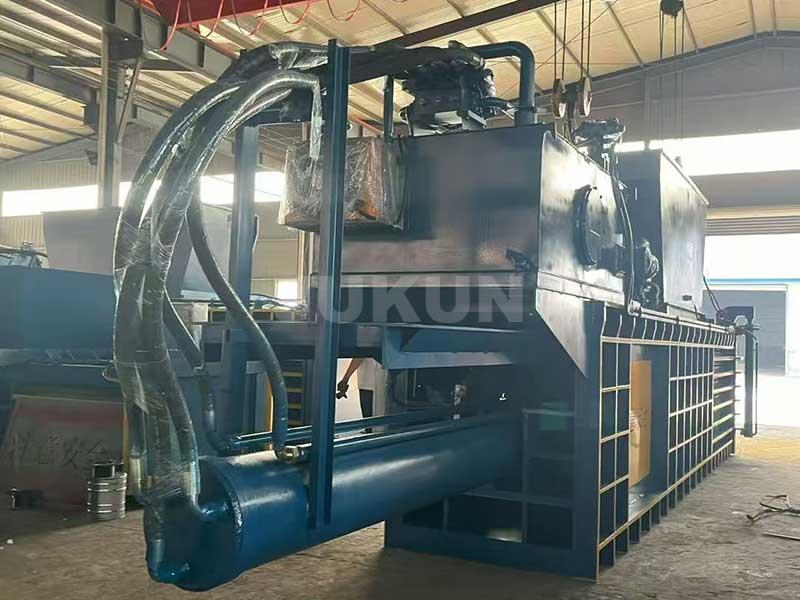 Compare supplier quotations line by line. Confirm the baler model, compression force, hydraulic parts, electrical system, tying method, included accessories, warranty, spare parts, and delivery terms. A lower headline price may reflect a different configuration rather than a better deal. Here is the list to check:
| Quote Item | What to Confirm | Why It Matters |
|---|---|---|
| Main baler unit | Model, force, and chamber size | Sets the base machine |
| Hydraulic system | Pump brand, valve brand, oil cooler | Sets speed and part life |
| Electrical control | Voltage, brand of parts, safety stops | Sets safety and fit |
| Tying system | Manual, auto, or not included | Changes labor cost |
| Conveyor | Included or extra | Changes feed speed and price |
| Spare parts and warranty | Which parts, how long, ship time | Sets long-term risk |
| Shipping and installation | EXW, FOB, CIF, DAP, DDP, or site work | Sets total landed cost |
Ask your supplier to fill in each line. If they refuse, that tells you something. A good factory shares the full list. A weak one hides the details.
How Much Does It Cost to Ship a Horizontal Baler from China?
A low machine price can hide a high shipping cost. The total jumps when the freight quote arrives. Plan for shipping before you set your budget.
Shipping cost depends on machine size, weight, packing, port, and trade terms. A small baler may fit in one 20-foot container. A large line may need a 40-foot container or flat rack. The exact loading plan depends on the machine's shipping dimensions, weight, packing method, and the freight forwarder's plan. Ask for a door-to-door quote with all fees listed.
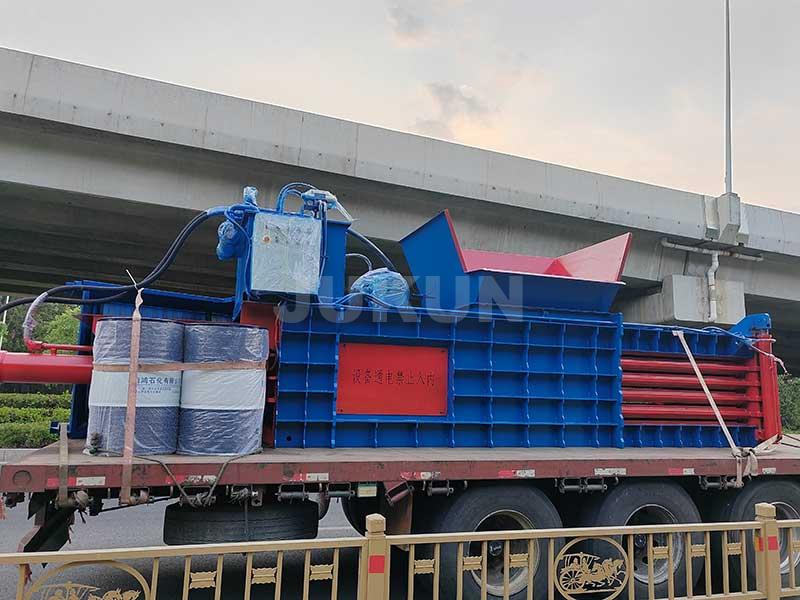 Ask for three things before you quote shipping. First, the destination port or city. Second, the machine model. Third, the trade term. The answers change the cost by thousands of dollars. Here is what to confirm:
| Cost Item | What to Ask | Hidden Risk |
|---|---|---|
| Sea freight | Port to port or door to door | Port fees surprise you |
| Export packing | Wooden case or open frame | Damage in transit |
| Insurance | Value covered and claim terms | Loss without cover |
| Import duty | HS code and local rate | Duty adds a large sum |
| Port charges | Who pays and how much | Small fees add up |
| Inland truck | Port to your site | Remote sites cost more |
| Installation | Site work, wiring, and setup | Site work adds up fast |
Do not trust a single lump-sum number. Ask for each line. Ask if the quote is EXW, FOB, CIF, DAP, or DDP. CIF covers sea freight and insurance to the named port of destination. CIF is not door-to-door. DAP and DDP go further, but each has its own rules. A fair comparison uses the same term on both quotes.
How Do You Calculate the Total Cost of a Horizontal Baler?
The machine price is only one line in your budget. Shipping, power, parts, and labor add up fast. A five-year view gives you the real number.
Add up five things. First, the machine price with all included options. Second, delivery and installation. Third, five years of power. Fourth, five years of parts and maintenance. Fifth, five years of labor. Then compare that total across suppliers.
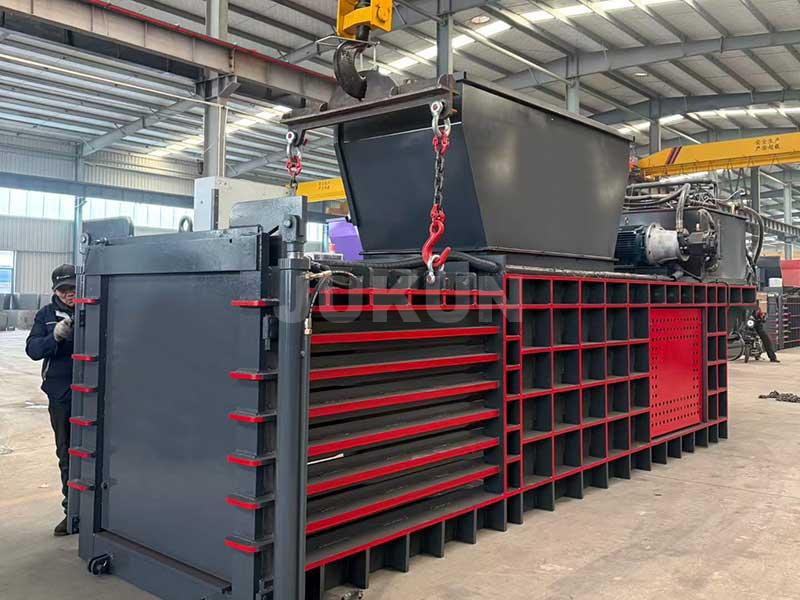 Here is a simple example. The numbers are for method only, not a real quote. A semi-automatic setup costs USD 38,000. Delivery and installation cost USD 8,000. Five-year power and parts cost USD 15,000. Five-year labor costs USD 150,000. The five-year total is USD 211,000.
A full automatic line costs USD 95,000. Delivery and installation cost USD 12,000. Five-year power and parts cost USD 20,000. Five-year labor costs USD 90,000. The five-year total is USD 217,000.
Under these assumptions, the fully automatic line costs about USD 6,000 more over five years. Its simple payback based on the initial investment gap and labor savings is about 5.1 years. Once higher power and maintenance costs are added, the break-even period is longer than five years. The cheaper setup is not always the lower-cost setup. Run your own numbers with real quotes.
The five-year total cost of ownership has a simple form:
5-year TCO = Equipment Cost + Delivery and Installation + 5-year Operating Costs
Operating costs include power, parts, labor, and downtime. Use real load and real run hours for power. Do not use the motor rating for all hours. Use this table before you sign:
| Cost Item | How to Estimate or Check |
|---|---|
| Machine price | Quote with model, options, and power rating |
| Shipping | Door-to-door quote with port fees and duties |
| Import duties | Check rules for your country and HS code |
| Installation | Site work, wiring, and setup cost |
| Five-year power | Motor kW, load, and run hours per day |
| Five-year parts | Parts price list and maintenance plan |
| Five-year labor | Operators per shift and local wage |
| Downtime cost | Lost output per stop and stops per year |
Is Buying a Horizontal Baler Directly from a Chinese Manufacturer Worth It?
A Chinese factory can save money. But the saving depends on how you buy. A low factory price can hide high shipping and import costs.
Buying direct from a manufacturer may simplify technical talks and custom specs. But the lowest factory price does not always mean the lowest total cost. Compare the machine specs, included equipment, shipping terms, warranty, spare parts, and after-sales support. This rule applies to every supplier, not just Chinese ones.
 Two common mistakes cost buyers money. First, a buyer compares an EXW price with a CIF price. That is not a fair comparison. Second, a buyer ignores spare parts cost. A rare part can stop the line for weeks. Here is what each trade term means:
| Quote Term | What It Covers | What to Confirm |
|---|---|---|
| EXW | Goods at the factory | Loading, inland transport, export papers |
| FOB | Goods to the named port of shipment | Port fees and loading on board |
| CIF | Sea freight and insurance to the named port | Import clearance and delivery are not included |
| DAP | Goods to the named place | Import duty and clearance may not be included |
| DDP | Goods to the named place with duty paid | Confirm what is covered in writing |
CIF is not door-to-door. It stops at the named port of destination. DAP and DDP go further, but each has its own rules. Ask for the term in writing. Ask what is not covered. Ask for a live video tour. Ask to see the workshop and the test area. Ask for a reference from your region. Judge each supplier by evidence, not by label.
How Can You Get an Accurate Horizontal Baler Quote?
A vague request gets a wide range. A clear request gets a clear quote. This saves time for you and the factory.
Send six things with your request. First, your material type. Second, your daily tonnage. Third, your target bale size and weight. Fourth, your run hours per day. Fifth, your voltage and frequency. Sixth, your destination country and port. Add photos or a short video of your material if you can.
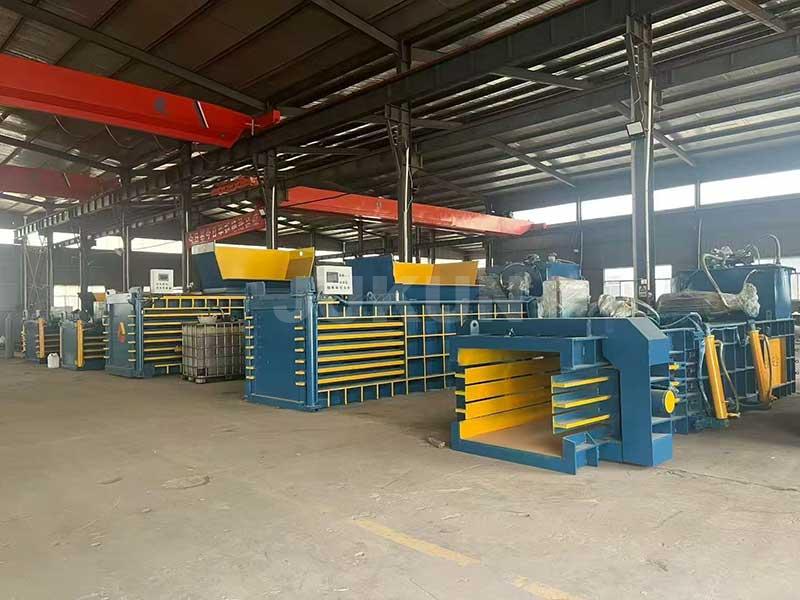 A good quote lists the model, the included parts, the trade term, and the price date. It also lists the spare parts and the warranty. Here is the list to send:
| What to Send | Why It Matters |
|---|---|
| Material type and photos | Sets chamber and feed design |
| Daily tonnage | Sets machine size |
| Target bale size and weight | Sets chamber and cylinder |
| Run hours per day | Sets automation choice |
| Voltage, frequency, and phase | Sets motor and control parts |
| Destination country and port | Sets shipping and duty estimate |
Ask for all of these in writing. Then compare quotes on the same basis. That way you pick the best value, not just the lowest number.
Need a Horizontal Baler Quote for Your Recycling Business?
Share your material type, daily processing volume, target bale size, operating hours, and destination country. Our team can review your requirements and recommend a suitable horizontal baler configuration.
Contact us for a model recommendation, a quotation based on the required configuration, and details of the included equipment, shipping terms, and spare parts.
Conclusion
A horizontal hydraulic baler costs about USD 25,000 to 150,000 or more. Price depends on size, automation, and included parts. Compare the five-year total cost, not just the sticker price. Then you buy right.