
Chaotic scrap piles waste space and money. A scrap baler transforms disorganized metal into profitable assets quickly.
Scrap balers use hydraulic pressure in steel chambers to crush metals into dense bales 5-10x smaller—saving 85% storage space, cutting transport costs 60%, and increasing resale value by 20% through uniform packaging.
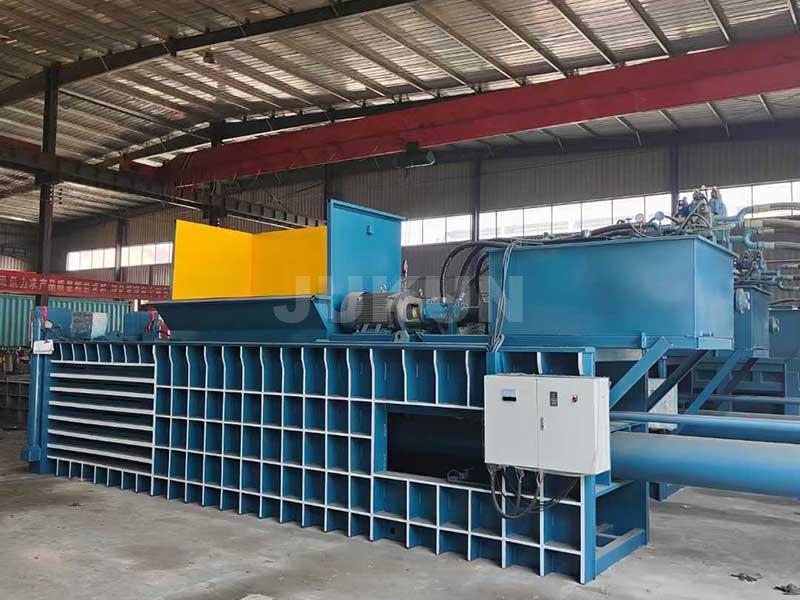
See how this powerhouse boosts your bottom line.
What Is a Scrap Baler Machine and How Is It Used in Metal Recycling?
Uncompressed steel costs you at every handling stage. Scrap balers make material manageable and profitable immediately.
This machinery compresses loose scrap into transport-ready blocks—essential for scrap yards cutting storage costs, foundries streamlining material flow, and manufacturers reducing waste expenses.
Discover industry-specific impacts:
Sector efficiency transformation
Real-world installations by Jukun:
| Recycling Sector | Material Handled | Storage Saved | Transport Cost Drop | Labor Reduction |
|---|---|---|---|---|
| Auto Dismantling | Crushed car bodies | 75% | $220/load | 2 workers |
| Steel Mill | Production offcuts | 500 sq meters | 20 trailer loads/month | 65 hours weekly |
| Scrap Yard | Mixed ferrous | 80% less space | $17k monthly savings | 50% handling time |
| Manufacturing | Aluminum trimmings | 40-bin reduction | Haul frequency halved | 30 minutes/shift |
Foundries gain most per ton. One Ontario facility processing 100 tons/day saved $38k monthly by shipping denser bales. Auto dismantlers eliminate labor risks: workers avoid handling jagged edges when loading compacted blocks. Uniformity adds hidden value: aluminum processors receive 12-15% premium for bales fitting rotary furnaces. Note volume thresholds: operations under 5 tons daily achieve slower ROI than large-scale yards.
How Does a Hydraulic Scrap Baler Compress Scrap Metal Efficiently?
Irregular shapes resist compaction. Hydraulic brute force crushes resistance.
High-pressure cylinders deliver 50-500 tons of force into scrap chambers, compacting materials in 3-5 minute cycles—maintaining >95% density consistency at 8-15 bales/hour without supervision.
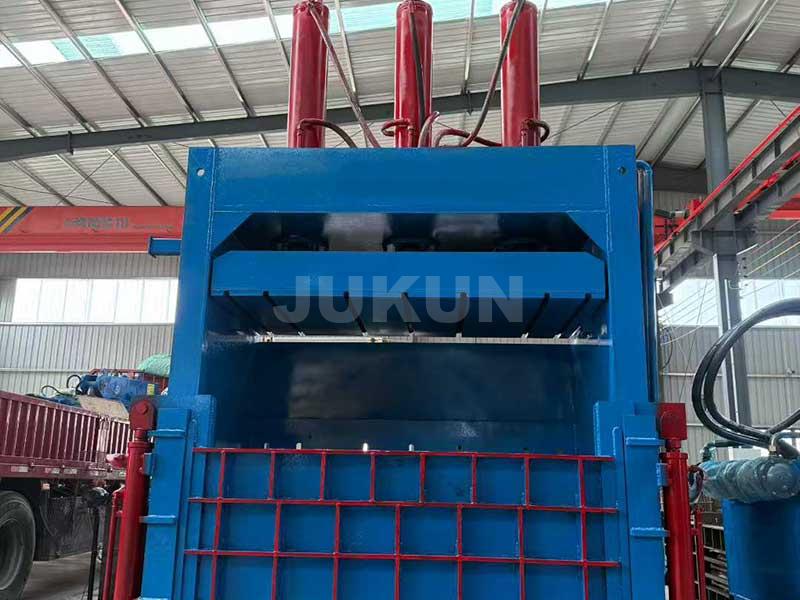
Examine the powerhouse:
Performance impact factors
Jukun engineering specifications:
| Component | Pressure Range | Cycle Time | Density Influence | Failure Risk |
|---|---|---|---|---|
| Main Cylinder | 180-450 tons | Shortens 40% | Direct correlation | Seal failure |
| Hydraulic Pump | 15-45 GPM | Determines speed | +22% at max GPM | Cavitation |
| Control Valves | 4500 PSI nominal | Automated sequencing | Steady pressure | Clogging |
| Chamber Design | Reinforced steel walls | Material flow | Shape uniformity | Wall fatigue |
| Platen Size | 1x2m to 3x4m | Feed limitations | Surface compression | Edge warping |
Pressure consistency matters. Jukun’s dual-pump system delivers constant 400 tons despite load irregularity—a Manitoba yard increased throughput 150% after upgrading from single-pump models. Steel quality defines endurance: hardox-lined chambers withstand 5x more impact cycles than mild steel. Monitor cycle deviations: 10% longer compression times signal hydraulic issues early. One BC recycler avoided $29k pump failure by noticing 8-second delay trends.
What Types of Scrap Metal and Recyclable Materials Can a Scrap Baler Process?
Not all metals crush equally. Machine selection matches material challenges.
Bales ferrous steel/iron at 700kg/m³, non-ferrous like aluminum/copper at 450-620kg/m³—also processing drums and compressed cans when machines feature piercing teeth and pressure adaptations.
Match your scrap profile:
Density and baling requirements
Verified by Jukun technicians:
| Material Type | Optimal Pressure | Bale Density | Special Requirements | Limitations |
|---|---|---|---|---|
| Steel Scrap | 250-400 tons | 850-1200 kg/m³ | Chamber reinforcement | >25mm thickness |
| Aluminum | 150-250 tons | 500-660 kg/m³ | Heat dissipation | Molten contamination |
| Copper Wire | 180 tons | 420-470 kg/m³ | Pre-cutting needed | Length limits |
| Beverage Cans | 35 tons | 390-400 kg/m³ | Pre-crusher required | Liquids present |
| Auto Shreds | 330 tons | 900-1050 kg/m³ | Piercing systems | Rubber content |
Aluminum needs careful handling. Low compression preserves purity: Toronto processors use stepped-pressure programs to prevent zinc contamination at joints. Ferrous materials thrive with force: demolition contractors bale structural beams using Jukun’s 450-ton models. Drums require precautions: residual chemicals necessitate sealed fluid collection systems. Monitor material mix: copper fragments embedded in steel dramatically cut bale value. Pre-sorting prevents 80% quality rejections.
How Do Scrap Baler Machines Reduce Recycling Costs and Increase Profitability?
Unbaled scrap loses profit at every step. Balers transform waste into premium commodity.
Compression saves $12-$45/ton in transport, eliminates 2.5 labor hours per bale, cuts storage costs 82%, and adds $15-$110/ton value through density and presentation quality.
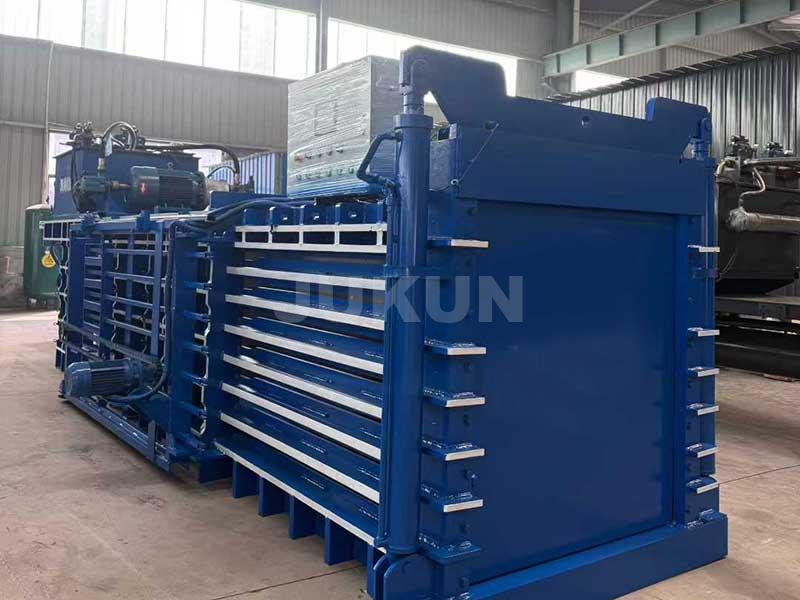
Count your savings:
ROI breakdown by operation
Documented by Canadian recyclers:
| Cost Area | Savings/Improvement | Calculation Basis | Payback Accelerator |
|---|---|---|---|
| Transport | $28/ton average | 3x less trailer loads | >8 tons/day volume |
| Labor | 19 hours/semi-trailer | 5 minute bale handling | Automatic tie systems |
| Storage | 85% space reduction | Warehouse cost/sq meter | Urban facility locations |
| Material Value | +18% ferrous price | Clean, stackable bales | Uniform size adherence |
| Equipment Life | 32% longer than manual | Reduced handling abuse | Regular maintenance |
Transport savings dominate ROI. One Saskatoon yard saved $41k monthly shipping 720 compacted bales instead of 3,000 loose loads. Labor reduction multiplies: automatic tying systems let one worker produce 85 bales daily instead of five workers manually. Presentation adds hidden profit: stainless steel mills pay $110/ton premium for oxidation-free bales under 1.4m height—achieved by climate-controlled storage. Track density premiums: exceeding 900kg/m³ for steel consistently attracts +6% offers.
Conclusion
Scrap balers reshape metal economics—transforming unwieldy waste into high-value commodities through hydraulic innovation.