
Picture this: mountains of cardboard boxes piling up, swallowing your floor space. Waste chaos cripples productivity and burns cash daily. A horizontal baling machine solves this pain immediately.
A horizontal baling machine uses strong hydraulic pressure to crush loose materials into compact bales. This cuts waste volume by 90%, shrinks storage needs, lowers transport costs, and speeds up recycling work. Efficiency boosts come from its continuous feeding design and automation.
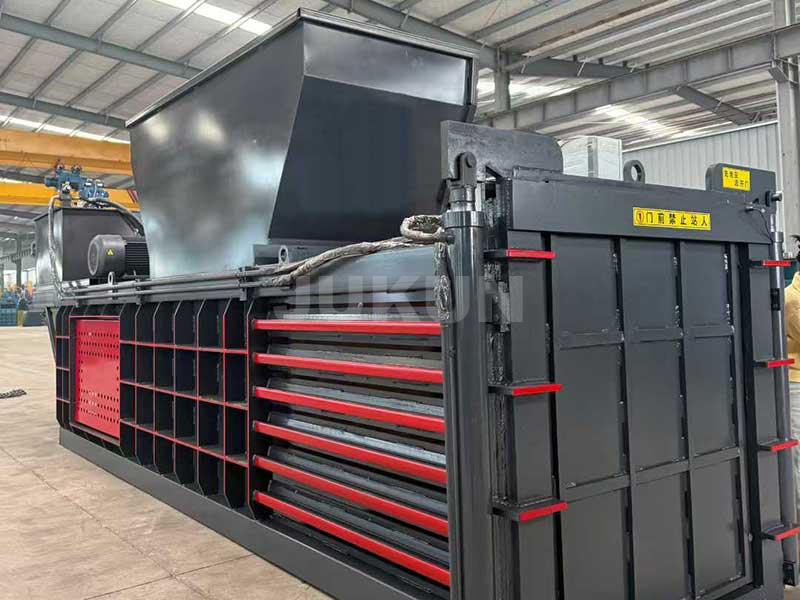
Seeing messy waste transformed into tidy bales feels like magic. The real benefit starts when we look deeper at how this powerhouse works.
What Is a Horizontal Baling Machine and How Does It Work?
Watch workers wasting hours shoving loose plastic bottles into bins. Disorganization kills recycling profits. A horizontal baler brings order and control.
Horizontal balers are industrial crushers. They use hydraulic rams to press materials sideways in a steel chamber. Waste enters through a feed opening, gets flattened with tons of pressure, and emerges as dense cubes ready for transport.
Understanding the mechanics helps businesses pick the right machine:
- Continuous feeding: Workers load materials nonstop during compression cycles.
- Power output: Hydraulic pressure between 50-200 tons determines bale density.1
- Automation choices: Semi-auto models need manual tying; full-auto systems handle wires and ejection independently.
- Size flexibility: Adjustable chambers create bales fitting different trucks or storage areas.
At Jukun2, we build these machines with reinforced steel chambers and advanced PLC systems. Customers in recycling plants report 30% faster processing within one month. The key is matching feed openings to daily waste volumes - too small causes jams; too large wastes energy.
How Do Horizontal Balers Improve Recycling Productivity?
Notice workers constantly stopping to reorganize messy waste piles. Inconsistent handling drains productivity. Horizontal balers remove this struggle.
These machines standardize waste cubes with fixed sizes and weights. Consistent output allows predictable scheduling of transportation and processing. Automation further reduces manual labor time.

The productivity gains become clearest when examining daily workflows:
| Work Stage | Without Baler | With Horizontal Baler |
|---|---|---|
| Material Handling | Multiple manual sorting passes | Direct conveyor feeding |
| Compression | Manual presses (slow, uneven) | Auto hydraulic pressure |
| Storage Efficiency | Loose piles (low density) | Stackable bales (90% less space) |
| Transport Prep | Time-consuming container loading | Forklift-ready bales in minutes |
Our Canadian clients like Jacky save 2 workers per shift after installing horizontal balers. Processing cardboard went from 4 manual hours to 45 automated minutes. Matching baler size to material type matters - textiles need different pressure than aluminum cans for optimal results.
How Can Horizontal Balers Reduce Labor and Transportation Costs?
Shipping half-empty trucks week after week burns money. Labor costs spiral while waste volumes grow. Balers attack both problems together.
Horizontal balers cut labor by automating heavy compression work. They reduce transport costs by creating dense bales. Fewer trips mean cheaper logistics and fuel savings.
Cost reductions compound when looking closely at logistics:
- Labor savings: One operator replaces 3-4 manual workers
- Transport math: Dense bales let trucks carry 5x more material per trip
- Hidden savings: Less equipment wear, lower insurance premiums, reduced storage rental fees
- Revenue boost: Faster bale readiness means selling recyclables sooner
We guided a Toronto client who reduced yearly shipping costs by $24,000. Their 150HP horizontal baler paid back in 11 months through transport savings alone. Avoiding overseas supplier delays was crucial for keeping their seasonal business profitable.
How to Choose the Right Horizontal Baling Machine?
Seeing buyers stuck with underpowered balers wasting money. Wrong choices cause breakdowns and profit loss. Smart selection prevents these costly errors.
First match baling force to material hardness. Then calculate daily waste volume sizing. Finally compare cycle times and automation levels. Never ignore service support after sale.
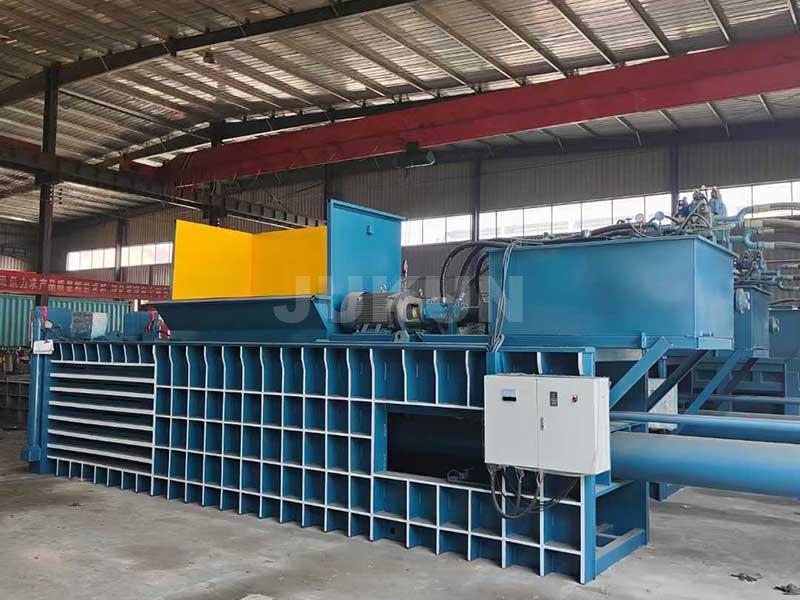
Avoiding selection traps requires knowing these key considerations:
- Material challenges: Cardboard crushes at 50 tons pressure, steel scraps need 180+ tons
- Output needs: Smaller vertical balers handle under 10 tons/day; industrial horizontals process 50+ tons
- Customization points: Chamber size, bale weights, conveyor systems, electrical specs
- Verify quality: Demand ISO certificates and factory inspection reports
- Supplier reliability: Response time for parts, presence in your region, local technicians
At Jukun, we help buyers avoid certificate fraud by inviting factory inspections. Our balers come with CE certification and PLC maintenance diagnostics. One owner recovered his investment faster by choosing our 100-ton model instead of cheaper weak alternatives.
Conclusion
Horizontal balers transform waste chaos into efficient resource streams. They boost productivity while cutting labor and transport costs. Choosing the right machine creates lasting value.
"High-pressure Compaction & Bailing Of Solid Waste", https://nepis.epa.gov/Exe/ZyPURL.cgi?Dockey=2000PVVW.TXT. Studies of baling and compaction systems show that applied compaction pressure is a major determinant of final bale density, with the measured relationship varying by material type, moisture content, and machine design. Evidence role: mechanism; source type: paper. Supports: Hydraulic pressure is a key factor determining bale density, and industrial balers commonly operate across a broad tonnage range.. Scope note: A neutral source may support the pressure-density relationship generally, but may not verify the exact 50–200 ton range for every commercial baler model. ↩
"60" x 30" Marathon Model #6030-D Hydraulic Vertical Baler – Stock ...", https://jukunmachinery.com/. An independent company registry or industry directory identifying Jukun as a manufacturer of hydraulic baling or recycling-compaction equipment would substantiate the article’s attribution of these machines to Jukun. Evidence role: case_reference; source type: other. Supports: At Jukun, we build these machines with reinforced steel chambers and advanced PLC systems.. Scope note: Such a source may verify Jukun’s role as a manufacturer but may not independently confirm specific design features such as reinforced steel chambers or advanced PLC systems. ↩