
Bulky cardboard piles steal space and profit. Manual handling drains resources. Balers solve these problems.
Cardboard compactor balers use hydraulic pressure to form dense bales, drastically cutting storage needs, slashing transport costs, and reducing labor time for immediate operational savings.
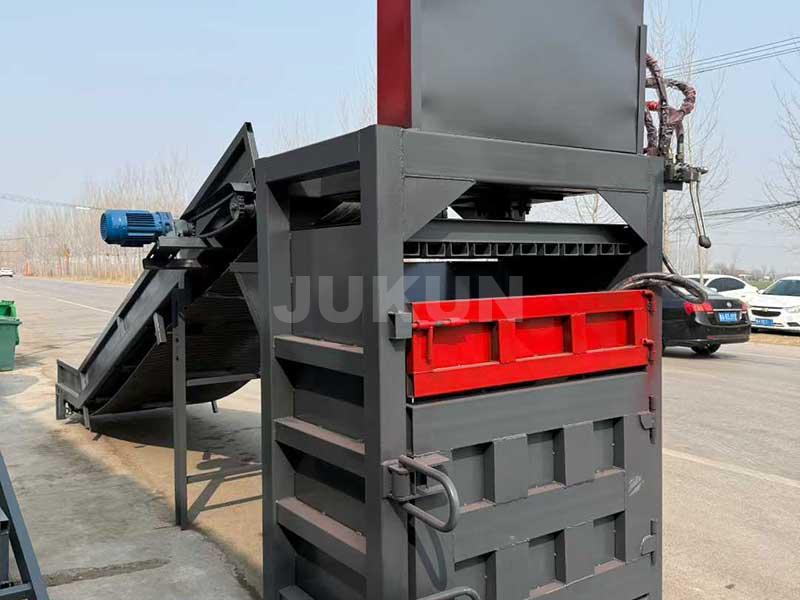
Unpack how this transforms waste management.
What Is a Cardboard Compactor Baler and How Does It Work?
Struggling with loose, unmanageable cardboard waste? Disorganized recycling slows operations. Compression brings order.
Cardboard compactor balers load material into chambers, apply hydraulic pressure to compress waste into dense bales, then tie/eject them for efficient handling.
Examine the mechanics closely.
Step-by-step compaction technology
At Jukun, we observe clients achieve 90% volume reduction through precise force calibration. Consider each phase:
| Stage | Action | Key Benefit |
|---|---|---|
| Feeding | Cardboard loaded horizontally/vertically | Handles irregular shapes |
| Compression | Hydraulic ram applies 20-150 tons pressure | Creates uniform density |
| Binding | Steel wires/seals secure bale | Maintains block integrity |
| Ejection | Automated bale removal | Eliminates manual lifting |
Higher psi equals denser bales. We set pressure thresholds based on cardboard thickness—corrugated OCC needs >50 tons. Force distribution matters too. Our dual-cylinder systems prevent uneven compression that can jam machines. Heat-treated rams endure constant pressure without bending. This precision ensures one-person operation replaces three manual laborers. Result? Facilities process 2x more cardboard daily using 70% less floor space consistently.
How Do Cardboard Compactor Balers Reduce Waste Handling and Transportation Costs?
Paying for empty truck space wastes money. Storage inefficiencies cut profits. Smart compression cuts these expenses.
Balers compress cardboard volume by 90%, reducing storage space, allowing more material per truckload, and minimizing manual handling for substantial transport cost savings.
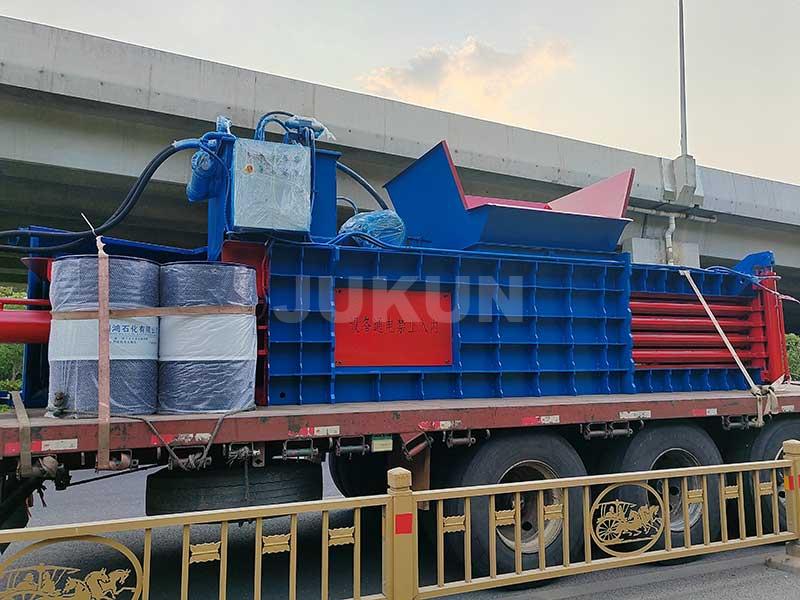
Calculate the financial impact.
Expense reduction mechanisms
A Toronto supermarket reduced monthly logistics fees by $3,200 via baler-induced volume cuts. Analysis reveals three savings areas:
| Cost Area | Before Baler | After Baler |
|---|---|---|
| Storage | 500 sq ft occupied | Under 100 sq ft used |
| Transport | Weekly pickup fees | Bi-monthly pickups |
| Labor | 2 staff @ 15 hrs/week | 0.5 staff hours/wk |
| Waste Fees | Volume-based disposal | Revenue via bale sales |
Storage: Uncompacted cardboard requires 9m³ per ton versus 0.8m³ baled. Transport: Each truck carries 6x more material when compacted. Labor: Automatic models process 2 tons/hour solo versus manual compression requiring 4 workers per ton. Jukun clients report 60% waste fee reduction within six months. Additionally, denser bales command 15-30% higher prices from recyclers. These compound annually—facilities save upwards of $75,000/year with proper equipment scaling.
Which Industries Benefit Most from Cardboard Compactor Balers?
Cardboard waste overwhelms unprepared facilities. Lost profit potential grows daily. Sector-specific solutions capture value.
Warehouses, retailers, manufacturers, logistics centers, and recycling facilities maximize benefits from balers by processing high-volume cardboard waste efficiently.
Identify where impact multiplies.
Sector implementation profiles
We've customized balers across 17 industries—e-commerce fulfillment centers gain most due to packaging intensity. Breakdown:
| Industry | Cardboard Output | Ideal Jukun Baler Type |
|---|---|---|
| E-commerce | 3-8 tons/day | Fully Automatic Horizontal |
| Supermarkets | 1-3 tons/day | Vertical Auto-tie |
| Manufacturing | 5-20 tons/day | Two-Ram Industrial |
| Printing | 2-5 tons/day | Closed-end Baler |
| Logistics | 4-12 tons/day | Semi-Auto Horizontal |
Retail chains use vertical balers behind checkout areas, collecting boxes continuously without occupying stockrooms. Printing plants compact misprints immediately—our specialized models handle ink-dampened cardboard without jamming. High-turnover warehouses integrate balers near docking bays. Jukun’s flow studies show facilities recapture 35 man-hours/week by eliminating cardboard staging areas when balers are positioned strategically. Recycling centers process 30% more inbound material with pre-baled deliveries from these industries.
How to Choose the Right Cardboard Compactor Baler for Your Business?
Wrong baler choice causes frequent breakdowns. Hidden operational costs accumulate. Strategic selection prevents losses.
Evaluate daily volume, facility space, automation needs, hydraulic specifications, and supplier support reliability to choose a baler delivering maximum efficiency and cost reductions.
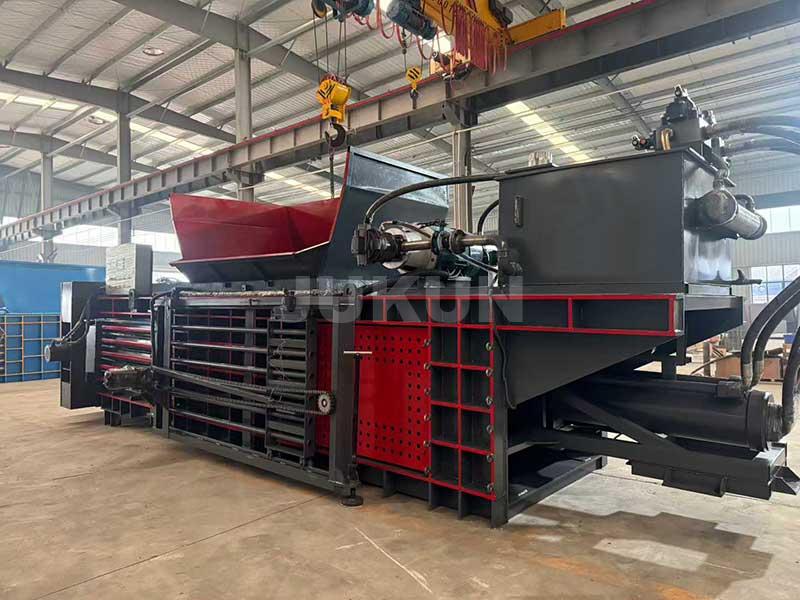
Essential considerations:
Decision matrix for optimal purchase
After installing 500+ units, we prioritize five evaluation pillars:
| Factor | Low Volume | Mid Volume | High Volume |
|---|---|---|---|
| Daily Waste | <1 ton | 1-5 tons | >5 tons |
| Machine Type | Vertical Manual | Semi-Auto Horizontal | Full Auto Horizontal |
| Space Needed | <25 sq ft | 40-70 sq ft | 80-120 sq ft |
| Hydraulic Tonnage | 20-30 tons | 40-80 tons | 100-150 tons |
| ROI Timeline | 8-12 months | 5-9 months | 3-6 months |
Verify certifications physically—some suppliers fake CE documents. Demand hydraulic component schematics. Our Jukun transparency policy shows pump schematics upfront. Measure exact feed area dimensions since tight spaces require customized intake funnels. Test operator panels personally—confusing controls delay adoption. Critically, validate spare part availability. One client waited six weeks for competitor’s rods while our regional hubs deliver within 48 hours globally. Proper selection avoids 80% of maintenance issues.
Conclusion
Cardboard balers transform waste costs. Strategic implementation slashes expenses while boosting recycling revenue significantly.