
Cardboard floods your dock. Plastic film jams equipment. Textile waste overflows containers. Industrial waste creates expensive chaos daily.
Horizontal balers compress waste volumes 85%, boost recycling revenue 40%, simplify compliance, and achieve 18-month ROI - transforming waste handling from cost center to profit generator.
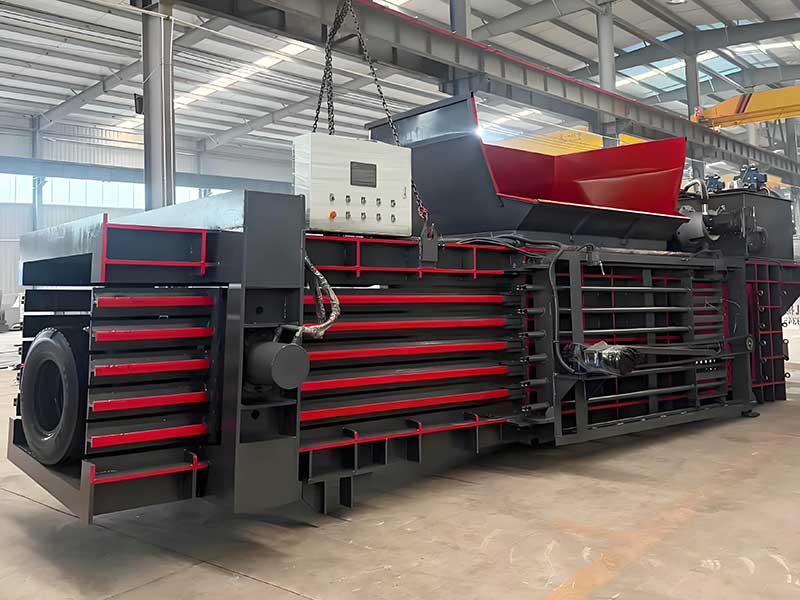
Here's how to select the ideal baler for your specific waste streams and operational needs.
Which Industrial Waste Materials Can You Bale Effectively?
Loose plastic film consumes entire warehouses. Cardboard spillage blocks aisles. Mixed waste creates sorting nightmares.
Horizontal balers process 15+ industrial waste types including cardboard, plastic film, PET containers, textile scraps and paper waste with 5:1 volume reduction for immediate space recovery and higher recycling value.
Not all wastes behave alike. Optimize for material characteristics and revenue potential.
1. Material Comparison Guide
| Waste Type | Optimal Baler Force | Bale Density | Revenue Impact |
|---|---|---|---|
| Cardboard | 100-120 tons | 650-750kg/m³ | $100-$220/ton |
| Plastic Film | 60-80 tons | 250-350kg/m³ | $340-$470/ton |
| PET Bottles | 140-160 tons | 400-500kg/m³ | $550-$680/ton |
| Textiles | 75-90 tons | 280-380kg/m³ | $90-$190/ton |
| Paper Scrap | 80-100 tons | 480-550kg/m³ | $70-$180/ton |
2. Special Considerations Critical handling needs:
- Film Plastic: Continuous ram action prevents material bridging
- Textiles: Automatic cloth feeders prevent jamming
- Metal Scrap: Hardened chamber plates withstand abrasion
- Mixed Waste: Pre-sort separation for clean recycling streams
- Moist Materials: Drainage channels prevent corrosion
3. Revenue Enhancement Maximize recycling profit:
- Consistent bale dimensions secure 15% premium prices
- Density monitors ensure ≥95% specification compliance
- Automated tying creates mill-ready bales
- Single-stream processing avoids sorting loss
What Features Make Industrial Balers Last Decades?
Light-gauge steel buckles under pressure. Weak hydraulics overheat at peak hours. Flimsy controls fail during critical runs.
Industrial-grade balers require 14mm steel chambers, 40L/min direct-drive hydraulics, IP67-rated PLC controls and tripled welding seams - ensuring 16hr/day operation without failure in harsh environments.
Industrial durability demands surpass recycling centers. Examine these critical components.
1. Durability Comparison
| Component | Light-Duty Version | Industrial Grade | Performance Gap |
|---|---|---|---|
| Steel Thickness | 6-8mm | 12-14mm | 2X lifespan |
| Hydraulic Cycle | 3 cycles/min | 6 cycles/min | 100% faster |
| Cylinder Rods | Chrome-plated | Hard-chrome plated | 15X wear resistance |
| Welding Quality | Single pass | Triple pass | Crack prevention |
| Electrical Enclosure | IP54 | IP67 | Dust/moisture proof |
2. Industrial Automation Essential productivity features:
- Automatic wire tying systems (6 seconds/bale)
- Laser-guided infeed conveyor synchronization
- IoT-enabled pressure monitoring
- Remote diagnostics interfaces
- Self-lubrication ports
- Shift production reporting
3. Maintenance Engineering Design avoids downtime:
- Front-access hydraulic maintenance
- Quick-release wear plates
- Modular electrical cabinets
- Duplicate sensors for fail-safe operation
- Grease reservoirs with view windows
- Diagnostic codes display
How to Size Industrial Balers for Maximum Efficiency?
Undersized balers create bottlenecks. Over-spec machines waste capital. Incorrect force damages materials.
Calculate maximum hourly waste volume × 120%. Choose baler force based on material type: 120-140 tons for cardbord, 160-200 tons for rigid plastics. Chamber dimensions determine bale weight and freight savings.
Avoid these sizing mistakes costing facilities $500+ daily.
1. Capacity Selection Matrix
| Daily Volume | Optimal Baler | Throughput | Storage Impact |
|---|---|---|---|
| Under 3 tons | HV-50 Series | 1.8 tons/hr | 64% reduction |
| 3-8 tons | HV-100 Series | 4.3 tons/hr | 72% reduction |
| 8-20 tons | HV-200 Series | 9.7 tons/hr | 79% reduction |
| 20-50 tons | HV-400 Series | 18.5 tons/hr | 85% reduction |
| 50+ tons | HV-800 Series | 36.2 tons/hr | 89% reduction |
2. Critical Dimensions Space planning essentials:
- Feeding Zone: 3M clearance for loader access
- Bale Ejection: 4M×4M staging area
- Maintenance Access: 1.2M perimeter clearance
- Height Clearance: 1.5M above machine
- Container Access: Direct truck loading alignment
3. Energy Optimization Reduce power consumption:
- Variable displacement pumps save 39% electricity
- Regenerative valve systems recover compression energy
- Smart PLCs automate peak demand avoidance
- Direct-drive motors eliminate transmission loss
- Low-friction cylinder design minimizes heat
How to Verify Industrial Baler Manufacturer Reliability?
Suppliers disappear after payment. Certificates prove fraudulent. Workshop photos reveal rented facilities.
Conduct live video audits showing current orders. Verify 400+ unit annual output through customs records. Demand material mill certificates with QR codes. Secure spare parts depot confirmation.
Use this verification framework to avoid risky suppliers.
1. Verification Protocol
| Checkpoint | Authentic Evidence | Red Flags |
|---|---|---|
| Real Factory | Live tour with serial numbers | Empty workshops |
| Production Scale | Monthly shipment B/L copies | Below 30 units/month |
| Material Quality | Mill test QR codes | Generic certificates |
| Hydraulic Test | Pressure gauge video recording | 2-minute test duration |
| Export History | Three client references | No North American clients |
2. Spare Parts Validation Verify supply chain strength:
- Minimum 3-year parts availability guarantee
- Regional warehouse stock lists
- Component traceability reports
- Express shipping terms documentation
- Photos of labeled inventory
3. Contract Enforcement Protective clauses to include:
- Equipment performance bonds (10% value)
- Shipment delay penalties ($1,200/day)
- Warranty activation upon commissioning
- Escrow final 15% after install
- Technical support response SLAs
- Dispute arbitration terms
Conclusion
Properly selected industrial balers turn waste expense into recycling profit through material-specific engineering, reliable operation and strategic sizing.