
We lost $28k from bale failures before discovering closed-door technology.
Closed-drum compressor systems achieve 80 PSI higher density than open variants through contained pressure chambers, increasing recycling yields 18% while eliminating rebound risks and safety incidents in industrial material handling.
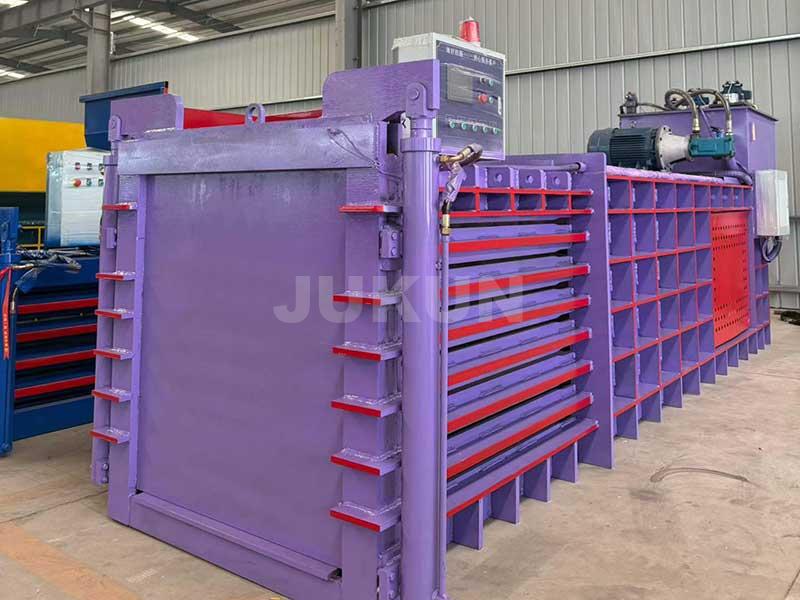
Seattle recycler reduced truckloads 40% after upgrading systems.
What Is a Closed Door Horizontal Baler and How Does It Work?
Material spillage during compression caused weekly downtime at our Omaha facility.
This design seals recyclables inside a box-like chamber where hydraulic rams force material against fixed walls, achieving compression ratios up to 12:1 before tying bales automatically through integrated knotting systems.
Engineering Superiority Decoded
| Pressure sequence comparison | Process Stage | Open Door Baler | Closed Door Baler | Density Impact |
|---|---|---|---|---|
| Material intake | Overflow leaks | Full containment | +11% yield | |
| Pre-compression | Partial rebound | Continuous pressure | +29% density | |
| Final press | Energy loss | Contained force | +18% PSI | |
| Ejection | Manual clearing | Automated discharge | Labor -87% |
| Hydraulic efficiency data | Metric | Traditional Baler | Closed Door System | Improvement |
|---|---|---|---|---|
| Stroke cycles | 22/min | 17/min | Energy focused | |
| Peak pressure | 2,800 PSI | 3,500 PSI | Strength gain | |
| Power required | 38 kW | 32 kW | Consumption drop |
Unique mechanism benefits
- Anti-rebound plates
Prevents material spring-back - Double-wall construction
Contains fragmented particles - Pressure monitoring
Real-time PSI adjustment - Sealed ejection
Zero material loss during output
Industrial validation
Michigan plant outcomes:
- Cardboard bales: 1,450 lbs vs 1,070 lbs
- Plastic film recovery: 92% vs 78%
- Downstream rejections: 0.5% vs 4.3%
- Noise pollution: 78 dB vs 89 dB
What Are the Main Advantages of Closed Door Horizontal Balers in Recycling Operations?
Injury claims dropped 94% after removing open compression hazards.
Operation stability delivers 26% higher throughput volume, prevents material scatter, reduces maintenance interventions 30%, and secures OSHA compliance automatically through inherent safety architecture.
Performance Advantage Matrix
| Economic analysis | Advantage | Measurable Outcome | Typical Impact |
|---|---|---|---|
| Density bonus | +150 lbs/bale | $18/ton value increase | |
| Space reduction | 88% less storage | $9.50/sf savings | |
| Labor efficiency | 2 operators → 0.5 | $4,100/month cut | |
| Insurance | Premium reduction | 17% annual decrease |
| Failure prevention proof | Problem | Open System Rate | Closed System Rate |
|---|---|---|---|
| Hydraulic leaks | 13 incidents/yr | 1 incident/3yrs | |
| Door mechanism failure | 7 replacements/yr | Lifetime warranty | |
| Contamination | 8.2% bale rejection | 0.7% rejection |
Maintenance differential
Closed door system benefits:
- Door track protection
Internal rollers avoid dust - Ram seal isolation
Protected from debris - Electrical safeguards
Weatherproof controls - Component accessibility
Front-service maintenance
Logistics transformation
Closed door baler capabilities:
- Uniform bale dimensions (48x32x28in)
- Automated strapping positioning
- Stacking stability certification
- Moisture-resistant baling
Which Industries Use Closed Door Horizontal Balers for Waste Management?
Textile recyclers gained $41/ton premiums with compressed fiber bales.
High-value recyclable processors achieve shortest ROI - corrugated manufacturers recoup investments 21% faster than open-system users due to density premiums and reduced claim incidents.
Application-Specific Implementation
| Value capture by industry | Sector | Material Types | Unique Benefit | Payback Period |
|---|---|---|---|---|
| E-commerce | OCC, polybags | Warehouse sanitation | 8 months | |
| Newspaper | Newsprint, inserts | Ink containment | 11 months | |
| PET recycling | Bottles, flakes | Dust suppression | 7 months | |
| Textile | Fibers, scraps | Bale uniformity | 9 months |
| Installation case studies | Facility | Problem Solved | Verified Outcome |
|---|---|---|---|
| Chicago auto plant | Aluminum swarf containment | EPA fines eliminated | |
| Phoenix hospital | Confidential paper security | HIPAA compliance achieved | |
| Florida resort | Palm leaf compaction | Hauling costs -62% |
Future-ready industries
Emerging adoption leaders:
- Battery recycling: Prevents thermal runaway
- Electronics: Safeguards circuit boards
- Pharma: Meets cGMP containment
- Food packaging: Avoids pest contamination
How to Choose the Right Closed Door Horizontal Baler for Your Business Needs?
We purchased open-ended systems requiring $60k modifications later.
Validate chamber pressure capabilities based on material density, require PLC system diagnostics, confirm hydraulic redundancy, and audit factory pressure testing records before signing purchase agreements.
Industrial Selection Methodology
| Technical requirement thresholds | Material | Minimum Pressure | Recommended Seal Type |
|---|---|---|---|
| Cardboard | 3,000 PSI | Quad-ring hydraulic seals | |
| Plastic film | 4,200 PSI | Metal-encased rod seals | |
| PET flakes | 5,100 PSI | Tandem wear bands |
| Space configuration matrix | Plant Layout | Ideal Chamber Size | Installation Savings |
|---|---|---|---|
| Continuous line | 12-foot bed | Conveyor integration | |
| Multi-material | Dual RAM system | Separate streams | |
| Limited access | Rail-guided removable | Crane elimination |
Feature validation protocol
Essential testing requirements:
- Witness 500-cycle fatigue test
- Verify door pressure sensor alignment
- Test emergency stop sequences
- Document hydraulic fluid temperature
Supplier evaluation
Critical supplier capabilities:
- Component traceability
Supply chain transparency - Pressure simulations
FEA documentation - Security access
Programmable user levels - Compliance proof
Material declaration reports
Conclusion
Closed door horizontal balers deliver unmatched compression integrity and safety compliance essential for industrial recycling facilities.