
Are you tired of your employees spending hours tying bales by hand while your cardboard waste keeps piling up?
An automatic cardboard baler is a fully self-contained machine that uses hydraulic pressure and a PLC control system to compress cardboard waste into dense bales. It handles feeding, compression, tying, and bale ejection automatically without requiring constant operator attention.

I have seen this transformation happen in dozens of facilities. The shift from semi-automatic to fully automatic operation is not just about convenience. It is about freeing your people to do more valuable work. It is about processing more cardboard in less time. It is about producing bales that sell for better prices because they are consistent and dense.
What Is an Automatic Cardboard Baler?
What exactly makes a cardboard baler "automatic," and how is it different from other types?
An automatic cardboard baler is a machine that uses hydraulic power to compress cardboard into bales and handles the entire process from feeding to tied bale ejection using sensors, a PLC controller, and automated tying mechanisms, with minimal human intervention beyond loading the material.
The word "automatic" is the key difference. A semi-automatic baler requires you to start the cycle, monitor the compression, and manually tie the bale when it is done. An automatic baler does all of this by itself.
Let me give you a simple breakdown of what an automatic system includes.
| Component | Function | Automation Level |
|---|---|---|
| PLC control panel | Manages the entire cycle, sets bale length | Fully automatic |
| Hydraulic system | Provides compression force | Fully automatic |
| Feed sensors | Detect when material is loaded | Fully automatic |
| Compression ram | Pushes material into the chamber | Fully automatic |
| Tying system | Wraps wire or strap around the bale | Fully automatic |
| Ejection system | Pushes finished bale out | Fully automatic |
The operator's main job is to keep the machine fed with cardboard. Everything else is handled by the machine itself.
How Does a Fully Automatic Cardboard Baler Work?
Have you ever wondered what actually happens inside a fully automatic cardboard baler from the moment cardboard goes in to the moment a finished bale comes out?
A fully automatic cardboard baler works through a sequence of steps: the operator feeds cardboard into the hopper, sensors detect the material, the hydraulic ram pushes it into the chamber, the PLC counts the cycles until the bale reaches the preset length, the tying system automatically secures the bale, and the ejection system pushes it out for removal.
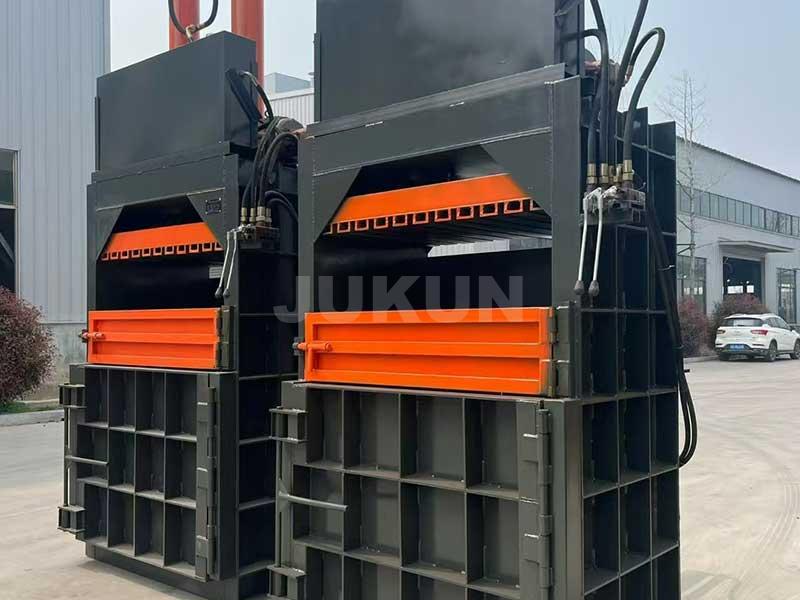
Let me walk you through each step of the process so you understand exactly how the machine does its job.
Step 1: Cardboard feeding
The operator loads cardboard into the hopper. This can be done manually or with a conveyor belt. Some facilities use a continuous feed system where a conveyor drops cardboard into the hopper without stopping.
Step 2: Material detection
Sensors in the hopper detect when cardboard is present. The sensors send a signal to the PLC controller. This tells the machine that material is ready for compression.
Step 3: Pre-compression
The hydraulic ram moves forward to push the cardboard from the hopper into the compression chamber. This step compresses the material and creates space for more cardboard to enter the hopper.
Step 4: Main compression
Once enough material is in the chamber, the main compression cycle begins. The ram applies full hydraulic pressure to compress the cardboard into a dense block.
Step 5: Bale length measurement
The PLC tracks how many compression strokes have been completed. It also measures the position of the ram. When the bale reaches the preset length, the machine signals the tying system.
Step 6: Automatic tying
The tying system activates. It wraps wire or plastic straps around the bale and secures them tightly. This happens without any manual work from the operator.
Step 7: Bale ejection
The finished bale is pushed out of the chamber onto an exit conveyor or pallet. The machine is now ready to start the next bale. The whole cycle continues without stopping.
I have watched this process countless times. The most impressive part is how smooth it is. The machine never stops, never slows down, and never asks for help. That is what makes it automatic.
Advantages of Automatic Cardboard Balers Over Semi-Automatic Models
What specific advantages does an automatic cardboard baler offer that makes it worth the extra cost compared to a semi-automatic model?
Automatic cardboard balers offer lower labor costs, consistent bale quality, higher throughput, better safety, reduced physical strain on workers, and the ability to operate continuously with minimal supervision, which makes them significantly more productive and cost-effective for medium to high-volume operations.
Let me compare these two types of machines side by side so you can see the clear differences.
| Feature | Automatic Baler | Semi-Automatic Baler |
|---|---|---|
| Labor per shift | 1 person | 2 to 3 people |
| Tying method | Fully automatic | Manual |
| Operator attention | Minimal | Constant |
| Bale consistency | Very high | Variable |
| Throughput per hour | 2x to 3x higher | Moderate |
| Safety risk | Lower | Higher |
| Training required | Moderate | Simple |
| Upfront cost | Higher | Lower |
| Long-term value | Better for volume | Better for low volume |
Labor savings
This is the most obvious advantage. An automatic baler needs one person to feed it. That person can also handle other tasks between loading. A semi-automatic baler needs someone to start each cycle, watch the machine, and tie each bale by hand. The labor cost difference is significant over a year.
Consistent bale quality
Automatic machines produce bales that are exactly the same size and density every time. The PLC ensures the pressure and length are consistent. Semi-automatic machines depend on the operator. Bale quality varies between operators and even between bales from the same operator.
Higher throughput
Automatic balers are faster because they do not stop between cycles. Tying is done in seconds without human intervention. The machine keeps running. Semi-automatic balers slow down because the operator has to tie each bale and restart the cycle.
Better safety
Operators do not have to reach into the machine to tie bales. The automatic tying system does this. There are fewer pinch points and fewer opportunities for injury. Worker fatigue is also reduced.
Continuous operation
Automatic balers can run 24 hours a day with minimal breaks. They only need maintenance and occasional cleaning. Semi-automatic balers require more frequent stops. The operator needs breaks. Tying takes time.
Reduced training needs
Operating an automatic baler is simpler. The operator just feeds the machine. The PLC handles everything else. Semi-automatic balers need more training because the operator must manage the cycle and tying.
I had a client who ran a distribution center. They processed 8 tons of cardboard per day. They switched from a semi-automatic machine to an automatic one. Their labor went from three people per shift to one. Their bale weight increased by 15% because the automatic machine compressed more consistently. The payback was under 12 months.
How to Choose the Best Automatic Cardboard Baler for Your Business
How do you pick the right automatic cardboard baler when there are so many models and suppliers to choose from?
To choose the best automatic cardboard baler, start by calculating your daily cardboard volume, matching the machine capacity to your needs, checking the build quality and component brands, verifying supplier certifications, and comparing warranties and after-sales support from at least three different suppliers before making a final decision.
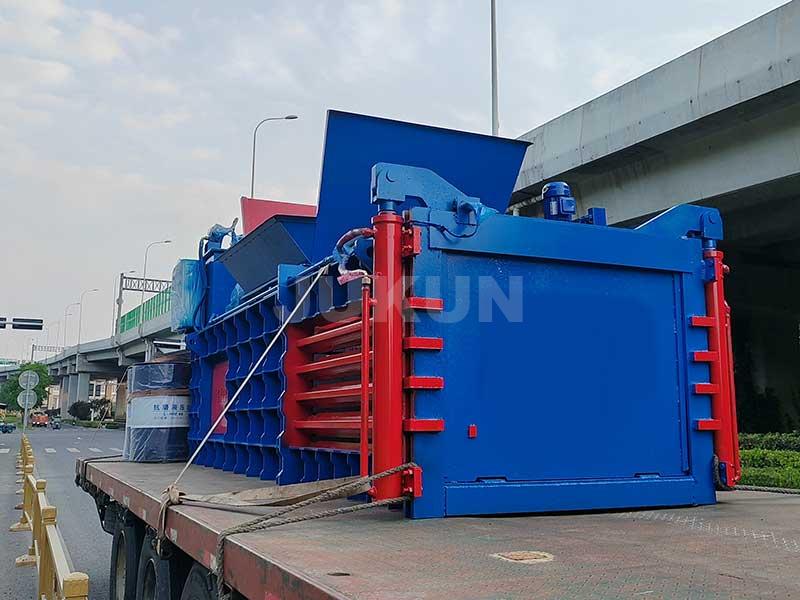
Here is my step-by-step guide to making the right choice.
Step 1: Calculate your daily cardboard volume
Weigh your cardboard waste for a full week. Get an accurate average daily number. Include all cardboard, including boxes, sheets, and any other paper-based packaging. This number determines the machine capacity you need.
Step 2: Match capacity to your volume
| Daily Cardboard Volume | Recommended Baler Capacity | Model Size |
|---|---|---|
| 1 – 3 tons | 2 – 4 tons/day | Small automatic |
| 3 – 6 tons | 5 – 8 tons/day | Medium automatic |
| 6 – 12 tons | 8 – 15 tons/day | Large automatic |
| 12+ tons | 15+ tons/day | Industrial automatic |
A machine that is too small will not keep up. Your cardboard will pile up and create problems. A machine that is too large costs more than you need and wastes energy.
Step 3: Check the bale size and density
Different mills prefer different bale sizes. Ask your buyers what they want. Make sure the machine produces bales that meet those specifications. Also check the bale density. Higher density means heavier bales and lower transport costs.
Step 4: Inspect build quality
Ask about steel thickness. Thicker steel means a stronger machine. Check the welding. Good manufacturers use certified welders. Look at the hydraulic cylinder. It should be from a recognized brand. Poor build quality leads to breakdowns and expensive repairs.
Step 5: Verify component brands
The hydraulic pump, motor, valves, and PLC should be from reputable brands. Bosch, Rexroth, Yuken, and Schneider are examples of quality brands. Generic parts may be cheaper but are less reliable. Replacement parts may also be harder to find.
Step 6: Check certifications
ISO 9001 certification indicates quality management. CE certification shows compliance with European safety standards. Ask for material certificates that confirm the steel grade used in the machine. Suppliers who cannot provide these may be cutting corners.
Step 7: Compare multiple suppliers
Request quotes from at least three suppliers. Compare the specifications, not just the prices. One supplier may offer a better warranty. Another may include a conveyor or spare parts kit at no extra cost. The cheapest machine is rarely the best value.
Step 8: Ask about warranty
A good automatic baler should have at least three years of parts warranty. Read the details carefully. Does it cover the cylinder, pump, and motor? Are labor costs included? Is there a limit on repair costs? A strong warranty shows the supplier is confident in their product.
Step 9: Check after-sales support
Ask about technical support availability. Is there someone who speaks your language? How fast can they ship spare parts? Do they have a service agent in your country? These questions matter when you have a problem.
Step 10: Request a demonstration
If possible, ask the supplier to run your cardboard through the machine. Watch the bale quality and density. Check how long each cycle takes. This is the most reliable way to confirm the machine meets your needs.
Step 11: Read reviews and ask for references
Ask the supplier for contact details of previous customers. Call them. Ask about the machine's reliability, the supplier's delivery performance, and the quality of support. This real-world feedback is worth more than any brochure.
Step 12: Understand shipping and payment terms
Check the delivery timeline. Late shipments can disrupt your operations. Understand the shipping terms. CIF includes insurance and freight. FOB means you arrange shipping yourself. Payment terms are usually 30% deposit and 70% before shipment. Some suppliers offer more flexible terms for repeat customers.
Conclusion
An automatic cardboard baler reduces labor costs, improves bale quality, and increases throughput, making it a smart investment for businesses processing more than three tons of cardboard daily.