
You need a baler. But you face a choice. Horizontal or vertical? Pick wrong and you waste money. I see this mistake often.
A vertical baler fits batch work and small floor space. A horizontal baler fits larger, steady material flow and conveyor feeding. Choose by daily tonnage, floor space, labor cost, and bale size. Then compare the full five-year cost.
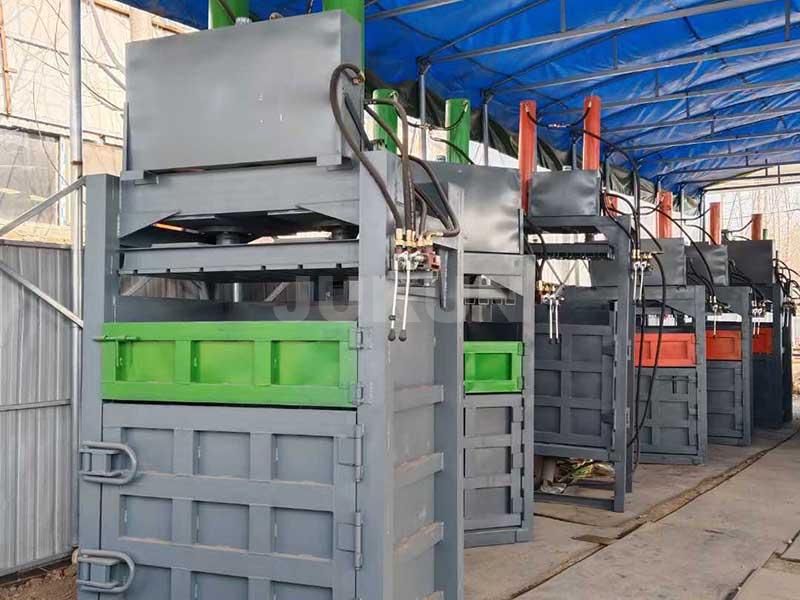 I work at a baler factory in China. I build both types. I test them in our workshop every week. I talk to buyers in Canada, Europe, and Asia. Many of them ask the same question first. Which type fits my site? They want a clear answer. This guide gives you that. It compares design, real model specs, material fit, and the full cost over five years. It uses real model data from our own line. It helps you pick with facts.
| If your priority is... | Consider... |
|---|---|
| Limited floor space and batch processing | A vertical baler |
| Lower initial investment | A vertical baler, sized to your volume |
| Conveyor feeding and steady material flow | A horizontal baler with conveyor feed |
| Higher output and automatic tying | A suitable horizontal baler setup |
| Growing volume over the next few years | Compare both options with your full costs |
These are conditional guides. They are not fixed rules. Check your real numbers before you choose.
What Is the Difference Between Horizontal and Vertical Balers in Design and Operation?
You may see both types online. They look different. But the real difference is how they press and how you feed them. One presses down. One presses sideways. That shape changes the work flow.
A vertical baler is often a practical choice for batch work and limited floor space. A horizontal baler is generally better suited to higher throughput, larger bales, or conveyor-fed processing. But the best choice depends on the actual machine setup, material type, daily and peak volume, run hours, labor needs, and bale specs. Not every horizontal baler is fully automatic. Some vertical balers can handle substantial volume when correctly sized.
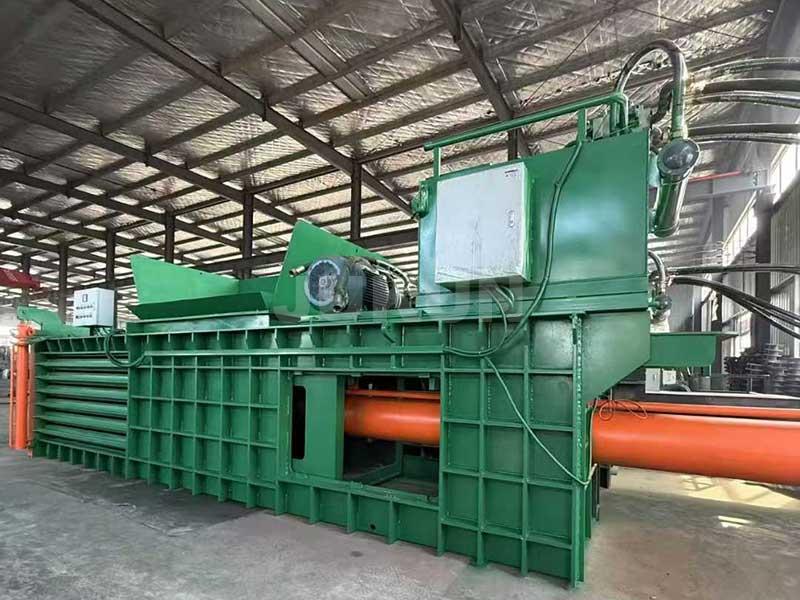 I show both types to every buyer who visits our factory. I point to the chamber. I explain the feed path. The vertical baler needs a hand to load each batch. The horizontal baler can take a steady flow from a conveyor. Here is how the two designs compare:
| Factor | Vertical Baler | Horizontal Baler |
|---|---|---|
| Press direction | Downward | Sideways |
| Chamber position | Upright | Flat |
| Feed method | Usually by hand | By hand or conveyor |
| Bale size | Generally smaller | Often larger and heavier |
| Tying | Usually manual | Manual or auto |
| Floor space | Small footprint | Needs a long floor area |
| Labor need | More hand work per batch | Lower with conveyor and auto tie |
| Best fit | Batch work, limited space | Steady flow, larger volume |
These are general design differences. The real output of any model depends on its specs and your work flow. Ask for the model data before you compare. Do not judge a machine by its type name alone.
Horizontal vs. Vertical Baler: Model Specifications and Prices
You may see a wide price range online. That range hides the real question. What machine do you get for that price? A bare unit and a full line are not the same. You need model data to compare.
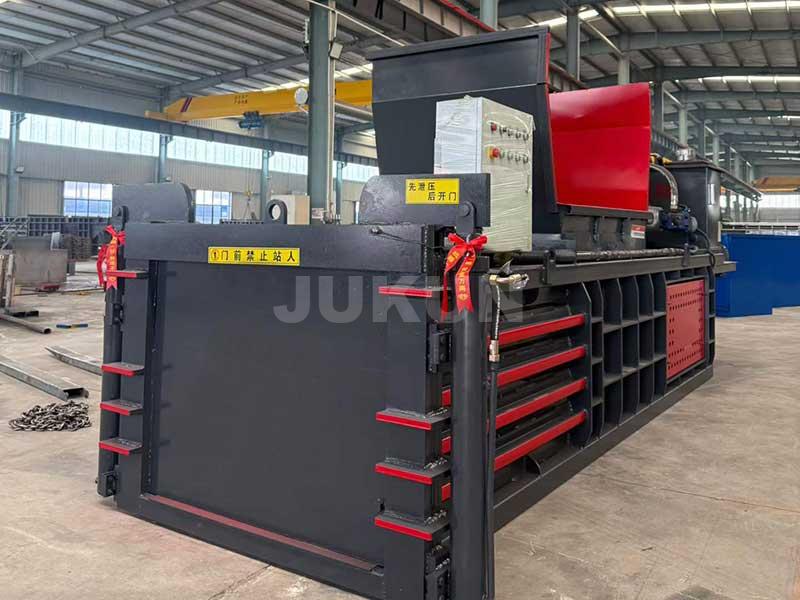
Here are real spec ranges from our own production line. The prices are reference ranges for standard export setups. They are not market averages. Shipping, duties, and site work are extra.
 |
Specification | Vertical VB-30 | Semi-Auto HBM-60 | Auto HBM-100 |
|---|---|---|---|---|
| Compression force | 30 tf | 60 tf | 100 tf | |
| Motor power | 4 kW | 11 kW | 22 kW | |
| Bale dimensions (L × W × H, mm) | 800 x 600 x 600 | 1100 x 800 x 700 | 1100 x 800 x 900 | |
| Bale weight (dry cardboard) | About 80 kg | About 250 kg | About 400 kg | |
| Workshop test throughput (dry cardboard, model-specific test conditions) | About 0.4 t/h | About 1.5 t/h | About 3 t/h | |
| Tying | Manual | Manual or auto option | Auto | |
| Reference price (USD) | 4,000 to 8,000 | 28,000 to 38,000 | 45,000 to 65,000 |
The throughput figures are reference results from our workshop tests using dry cardboard. The HBM-60 figure comes from the full-load test record shown below. The VB-30 and HBM-100 figures come from our standard workshop test data for those models. Test procedures reflect each machine's feeding method and operating cycle. The figures should not be treated as guaranteed continuous production rates. Actual output depends on material condition, loading time, cycle time, tying, bale removal, and operator workflow. Request the full test record for the specific model before comparing its capacity with your site's requirements.
The reference price for the HBM-100 includes the standard automatic tying system specified in the quotation. The HBM-60 price covers the main unit with a manual tying setup. Auto tying is an option at extra cost. The conveyor is also optional on the HBM-60 and HBM-100. Conveyor equipment, shipping, installation, and other optional features are charged separately unless listed in the offer. Confirm the exact configuration and included equipment before comparing prices.
For a more detailed breakdown of horizontal baler costs, see our separate horizontal baler cost guide on the Jukun website.
What Are the Installation Space Requirements for Each Model?
You may pick the right machine type. Then find it will not fit your site. Door width, ceiling height, and floor area can block the installation. This happens more often than you think.
A vertical baler needs a small footprint. A horizontal baler needs a long floor area and room for a conveyor. Check your site before you order.
 Here are the installation requirements for the three models. The numbers are from our own layout drawings. Your site may need more space for material storage, forklift paths, and bale pickup.
| Installation Requirement | Vertical VB-30 | HBM-60 | HBM-100 |
|---|---|---|---|
| Machine footprint (L × W, mm) | 1200 x 1000 | 3200 x 1400 | 3800 x 1600 |
| Front loading clearance (mm) | 1000 | 2000 | 2500 |
| Side service clearance (mm) | 800 | 1500 | 1800 |
| Bale discharge space (mm) | 800 front | 1500 rear | 2000 rear |
| Conveyor length (optional) | Not applicable | 3000 to 5000 | 4000 to 6000 |
| Total installation area (approx., m², including conveyor and service space) | 4 to 6 | 20 to 30 | 30 to 40 |
The installation areas are preliminary planning estimates based on the listed machine configurations. The HBM-60 area assumes a 3,000 to 5,000 mm conveyor and the service clearances shown above. The HBM-100 area assumes a 4,000 to 6,000 mm conveyor and the larger service clearances. These figures should be confirmed against the final layout drawing, including conveyor length, service clearance, bale discharge, material storage, and forklift access.
For the HBM-60 and HBM-100, the total installation area includes the machine footprint, the optional conveyor, the front loading zone, the rear bale discharge zone, the side service area, and a basic forklift path. If your site has a narrow door or a low ceiling, measure the clear opening first. A large machine cannot pass through a small door. Confirm the exact layout with the factory before you order.
These are reference figures. Measure your door width, ceiling height, and floor strength. Plan the forklift path and the bale storage area. A good supplier asks for these details first. A weak one ships the machine and lets you solve the problems.
How Do You Compare the Five-Year Cost of Horizontal and Vertical Balers?
You may think the price gap is small. It is not. A horizontal baler generally needs a higher initial investment than a compact vertical baler. The extra money buys speed, bale size, and less hand work. But the price gap depends on the exact models and setups you compare.
A high-end vertical baler may cost close to a small semi-automatic horizontal model. Always compare models with similar material needs, bale specs, and run hours. Then add the full cost over five years. This section shows you how to run that comparison. It does not give a single answer for every site. The result depends on your numbers.
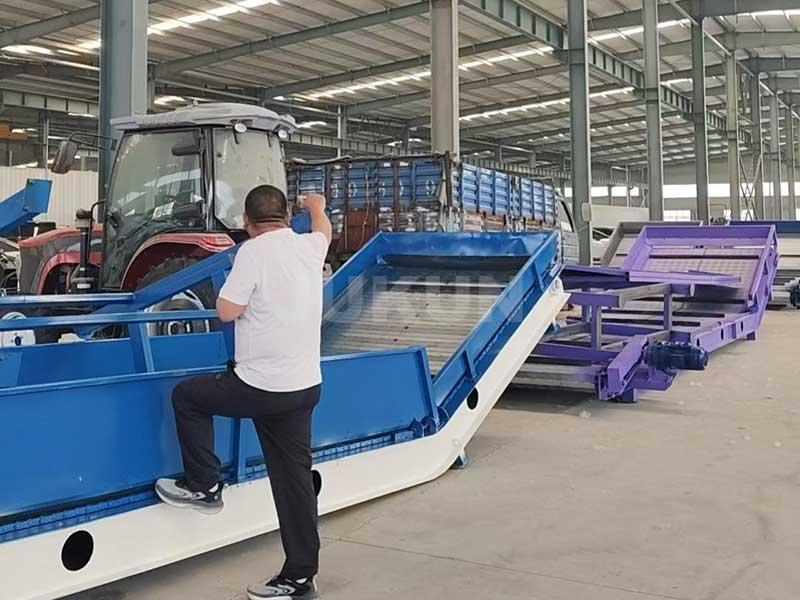 Here is a simple example. The numbers are for method only, not a real quote. A company processes 6 tonnes of cardboard per day and runs 6 hours. The average need is 1 t/h. Based on our workshop test rates, the VB-30 would not be suitable for this workload under this schedule. Its tested rate of 0.4 t/h would need at least 15 hours to process 6 tonnes, even before tying delays and bale removal. The HBM-60, with a workshop test rate of 1.5 t/h, may be a better candidate. But its real fit must be confirmed with a full-cycle test using your material and your work flow.
The HBM-60 with a small conveyor may reduce manual loading and feeding work. If you need automatic tying, specify that option in the quote and include its cost when you compare labor savings. The table below shows how to compare the two paths:
| Cost Item | Vertical Baler | Horizontal Baler |
|---|---|---|
| Initial purchase | Lower | Higher |
| Shipping and duties | Fill in your real quote | Fill in your real quote |
| Installation | Fill in your real quote | Fill in your real quote |
| Five-year power | Motor kW, load, and run hours | Motor kW, load, and run hours |
| Five-year parts | Parts price list and plan | Parts price list and plan |
| Five-year labor | Operators per shift and wage | Operators per shift and wage |
| Downtime cost | Lost output per stop | Lost output per stop |
Fill in only numbers you can measure. Leave the rest blank until you get a real quote. A cheap machine with high labor cost can lose money. A costly machine with low labor cost can win. Run your own numbers. Ask your supplier to help with a simple payback estimate.
What Do Real Material Tests Show?
You may read many test numbers online. But you need to know how each test was run. A test with dry board and steady feed is not the same as a real site with wet board and stops. Ask for the full test record.
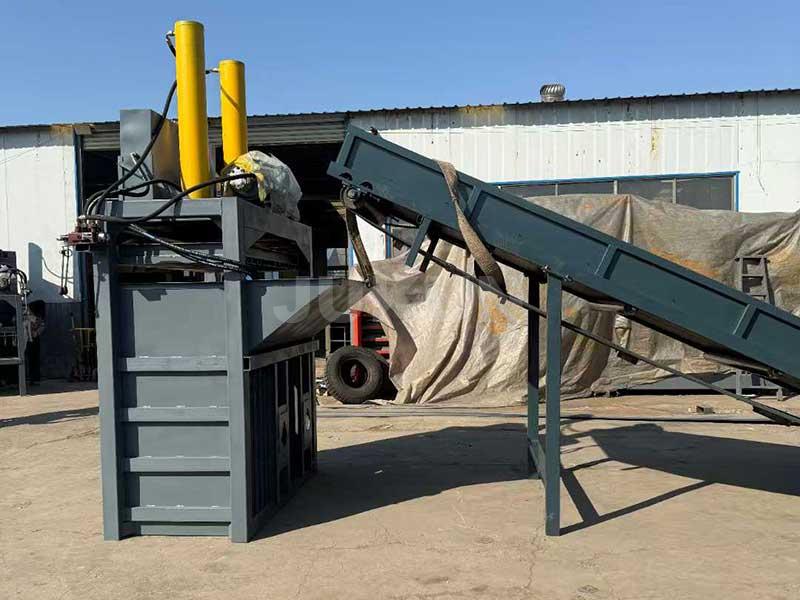
We test each model with the material the buyer plans to process. The test record lists the material type, test duration, input weight, and number of bales. Here is a sample from one of our HBM-60 full-load tests:
 |
Test Item | HBM-60 Test Record |
|---|---|---|
| Test type | Full-load continuous test | |
| Material | Dry OCC cardboard, flattened | |
| Machine setup | Standard unit, manual tying, small conveyor | |
| Test duration | 60 minutes continuous run | |
| Input weight | About 1,500 kg | |
| Bales produced | 6 full bales | |
| Average bale weight | About 250 kg per bale | |
| Throughput | About 1.5 t/h | |
| Stops during test | None | |
| Notes | Bales reached full weight under repeated cycles |
The HBM-60 throughput test included an optional small conveyor, which is not included in the base machine price shown above. The tested setup and the quoted base configuration are therefore different. Actual throughput may vary with the feeding method, material condition, operator workflow, and selected options.
The reported throughput is based on the stated test setup and test duration. Confirm whether feeding, tying, bale removal, and other routine operating steps are included before using the result to estimate production capacity at your site. This record covers the full work cycle, including feeding, compression, manual tying, and bale removal. Your real output may differ with material type, moisture, and operator speed.
This is a sample record. The numbers change with material, moisture, and operator skill. Ask for the test record for the model you plan to buy. Use it to compare models on the same basis. A good factory shares the record. A weak one gives only a brochure number.
Which Baler Is Best for Cardboard, Waste Paper, and Plastic Bottle Recycling?
You may process one material today. You may add another later. Each material behaves differently. A machine that fits cardboard may not fit plastic bottles well. Check material fit before you buy.
Cardboard and paper press easily in both types. PET bottles can rebound after compression. The right setup depends on bottle prep, feed opening, chamber design, and the bale specs your buyer needs. Plastic film needs a check on feed structure and wrap risk. Metal scrap usually needs a dedicated metal baler.
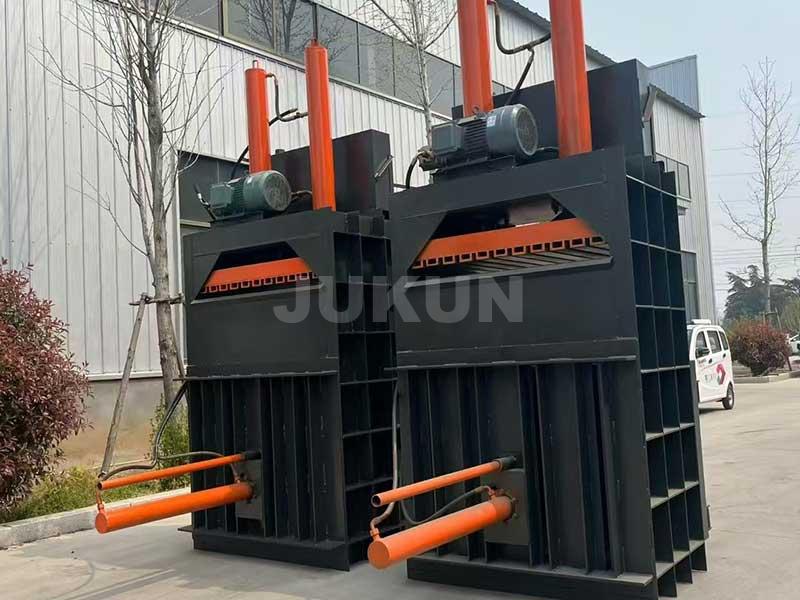 I once saw a buyer try to bale PET bottles in a small vertical baler. The bales came out loose. They fell apart on the truck. He lost money on the load. Now I ask for samples first. I ask for photos and short videos. I test the material in our workshop. Here is how the two types fit common materials:
| Material | Vertical Baler | Horizontal Baler |
|---|---|---|
| Cardboard, OCC | Good for small or batch work | Good for larger volume and steady feed |
| Waste paper | Good for intermittent work | Good for a steady material flow |
| PET bottles | Check volume, bottle prep, and bale spec | Check feed, bottle prep, and ram setup |
| Plastic film | Check feed and tying setup | Check anti-wrap design and feed setup |
| Textiles | Depends on material shape and bale spec | Depends on output and chamber size |
| Metal scrap | A standard vertical waste baler is generally not suitable | Use a purpose-built metal baler selected for the scrap type |
Do not assume one machine fits all. Tell the factory your main material and your second material. Ask if the same setup works for both. A good factory tests the material. A weak one says yes to everything without proof.
Horizontal vs. Vertical Baler: A Simple Selection Framework
You may still feel unsure. The choice looks hard. But it comes down to four steps. Walk through them in order. The answer will be clear.

Step 1: Measure your material flow. Write down your daily tonnage in metric tonnes. Write down your peak day tonnage. Write down your real run hours. A site that handles 6 tonnes per day and runs 6 hours needs about 1 t/h on average. This is the average need, not a guaranteed output. Add a margin for peak flow, feed stops, tying time, and bale removal.
Step 2: Check your feed process. Does material arrive in batches? Can one person load it by hand? If yes, a vertical baler may fit. Does material arrive in a steady flow? Do you need a conveyor? If yes, a horizontal baler may fit.
Step 3: Check your bale needs. What bale size and weight does your recycler accept? Larger bales can reduce handling, storage, and transport cost per tonne when bale density, vehicle payload, and buyer specs allow it. But larger bales may need a heavier forklift, suitable loading gear, and more storage room. Confirm your transport limits and your buyer's bale requirements before you choose the target bale size.
Step 4: Compare the full cost over five years. Add machine price, shipping, duties, installation, five-year power, five-year parts, five-year labor, and downtime. Use the cost table above. A small site may do better with a vertical baler. A site with steady, high output may do better with a horizontal baler. Do not buy the largest machine just in case. Size for your real growth.
Need Help Choosing Between a Horizontal and Vertical Baler?
Send us your material type, daily tonnage, bale size, voltage, floor space, and door width. Our team at Jukun will review your case and suggest the right machine type. You will get three things. First, a clear recommendation for vertical or horizontal. Second, a test video or test record for the model we suggest. Third, a full parts price list and a clear quote range. Contact us before you order.
Conclusion
A vertical baler is often a practical choice for batch processing and limited floor space. A horizontal baler may be a better fit for larger material flows, conveyor feeding, and automated operation.
The right choice depends on your material type, daily and peak tonnage, available space, bale specs, labor costs, and long-term operating costs. Compare actual machine specs and quotes before you decide.
Need help choosing a baler for cardboard, waste paper, or plastic bottles? Share your material type, daily volume, floor space, and target bale size with our team. We can review your needs and recommend a suitable setup.