
Cardboard piles up fast. Loose boxes eat floor space. Freight costs climb. I see this in many warehouses. A wrong baler choice makes it worse.
Choose by daily cardboard tonnage, bale size, automation level, and floor space. Match the machine to your real work flow. Then compare total cost, not just the price.
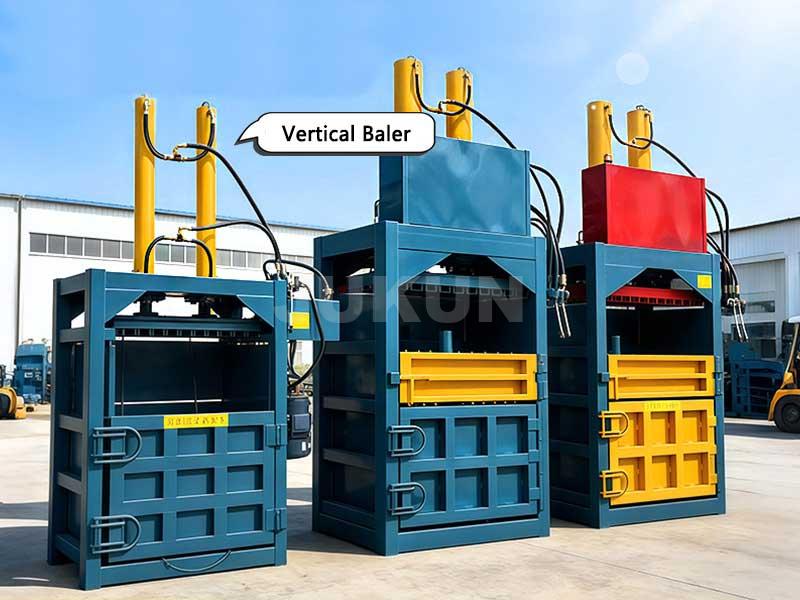 I work at a baler factory in China. I test cardboard samples in our workshop every week. I also talk to buyers in Canada, Europe, and Asia. Many of them ask the same question first. How do I pick the right machine? They want a clear answer, not a sales pitch. This guide helps you match a horizontal cardboard baler to your daily tonnage, operating schedule, bale needs, and site conditions. It covers machine size, automation choice, bale size, cost, and site checks. For a deeper cost comparison, see our separate cardboard baler price guide.
What Size Horizontal Baler Do You Need for Cardboard Recycling?
You may pick a baler by box count. That number lies. Box size and thickness change the real waste volume. A small machine then chokes at peak hours.
Start with daily tonnage in metric tonnes, not box count. Check peak days too. Then ask for real throughput. Cycle time, chamber size, and feed method set true output. Plan for growth over two to three years.
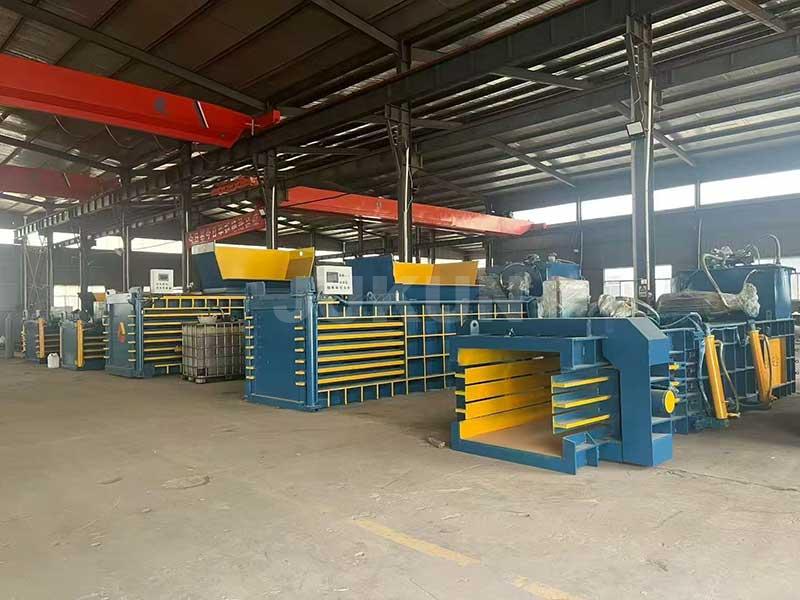 I learned this from a failed quote. A customer in Canada said he had "many boxes." We quoted a small unit. He actually ran ten tonnes a day at peak. The machine could not keep up. He lost a buyer. Now I always ask for tonnage and photos. I ask for run hours. Here is a simple way to size a machine:
| Selection Step | Example | What to Add |
|---|---|---|
| Daily cardboard volume | 12 tonnes | Add peak day volume |
| Real run hours per day | 6 hours | Use real hours, not planned hours |
| Average output needed | 2 t/h | Add a margin for peaks and stops |
| Next step | Test with your real cardboard | Confirm the rate holds with your board type |
This example gives us a clear benchmark. The facility needs an average of 2 t/h. This is the average requirement, not the guaranteed capacity of the machine. The final choice must account for peak arrivals, feeding stops, tying time, bale discharge, and planned downtime. Ask the factory to show the required output with your real cardboard and your feed method.
A model with a nominal rate near 3 t/h may be worth checking. The HBM-100 fits that range. But its real output must be confirmed by a test, not by the brochure number alone. Here are the three models from our line. I split the data into two types. The first is our workshop test rate. The second is the real output you should confirm before you buy.
| Specification | Model HBM-60 | Model HBM-100 | Model HBM-160 |
|---|---|---|---|
| Compression force | 60 tonnes | 100 tonnes | 160 tonnes |
| Motor power | 11 kW | 22 kW | 37 kW |
| Bale size | 1100 x 800 x 700 mm | 1100 x 800 x 900 mm | 1200 x 900 x 1100 mm |
| Bale weight (cardboard, dry) | About 250 kg | About 400 kg | About 550 kg |
| Workshop test rate (dry board, steady feed) | About 1.5 t/h | About 3 t/h | About 5 t/h |
| Best fit | Small shop, retail | Warehouse, depot | Recycling center |
The workshop test rate is measured with dry board and steady feed. It does not include long stops, tying delays, or bale removal time. The real output on your site will be lower. Ask the factory for a full-cycle test record. It should list the material type, test duration, input weight, and number of bales. We share this record with every buyer. Ask for the same before you pay.
Automatic vs. Semi-Automatic Horizontal Balers: Which Is Best?
You may think automatic always wins. It does not. An automatic baler costs more and needs more space. If your volume is low, you pay for speed you never use.
Semi-automatic balers fit moderate cardboard flows and tight budgets. Fully automatic balers fit high volume, long run hours, and low labor. Compare daily tonnage, labor cost, floor space, and future growth before you decide.
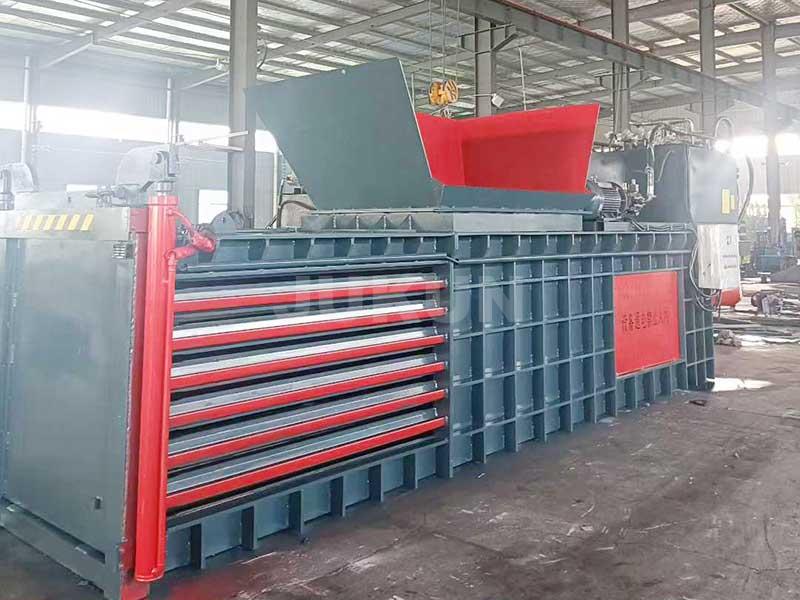 A mid-size depot once asked me about a full automatic line. They ran only four hours a day. Based on their short schedule and labor needs, a fully automatic line did not appear to justify the extra investment. The depot chose a semi-automatic model with a small conveyor instead. It fit their space and budget. Another customer ran three shifts a day. He chose full automation. His labor cost dropped. Ask the factory one clear question. Which functions are truly automatic? Feeding, pressing, tying, and bale discharge are separate features. Not every "automatic" baler includes all of them.
| Function | Basic Semi-Automatic | Semi-Automatic with Auto Tying | Fully Automatic |
|---|---|---|---|
| Feeding | By hand | By hand or small conveyor | Full conveyor |
| Pressing | Automatic | Automatic | Automatic |
| Tying | By hand | Automatic | Automatic |
| Discharge | By hand | By hand or ramp | Automatic |
| Operator need | High | Medium | Low |
Choose by your real work flow. Check your run hours and your labor cost. Ask for a test video with your board type. The best machine fits your floor, your team, and your daily tonnage. It is not always the biggest or the cheapest.
How Do Bale Size and Weight Affect Shipping and Recycling Costs?
You may focus on the machine price and forget the bale. But bale size and weight change your shipping cost, your storage needs, and your price from the recycling buyer. This is a big hidden factor.
Bigger, denser bales lower your cost per tonne. They fit more material per truck load. But they need a bigger machine and more floor space. Check what your recycling buyer accepts before you choose bale size. Match the bale to the transport and the buyer.
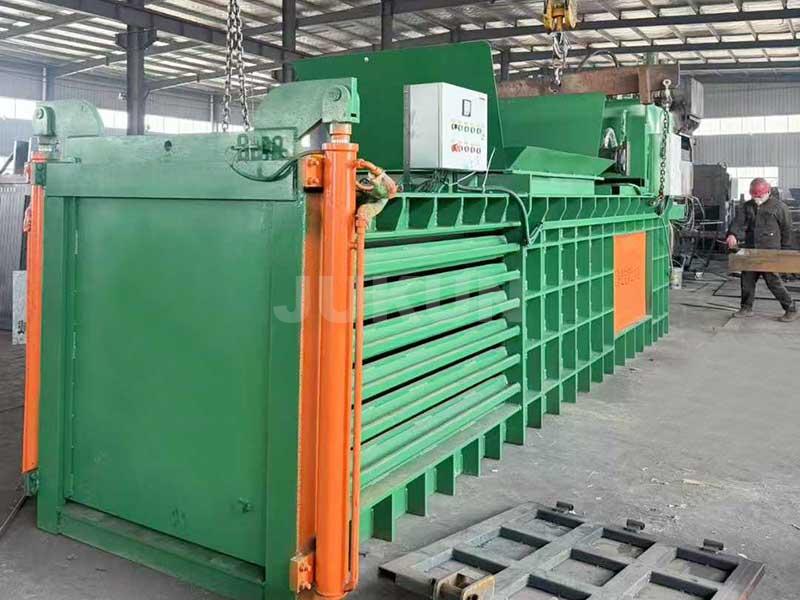 A buyer once chose the largest bale size. His recycling partner could not handle those bales. The partner used a smaller forklift and a smaller truck. The buyer had to re-bale or sell at a lower price. That mistake cost him money every month. Now I ask two questions first. What bale size does your buyer accept? What truck and forklift will move the bales? Use this table to compare the trade-offs:
| Bale Factor | Smaller Bale | Larger Bale |
|---|---|---|
| Machine cost | Lower | Higher |
| Floor space | Less | More |
| Truck load | Fewer tonnes per load | More tonnes per load |
| Handling | Easier with small forklift | Needs heavy forklift |
| Buyer fit | Fits small recyclers | Fits large mills and exporters |
| Storage | More bales per area | Fewer bales per area |
Also check bale density. A dense bale holds more cardboard in the same space. But it needs more force and a stronger wire or strap. Ask the factory for the bale density with your board type. Ask for a photo of a finished bale with its weight and size. These details help you plan shipping and storage before you buy.
How Much Does a Horizontal Cardboard Baler Cost?
You may see a low quote and feel ready to pay. But shipping, power, parts, and labor add up fast. A cheap baler can cost more over five years.
Our reference ranges follow our main price guide. A compact semi-automatic cardboard baler runs about USD 25,000 to 45,000. A mid-range fully automatic model runs about USD 50,000 to 80,000. A large industrial line often runs USD 90,000 to 150,000 or more. These ranges are for standard export setups, based on our latest review. Bale size, voltage, safety options, and trade terms change the final quote.
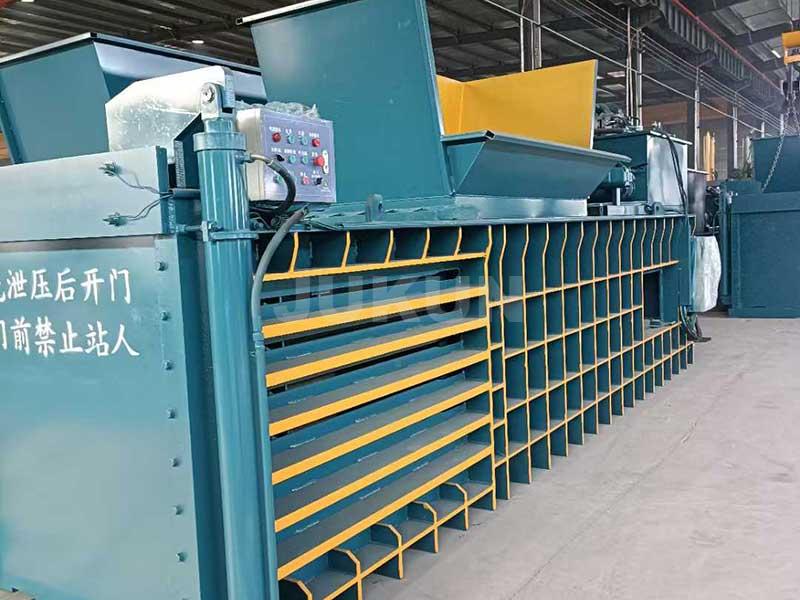 Different pages on our site may show different ranges. That is because the tonnage, automation, and included accessories differ. Always ask what is included. Ask if the price covers the conveyor, auto tying, shipping, and installation. Ask for the quote date and the trade terms. For a full cost breakdown, read our detailed horizontal cardboard baler price guide on the Jukun website. I keep the cost part short here because this article focuses on selection. But I share one rule with every buyer. Compare total cost of ownership, not just the sticker price. Add five years of power, oil, parts, and labor. One customer chose the cheapest quote. His pump failed twice in one year. The downtime cost more than the savings.
| Cost Item | What to Ask | Hidden Risk |
|---|---|---|
| Machine price | Full spec sheet and included options | Missing options raise later cost |
| Shipping | Door-to-door quote with port fees | Port fees surprise you |
| Power use | Motor kW and run hours per day | High power drains profit |
| Spare parts | Price list and stock levels | Rare parts cause long stops |
| Labor | Operators per shift and tying time | Manual tying needs more hands |
Confirm that the machine's voltage, frequency, phase, and electrical protection match your local power supply. Confirm spare parts reach you fast. A low price with slow parts is a bad deal. The best value is the machine that runs every day with little downtime.
What Should You Check Before Ordering a Horizontal Cardboard Baler?
You may compare machines by price and force only. But a baler must fit your site, your material, and your team. A machine that fits on paper may fail on the floor.
Check your door width, ceiling height, floor strength, power supply, conveyor path, and bale storage. Also check bale size with your recycling buyer. These checks avoid costly changes after the machine arrives.
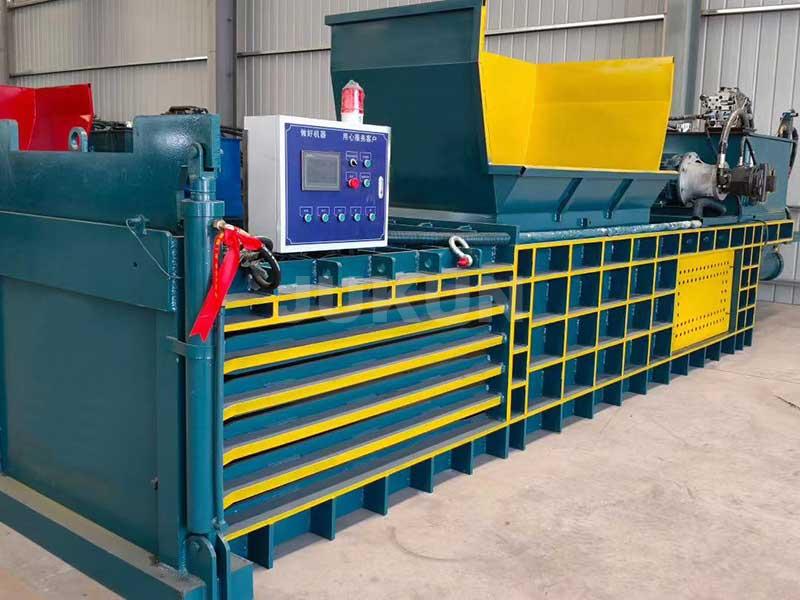 One buyer ordered a large baler. It could not pass through his warehouse door. He had to rent a crane and remove a wall section. The extra cost was thousands of dollars. Now I ask every buyer for four photos before we quote. I ask for the door, the floor, the power panel, and the bale storage area. Use this list to plan your site:
| Check Item | What to Measure | Why It Matters |
|---|---|---|
| Door width and height | Clear opening in mm | Machine must pass through |
| Ceiling height | Floor to lowest beam | Feed hopper needs space |
| Floor strength | Concrete thickness and load rating | Machine weight needs support |
| Power supply | Voltage, frequency, phase, breaker size | Wrong power damages the motor |
| Conveyor path | Distance from sorting area to baler | Long paths slow the feed |
| Bale storage | Space for finished bales | Full bales block the exit if space is tight |
| Buyer bale spec | Size and weight your recycler accepts | Wrong bale size cuts your price |
Also check bale fit with your buyer. Large bales need a heavy forklift and a big truck. Small recyclers may only take smaller bales. Ask your buyer first. Then ask the factory for a photo of a finished bale with its weight. A good supplier asks for these details first. A weak one ships the machine and lets you solve the problems.
Need Help Choosing a Cardboard Baler?
Send us your daily cardboard tonnage, bale size, voltage, floor space, and door width. Our team at Jukun will review your case and suggest a machine setup. You will get three things. First, a machine setup that fits your board type and tonnage. Second, a test video or test record for the model we suggest. Third, a clear parts price list and a full quote range. Contact us before you order.
Conclusion
Choose the size by daily tonnage, the type by work flow, and the cost by total ownership. Check your site and bale fit first. Then you buy right.