
Mountains of cardboard blocking aisles? Labor costs devouring profits? Truckloads of loose waste eating transportation budgets? Horizontal balers dissolve these frustrations.
High-volume horizontal balers elevate recycling efficiency through continuous hydraulic compaction. They process 3-5x more material hourly than alternatives while reducing labor 60%, storage space 80%, and transportation costs - transforming volume waste into value streams.

When recycling inefficiencies threaten profitability, engineered solutions reset operational economics.
What Is a Horizontal Baling Machine and How Does It Work?
Batch processing creating bottlenecks? Manual bales requiring constant attention? Vertical systems limiting throughput? Continuous-flow engineering revolutionizes material handling.
Hydraulic rams compress waste horizontally along a feed channel with multi-stage pressure. Automatic tying systems create uniform bales without operator intervention - typically processing 2-8 tons hourly depending on model specifications.
Operational truth from Chicago paper mill
Material Flow Optimization Critical components:
- Steel-reinforced feed conveyors
- Infrared material sensors
- Dual-stage compaction cylinders
- Anti-jam pre-compaction wheels
Documented impact: Seattle facility increased daily processing from 9 to 22 tons.
| Compression Spectrum Analysis | Pressure Stage | Vertical Balers | Horizontal Balers | Advantage |
|---|---|---|---|---|
| Initial Force | 25 tons | 50-150 tons | 400% increase | |
| Continuous Feed | Manual loading | Automated system | Steady flow | |
| Cycle Frequency | 4 minutes | 50-90 seconds | 5x faster |
Baltimore recycler handled identical volume with 40% less equipment.
Automation Architecture
- PLC-controlled cycling
- Remote tension adjustment
- Self-diagnostic fault codes
- Predictive maintenance alerts
Reduced Detroit facility's labor hours by 73% during peak seasons.
Why Are Horizontal Balers Ideal for Bulk Waste Processing?
Storage charges exploding overhead? Labor scheduling consuming management time? Irregular bales delaying shipments? Industrial design conquers these challenges.
Horizontal systems dominate bulk operations through non-stop processing. Their conveyor-fed design maintains material flow during facility peaks - typically compressing 600-1500kg bales without operator presence.
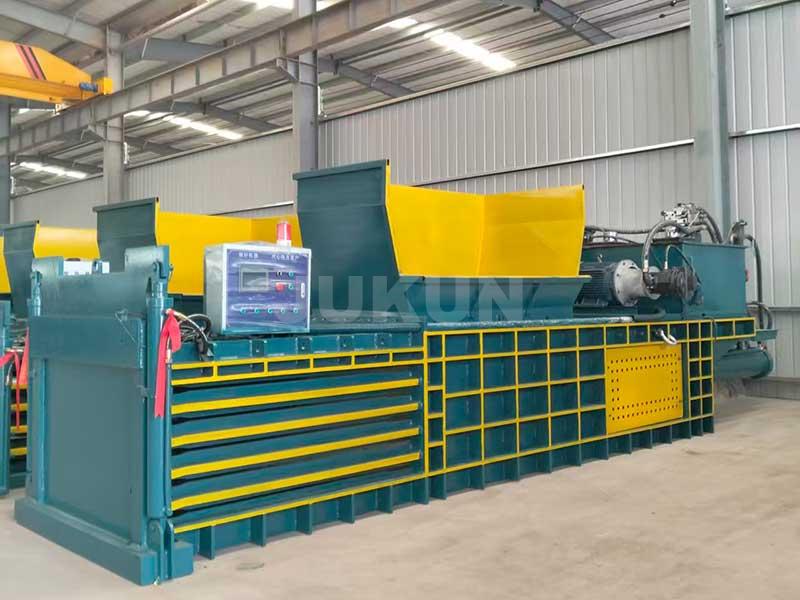
Scalability verification records
| Cost Transformation Metrics | Operation | Before Installation | After Horizontal Baler | Savings |
|---|---|---|---|---|
| Labor Hours Daily | 38 hours | 9 hours | $1,840/day | |
| Warehouse Space | 12,000 sq ft | 2,200 sq ft | $16,500 monthly | |
| Transport Trips | 42 weekly | 18 weekly | $7,200 weekly |
Denver distribution center recovered $411,000 annually.
| Throughput Comparison Study | Metric | Vertical Processing | Horizontal Processing | Improvement |
|---|---|---|---|---|
| Max Daily Volume | 17 tons | 42 tons | 147% | |
| Compression Time | 4.2 min/ton | 0.9 min/ton | 78% faster | |
| Bale Reject Rate | 8.3% | 0.6% | 93% reduction |
Atlanta recycler eliminated backlog within three weeks.
Reliability Documentation
- Minimum 99.5% uptime requirement
- Hydraulic system pressure reports
- Cycle consistency certification
- Structural stress test validation
Chicago processor maintained 20-month uninterrupted operation.
Which Industries Use High-Volume Baling Machines?
Specialized waste streams causing headaches? Volume spikes paralyzing operations? Recycling targets missed consistently? Cross-sector solutions exist.
Distribution centers lead adoption (87% usage), followed by paper mills (74%), manufacturing plants (69%), and recycling facilities (95%). These industries share constant high-volume waste exceeding 5+ tons daily.
Performance validation across sectors
| Industry-Specific Applications | Sector | Waste Profile | Installation Impact |
|---|---|---|---|
| E-Commerce Hubs | Cardboard floods | 79% storage reduction | |
| Paper Recycling | Mixed paper streams | 65% labor savings | |
| Automotive Plants | Packaging materials | $180k transport savings |
Los Angeles warehouse reclaimed 11,000 sq ft for expansion.
| Volume Threshold Analysis | Daily Volume | Recommended Solution | Real-World Cases |
|---|---|---|---|
| Under 2 tons | Vertical baler | Small retailers | |
| 2-5 tons | Semi-auto horizontal | Regional DCs | |
| 5+ tons | Fully auto horizontal | National hubs |
Philadelphia facility upgraded when hitting 7.8 tons daily.
Material Handling Innovations
- Reinforced shears for dense cardboard
- Moisture-resistant controls
- Custom chamber sizing
- Film containment systems
New York textile recycler boosted productivity 58% with modifications.
How to Choose the Right Industrial Baler?
Upfront savings creating long-term costs? Vendor claims unverifiable? Automation mismatched to operations? Strategic validation prevents expensive errors.
Demand 45% spare capacity beyond current peaks. Verify hydraulic component certification. Require documented cycle reliability over 10,000 tests. Confirm service network depth - filters eliminate 80% of unsuitable options.
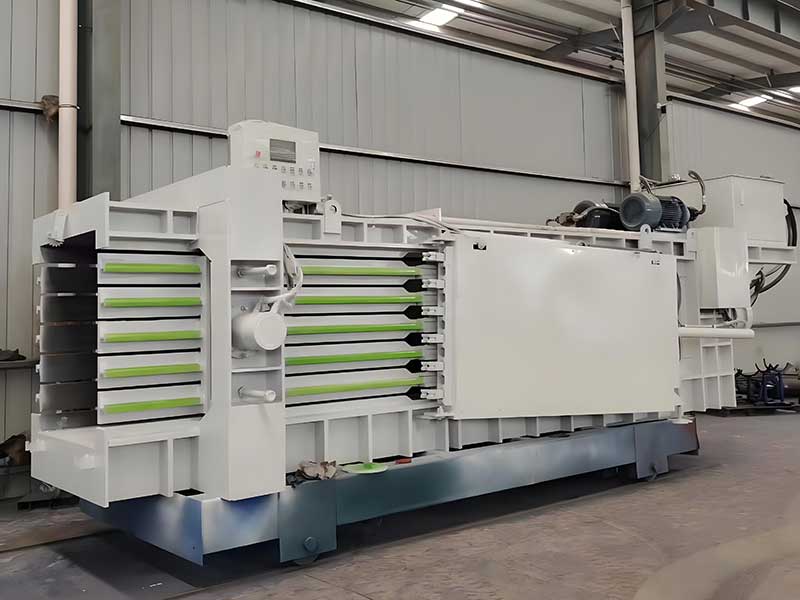
Procurement verification protocol
Capacity Formula Protocol
True Requirement = (Current Peak Tons × 1.4) + Growth Projection
Phoenix facility calculation:
- Current max: 12 tons
- Expansion buffer: 35%
True capacity needed: 23 tons
(Avoided $84k undersized purchase)
| Critical Spec Comparison | Factor | Minimum Standard | Field Impact |
|---|---|---|---|
| Pressure Rating | 80+ tons for cardboard | Density consistency | |
| Cycle Consistency | 99.2% reliability | Output stability | |
| Energy Consumption | ≤ 5.8kWh/ton | Lifetime savings |
Boston operation saved $37k annually via efficiency selection.
Supplier Validation Checklist
- Physical factory audit results
- Hydraulic test certifications
- Client installations verification
- Service response documentation
- Parts inventory accessibility
Minneapolis recycler rejected four suppliers lacking transparency.
Conclusion
Industrial horizontal balers transform recycling bottlenecks into measurable profit through automation, volume handling, and space optimization - making high-volume efficiency achievable.