
Struggling with cardboard piling up? Losing profits to inefficient recycling? We’ve all faced this. I once saw a small recycling plant nearly shut down because their baler choked on daily volumes.
A fully automatic horizontal baler processes 1 to over 30 tons of cardboard per hour. Exact capacity varies by model specs, opening size, hydraulic pressure, material density, and automation level. Match your machine to actual needs—this prevents workflow bottlenecks and boosts ROI.
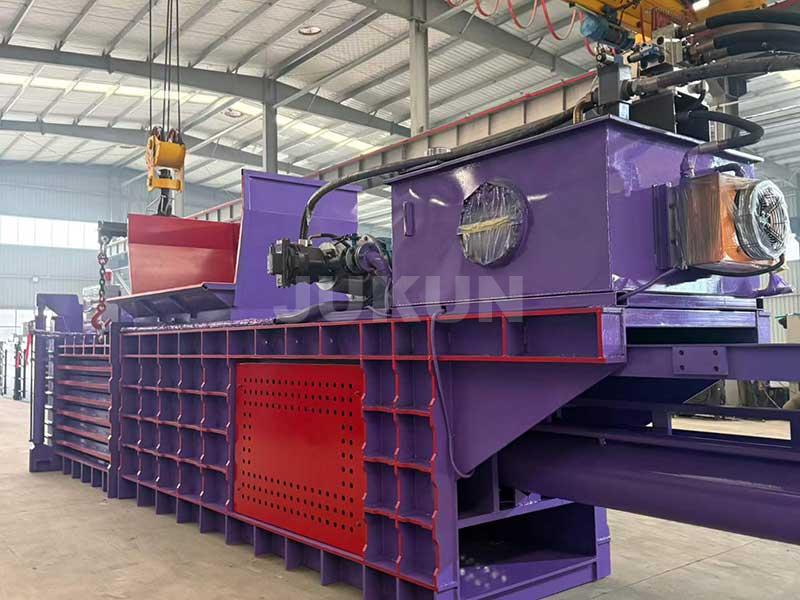
I’ll explain why hourly claims look so different in real plants. Knowing these truths helps avoid expensive mistakes. Let’s clarify the factors impacting true capacity.
What Factors Affect the Capacity of a Horizontal Baler?
Is your baler underperforming despite specs? It’s frustrating when promised tons vanish. Hydraulics aren’t the whole story—I learned this during factory audits last year.
Baler capacity depends on hydraulic force, opening size, conveyor feed speed, compression cycles, automatic tying efficiency, cardboard density/moisture, and operator workflow. These elements combined determine hourly throughput in practice.
Let’s examine five game-changers most buyers overlook:
Hidden Throughput Killers
- Material Variations: Dry OCC yields 25% higher volume than damp mixed paper. Density variations alter cycle times and bale weights.
- Human Bottlenecks: Manual feeding adds delays. Fully automated systems trim those seconds—our client’s facility cut 8% downtime using Jukun’s conveyor solutions.
-
Cycle Sync Issues: Fast compression means nothing if tying lags. Watch synchronization between stations: Component Slow System Optimized System Compression 30 sec 22 sec Tying Mechanism 15 sec 8 sec Reset Time 10 sec 5 sec - Moisture’s Weight Trick: Wet cardboard adds water weight but reduces compressibility. One Toronto facility saw 12 TPH drop during rainy seasons until adding dehumidifiers.
- Maintenance Gaps: Unlubricated ram guides slow compression. Regular checks keep cycles efficient—I recommend weekly hydraulic inspections.
Never trust hydraulic PSI alone. Demand test videos using material like yours.
How Is Horizontal Baler Throughput Measured and Calculated?
Skeptical about seller claims? Real numbers lie beyond glossy brochures. I recall a client shocked when their "20 TPH" machine yielded 14.
Manufacturers calculate baler throughput in tons/hour based on bale weight × cycles per hour. Actual output requires testing under normal conditions, covering compression time, material prep, and feeding consistency. Lab conditions ignore real-world disruptions.

Let’s demystify measurement methods:
Reality vs. Theory
- Standard Testing: Reputable factories like ours run 8-hour continuous trials at Jukun—monitoring:
- Average bale weight (kg)
- Cycles completed per hour
- Total hourly output (bale weight × cycles)
- Formula Breakdown:
Throughput (TPH) = (Bale Weight × 3600) / Total Cycle Time (seconds)
Example: 500kg bales × 40 cycles hourly = 20 TPH. - Field Adjustments: Operators often sacrifice speed for bale density. Higher compression = heavier bales but fewer cycles.
- Variable Factors:
- Cardboard irregularity extends feeding time
- Conveyor jams reduce active hours
- Worker shifts affect consistency
Request raw trial footage from factories. Validate against your cardboard profiles.
Which Industries Require High-Capacity Horizontal Balers?
Choosing overkill balers wastes money. But undersizing halts production—I’ve seen distribution centers lose $8,000 daily during baler failures.
High-capacity horizontal balers suit paper mills, recycling plants, distribution centers, packaging manufacturers, supermarkets, and waste firms processing over 15 tons daily. Continuous cardboard streams demand automated systems to avoid accumulation.
Consider sector-specific needs:
Volume Demands by Industry
- Recycling Plants: Handle 30-100 TPH. Need auto-tie systems to manage nonstop flows. One Jukun client runs three units 24/7.
- Distribution Centers: Peak periods require 20-50 TPH balers. E-commerce surges make scalability vital.
- Paper Mills: High-density bales matter more than speed. Balers must compress mixed materials uniformly.
- Supermarkets: Space limits machine size, yet daily cardboard reaches 3-8 tons. Our compact Jukun models fit backrooms.
Assess your peak loads. Invest where delays cost most.
How to Choose the Right Horizontal Baler Capacity for Your Business?
Regretting an oversized baler? I helped a Canadian seller return an unused machine last year. Capacity mismatches waste capital.
Select balers based on daily volume, peak demands, material type, growth plans, space limits, and automation needs. Right-sizing minimizes operating costs and future-proofs investments while preventing bottlenecks.

Follow this step-by-step approach:
Capacity Sourcing Strategy
- Calculate Averages: Track cardboard volumes weekly. Include seasonal peaks—retailers often triple post-holiday volumes.
- Automation Audit:
- No night shifts? Manual feed balers work
- 24/7 ops? Prioritize conveyor-fed auto-tie systems like our Jukun JKB-360
- Space vs. Growth:
- Tight warehouse: Modular expandable systems
- New facilities: Reserve 30% extra capacity
- Cost Projections: Undersized balers need extra shifts costing $90/hour. Oversized units consume 40% more power idly.
- Supplier Vetting:
- Demand real workplace videos
- Test certificates for hydraulic components
- Check logistics timelines
Partner with certified factories—Jukun balers come with CE/ISO documentation and PLC data logs.
Conclusion
Balance capacity, cost, and workflows. Choose balers matching your actual cardboard volume to maximize efficiency and ROI.