
Choosing wrong automation cripples profits. Overpaying for unused features hurts competitiveness. Find your perfect fit.
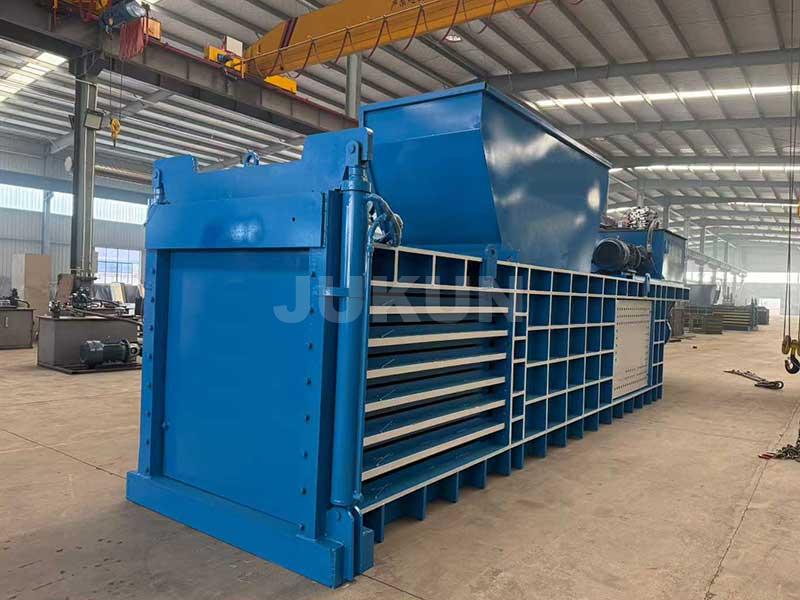
A semi-automatic horizontal baler is a cost-effective recycling machine that compresses large volumes of recyclable materials while requiring manual bale tying. It is ideal for businesses with medium to high waste volumes that need reliable performance without the higher investment of a fully automatic baler. When choosing a semi-automatic horizontal baler, consider waste volume, labor availability, production requirements, and budget to ensure the best long-term value.
Match your operation today.
How Do Semi-Auto Balers Actually Function?
Manual baling exhausts workers. Full automation overshoots needs. Hybrid operation bridges gaps.
Conveyors feed cardboard automatically—850 PSI hydraulic rams compress bales—then staff manually ties wires before ejection—delivering industrial compression at 45% lower price than robotic tiers.
Operation sequence comparison:
| Process Stage | Manual System | Semi-Auto Advantage | Full Automation Cost |
|---|---|---|---|
| Feeding | Hand-carry every piece | Auto conveyor + hopper | +$18,700 |
| Compression | Hand-crank (20+ minutes) | Hydraulic press (90 sec) | Same |
| Tying | Manual threading (12 min) | Manual wire (6 min) | Auto-tier (+$31,200) |
| Ejection | Forklift removal | Gravity chute | Pusher ram (+$9,500) |
| Daily Output | 2.8 tons | 6.7 tons | 8.1 tons |
| Labor Demand | 4 workers | 2 operators | Minimal oversight |
Toronto distributor result: Cut labor from 3 to 1.5 FTEs. Key feature: timed compression lock. Test: load mixed cardboard during demo.
When Does Semi-Auto Outperform Full Automation?
Empty robots waste capital. Labor shortages hurt. Strategic balance wins.
Choose semi-auto if your shifts process under 10 tons or you afford ≤2 operators—payback occurs within 14 months instead of 31—avoiding $28k hardware premiums.

Break-even scenarios:
| Business Factor | Semi-Auto Choice | Full-Auto Choice | Jukun's Recommendation |
|---|---|---|---|
| Daily Volume | <10 tons | >15 tons | Volume calculators provided |
| Labor Cost | <$19/hour | >$27/hour | Regional wage reports |
| Shift Pattern | Single shift | Multi-shift | Automation sensors included |
| Available Space | Limited floor | Dedicated area | Compact layout designs |
| Maintenance Skill | Basic mechanical | PLC programming | Training videos supplied |
| Cash Flow | <$65k budget | >$110k investment | Lease-to-own options |
Montreal recycler mistake: Bought full-auto running at 38% capacity. Our solution: Free throughput analysis before quoting. Verify: track actual daily bales.
Who Should Never Consider Semi-Auto Systems?
Slow tying stalls output. High turnover cripples. Smart screening avoids pain.
24/7 plants needing >10 tons/hour can't wait tying—medical recyclers demand traceable wires—places under OSHA scrutiny better suit fully-automated systems.
Mismatch warnings:
| Business Type | Semi-Auto Suitability | Signs of Wrong Fit | Alternative Solution |
|---|---|---|---|
| MRFs >10 TPD | Low: tie-time bottleneck | Overtime constantly needed | Dual-ram systems |
| Food Packaging | Conditional: waterproof needed | Corroded wires | Stainless tie kits |
| Retail Distribution | Excellent: variable volumes | N/A | Expandable chambers |
| Recycling Depots | Good: volunteer workforce | Training failures | Color-coded guides |
| Auto Parts Plants | Acceptable: 2-shift max | Grease interferes | Special shields |
| Textile Recyclers | Avoid: fluffy material | Tangled wires | Vertical alternatives |
Vancouver warehouse success: Implemented with color-coded tying sequence. Critical spec: 60-second safety auto-stop during tying.
How to Verify True Durability Before Signing?
Thin steel warps. Faked components fail. Hands-on checks prevent regrets.
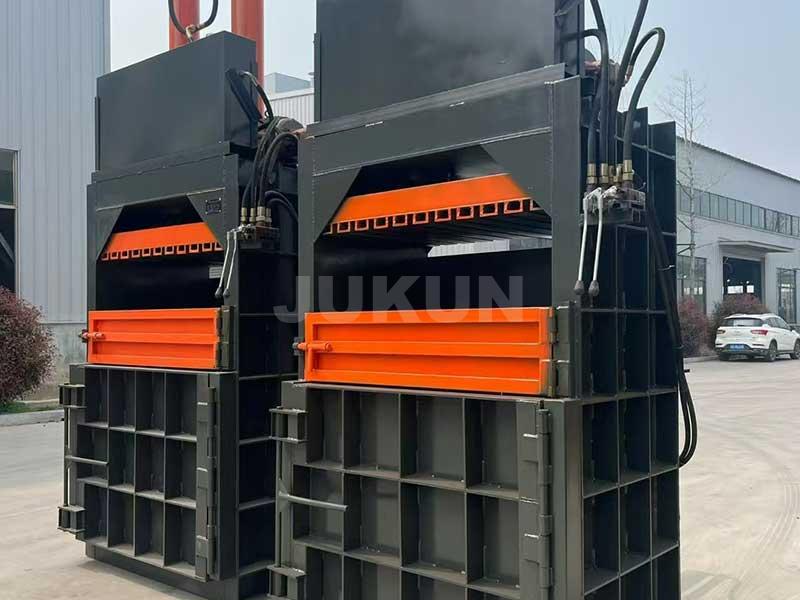
Measure cylinder wall thickness—demand 12mm steel certificates—test pressure buildup—count hose fitting brands—verify electrical cabinet brands—record noise below 80dB.
Pre-ship verification table:
| Component | Acceptable Standard | Fraud Indicator | Test Method |
|---|---|---|---|
| Frame Steel | >10mm grade Q345B | Rust under paint | Thickness gauge |
| Hydraulic Tank | 50L capacity | Thin gauge metal | Strike test |
| Electricals | Schneider / Siemens | Unlabeled components | Panel inspection |
| Oil Seals | NOK brand | Generic packaging | Marking check |
| Wire Twisters | Hard-chromed | Paint-coated | File test |
| Platen Welds | No splatter marks | Grinding evidence | Dye penetrant |
Calgary importer saved: Rejected baler showing 6mm frame steel. Our guarantee: Jukun provides steel mill certificates with order. Necessity: witness hydraulic pressure tests.
Conclusion
Semi-auto balers optimize moderate recyclers—delivering industrial power without over-automation expenses.