
Piles of loose waste cost space and money. Manual compaction drains staff energy. Industrial balers solve both instantly.
Baler machines compress cardboard, plastic, paper, and metals into dense rectangular bales using hydraulic pressure—reducing volume by 90%, slashing storage needs 75%, cutting transport costs 50%, while creating sellable recyclables generating $15-$290/ton revenue.
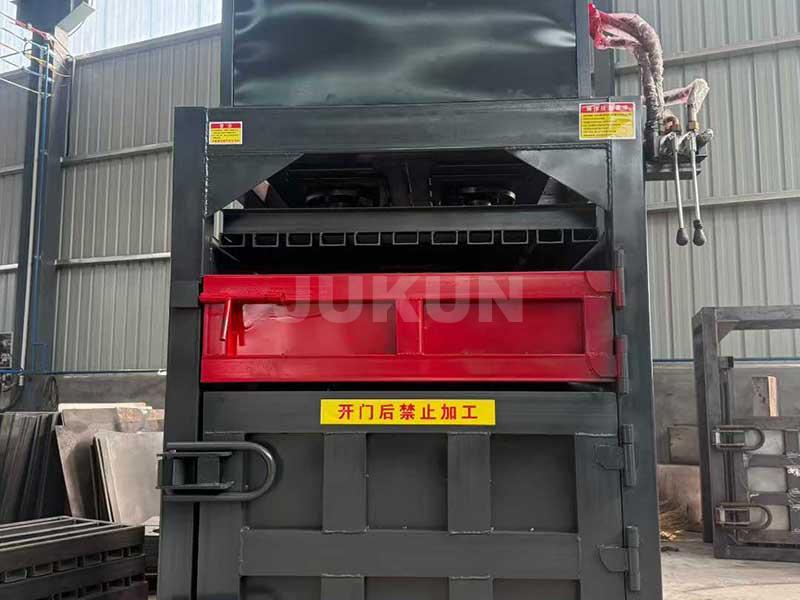
Turn waste into profit.
How Does a Baler Machine Work Step by Step in Industrial Recycling Operations?
Chaotic waste streams disrupt production. Manual handling causes injury risks. Hydraulic systems bring order and safety simultaneously.
Workers load recyclables into the chamber, hydraulic cylinders apply 80-300 tons pressure, dense bales autotie with wires/straps in 45-90 seconds, then eject finished blocks—achieving 95% density consistency continuously.
Critical phases detailed:
Hydraulic compression mechanics
Field-tested across industries:
| Stage | Action | Duration | Key Components | Failure Risks |
|---|---|---|---|---|
| Feeding | Material enters | 10-30 sec | Infeed conveyor | Jams from oversized items |
| Pre-compaction | Initial crushing | 15-25 sec | Pre-press plates | Uneven material spread |
| Main Compression | Full hydraulic force | 20-60 sec | Cylinder tonnage | Overheating over 65°C |
| Tying | Wire/straps applied | 8-15 sec | Tensioners | Loose ties under <70kg force |
| Ejection | Bale discharge | 5-12 sec | Ejector ram | Conveyor misalignment |
Pressure stability ensures profit. Jukun's thermal-monitored systems maintain ±3% pressure variance—preventing cardboard density drops below 280kg/m³. Temperature protection is critical: hydraulic oil viscosity fails at 70°C causing $700/day downtime. Material preparation prevents problems: cardboard exceeding 1.5m lengths causes chamber jams in 18% of cycles. Document wear: measure ram seals monthly—replace if leakage exceeds 30ml/hour.
What Are the Main Applications of Baler Machines in Waste Recycling Industries?
Mixed recycling complicates value recovery. Specialized sectors demand tailored solutions. Correct baling multiplies revenue streams.
Supermarkets process 5 tons/day cardboard—recycling facilities bale PET bottles earning $280/ton—textile plants compress cotton scraps into 380kg blocks selling to insulation makers.
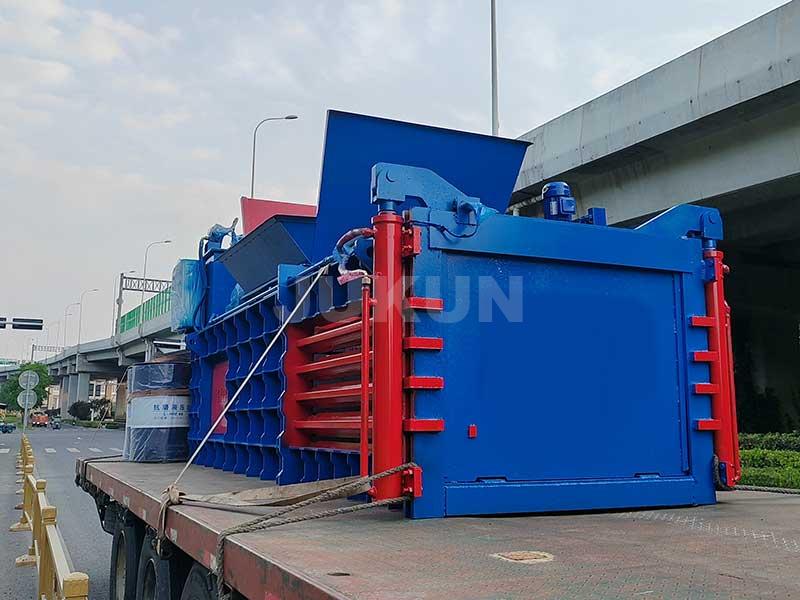
Sector-specific uses:
Application optimization matrix
Jukun performance data:
| Industry | Primary Material | Bale Density | Revenue Impact | Special Adaptation |
|---|---|---|---|---|
| Retail | OCC Cardboard | 350-380kg/m³ | $42k/year savings | Low-noise operation |
| Recycling Plants | PET Bottles | 280kg/m³ | $290/ton value | Air-release valves |
| Manufacturing | Steel Shavings | 510kg/m³ | $320/ton resell | Spark-proof motors |
| Textiles | Fabric Offcuts | 180kg/m³ | 24% higher prices | Humidity controls |
| Distribution | Plastic Film | 185kg/m³ | 60% fewer trucks | Shredder pre-process |
Steel shavings require hardening. Our balers include tungsten-carbide cylinders resisting metal abrasion—extending lifespan 120% beyond standard models. Contamination control impacts value: food packaging in retail bales reduces purity below 95% triggering $27/ton penalties. Critical adjustment: textile balers need 65-70% humidity to prevent static fires. Track bale weights: reject any under 400kg to maintain buyer contracts.
What Are the Key Benefits of Using a Baler Machine for Waste Management and Recycling?
Air-filled waste wastes money. Manual labor increases injury rates. Compaction transforms liabilities into assets rapidly.
Dense bales reduce transport volume 90%, cut storage space 75%, lower labor costs 70% per ton—while creating recyclable commodities generating $15-$1,400/ton based on material purity.
Profit levers quantified:
Operational benefit analysis
Canadian case studies:
| Benefit | Average Impact | Requirements | Financial Value | Measurement Method |
|---|---|---|---|---|
| Transport Savings | $52/ton | Density >320kg/m³ | $31,200 yearly | Freight invoices |
| Space Recovery | 200m² reclaimed | Uniform bale size | $16,800 lease value | Floor plan overlay |
| Labor Reduction | 2.8 hrs/ton saved | Auto-tie system | $44,100 annual | Time tracking |
| Revenue Generation | $25-$1,400/ton | Purity >95% | $58k quarterly | Recycling reports |
| Safety Improvements | 57% fewer injuries | Guarded zones | $18k insurance cut | Incident logs |
Density drives margins. Ontario recyclers earned 28% higher PET prices by achieving 290kg/m³ versus industry-average 260kg/m³. Fire risks plummet: compacted cardboard ignites 70% slower than loose waste reducing insurance premiums. Critical metric: calculate bales per labor-hour—automated systems achieve 14.8 versus manual 3.2. Bonus benefit: uniform bales attract premium buyers paying 5-10% above spot prices.
How to Choose the Right Baler Machine for Your Industry, Capacity, and Budget?
Underpowered machines cause breakdowns. Oversized units waste capital. Precision matching prevents $50k+ losses.
Select balers with hydraulic force matching material density (100+ tons for steel), capacity 140% daily peak volume, automation for >18 tons/week operations—demand hydraulic validation reports proving specs.
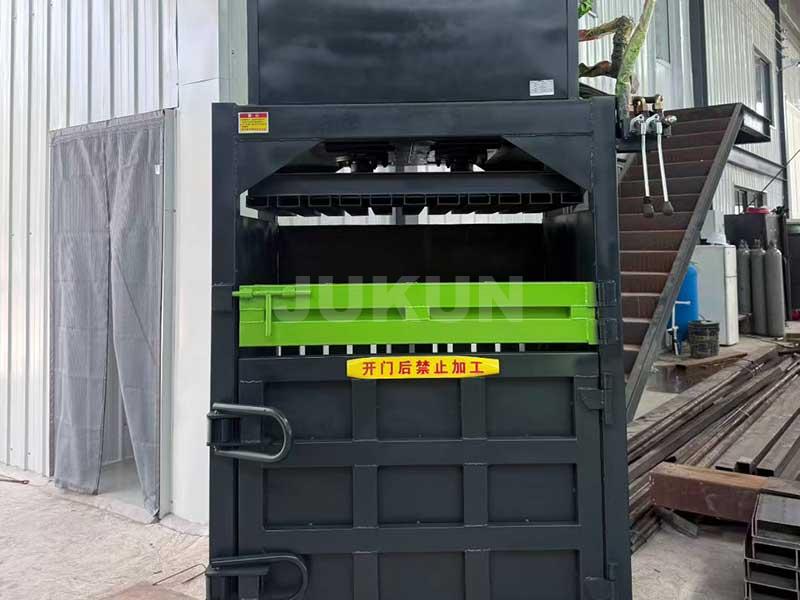
Avoid common pitfalls:
Specification matching protocol
Jukun engineer recommendations:
| Factor | Standard Requirement | Testing Method | Cost of Error | Verification Tool |
|---|---|---|---|---|
| Material Match | PET: 100 tons minimum | Load cell reports | 50% density failure | Material trial videos |
| Daily Volume | 130% peak processing | 8-hour run test | $22k upgrade needed | Waste audit data |
| Automation Level | 20+ tons/week: auto-tie | ROI calculation | 0.9 FTE wasted | Labor cost analysis |
| Duty Rating | 18+ hours/day: oil-cooled | Thermal imaging | $8k motor burnout | Temperature logs |
| Certification | Mandatory CE/ISO | Document review | $35k re-export cost | Certificate copies |
Hydraulic validation prevents fraud. Demand sensor data—Jukun provides calibrated pressure graphs showing consistent output. Space planning avoids failures: measure ceiling clearance—low-profile horizontal balers need just 2.9m clearance versus 3.7m standard units. Lead time clauses matter: stipulate 72-hour spare parts delivery to prevent $1,100/hour downtime. Certification checks: confirm ISO 9001 prevents customs delays costing $450/day.
Conclusion
Baler machines transform waste processing—delivering unmatched volume reduction, logistics optimization, and revenue generation impossible through manual methods.