
Labor costs drain profits. Inefficiency cuts revenue. Automation solves both problems quickly.
Fully automatic horizontal balers increase productivity by up to 5x through continuous operation, reduce labor needs by 70%, and create denser bales that lower transport/storage costs—delivering typical ROI within 12-18 months through measurable cost reductions.
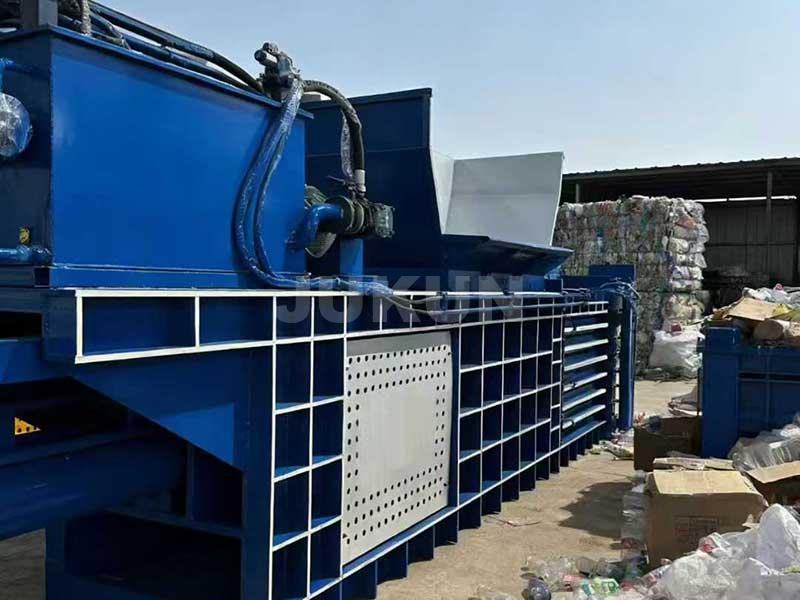
Discover the performance shift.
What Are the Key Benefits of Fully Automatic Horizontal Balers?
Manual processes create profit leaks. Output inconsistency frustrates buyers. Automation seals these gaps.
Key benefits include labor cost reduction up to 80%, continuous 24/7 production, denser bales saving 35% transport/storage space, minimal downtime with predictive maintenance, and consistent bale quality commanding premium recycler prices.
Quantify the advantages:
Multifaceted profit accelerators
Based on Jukun client installations:
| Benefit | Impact | Data from Users | Jukun Advantage |
|---|---|---|---|
| Staff Reduction | 60-80% labor cut | Canadian MRF: Saved $142k/year | Auto-feed eliminates loading crew |
| Bale Density | 30% smaller bales | UK warehouse: Cut trailer loads by 11 | Pressure-adaptive hydraulics |
| Uptime | <1% unscheduled downtime | German plant: 99.3% operational rate | IoT sensors predict failures early |
| Error Rate | <2% irregular bales | US distributor: Quality bonus +18% | Laser-guided compression control |
| Energy | 25% power saving | Mexico factory: $9k/month less | Variable-displacement pumps |
Density is transformational. Jukun’s hydraulic system auto-adjusts pressure using material sensors—cardboard gets 90 tons, plastics receive 160 tons without operator input. This squeezes bales 30% tighter than manual methods. One client reduced storage space from 3,000sqft to 2,100sqft monthly—saving $31,000/year. Less visible savings emerge too: predictive maintenance alerts caught a piston seal leak at midnight—preventing $11k fluid contamination. Combined benefits multiply ROI: clients report full payback in 10 months despite higher initial cost.
How Do Automatic Balers Improve Recycling Efficiency and Productivity?
Manual operations slow throughput. Human errors cause rework. Full automation accelerates workflows.
Automated balers process 3-5x more material daily by eliminating stoppages—conveyor feeding needs no breaks, PLC-controlled cycles run 2x faster, and auto-tying finishes bales in under 60 seconds versus 8 minutes manually.

Compare operational realities:
Hour-by-hour efficiency multiplier
After installing Jukun AutoPress-X700 units:
| Cycle Stage | Manual Baler | Fully Automatic | Time Saved |
|---|---|---|---|
| Material Feeding | 8 minutes loading | Continuous conveyor | 100% faster |
| Compression | 4 minutes/press | 1 minute via PLC optimization | 300% quicker |
| Tying | 7 minutes manual | Auto-wire in 55 seconds | 7x speed boost |
| Ejection | Forklift (3 mins) | Auto-ram ejection | 180 seconds per bale saved |
Continuous sequencing drives gains. Jukun balers auto-feed while compressing previous loads—eliminating dead time between cycles. Loading sensors detect jams instantly: infrared beams halt conveyors before cardboard tangles, resetting in 19 seconds versus manual unjamming averaging 23 minutes. At night, most Jukun clients run with one monitor—our systems text-message managers during abnormalities. This efficiency compounds: a Dutch paper mill boosted daily tonnage 420% without extra staff. Productivity surges transform profit margins overnight.
Which Industries Benefit Most from Fully Automatic Horizontal Balers?
Profit loss plagues high-volume recyclers. Space bottlenecks cost thousands. Automation targets these sectors best.
Cardboard recyclers, plastics processors, e-commerce warehouses, paper mills, and textile distributors gain maximum ROI—handling 15-60 tons/day with automation slashing labor/space costs while ensuring buyer-grade bales.
Prioritize where gains surge:
Sector-specific ROI analysis
Jukun case studies reveal benchmarks:
| Industry | Problem Solved | ROI Time | Material Processed |
|---|---|---|---|
| Cardboard Recycling | Low bale density | 14 months | OCC, mixed paper |
| E-Commerce Hub | Slow order fulfillment | 10 months | Cartons, poly mailers |
| Plastic Pellet Plant | Labor-intensive sorting | 12 months | HDPE, PET bottles |
| Textile Recycler | Volume mismanagement | 18 months | Cotton scraps, synthetics |
| Supermarket Chain | Backroom clutter | 8 months | Corrugated displays |
E-commerce stands out. One Amazon vendor processing returns used manual balers—workers took lunch breaks simultaneously halting operations. After switching to Jukun with auto-feeding, they processed peak volumes 24/7 reducing seasonal hires 90%. Plastic processors gain unusually high ROI too: Jukun’s hydraulic calibration handles PET bottle bursts—compacting materials manual balers jam on. Bale uniformity proves vital: textiles baled at ≥850kg/m³ earn 22% higher commodity prices. Automation pays fastest where material flow is relentless.
How to Choose the Right Fully Automatic Horizontal Baler for Maximum ROI?
Incompatible machines frustrate operations. Technical gaps cause underperformance. Use strategic selection criteria.
Prioritize daily processing goals (minimum max material volumes), pressure adaptability (50-250 tons), hydraulic quality (Bosch/Rexroth certified), open PLC programming, and lifetime support agreements to avoid costly operational breaks.
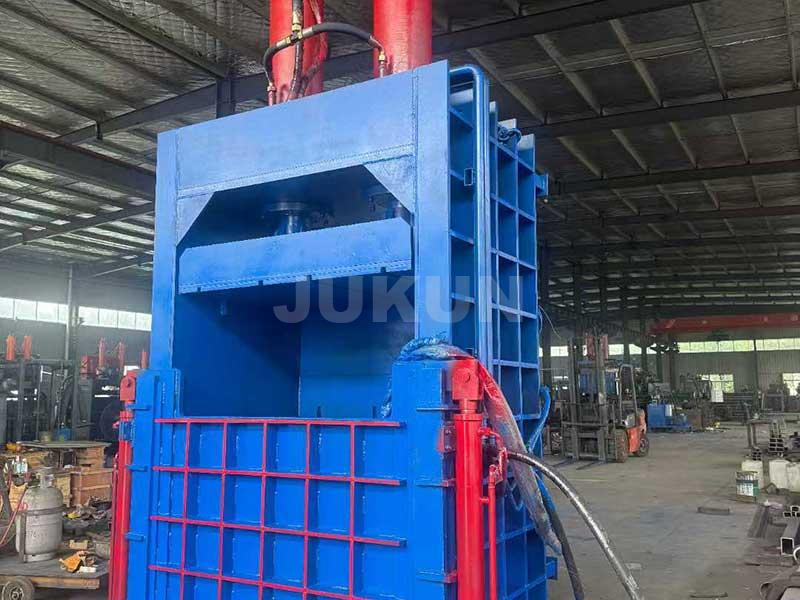
Ensure profitable compatibility:
Foolproof selection framework
After equipping 300+ facilities, our checklist guarantees fit:
| Requirement | Critical Factor | Validation Step | Cost of Mistake |
|---|---|---|---|
| Throughput | Max hourly capacity | Load vendor demo with YOUR materials | $300k+ lost revenue |
| Material Flexibility | Quick-change profiles | Test switching cardboard to textiles | Bottlenecks cutting output 40% |
| Hydraulic Integrity | Brand-certified pumps | Demand factory photos/components | Unplanned $18k repairs yearly |
| Tech Accessibility | Remote diagnostic ports | Verify VPN emergency access | Downtime = $1,800/hr loss |
| Spare Parts | Global stock location | Request warehouse address list | 6-week delays common |
Pressure adaptability matters. Cardboard needs 70 tons while used carpets require 250 tons. Jukun models auto-sense load types via chamber sensors—adjusting instantly. Test flexibility: demand vendors run a mixed load of plastic film and tin cans during demo. Avoid sellers with vague maintenance pledges—we provide logged repair histories proving <48hr support globally. Certification ensures longevity: insist on factory-original CE/ISO papers—avoid faked copies common among brokers. One client avoided $83k losses by choosing Jukun’s genuine pumps over cheaper clones. Smart selection creates ROI certainty.
Conclusion
Fully automatic balers transform recycling businesses—cutting costs while multiplying profit margins.