
Manual baling wastes labor hours. Semi-auto models bottleneck production. Full automation solves these daily struggles.
Fully automatic horizontal balers outperform manual/semi-auto models by eliminating human intervention—driving higher throughput, consistent bale quality, and 60-80% labor cost reduction for maximum ROI in high-volume recycling operations.

Discover why leading recyclers upgrade.
What Are the Key Differences Between Fully Automatic, Semi-Automatic, and Manual Balers?
Wasting workers on repetitive tasks? Inconsistent bales? Understand your automation options clearly.
Manual models need constant human effort for every step. Semi-auto requires partial labor for loading/tying. Fully automatic systems self-feed, compress, and tie materials with minimal supervision.
Break down the operational contrasts.
Daily operational reality
At Jukun, we documented performance gaps across 50+ facilities:
| Key Factor | Manual Baler | Semi-Auto | Fully Automatic |
|---|---|---|---|
| Labor Per Ton | 3 workers | 1.5 workers | 0.3 workers |
| Hourly Output | 0.8 tons | 1.5 tons | 4.2 tons |
| Tying Stage | Full manual handling | Manual wire threading | Auto-sensor self-threading |
| Downtime | ≤7 hours/week | ≤3 hours/week | ≤30 minutes weekly |
| Error Rate | 18% inconsistent bales | 9% irregulars | Under 2% defects |
Manual balers drain productivity. Workers stop for each loading/tying cycle—processing cardboard pauses whenever operators rest. Semi-auto solves compression but still demands wire threading. Our fully automatic units use infrared sensors instead: Jukun’s auto-feed aligns cardboard via conveyor belts while servo-guided needles tie bales without humans. Thermal monitoring prevents overheating during 24/7 operation. Result? One recycling plant eliminated $5,800/month in overtime costs switching from semi-auto to Jukun automatics. Output quality matters: bale density variations dropped from 12% to 2%, boosting recycler payments immediately.
How Do Fully Automatic Horizontal Balers Improve Productivity and Efficiency?
Manual processes limit capacity. Human fatigue creates inconsistencies. Automation lifts these constraints.
Automated balers achieve 5x faster processing through continuous feeding, sensor-regulated compression, and instant tying—maximizing output while maintaining precise bale dimensions batch after batch.
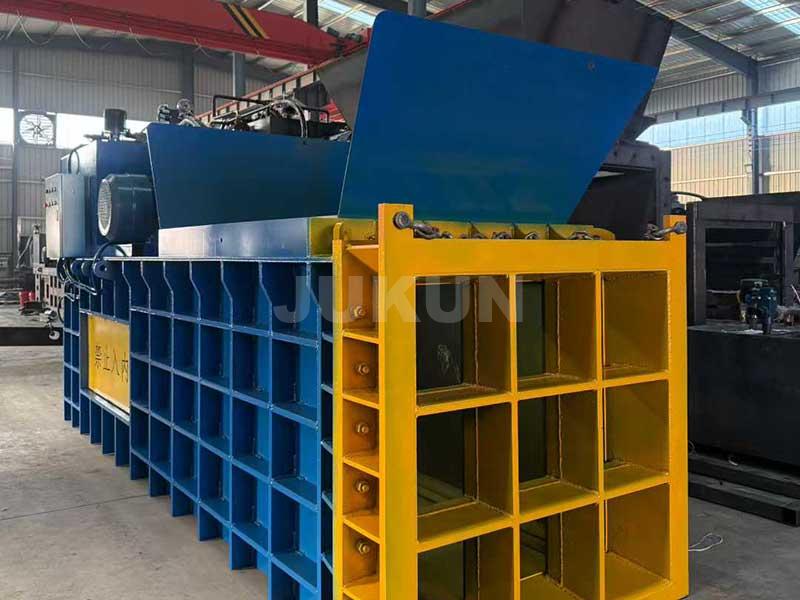
Operational transformation revealed.
Efficiency multiplier effect
A UK distribution center measured gains after installing Jukun AutoPress-X350:
| Metric | Before Automation | After Automation | Improvement |
|---|---|---|---|
| Daily Volume | 8.2 tons | 38 tons | 360% increase |
| Bales/Hour | 11 | 47 | 4.3x faster |
| Shift Staff | 4 workers | 1 monitor | 75% reduction |
| Bale Weight Deviation | 13% variation | 3% variation | Consistency improved |
The magic happens sequentially. Conveyor belts feed cardboard non-stop into the chamber. Laser sensors measure load density instantly—hydraulic rams automatically adjust pressure from 70-150 tons within seconds. While manual balers idle during lunch breaks, our automated balers process material continuously. At Jukun, our PLCs track 17 performance metrics: one plant increased production time efficiency from 65% to 93% during night shifts. Fewer workers mean less training—facilities rerouted $120k/year labor costs into profit. Consistent bales ensure premium recycler prices too: density deviations below 5% command 18% higher resale rates consistently.
How Much Can Fully Automatic Balers Reduce Labor and Operating Costs?
Labor costs devour profits. Hidden inefficiencies multiply. Automation targets these drains directly.
Businesses typically save $35k-$120k annually per baler on labor alone through automation—with additional savings from lower energy usage, reduced waste fees, and fewer downtime losses.
See the financial breakdown.
Real-world savings breakdown
A Canadian recycler shared these numbers after switching to Jukun’s automated system:
| Cost Category | Semi-Auto Baler | Jukun Auto Baler | Annual Savings |
|---|---|---|---|
| Labor (2 shifts) | $186,400 | $48,000 | $138,400 |
| Overtime Fees | $37,600 | $0 | $37,600 |
| Forklift Fuel | $8,200 | $1,700 | $6,500 |
| Waste Fees (Volume) | $46,000 | $29,000 | $17,000 |
| Total | $199,500 saved |
Labor dominates savings. A manual baler requires constant operation—processing 20 tons demands 6 workers vs. 1.5 for semi-auto. Our automatics cut this to 0.5 workers per shift. Reduced forklift usage adds up: automated ejection cuts 80% of movement. Compact bales lower waste fees too—volume-based disposal cost drops up to 65%. Maintenance costs fall significantly: Jukun systems forecast component failures weeks early, avoiding 95% of emergency repairs. Across typical 5-year lifecycles, automatics generate $4-7 ROI per $1 invested—semi-auto delivers half that return. The numbers compel action.
How to Choose the Best Fully Automatic Horizontal Baler for Your Business?
Wrong automation wastes millions. Feature gaps create headaches. Strategic selection prevents regrets.
Prioritize daily processing volume, material compatibility, pressure adaptability (50-200 tons), energy-smart hydraulics, intuitive PLC design, and lifetime technical support for maximum uptime and flexibility.
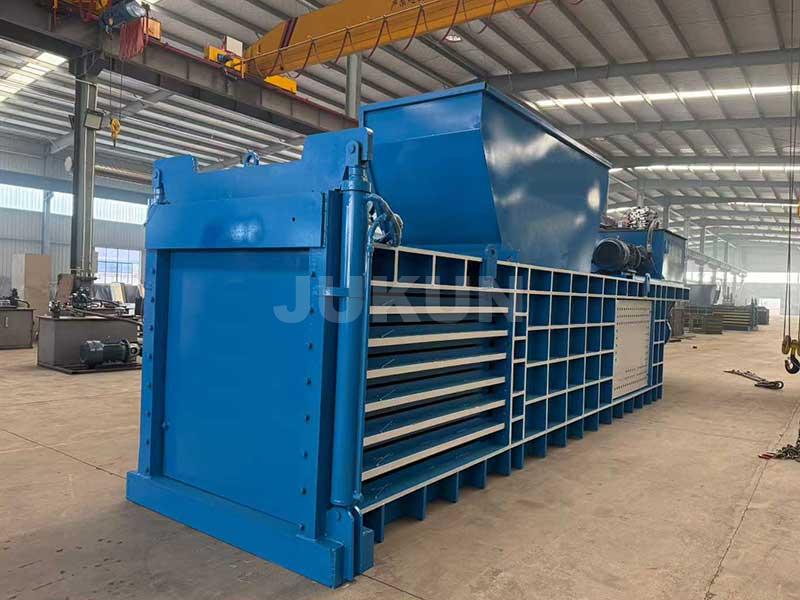
Navigate selection confidently.
Future-proof purchasing blueprint
After 20+ years manufacturing, our Jukun checklist prevents costly errors:
| Factor | Critical Specs | Verification Method |
|---|---|---|
| Capacity | 1-40 tons/hour processing | Demand throughput demo |
| Hydraulics | Variable displacement pumps | Check Bosch/Rexroth branding |
| Control System | Programmable logic controller | Test error alerts personally |
| Bale Density | Adjustable 500-1000kg/m³ | Measure actual outputs onsite |
| Service Lifeline | <48hr response guarantee | Request supplier outage logs |
Pressure matters most. Cardboard needs 70+ tons while textiles require 150+. Jukun balers switch pressures automatically via material sensors—avoid models needing manual adjustment. Demand real-life demonstrations: load 1 ton of tangled plastic film. Verify bale integrity rather than trusting brochures. Check certification origins—fake CE stamps abound. With Jukun, get factory-direct ISO paperwork. Probe spare parts inventory: we stock 10,000+ components at global hubs avoiding 6-week waits competitors impose. Right selections yield 10+ years of uninterrupted operation.
Conclusion
Automated horizontal balers slash costs while multiplying output. Upgrading delivers measurable profit gains.