
Constant breakdowns eating profits? Material piled up unsold? Labor costs cutting margins? Fix it today.
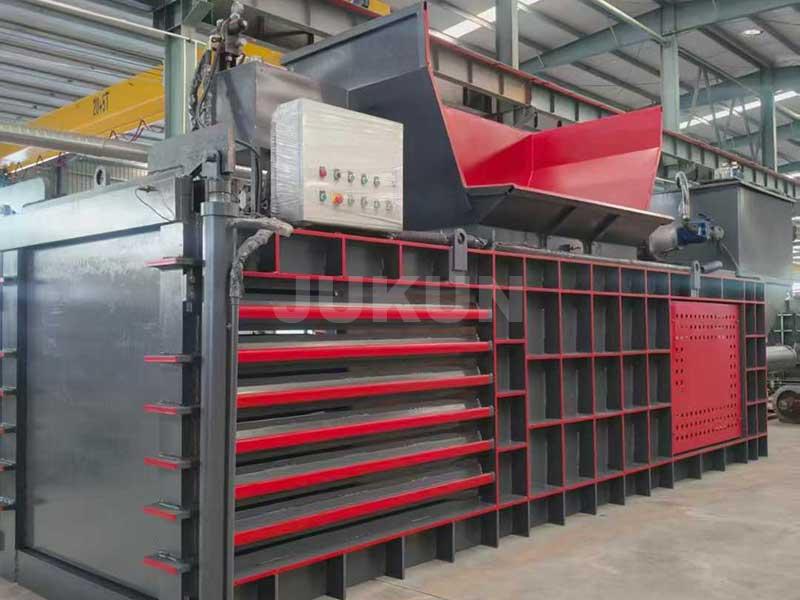
A baler machine is used to compress recyclable materials into compact bales for easier storage and transport. Main types include vertical balers, horizontal balers, automatic balers, semi-automatic balers, and closed-end horizontal balers. Vertical balers are for small to medium waste volumes, while horizontal and automatic balers are for high-volume industrial use. The right baler depends on waste type, capacity, space, and automation needs.
Stop waste stealing profits. Explore your options.
What Are the Different Types of Baler Machines?
Mismatched equipment failing? Confusing specs delaying projects? Unplanned upgrades bleeding cash? Classify properly.
Horizontal balers handle 15-40 tons/day continuously. Vertical balers fit tight spaces. Auto-tie cuts labor 75%. Closed-ends manage films. Two-rams offer superior material adaptability - select by throughput and physical layout.
Core Classification System
Group balers by structural features:
| Type | Key Design | Daily Capacity | Installation Area | Primary Application |
|---|---|---|---|---|
| Horizontal Baler | Chamber parallel to floor | 5-40 tons | 10-15m² | Recycling plants |
| Vertical Baler | Compression upward | 0.5-3 tons | 3-6m² | Backroom operations |
| Auto-Tie Baler | Self-tying mechanism | 8-30 tons | 10-14m² | Low-labor facilities |
| Closed-End Baler | Non-opening front plate | 20-45 tons | 12-18m² | Film recycling |
| Two-Ram Baler | Dual cylinder system | 15-35 tons | 11-16m² | Mixed waste streams |
Operational Distinctions
- Horizontal balers: conveyors feed materials continuously
- Vertical balers: top-loading requires manual stacking
- Auto-tie balers: sensors trigger automatic wiring
- Closed-ends: sealed chambers contain light materials
- Two-rams: primary ram pre-compacts, secondary compacts
Brazilian warehouse cut costs: Chose two-ram for varied plastics. Ensure hydraulic pressures exceed material resistance.
What Are the Differences Between Horizontal and Vertical Balers?
Underperforming equipment? Space conflicts blocking expansion? Labor budgets ballooning? Clarify positioning.
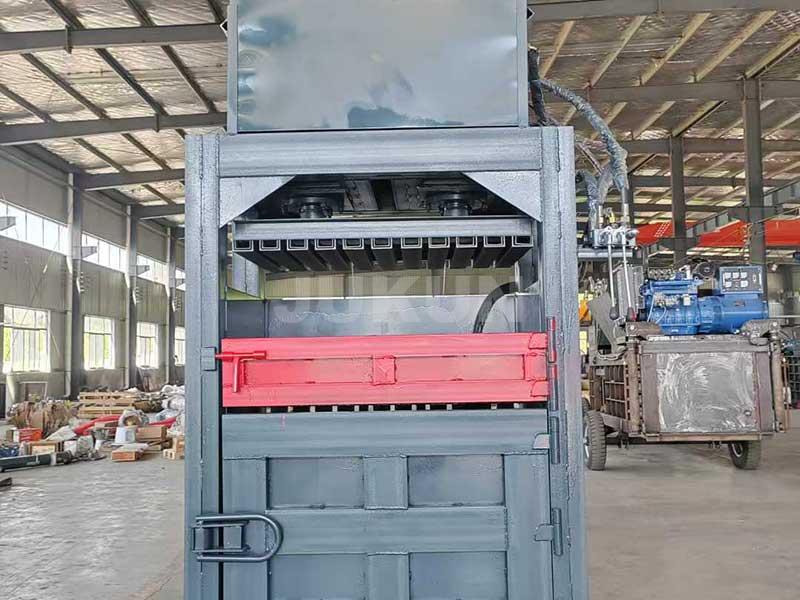
Horizontal balers achieve 18 tons daily capacity versus vertical's 1.8 tons. Processing cost drops from $5.25 to $0.90 per ton. Labor requires 0.5 workers/shift versus 1.2 - quantify operational gaps.
Performance Benchmark Comparison
Capability differences:
| Metric | Horizontal Balers | Vertical Balers | Performance Gap | Business Impact |
|---|---|---|---|---|
| Daily Output | 15-40 tons | 0.5-3 tons | 10x capacity | Scalability limitations |
| Bale Density | 700kg/m³ | 420kg/m³ | 67% denser | Transport savings |
| Automation | Conveyor integration | Manual feeding | Full automation | Labor reduction |
| Installation | Complex (5-7 days) | Simple (hours) | Implementation | Faster startup |
| Floor Space | 12x6m minimum | 3x3m compact | Layout constraints | Space planning |
Practical Application Boundaries
- Horizontal: 15+ tons daily OR 24/6 operation
- Vertical: <3 tons OR restricted ceiling height
- Material compatibility: Film wraps jam vertical chambers
Australian supermarket resolved issues: Picked vertical for space constraints. Confirm ceiling height before install.
Which Baler Machine Is Best for Different Recycling Materials?
PET bottles springing back? Cardboard jams stalling production? Film wraps crushing components? Match properties.
Horizontal balers with serrated plates compress OCC cardboard. Closed-end designs trap plastic films. Two-ram systems handle contaminated metals. Vertical balers manage clean retail cardboard below 3 tons.
Material-Specific Processing Matrix
Optimal pairings:
| Material | Key Properties | Recommended Baler | Critical Features | Avoid |
|---|---|---|---|---|
| OCC Cardboard | Abrasive, dense | Auto horizontal | Reinforced sidewalls | Vertical above 3 tons |
| Plastic Film | Low density | Closed-end horizontal | Film containment | Open chamber balers |
| PET Bottles | Elastic | Two-ram baler | Primary compression | Single-stage systems |
| Mixed Textiles | Tangling | Horizontal with ramp | Sequential feeding | Manual vertical |
| Scrap Metal | Hard, sharp | HD metal baler | Hardened chambers | Plastic balers |
Material Preparation Protocols
- Cardboard: Moisture content below 12%
- Film: Remove pallet remnants
- PET: Remove caps and lids
- Textiles: Pre-shredded minimizes jams Texas recycler boosted efficiency: Added PET shredder pre-baler. Eliminate contaminants daily.
How to Choose the Right Baler Machine for Your Business?
Undersized machines bottlenecking output? Hidden costs surfacing post-purchase? Supplier promises evaporating? Apply precision selection.
Calculate peak daily volume. Test with actual materials. Verify manufacturer certification. Inspect component quality. Secure service agreements - skip these steps and risk $65,000+ losses.
Procurement Safeguard Protocol
Risk-proof methodology:
| Step | Mandatory Action | Verification Technique | Cost of Failure |
|---|---|---|---|
| Volume Audit | Measure 90th percentile waste | Scale daily input | $43k underestimation |
| Supplier Check | Factory tour mandatory | Production line audit | Trading companies: 65% markup |
| Certification | Valid CE/ISO certificates | Issuing body contact | Forged docs: border seizure |
| Material Test | Run sample materials | Observe density | $28k modification later |
| Components | Labeled Bosch valves | Serial validation | Clone parts: 80% breakdowns |
Contractual Armor Clause
- Delivery delay penalty: 1.5%/day
- Performance warranty: Min 380 bar
- Remote diagnostics: Within 48 hours
- Spare parts consignment locally
- Payment release after commissioning
German buyer prevented fraud: X-rayed cylinder construction. Validate steel thickness everywhere.
Conclusion
Match baler types to operational reality - prioritize validation over low price tags.
Jukun Custom Balers
Request Material Test
Download Baler Selection Workbook