
I have seen many buyers pick a plastic bottle baler by price alone. Then they struggle with jammed feeding, loose bales, or slow cycles. You can avoid this mistake.
Before buying a horizontal plastic bottle baler, check five things: your bottle type and condition, your daily volume, the required bale weight and size, the feeding and tying method, and the total installed cost. Match the machine to your actual material, not just the advertised tonnage.
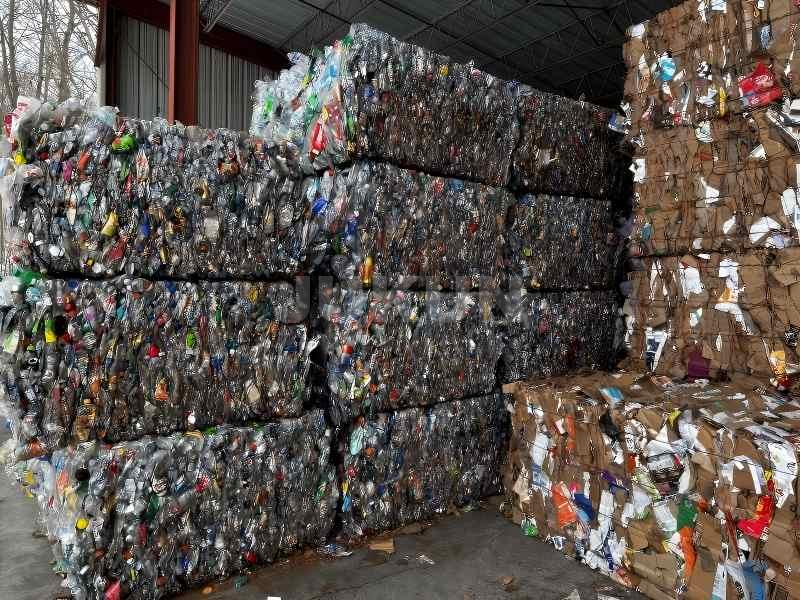
A plastic bottle baler is not a simple box. PET bottles trap air. HDPE bottles vary in shape and wall thickness. Caps, labels, and liquid change the feed. You need a machine that fits your real material. This guide shows what to check before you pay.
Technical note: This guide is based on our factory experience with horizontal hydraulic balers for PET and HDPE bottle recycling. It focuses on bottle preparation, bale delivery, total installed cost, and real test results. For our full PET model comparison, see our related PET baler guide.
Get a plastic bottle baler recommendation
What Type of Horizontal Baler Is Best for PET and HDPE Bottle Recycling?
You may think all bottle balers are the same. They are not. PET bottles need air release. HDPE bottles have different shapes and wall thicknesses. Mixed bottles need sorting first.
PET and HDPE bottles have different physical properties, but the required compression force depends on more than the plastic type. Bottle wall thickness, shape, size, cap status, material condition, and baler chamber design all affect compression performance. Provide representative bottle samples and your target bale specifications to the manufacturer before choosing a model.
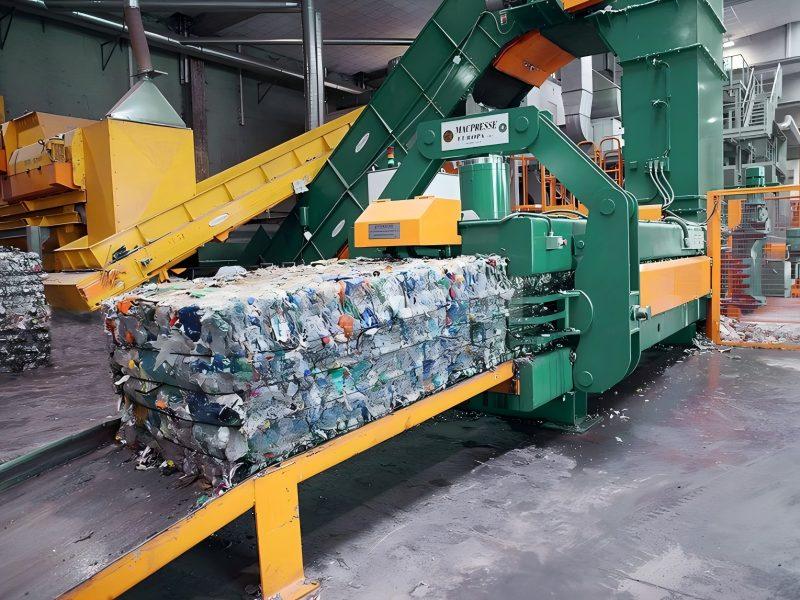
PET bottles are light and bulky. Whole bottles hold air. The ram compresses them. Then they push back. The bale can expand after discharge. A perforator can help release the air. But not every job needs one. Test your bottles first.
Be careful with one term. A perforator is not a crusher. A perforator makes holes in the bottle to release air. A crusher breaks the bottle into smaller pieces. They do different jobs. For a line that bales whole bottles, a perforator may fit better. Check your bottle condition and your compression test before you add one.
Do not assume every HDPE bottle needs more force than every PET bottle. Wall thickness, shape, cap status, and the chamber design all matter. Ask the factory to test your actual bottles.
| Feature | What to Check | Why It Matters |
|---|---|---|
| Chamber size | Fits your bottle size and bale target | Wrong size means poor bales |
| Feeding method | Manual or conveyor | Affects labor and speed |
| Tying system | Manual or automatic | Affects cycle time and labor |
| Bottle preparation | Perforator (not a crusher) | Helps release trapped air |
Do not pick a machine by name alone. A material test using your actual bottles, supported by recorded results, is one of the most reliable ways to verify whether a machine meets your requirements.
Ask about PET and HDPE bottle baler options
How Should You Prepare Plastic Bottles Before Baling?
You may skip preparation. But poor preparation causes jammed feeding and weak bales. A few simple steps save you time and money.
Prepare plastic bottles by checking the bottle type, removing caps or deciding to keep them, removing liquid and contaminants, sorting mixed plastics, and deciding whether perforation is needed. Then test your actual bottles with the proposed machine before you buy.

Start with the bottle type. Is it PET, HDPE, or mixed? Each one feeds and compresses differently. Mixed loads can lower bale value and cause feeding problems.
Check the caps. A closed cap traps air. Some lines remove caps. Some keep them and use a perforator. The right choice depends on your buyer and your machine test.
Remove liquid and food residue. Wet or dirty bottles lower bale value. They can also cause odors and mold. Check the label policy of your buyer. Some accept labels. Some do not.
Sort mixed plastics. PET and HDPE usually go to different buyers. Mixing them can make the bale unacceptable.
Decide on perforation. Test whole bottles and perforated bottles. Compare bale weight, bale stability, and cycle time. Then choose the setup that fits your target bale.
| Preparation Step | What to Do | Why It Matters |
|---|---|---|
| Bottle type | Identify PET, HDPE, or mixed | Selects the right machine setup |
| Caps and liquid | Remove caps or plan perforation | Controls trapped air and dirt |
| Sorting | Separate plastic types | Improves bale value |
| Test | Run a real bottle test | Confirms bale weight and stability |
Good preparation makes a good bale. Bad preparation wastes a good machine.
What Capacity and Compression Force Do You Need?
You may look at the tonnage number. But tonnage alone does not tell you real output. You need the right balance of force, speed, and bale size.
Capacity depends on bottle type, bulk density, feeding speed, and cycle time. Compression force affects bale density but not output alone. Calculate your daily tons and net productive hours. Then ask for a test with your bottles to confirm bale weight and cycle time.
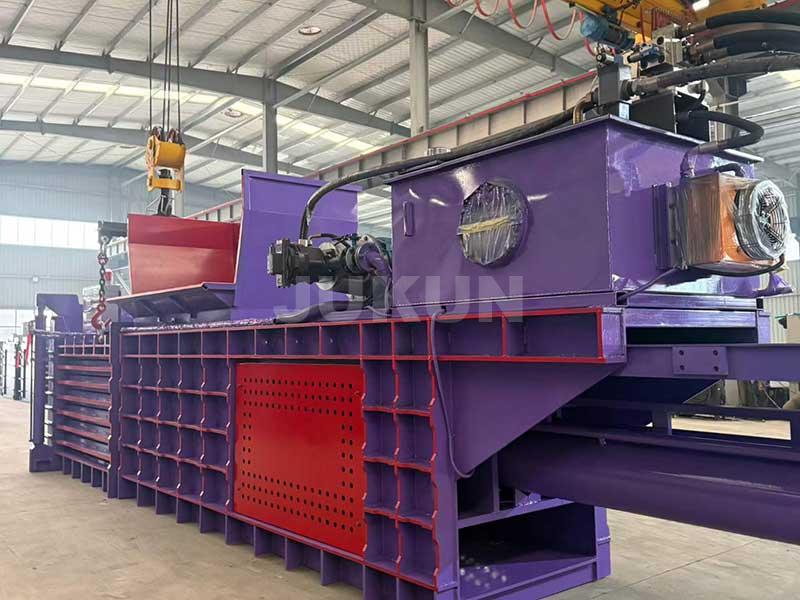
Start with your daily volume. Then divide by net productive hours, not total shift hours. Real work has stops. Feeding stops. Tying stops. Bottle changes stop.
Required Capacity = Daily Material Volume ÷ Net Productive Hours
Required Capacity is a planning estimate, not a guaranteed machine rating. It differs from the manufacturer's rated capacity. It also differs from the tested capacity with your own bottles. Keep these three numbers separate.
If your daily volume already includes downtime, do not subtract the same downtime twice. That will overstate the capacity you need.
Here is an example. This is only a planning number. Suppose you process 20 tons per day. Your net productive time is 8 hours. Your required average rate is 2.5 tons per hour. These are example numbers, not a promise of our machine output.
Compression force is only one factor affecting bale density and stability. Chamber dimensions, ram travel, material condition, feeding consistency, and tying method also influence the final bale quality. Compare these factors together and verify the results through a test using your actual bottles.
| Check Item | What to Ask | Why It Matters |
|---|---|---|
| Daily volume | Real tons per day | Sizes the machine correctly |
| Net productive hours | Real working time | Avoids overbuying or underbuying |
| Rated vs tested capacity | Manufacturer rating and real test | Shows the real output gap |
| Test result | Bale weight and cycle time | Confirms real performance |
Ask the factory one key question: "Is this capacity based on a real test with my bottles, or is it a theoretical number?" A good factory will explain. A poor factory will avoid the question.
Calculate your baler capacity with us
What Bale Weight and Size Should You Choose?
You may want the heaviest bale. But a heavy bale can be too big for your truck or too dense for your buyer. You must match the bale to your full process.
Choose bale weight and size based on your buyer's specification, your truck and forklift limits, and your storage space. Check bale dimensions, bale weight, bale density, bale stability, and tying method. Do not assume one bale size fits every buyer.
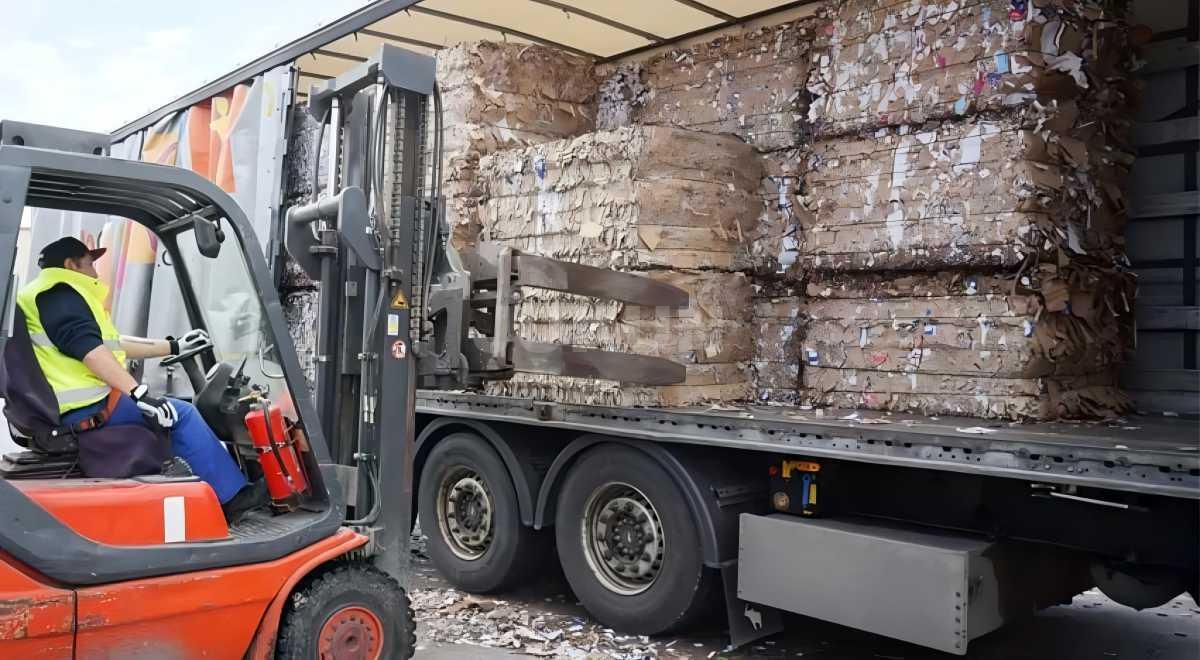
Confirm the target bale weight required by your buyer. Confirm the maximum bale size your truck can load. Confirm the bale size your forklift can lift. Confirm the bale density your storage can hold.
Bale stability matters too. A loose bale can break in transport. A well-tied bale holds its shape. Check the tying method and the hold time on the test.
Here is an example. This is an illustrative example only. A bale of 300 kg and 1100×800×900 mm may fit one operation. It may not fit another. Actual bale weight and dimensions depend on the machine configuration, material condition, and buyer requirements.
| Bale Check | What to Confirm | Why It Matters |
|---|---|---|
| Bale weight | Buyer target weight | Meets recycling plant rules |
| Bale size | Truck and storage limits | Prevents handling problems |
| Bale density | Stacking and shipping needs | Shows real compression |
| Bale stability | Shape after discharge | Prevents broken bales |
Check Your PET Buyer's Bale Specifications Before Buying a Baler
Your buyer may reject a bale that does not meet their rules. Check the target bale weight. Check the bale size and density. Check the tying method. Check the purity and impurity rules. Check the loading and stacking needs.
A baler compresses material. A baler does not replace sorting. A baler does not guarantee PET purity. Keep the machine's compression job separate from your material quality job.
Do not chase the biggest bale. Chase the right bale.
Automatic vs. Semi-Automatic Plastic Bottle Balers: Which Is Better?
You may want the cheapest machine. Or you may want the most automated one. Neither choice is always right. You need the machine that fits your labor and volume.
Semi-automatic horizontal balers can suit moderate processing volumes with available operators. Fully automatic models are often a better fit for high-volume recycling lines that need continuous feeding and reduced manual handling. The best choice depends on actual throughput, labor availability, operating hours, budget, and your full recycling process.
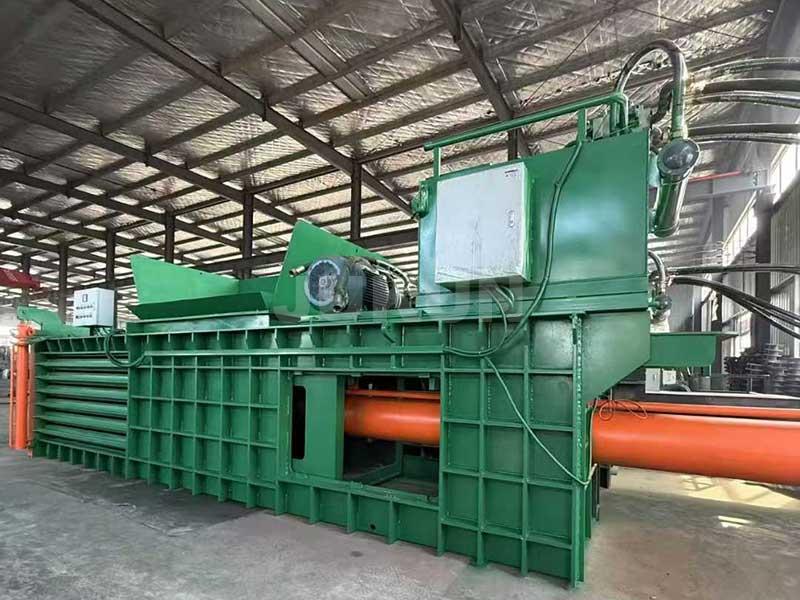
A semi-automatic baler compresses automatically. But the operator ties the bale by hand. This is fine for a small shop. The machine cost is lower. Maintenance is simpler.
A fully automatic baler ties and discharges automatically. It may include a conveyor and PLC control. This is better for a large plant with continuous feed. But the cost is higher. The system is more complex. You need trained staff.
Do not assume a large plant always needs a fully automatic machine. Do not assume a small plant always needs a semi-automatic machine. Check your real workflow. Count your operators. Count your daily tons. Check your budget.
| Buyer Situation | Recommended Option |
|---|---|
| Lower volume, available operators | Semi-automatic |
| Medium volume, limited automation needs | Compare both |
| High volume, continuous feeding | Fully automatic |
| Integrated recycling line | Fully automatic may be suitable |
Before you decide, ask for a video of both types running with your material. See how the tying works. See how the bale comes out.
How Much Does a Horizontal Plastic Bottle Baler Cost?
You may see a low price online. But that price may not include the full machine. You must compare the complete package.
The price of a horizontal plastic bottle baler depends on compression force, chamber size, automation level, feeding system, and extra equipment. Total installed cost also includes shipping, insurance, import duties, electrical work, foundation and installation, training, and initial spare parts. Compare full specifications and included items, not just the headline price.
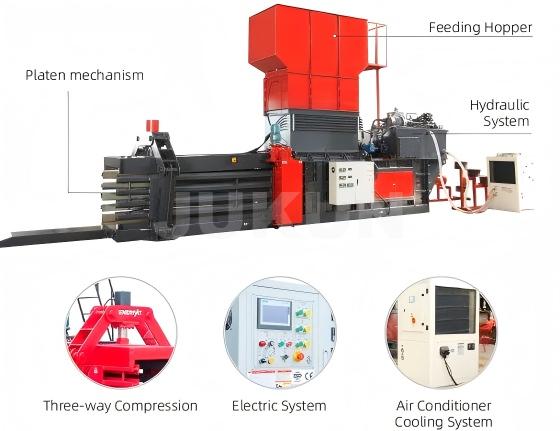
The machine price changes with size and force. A bigger chamber and stronger frame cost more. A fully automatic system with conveyor and auto-tie costs more than a semi-automatic model. A perforator adds cost. So does a discharge conveyor.
But machine price is not the full cost. Use this formula to compare suppliers.
Total Installed Cost = Machine Price + Auxiliary Equipment + Shipping & Insurance + Import Duties + Electrical Work + Foundation & Installation + Training + Initial Spare Parts
After-sales support is a separate long-term cost. Keep it out of the one-time install total. Check the spare parts supply plan. Check the remote support terms. Check the warranty range. Then add the expected yearly cost.
What Is Included in a Horizontal Plastic Bottle Baler Quotation?
Ask each supplier for the same items. Ask for the machine model and full specifications. Ask for the hydraulic component brands. Ask for the electrical configuration. Check the voltage, frequency, and phase for your country. Ask whether you need a foundation, lifting equipment, or on-site install. Ask which spare parts are included. Ask for the warranty terms. Ask for the spare parts lead time.
| Quotation Item | What to Confirm | Why It Matters |
|---|---|---|
| Machine specs | Model, force, chamber, motor | Confirms the real setup |
| Electrical | Voltage, frequency, phase | Prevents site mismatch |
| Install and training | Foundation, lifting, operator | Avoids surprise costs |
| Spare parts | Included items and lead time | Reduces future downtime |
A low price with missing parts is not a real saving.
Get a full quotation for your bottle baler
How Can You Verify a Horizontal Plastic Bottle Baler Manufacturer?
You may find many suppliers. Many look the same online. But the machine quality and support can be very different. You must check the supplier.
Verify a manufacturer by checking the real factory, the machine videos, the material test, the technical documents, the spare parts list, the warranty, and the installation support. Ask for a test with your actual bottles. A recorded test result is more reliable than a catalog.
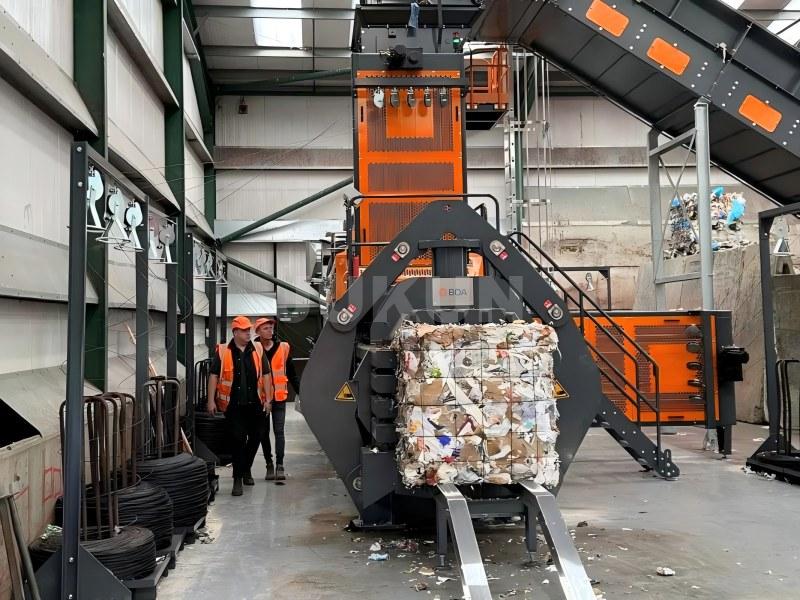
Check the factory. Ask for a live video call. Ask to see the workshop. Ask to see the machines being built. A real factory will say yes.
Check the machine videos. Ask for a video of the model you plan to buy. Ask for a video with bottles like yours. Watch the feeding, compression, tying, and discharge.
Check the technical documents. Ask for the electrical drawing. Ask for the operation manual. Ask for the maintenance guide.
Check the spare parts list. Ask which parts to stock. Ask how fast they ship. Check the warranty terms. Check the installation and training plan.
| Check Item | What to Ask | Warning Sign |
|---|---|---|
| Factory | Live video and workshop photos | Excuses or delays |
| Machine test | Real test with your bottles | Generic video only |
| Documents | Drawings, manual, parts list | No clear files |
| Warranty | Covered parts and claim process | Vague promises |
A good factory answers clearly. A poor factory avoids the question.
How Jukun Helps Buyers Select the Right Plastic Bottle Baler
Our factory builds horizontal hydraulic balers for PET and HDPE bottle recycling. We can show the real machine frame, hydraulic system, electrical cabinet, and testing area on a live video call. Buyers can also review assembly photos and machine test photos.
Before we confirm a model, we ask for your bottle type, daily volume, and bale target. We can test a customer bottle sample in our workshop. We record the bale weight, bale size, and cycle time from that test. Then we recommend the setup that fits your real material.
Here is the configuration check we use for each order. The final specifications are confirmed in the written quotation. Do not treat this table as a fixed list for every model.
| Model Series | Typical Application | Key Specs to Confirm |
|---|---|---|
| Semi-automatic horizontal | Small to medium PET and HDPE volume | Force, chamber, tying, motor |
| Fully automatic horizontal | High-volume continuous line | Conveyor, auto-tie, PLC, discharge |
We do not promise results without a test. We show the real machine and the real bale. That is how we help buyers avoid the wrong purchase.
What Can a Real PET Bottle Baler Test Tell You?
You may see a catalog. You may see a short video. But a real test report tells you what the machine actually does with your bottles.
A real PET bottle baler test shows the material condition, machine model, tested throughput, bale weight, bale size, cycle time, and bale stability. These numbers help you confirm if the machine meets your production needs. Ask for a recorded test with your actual bottles.
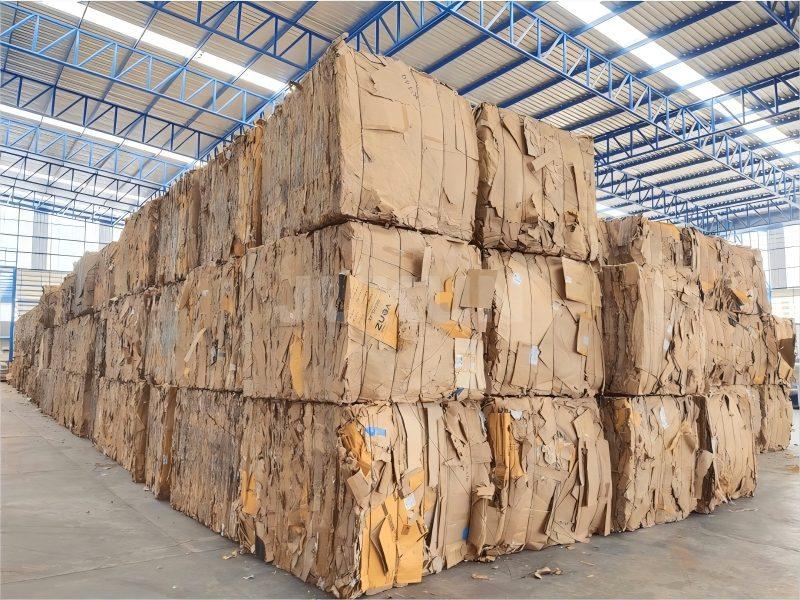
A useful test report has clear data. It is not just a short video. It lists the test conditions. Then it lists the results.
Here is the record structure we use. The data must come from a real test. Do not fill it with estimates.
| Test Item | What to Record |
|---|---|
| Test material | PET or HDPE, whole or perforated, with or without caps |
| Machine model | The specific model tested |
| Tested throughput | Real tons per hour |
| Bale weight and size | Real kg, and length × width × height |
| Cycle time and stability | Real seconds per cycle, and bale shape after discharge |
A good test shows the full process. It shows bottles entering the machine. It shows the ram compressing. It shows the bale being tied. It shows the finished bale on a scale. It shows the bale after one hour, to check spring-back.
If a factory cannot test your material, ask why. Ask for a test with a similar bottle. Ask for the basis of their recommendation. Do not accept a generic video as proof.
Request a PET bottle baler test
What Information Should You Provide When Requesting a Quotation?
You may send a short message and ask for price. But the factory cannot quote well without details. You need to give clear information.
Provide your bottle type, daily volume, bottle condition, target bale weight and size, working hours, preferred automation, installation space, and destination country. Clear details help the factory recommend the right model and give a useful quote.
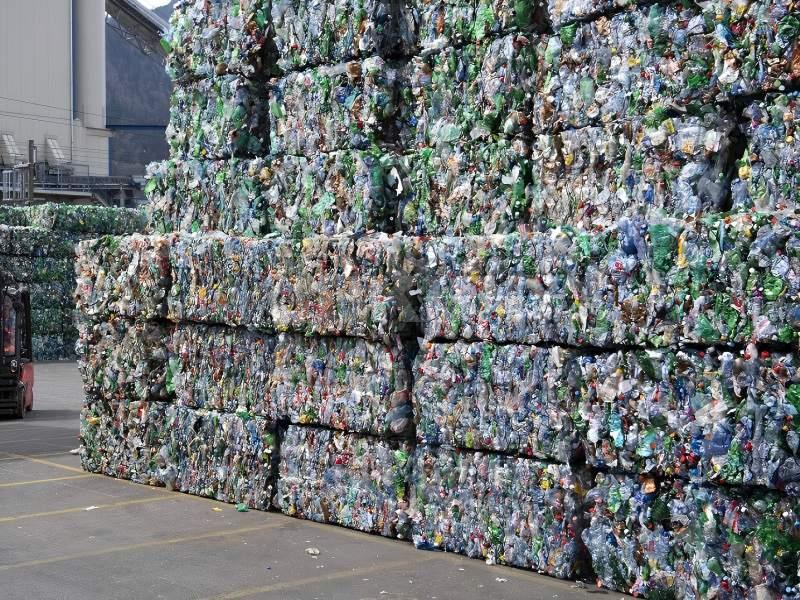
Tell the factory what plastic you process. Is it PET bottles? HDPE? Mixed? Are bottles whole, crushed, or perforated? Are caps on or off? Each answer changes the machine setup.
Tell the factory your daily tons. Tell them your working hours. Tell them your target bale weight and size. Tell them if you need a conveyor or a perforator. Tell them your country and voltage.
| Information | Example | Why It Matters |
|---|---|---|
| Bottle type | PET beverage bottles | Selects chamber and force |
| Daily volume | 10 tons per day | Sizes the machine |
| Bottle condition | Whole, uncapped | Checks air release need |
| Bale target | 300 kg, 1100×800×900 mm | Confirms bale size |
| Automation | Semi-automatic | Matches labor and budget |
A clear request saves time. The factory can send a suitable proposal. You can compare apples to apples.
Frequently Asked Questions
What Is the Best Horizontal Baler for PET Bottles?
The best machine depends on your bottle condition, daily volume, and bale target. A horizontal PET bottle baler with a suitable chamber and tying system is a common choice. Test your actual bottles before you buy.
Do PET Bottles Need to Be Perforated Before Baling?
Not always. Some lines bale whole bottles. Some remove caps. Some use a perforator. The need depends on bottle condition, machine design, and bale stability. Test with and without perforation, then compare the bale results.
Can One Horizontal Baler Handle Both PET and HDPE Bottles?
Some models can process both. But they should usually be baled separately. Confirm the chamber, ram force, and feeding system with the factory. Test each material separately.
How Many Tons of Plastic Bottles Can a Horizontal Baler Process Per Hour?
It depends on bottle type, bulk density, feeding speed, and cycle time. Do not rely on a general number. Ask for a test with your material and check the real tons per hour.
What Bale Weight Can a PET Bottle Baler Produce?
Bale weight depends on chamber size, ram force, bottle condition, and tying. Ask for the real bale weight from a test with your bottles. Do not assume a standard weight for all machines.
How Much Does a Horizontal Plastic Bottle Baler Cost?
Price depends on size, force, automation, feeding, and extra equipment. Add shipping, insurance, duties, electrical work, installation, and spare parts for the total installed cost. Compare full quotations, not headline prices.
Is a Fully Automatic Plastic Bottle Baler Worth the Investment?
It can be worth it for high-volume lines with continuous feed and limited labor. For smaller volumes, a semi-automatic model may be more economical. Compare total cost and real labor savings.
Conclusion
Choose a plastic bottle baler by matching the machine to your bottle type, volume, bale target, and labor. Test your material before you buy. Contact Jukun for a reliable horizontal plastic bottle baler.