
Labor costs spiraling? Production bottlenecks? We solve balancing automation investment with real output needs daily at our factory.
Semi-auto balers fit medium recycling with lower upfront cost. Fully-auto models run continuous for high-volume sites with faster ROI through labor savings. We help businesses match automation precisely to material volume and labor budgets.
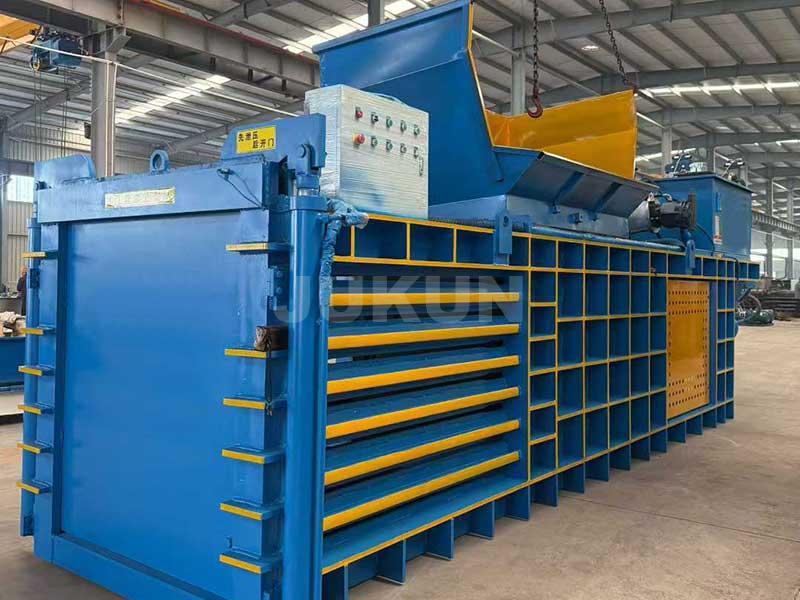
The automation choice impacts daily operations and long-term profits. Four critical factors guide this decision for buyers like Jacky in Canada.
What Are the Main Differences Between Semi-Automatic and Fully Automatic Horizontal Balers?
Tied down manually reloading your baler? I've watched workers exhaust themselves feeding machines non-stop during Shanghai factory tours.
Semi-auto balers pause for manual tying by operators. Fully-auto models complete feeding, compacting, and tying nonstop with automated systems like hydraulic bale ejectors, enabling true continuous operation.
Operational Contrasts in Daily Use
These differences materialize in workflow:
| Task | Semi-Automatic | Fully-Automatic |
|---|---|---|
| Material Loading | Manual/conveyor | Continuous conveyor |
| Tying Process | Operator ties bales | Auto-tiers with sensors |
| Downtime | 5-8 mins between bales | Zero (continuous cycle) |
| Personnel Needs | 1 dedicated operator | Monitoring only required |
Manual intervention creates natural workflow breaks. Semi-auto models suit facilities processing under three tons daily where labor costs stay low. Fully-auto systems shine when eliminating human delays matters - like Canadian logistics hubs where I've seen 24-hour shifts compress cardboard without halting. Our Jukun clients report 50% higher throughput from fully-auto balers simply because material keeps flowing uninterrupted while tying happens. Maintenance requires watching hydraulic fluid levels monthly on automated models versus manual cable replacements needed more often.
Which Baler Offers Higher Productivity, Lower Operating Costs, and Better ROI?
ROI uncertainty delaying your investment? True value lies beyond purchase price - let's break down real operational costs per bale.
Fully-auto balers deliver higher ROI for large sites by cutting labor 70% and boosting output. Semi-autos save money for medium operations where labor availability outweighs throughput needs, offering quicker payoff below 5-ton daily volume.
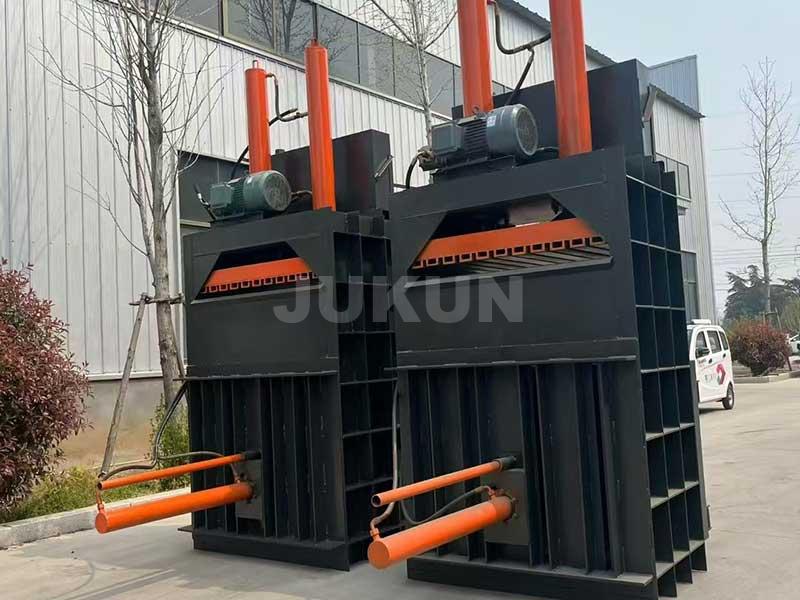
Cost-Per-Bale Analysis Over 3 Years
Data from our North American clients reveals patterns:
| Metric | Semi-Auto (CA$90k) | Fully-Auto (CA$180k) |
|---|---|---|
| Labor per 1,000 bales | CA$2,200 | CA$300 |
| Daily Max Bales | 80 | 240 |
| Payback Period | 16 months | 22 months |
| 3-Year Savings | CA$210k | CA$440k |
Higher initial investment in automation pays dividends over years. A Montreal recycling center using our fully-auto model processes cardboard volumes that would require six semi-auto balers - saving CA$380k annually in equipment redundancy alone. But choose carefully: facilities under three-ton daily volumes see faster ROIs with semi-auto models where lower machinery costs offset manageable labor expenses. For Jacky’s Canadian clients operating seasonal facilities, we suggest semi-auto units to avoid equipment sitting idle during slow months. Key tip: Calculate downtime cost per hour – delays beyond $300/hour justify automation upgrades.
Which Industries Should Choose Semi-Automatic or Fully Automatic Balers?
Struggling to match baler types to fluctuating material flows? Our industry deployment map clarifies ideal fits.
Medium sites like supermarkets use semi-auto balers well. Large material recovery facilities demand fully-auto systems. Material volume overrides industry labels – calculate your actual daily recycle weight first.
Industry Volume Thresholds
Real-world installations prove segmentation:
| Industry | Avg Daily Volume | Recommended Baler | Why? |
|---|---|---|---|
| Supermarkets | 0.5 - 1.2 tons | Semi-auto | Moderate throughput fits staff schedules |
| Warehousing | 1.5 - 4 tons | Flexible | Growth phases determine upgrade timing |
| MRFs | 5+ tons | Fully-auto | Eliminate shift change bottlenecks |
| Paper Mills | 15+ tons | Fully-auto | Continuous output prevents pulp backup |
Volume variability demands caution. I helped a Toronto packaging company avoid a $240k mistake – their irregular peaks suited two semi-auto balers instead of one fully-auto unit, saving CA$110k while handling maximum loads. Manufacturing clients like metal factories need fully-auto due to sharp production spikes. Consider balers with modular automation tiers – Jukun offers optional auto-tie retrofits as businesses scale. Never ignore facility space either: fully-auto balers need 30% more installation area for conveyors.
How to Choose the Best Horizontal Baler for Your Recycling Business?
Fearful of supplier dishonesty? We combat certification fraud with live factory walkthroughs to prove every ISO standard visibly in real time.
Evaluate daily volumes first. Then verify hydraulic PSI and chamber strength per material type. Demand third-party certifications and 24/7 support contracts upfront – avoid suppliers refusing video verification.
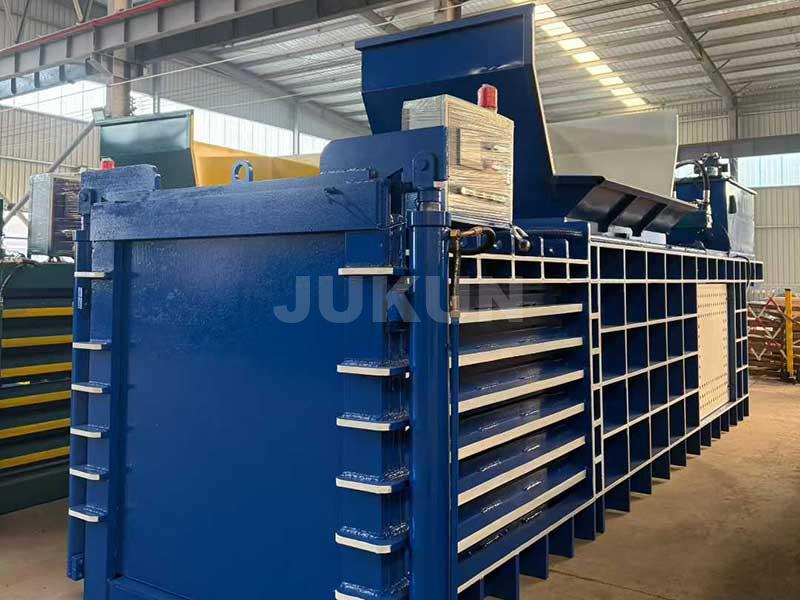
5-Step Buyers' Assurance Protocol
Protect your investment using our verified approach:
| Step | Action | Why Critical |
|---|---|---|
| Material Testing | Send waste samples for compaction trials | Confirms density results before purchase |
| Certification Audit | Video inspection of CE/ISO testing | Eliminates forged documents |
| Payment Structuring | 30% deposit, 70% post-shipment | Secures accountability |
| Support Verification | Validate spare parts stockpile visibility | Prevents 6-month repair delays |
| Logistics Review | Container loading video documentation | Guarantees damage-free delivery |
Capacity miscalculations remain the costliest error. We prevented a CA$175k error for Jacky’s distributor client whose "5-ton daily plastic" claim misrepresented weekly averages—truth was 1.8 tons. Semi-auto sufficed, delivering ROI in ten months. Additionally, require energy consumption data; some fully-auto models save $40 daily on power versus competitors. Most importantly, select manufacturers providing local technician networks – Jukun fulfills 48-hour North American service pledges through confirmed partners. Include performance clauses penalizing 5%+ output variances.
Conclusion
Match automation levels to actual daily throughput and labor economics for peak recycling profitability. We provide ROI-optimized balers verified for transparent operations.