
Struggling with inefficient recycling? Rising labor costs? Modern innovations solve these problems fast.
Advanced horizontal balers now feature fully automatic feeding, smart PLC systems, IoT remote tracking, energy-saving hydraulics, and predictive maintenance—transforming recycling efficiency while slashing operating costs.
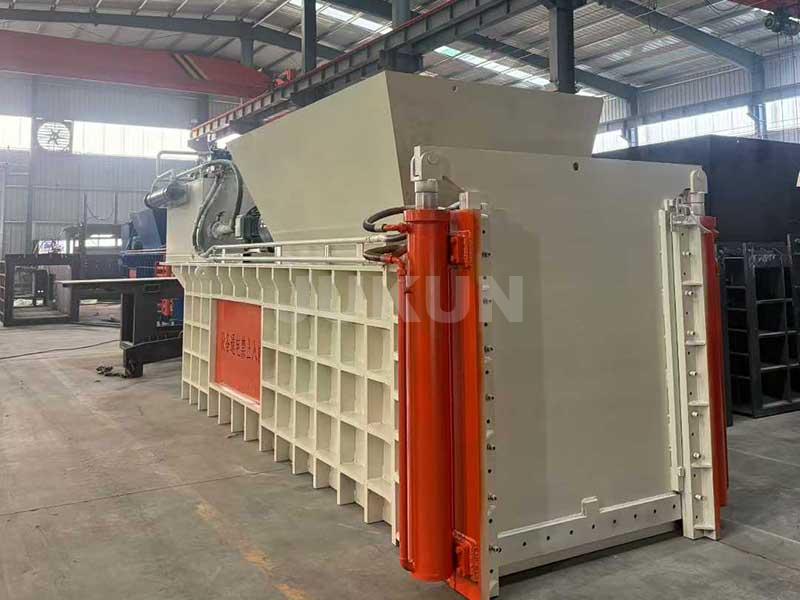
See how these breakthroughs redefine productivity.
What Are the Latest Innovations in Horizontal Baling Machines?
Drowning in manual operations? Outdated equipment slows throughput. Upgrade with intelligent systems.
Modern innovations include automatic conveyor feeds, real-time IoT monitoring, PLC control panels, energy-efficient pumps, auto-wire tying, high-pressure cylinders, and smart safety sensors for precise performance.
Explore core upgrades transforming recycling.
Revolutionizing traditional compaction
At Jukun, we implemented auto-feeding conveyors that increased material intake by 70%. Key technological shifts:
| Innovation | Function | Industry Impact |
|---|---|---|
| IoT Monitoring | Tracks pressure/temperature remotely | Reduces downtime 40% |
| Smart PLC Systems | Auto-adjusts cycle speed | Boosts daily output 35% |
| Eco-Hydraulics | Variable-speed pumps | Cuts energy use 50% |
| Auto-Tie Units | Self-threading wire systems | Eliminates 2 operators/shift |
| Safety Sensors | Stops ram when obstructed | Prevents workplace accidents |
Hydraulic systems matter most. Our dual-pump design maintains pressure at 30% less energy. Pressure sensors detect cardboard density variations instantly—adjusting force mid-cycle. This prevents overloads common in standard models. Remote diagnostics alert technicians before breakdowns occur. One client avoided $8k repair costs through vibration pattern alerts. These integrated technologies solve real operational pains daily.
How Does Automation Improve Baling Efficiency and Reduce Labor Costs?
Manual baling eats profits. Slow processes bottleneck output. Automation reshapes workflows.
Automated feeding, compressing, and tying enable non-stop operation—handling triple the material with fewer workers, cutting labor costs by 60-75% on average.
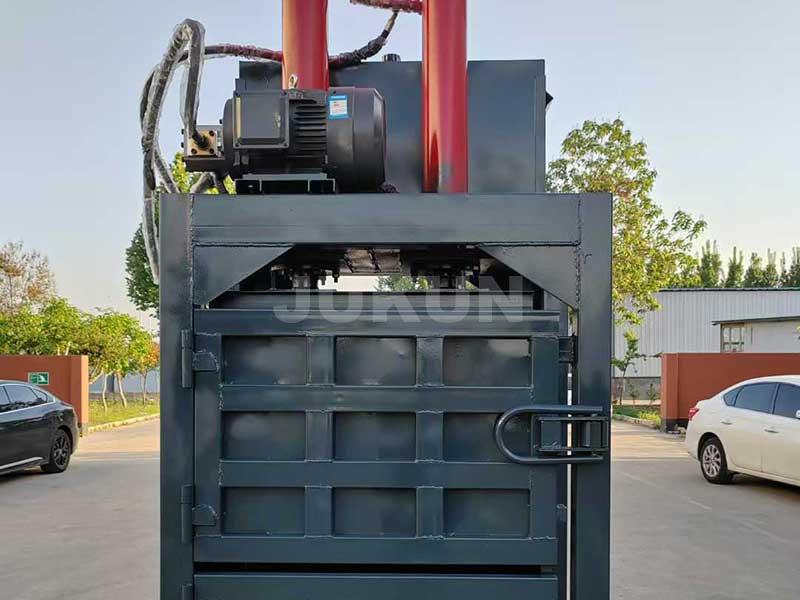
Quantify operational improvements.
Automation vs manual comparison
A Canadian recycler processing 50 tons/day documented these results after switching:
| Metric | Manual Operation | Automated Baler |
|---|---|---|
| Workers Needed | 6/shift | 2/shift |
| Hourly Output | 1.2 tons | 4.3 tons |
| Shift Changeover | 45 minutes | Instant |
| Error Rate | 15% bale rejects | Under 2% |
| Overtime Costs | $1,500 weekly | $0 |
Conveyor-fed systems maintain continuous flow—no human pacing bottlenecks. Our auto-tying eliminates wire threading delays, finishing bales in 90 seconds versus 8 minutes manually. Jukun’s latest PLCs even optimize ram pathways saving 22% cycle time. Maintenance drops too: self-lubricating rams require 80% fewer service hours. These compound annually—facilities save $125k average per machine yearly on labor alone. The math demands automation upgrade.
Which Smart Features Deliver the Highest ROI in Horizontal Balers?
Wasting money on unnecessary tech? Not every feature pays back equally. Invest wisely.
Highest-return features are auto-tying systems (25% labor cut), predictive maintenance alerts (30% downtime reduction), and smart hydraulics (40% energy decrease)—delivering ROI within 5 months.
Prioritize solutions that pay fastest.
Profit-multiplying feature analysis
Based on 150+ Jukun installations:
| Feature | ROI Time | Key Savings | Implementation Tip |
|---|---|---|---|
| Predictive Sensors | 3 months | $200/hr downtime avoidance | Install vibration monitors on rams |
| Auto-Tying | 6 months | $62k yearly labor reduction | Choose self-threading wire guides |
| Energy-Optimized Hydraulics | 5 months | $18k annual electricity drop | Demand variable-speed pumps |
| Remote IoT Dashboard | 8 months | 60% faster diagnostics | Require mobile alerts |
Predictive maintenance sensors yield quickest returns. Vibration analytics flag bearing wear 2 weeks pre-failure—replacing $15 parts avoids $3k rebuilds. Hydraulics matter long-term: Our European-style valves maintain pressure consistently using 30% less fluid. Avoid "premium" features like touchscreen controls which extend ROI. Instead, integrate load sensors that auto-calibrate compression based on material density. This squeezes extra 12% bale density for higher resale values. Smart selection nets bigger profits.
How to Choose a Future-Proof Horizontal Baling Machine for Your Business?
Obsolete tech becomes costly quickly. Short-term choices drain profits. Select adaptable systems.
Verify automation scalability, modular add-on capacity, PLC programming access, IoT compatibility, hydraulic component quality, and manufacturer tech support to ensure long-term viability.
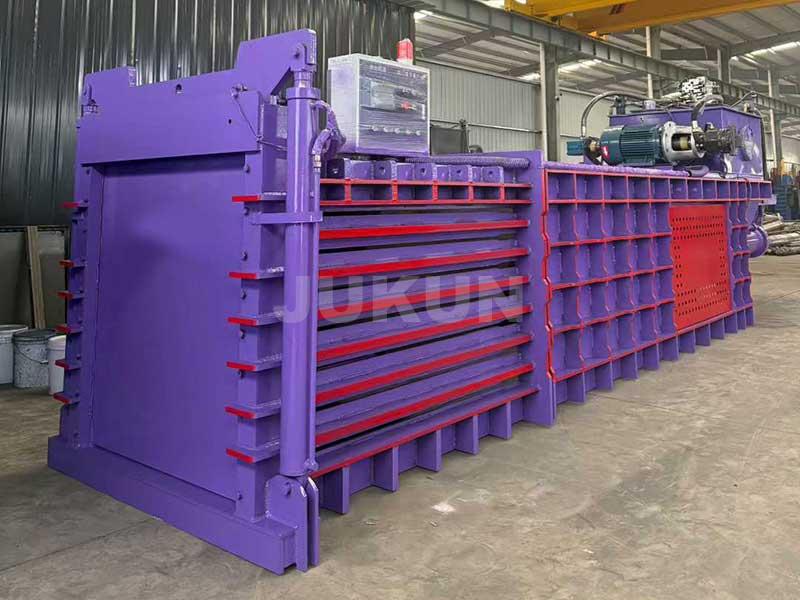
Protect your investment strategically.
Selection framework for 10-year viability
After evaluating hundreds of facilities, our checklist prevents legacy traps:
| Requirement | Critical Features | Red Flags |
|---|---|---|
| Modularity | Bolt-on automation kits | Welded-only frames |
| Connectivity | API-ready PLC systems | Proprietary controllers |
| Hydraulic Integrity | Branded pumps (Bosch/Rexroth) | Generic unlabeled valves |
| Material Flexibility | Quick-change chamber plates | Fixed-pressure settings |
| Tech Support | Remote system access | Manual-only maintenance |
Inspect hydraulic schematics—avoid balers requiring entire circuit overhauls for upgrades. Demand PLCs with open-source code compatibility; we enable clients to integrate third-party IoT without costly reengineering. Modular frames accommodate new conveyor systems years later. Test these: Ask your Jukun engineer to simulate adding auto-labeling post-purchase. Verify genuine pump brands—counterfeit hydraulics fail within 18 months. Future-proofing means paying 10-15% more upfront to save 200% in rebuild costs later. The right machine evolves with you.
Conclusion
Modern baler technologies maximize recycling profits. Strategic implementation transforms operational efficiency sustainably.