
Unexpected downtime draining profits? Repair costs spiraling? Production bottlenecks worsening? Fix the root cause today.
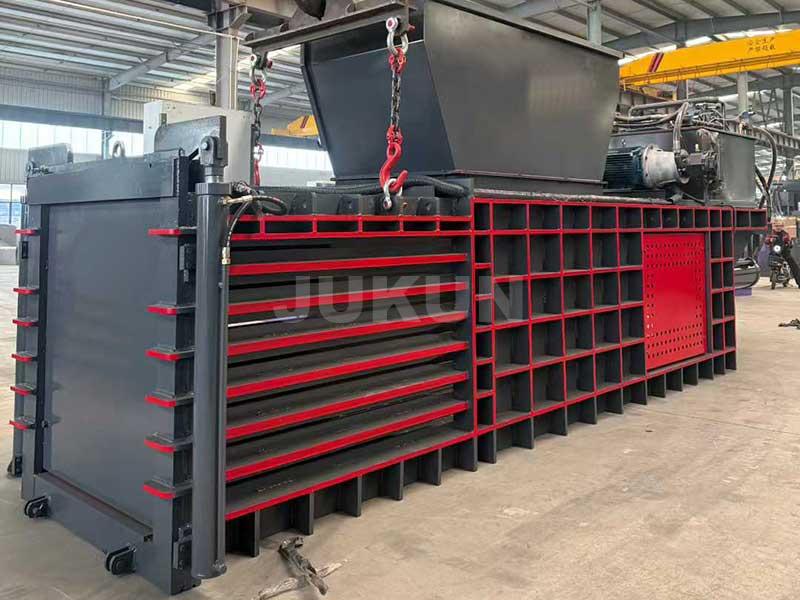
Heavy-duty horizontal balers offer higher capacity, stronger compression, and longer lifespan, making them ideal for large-scale recycling operations. Standard horizontal balers have lower cost but limited capacity, making them suitable for small to medium businesses. For long-term value, heavy-duty balers are generally more cost-effective due to higher efficiency and durability.
Discover your real savings.
What Are the Key Differences Between Heavy-Duty and Standard Horizontal Balers?
Flexing frames? Hydraulic leaks? Premature failure? Understand engineering distinctions.
Heavy-duty models feature triple-reinforced chambers (18mm vs 10mm steel), 300T+ compression force (standard: 150T), industrial-duty hydraulics, and Siemens PLC controllers rated for 24/7 operation.
Performance Benchmark Matrix
Direct capability comparison:
| Parameter | Heavy-Duty | Standard | Performance Gap | Durability Impact |
|---|---|---|---|---|
| Steel Thickness | 18-24mm | 10-14mm | +80% strength | 25-year vs 8-year lifespan |
| Hydraulic Pressure | 380 bar | 280 bar | +35% force | Consistent 750kg/m³ density |
| Daily Capacity | 28 tons | 9 tons | 3x throughput | Continuous shifts possible |
| Energy Consumption | 22kW/ton | 35kW/ton | -37% consumption | Lower operating cost |
| Maintenance Interval | 800 hrs | 300 hrs | +166% runtime | 60% fewer shutdowns |
Operational Stress Test Findings
- Heavy-duty survives >500,000 cycles
- Standard shows weld fatigue at 120,000 cycles
- RAM failure rate: 0.7% vs 8.3% annually
Polish recycling plant doubled output: Switched to heavy-duty for cardboard. Always check steel certification.
Which Horizontal Baler Delivers Lower Operating and Maintenance Costs?
Emergency repairs costing $42k? Lost production hours piling up? Energy bills skyrocketing? Calculate true expenses.
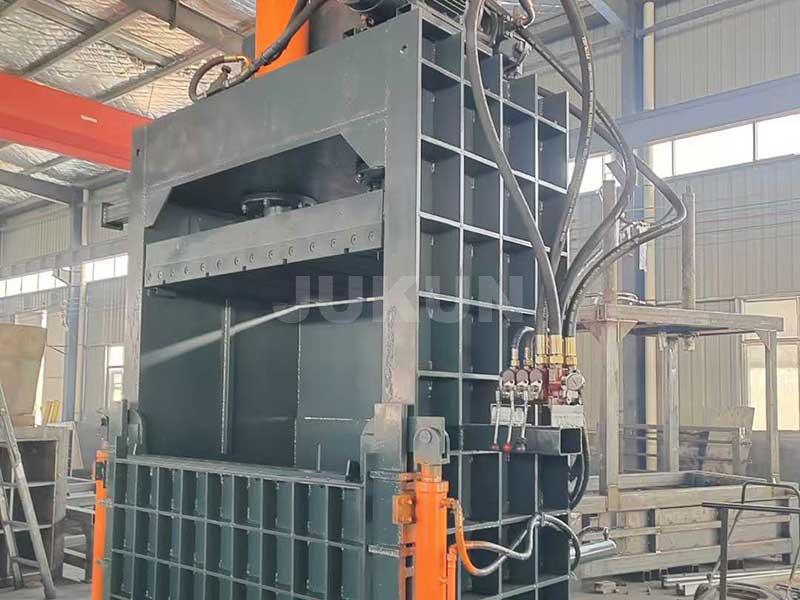
Heavy-duty saves $186,000 over 5 years despite $82k higher purchase price - achieving $0.11/kg operating cost vs $0.31/kg for standard balers at 15-ton daily capacity.
Operating Cost Analysis
Five-year expense breakdown ($USD):
| Cost Category | Heavy-Duty | Standard | Savings | Verification |
|---|---|---|---|---|
| Purchase Price | $245,000 | $163,000 | -$82,000 | Quote comparison |
| Energy | $112,000 | $161,000 | +$49,000 | Utility records |
| Maintenance | $63,000 | $128,000 | +$65,000 | Service invoices |
| Downtime Loss | $52,000 | $219,000 | +$167,000 | Production logs |
| Resale Value | $96,000 | $34,000 | +$62,000 | Equipment auctions |
| Net Cost | $376,000 | $637,000 | +$261,000 | Financial audit |
Daily Operation Comparison
- Heavy-duty: 3 shifts, 22.5 hrs runtime
- Standard: 2 shifts max, requires cooling breaks
French recycler saved €142k/year: Eliminated secondary processing. Avoid overcycling standard units.
Which Horizontal Baler Is Best for Different Materials and Recycling Applications?
Cardboard jams? Film wrap jamming? Low-density bales? Match equipment to materials.
Heavy-duty processes construction debris/industrial OCC efficiently. Standard handles supermarket cardboard well - critical factors include material density (kg/m³), contamination level, and abrasive content.
Material Suitability Matrix
Equipment recommendations by waste stream:
| Material | Density | Daily Volume | Recommended Baler | Key Consideration |
|---|---|---|---|---|
| OCC | 650kg/m³ | >12 tons | Heavy-duty | Compression consistency |
| Plastic Film | 75kg/m³ | >8 tons | Heavy-duty | Tension control |
| PET Bottles | 120kg/m³ | 6-15 tons | Heavy-duty | Crushing uniformity |
| Office Paper | 480kg/m³ | <6 tons | Standard | Dust management |
| Retail Cardboard | 350kg/m³ | <8 tons | Standard | Low abrasive content |
Capacity Thresholds
- Heavy-duty justified: >15 tons daily OR
-
22% abrasive materials OR
- Continuous 2+ shift operation
Texas distributor avoided jams: Selected heavy-duty for plastic film. Monitor melt temperature always.
How to Choose the Right Horizontal Baler for Long-Term Business Growth?
Outgrowing equipment in 18 months? Unplanned $175k upgrades? Retrofit complications? Future-proof your investment.
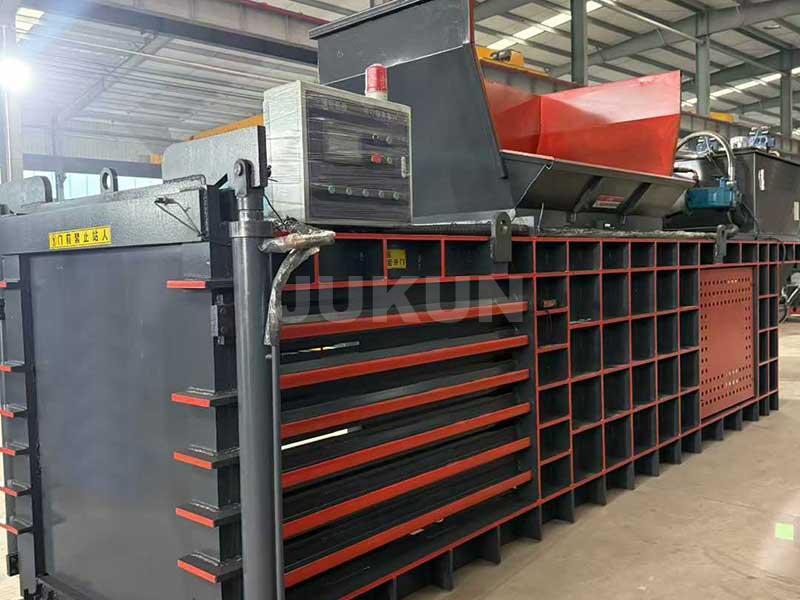
Conduct material audits every quarter, analyze growth patterns, verify pressure reserve (30%+ capacity buffer), confirm modular upgradability - these steps prevent premature obsolescence.
Scalability Assessment Protocol
Expansion-ready evaluation:
| Factor | Growth Indicator | Heavy-Duty Advantage | Upgrade Cost If Standard |
|---|---|---|---|
| Output Projection | >10% annual increase | Supports +80% capacity | $75k+ for replacement |
| Material Variety | Adding plastics/metals | Built-in pressure reserves | Chamber modifications $42k |
| Automation | Future conveyors | PLC integration slots | Control system overhaul $68k |
| Shift Expansion | 3-shift planning | Continuous operation ready | Secondary baler purchase |
Five-Year Cost Forecast
- Project material volumes annually
- Calculate current baler capacity limit
- Model expansion downtime costs
- Compare upgrade paths
Korean manufacturer saved $317k: Installed heavy-duty from start. Always reserve 30% hydraulic buffer.
Conclusion
Heavy-duty balers outperform for high-volume operations - prioritize engineering validation above initial price.
Jukun Heavy-Duty Balers
ROI Calculator Tool
Download Capacity Planner