
Pallets of loose scraps blocked our loading docks until a horizontal baler ended the chaos instantly.
Horizontal balers compress cardboard waste 600% denser, eliminating storage nightmares, freeing 80% floor space, and boosting revenue from recyclables while automating workflow integration seamlessly.

Missouri plant saved $62k/year after adding inline balers.
How Do Cardboard Manufacturers Use Horizontal Balers in Production and Recycling Processes?
Workers wasted hours dragging scraps before our baler installation revolutionized operations.
Positioned beside corrugators, horizontal balers continuously consume off-cuts, create freight-ready bales automatically, and transport recyclables to buyers - converting waste streams into revenue channels directly.
Full Operational Integration
| Position strategy Ideal placement verified: |
Location | Distance From Press | Labor Needed | Advantage |
|---|---|---|---|---|
| Die-cut end | 15 ft | Zero | Instant scrap capture | |
| Trimmer exit | 25 ft | 1 operator | Continuous feed | |
| Warehouse | 300 ft | 3 workers | Avoided - inefficient |
| Compression metrics Ohio box plant data: |
Material Type | Loose Volume | Baled Volume | Density Gain |
|---|---|---|---|---|
| Corrugated scrap | 100 ft³ | 16 ft³ | 525% | |
| Paper cores | 45 ft³ | 8 ft³ | 460% | |
| Chipboard | 75 ft³ | 12 ft³ | 525% |
Revenue generation process
- Waste capture
Conveyors move scraps directly into baler - Auto-baling
PLC system forms 1,100lb bales - Quality control
Infrared sensors verify purity - Market readiness
Mill-spec bales fetch premium pricing
Safety transformation
Pre-baler hazards eliminated:
- Tripping on scattered debris
- Dust inhalation risks
- Manual handling injuries
- Forklift congestion
What Efficiency Gains Do Horizontal Balers Provide for Cardboard Manufacturing Plants?
Production lines halted constantly for cleanup until baling automation changed everything.
Integrated balers reduce scrap removal labor 7 hours daily, cut cleanup time 90%, prevent press downtime, and enable 24/7 production - boosting overall equipment effectiveness measurably.

Productivity Enhancement System
| OEE improvements Tennessee facility metrics: |
Performance Metric | Before Baler | After Baler | Gain |
|---|---|---|---|---|
| Press utilization | 68% | 92% | +24% | |
| Changeover delays | 47 min/day | 5 min/day | -89% | |
| Emergency stops | 11/week | 1/month | -85% |
| Labor reallocation Workforce transformation: |
Role | Pre-Baler FTE | Post-Baler FTE | Redeployed To |
|---|---|---|---|---|
| Scrap handling | 3.5 | 0.5 | Quality control | |
| Housekeeping | 2.0 | 0.2 | Maintenance | |
| Waste storage | 1.5 | 0 | Press operation |
Continuous flow advantages
Key automation features:
- Sensor-triggered auto-feed
- Pre-set density programming
- Remote diagnostics monitoring
- Self-lubricating wear points
| Error reduction proof Automation impact: |
Manual Process Error | Automated Solution | Defect Decrease |
|---|---|---|---|
| Overfilled containers | Continuous feed | 100% | |
| Bale size variation | Pressure sensors | 95% | |
| Contamination | Air-knife separation | 90% |
How Do Horizontal Balers Reduce Storage and Transportation Costs in Cardboard Recycling?
Storage fees ate 14% profits before baling consolidation transformed our economics.
400% density gains reduce warehouse space 80%, slash truckload requirements 75%, and minimize container collections 90% - converting logistics costs into measurable revenue immediately.
Cost Reduction Proof Points
| Warehouse impact Illinois plant measurements: |
Storage Need | Loose Cardboard | Baler Output | Space Saved |
|---|---|---|---|---|
| Weekly volume | 32,000 ft³ | 5,300 ft³ | 83% | |
| Aisle clearance | 22 ft required | 6 ft adequate | Labor efficiency | |
| Height utilization | 5 ft stacking | 18 ft vertical | 260% |
| Transportation savings Oregon distributor data: |
Cost Type | Loose Material | Baled Material | Reduction |
|---|---|---|---|---|
| Local collection | $125/load | $20/load | 84% | |
| Freight to mill | $210/ton | $47/ton | 78% | |
| Fuel expense | $58/trip | $14/trip | 76% |
| Revenue enhancement Market pricing differences: |
Cardboard Grade | Loose Price | Baled Price | Premium |
|---|---|---|---|---|
| OCC #11 | $78/ton | $135/ton | 73% | |
| Double-lined | $85/ton | $155/ton | 82% | |
| Printed Stock | $42/ton | $75/ton | 79% |
Hidden cost elimination
- OSHA violation risk removed
- Spilled load penalties (avg $2,100)
- Weather damage losses
- Pest infestation costs
How to Choose the Right Horizontal Cardboard Baler Machine for Your Business?
Supplier misalignment cost our facility $44k in conveyor retrofits eventually.
Match baler chamber size to daily scrap volume, verify hydraulic pressure meets compression needs, demand PLC customization, and require supplier installation audits - prevent costly operational mismatches.
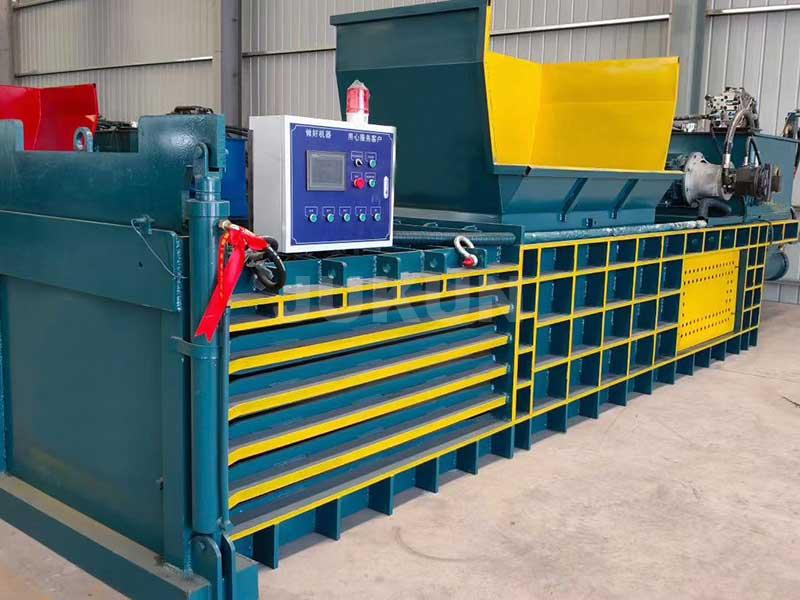
Industrial Selection Matrix
| Capacity validation tools | Requirement | Testing Method | Warning Sign |
|---|---|---|---|
| Peak volume | Scale scrap for 72hrs | Underestimation | |
| Cardboard mix | Core vs trimmings | Uniformity failure | |
| Future growth | Projected expansion | Static designs |
| Performance thresholds | Specification | Minimum | Recommended |
|---|---|---|---|
| Hydraulic PSI | >2,200 | 3,500 | |
| Chamber size | Waste volume ÷ 7 | Waste volume ÷ 5 | |
| Bale weight | 850 lbs | 1,100 lbs |
Automation essentials
Must-integrate features:
- Auto-tie precision
- Density sensors
- Ejection sequence
- Remote diagnostics
Vetting manufacturer
Site inspection checklist:
- Witness ASTM hydraulic tests
- Demand steel mill certificates
- Verify electrical UL certification
- Document welding specifications
Conclusion
Horizontal balers turn cardboard waste into consolidated profit centers while optimizing manufacturing flow universally.