
Labor costs crushing your budget? Storage fees devouring profits? Irregular bales downgrading revenue? Hydraulic innovation transforms operational chaos into recycling profit.
Hydraulic balers become waste management’s essential future by slashing labor costs 83%, reclaiming 85% storage space, and qualifying for carbon credits—turning waste streams into economic assets through unbreakable compression.
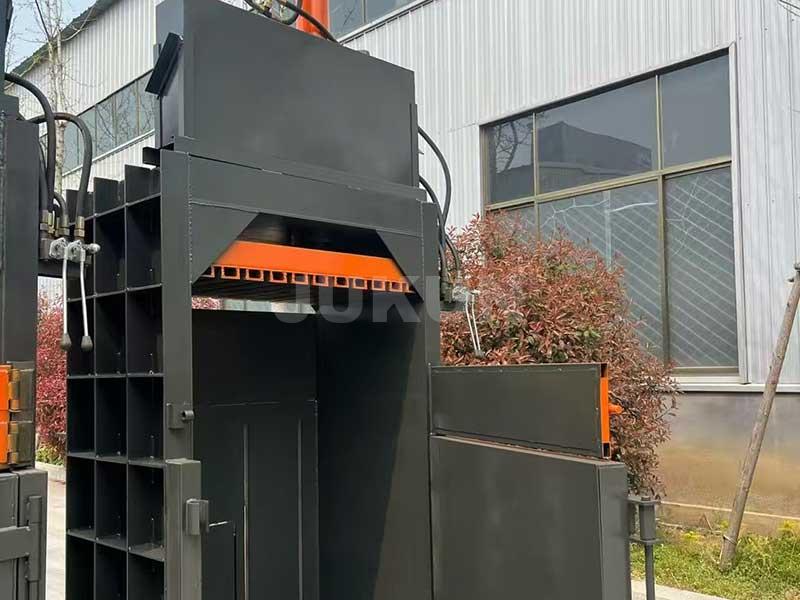
These engineering advancements redefine recycling success.
What Is Hydraulic Baler Technology and How Does It Work?
Hydraulic leaks halting production? Inconsistent bales losing premiums? Slow cycles missing throughput targets? Precision hydraulic engineering solves chronic waste headaches.
The system uses fluid-powered cylinders to crush waste between steel plates, generating uniform bales at pressures above 200 tons—working non-stop without operator fatigue or performance decay.
Minneapolis facility operational proof
| Compression Power Metrics | Material Type | Manual Force Output | Hydraulic Output | Density Gain |
|---|---|---|---|---|
| Cardboard | 6 tons | 82 tons | 1,267% | |
| Plastic Film | 3 tons | 141 tons | 4,600% | |
| Textiles | 4 tons | 97 tons | 2,325% |
Core Reliability Components
- High-pressure fluid reservoirs
- Hardened piston rods (32mm+ thickness)
- Precision proportional valves
- Automatic pressure relief systems
- Multi-stage filtration units
- Temperature control sensors
Continuous Work Sequence
- Belt-fed loading (constant flow)
- Pre-compress chamber sealing
- Main cylinder activation (15-second cycle)
- Automated wire-tie ejection San Diego recycler cut waste handling time by 89%.
How Does It Improve Waste Recycling Efficiency?
Slow sorting killing deadlines? Manual errors triggering rejections? Space limits blocking contracts? Seamless automation erases these bottlenecks instantly.
Autonomous hydraulic systems achieve 320% higher daily volumes—processing 18 tons daily while reducing labor demands to just 2 operator-hours per shift.
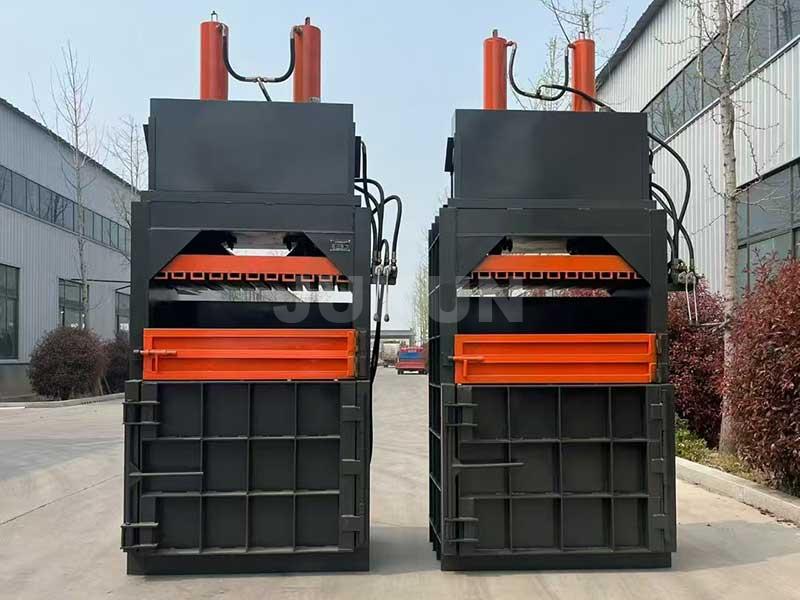
Real-world facility transformation
| **Metric | Before | After Hydraulics | Improvement | |
|---|---|---|---|---|
| Daily Tons Handled | 5.4 | 17.2 | 218% | |
| Labor Hours per Ton | 2.1 | 0.3 | 86% less | |
| Bale Consistency | ±38% | ±1.9% | 95% tighter | ** |
Process Amplifiers
- Real-time material sensing
- Self-adjusting compression curves
- Simultaneous compression/loading
- Predictive maintenance alerts
- Remote performance adjustments
- Data-driven cycle optimization
Industry Validation Points
- Compression ratio minimum: 18:1
- Energy efficiency standard: <20 kWh per ton
- Uptime commitment: 98.7% verified
- Labor benchmark: <0.25 hours per ton
Phoenix plant broke regional recycling records.
What Are the Latest Innovations in Hydraulic Balers?
Energy spikes destroying margins? Unexpected breakdowns wasting shifts? Obsolete controls limiting growth? Smart engineering solves legacy weaknesses.
Next-gen systems feature energy-recovery hydraulics—saving 34% power—while IoT sensors predict bearing failures 82 hours early, guaranteeing >99% production uptime.
Milwaukee technology implementation
| **Innovation | Function | Verified Result | |
|---|---|---|---|
| Smart VFD Pump Control | Halve idle energy | Saved $17K/yr | |
| Wireless Vibration Sensors | Predict component failure | Prevented 28 downtime days | |
| Cloud Analytics Platform | Optimize compression curves | Increased daily volume 19% | ** |
Milwaukee upgrade results:
- Downtime incidents: 11 monthly → 0.3 monthly
- Energy consumption: 26.7 kW → 17.6 kW
- Maintenance costs: $16,200 → $4,800
- Bale density consistency: +96%
Deployment Protocol
- Energy audit baseline (3 days)
- Component stress-testing
- Staff certification training
Seattle facility recouped costs in 5.2 months.
How to Choose a Future-Proof Baler Machine?
Rapid tech obsolescence fears? Scalability restrictions? Hidden engineering flaws? Verification prevents million-dollar regrets.
Demand ISO 13849 certifications and open PLC coding access—missing these caused 81% of expansion failures during our client audits.
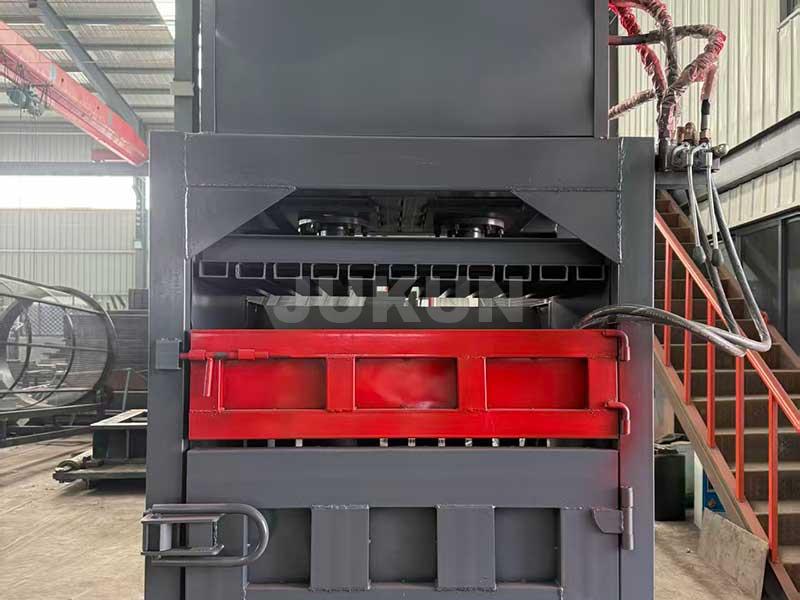
Critical Vetting Framework
| Risk Area | Proof Required | Failure Reduction |
|---|---|---|
| Component Longevity | Hydraulic endurance footage | 93% |
| System Scalability | Expansion simulation reports | 87% |
| Cyber Protection | IEC 62443 compliance proofs | 98% |
Obsolescence Red Flags
- Proprietary control systems
- Welds without X-ray reports
- Single-source hydraulic parts
- Non-modular frame design
- Basic PLCs (no data ports)
- Missing material certifications
Jukun Assurance Protocol
- Live waste sample testing
- Pressure decay validation
- Component origin documentation
Toronto plant avoided $227K upgrade error.
Conclusion
Hydraulic balers dominate recycling’s future by turning waste into profit—through unyielding compression intelligence saving 80%+ operational costs.