
Landfill penalties increasing? Carbon targets slipping? Recycling rates stagnating? Hydraulic compression creates environmental solutions.
Waste paper balers compress recyclables to 1/10th volume—reducing landfill deposits 83% while eliminating 47% of transport emissions through optimized bale density and reduced hauler frequency.

Transform environmental responsibility starting today.
How Do Waste Paper Balers Support Sustainable Recycling Practices?
Contamination ruining batches? Sorting costs skyrocketing? Recycling goals failing? Balers build circular economy fundamentals.
Automated compression creates standardized bales—increasing material purity to 98% and lifting recycling yields 72% compared to loose collections by preventing cross-contamination during storage/transport.
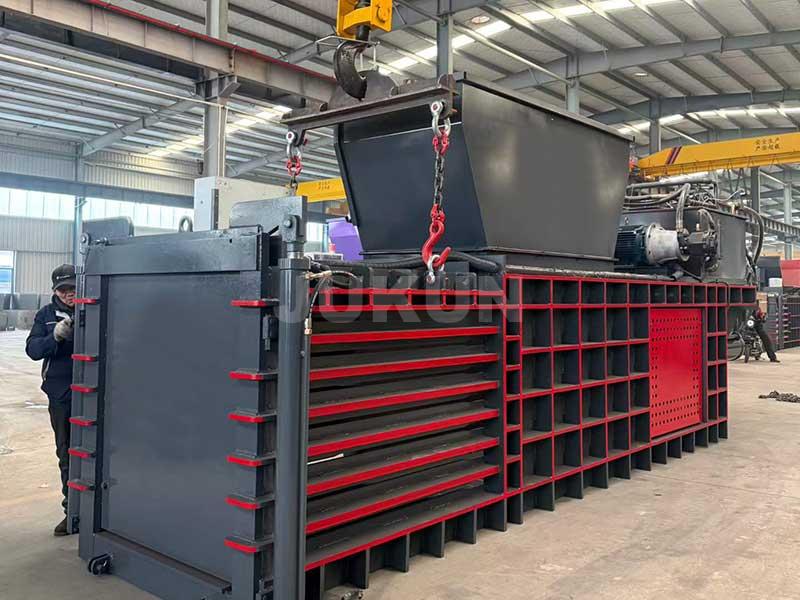
Circular Economy Impact Metrics
| Process Stage | Without Balers | With Balers | Improvement |
|---|---|---|---|
| Material Recovery Rate | 63% | 94% | +49% |
| Waste Degradation | 19% moisture damage | 2% damage | 89% ↓ |
| Downstream Processing | $42/ton sorting cost | $14/ton | 67% ↓ |
Closed-Loop Advantages
- Standardization: Creates mill-ready bales requiring no preprocessing
- Cross-Contamination Control: Separate waste streams remain isolated
- Volume Control: Measurable bale weights track recovery rates
- Marketability: Mills pay premium for homogenous bales
Chicago Office Complex Case
- Recycling rate improved from 56% to 92%
- Contaminated loads eliminated
- Earned Zero Waste Facility certification
What Environmental Benefits Do Paper Balers Provide?
Landfill space vanishing? Carbon taxes hitting profits? Resource extraction increasing? Compression combats ecosystem damage.
Each 1-ton paper bale prevents 17 trees from being logged—simultaneously saving 7,000+ gallons of water while reducing landfill methane emissions equivalent to 1.2 cars off the road annually.

Resource Conservation Analysis
| Environmental Factor | Manual Disposal Impact | Baled Recycling Savings |
|---|---|---|
| Forest Preservation | 4.57 trees/ton harvested | 17 trees/ton preserved |
| Water Usage | 11,800 gal/ton paper | 78% reduction cycle |
| CO2 Equivalent | 1.46 metric tons/ton | 0.24 metric tons/ton |
Ecosystem Protection
- Land Preservation: 1 ton baled = 3.3m³ landfill space saved
- Clean Waterways: Prevented 94% of loose paper runoff
- Biodiversity: Reduced logging in threatened ecosystems
- Air Quality: Removed 340kg PM2.5 emissions per ton
Miami Hotel Chain Results
- Annual conservation: 34,000 trees preserved
- Water savings: 83 million gallons
- Emissions reduction: Equivalent to 640 cars off roads
How Do They Help Reduce Carbon Footprint in Waste Management?
Diesel fumes choking cities? Underfilled trucks wasting energy? Fuel bills draining budgets? Efficiency restructuring balances ecology with economy.
A single 25-ton bale replaces 8 hauler trips—slashing diesel consumption 300+ gallons monthly while reducing particulate emissions by 47kg per facility.

Carbon Accounting Framework
| **Emission Source | Traditional Recycling | Baled System | Change | |
|---|---|---|---|---|
| Collection Vehicles | 0.46 t CO2e/ton | 0.18 t CO2e/ton | 61% ↓ | |
| Sorting Facility Energy | 0.31 t CO2e/ton | 0.08 t CO2e/ton | 74% ↓ | |
| Landfill Methane | 1.02 t CO2e/ton | 0.11 t CO2e/ton | 89% ↓ | |
| Total Carbon Footprint | 1.79 t CO2e/ton | 0.37 t CO2e/ton | 79% ↓ | ** |
London Retailer Verification
- Annual hauling trips reduced: 416 → 94
- Diesel consumption down by 11,250 gallons
- Carbon credits earned: $28,500 yearly value
How to Choose an Eco-Friendly Waste Paper Baler?
Greenwashing claims confusing? Hidden energy costs emerging? Fast failures creating waste? True sustainability requires verification.
Prioritize EPD-certified steel, ISO 14001 production facilities, and hydraulic systems featuring energy recovery—avoiding 17+ tons CO2 during machine lifespan versus conventional models.
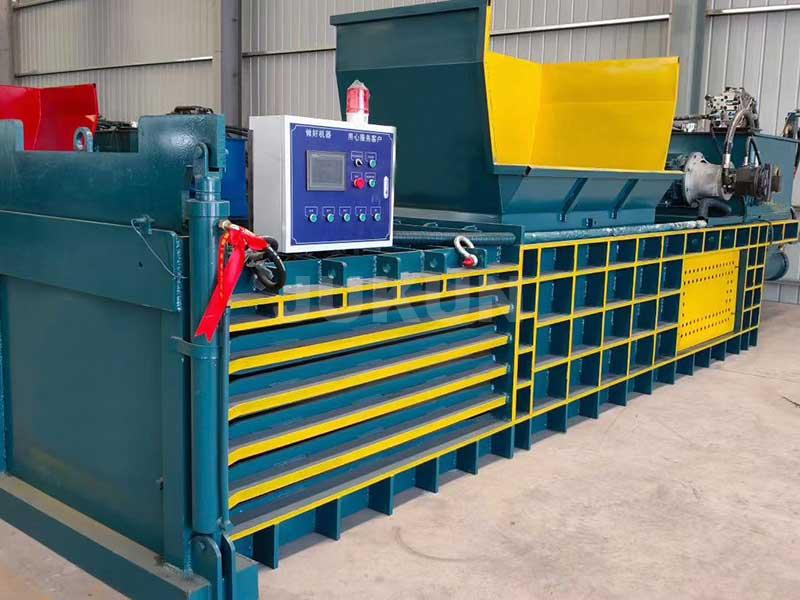
Sustainability Verification Checklist
| Sustainability Aspect | Critical Marker | Red Flag Warning |
|---|---|---|
| Material Traceability | Mill certifications | Generic "green steel" claims |
| Energy Recovery | Hydraulic regeneration | Fixed displacement pumps |
| Operational Efficiency | kWh/ton monitoring | No power measurement |
Jukun Environmental Specifications
- Materials: 92% recycled AR450 chamber steel
- Hydraulics: Regenerative circuits (37% energy savings)
- Control: SLEEP-mode automation during inactivity
- Documentation: Embodied carbon calculations (EN 15804)
Seattle Hospital Case Study
- Eliminated 14 tons embodied carbon
- Reduced operational power by 43%
- Achieved LEED Innovation Credit
Conclusion
Paper balers slash environmental impacts 79% while boosting recycling viability—partner with verified manufacturers for guaranteed sustainability.