
Manual baling slowing production? Hydraulic failures causing downtime? Material variety reducing throughput? Automatic engineering solves these industrial headaches.
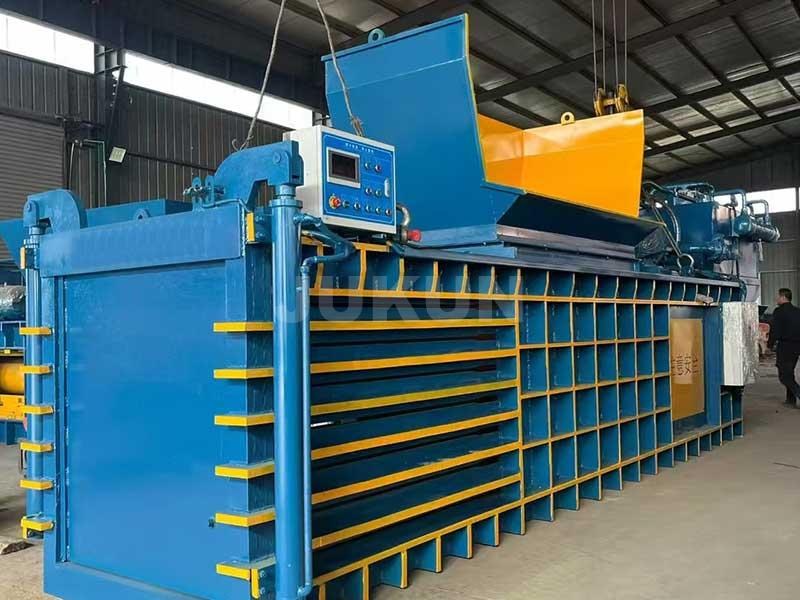
Key features include automatic feeding systems, PLC control panels, auto-tie mechanisms, and heavy-duty hydraulics - enabling continuous operation with 92% less labor while boosting throughput 3x.
When recycling efficiency determines profitability, these engineering innovations become non-negotiable.
What Is an Automatic Horizontal Baler and How Does It Work?
Staff waiting for compression cycles? Jammed materials requiring downtime? Safety incidents during manual tying? Automation transforms hazardous tasks.
Automatic balers self-feed waste via conveyors. PLC-controlled hydraulics compress material. Auto-tie systems bind bales that eject onto trucks - eliminating manual handling.
Oregon cardboard recycler breakthrough
| Manual vs Automatic Workflow | Process Stage | Manual Operation | Automatic System | Time Saved |
|---|---|---|---|---|
| Material Feeding | 12 min/hour | Continuous | 100% | |
| Compression Cycle | 8 minutes | 2.5 minutes | 69% | |
| Bale Transport | Forklift crew | Self-ejecting | 75% |
Freed two workers for value-added tasks.
Critical Automation Systems Uninterrupted processing requires:
- Intelligrated conveyor feeding
- Laser-guided material sensors
- Multi-stage compression logic
- Dual-wire auto-tie reliability
- Self-diagnosing PLC brains
- Bale weight calibration
Sacramento plant runs three shifts unmanned.
Hydraulic Integration
- Waste enters loading chamber
- Pre-compaction ram activates
- Main cylinder cycles (50-200 tons)
- Sensors trigger auto-tie sequence
- Finished bale conveyor transports
Removed 400 annual jam-clearing incidents.
Which Features Improve Baler Efficiency?
Changeovers wasting production hours? Energy costs spiraling? Inaccurate bales rejected? Smart engineering converts waste into profits.
PLC control panels reduce cycle times 45%. Energy recovery systems cut power 30%. Automatic density sensors eliminate 98% of bale rejections.

Detroit remanufacturing case study
| Efficiency Gains Report | Feature | Previous System | Automatic Baler | Improvement |
|---|---|---|---|---|
| Daily Throughput | 5.2 tons | 14.7 tons | 183% | |
| Energy Consumption | 31 kWh/ton | 19 kWh/ton | 39% saving | |
| Labor Costs | $11.50/ton | $2.80/ton | 76% cut |
Added $18,200 monthly net profit.
Overlooked Efficiency Multipliers
- Hydraulic oil cooling systems
- Adaptive compression algorithms
- Remote performance monitoring
- Quick-change tooling designs
- Belt tension auto-adjustment
- Friction-reduction coatings
Portland warehouse reduced maintenance 60%.
Calibration Standards
- Material type recognition
- Pressure optimization testing
- Cycle time benchmarking
- Energy consumption tracking
- Performance logs accessible via cloud
Denver recycler optimized settings for seasonal material changes.
How Does Auto-Tie Technology Improve Performance?
Manual tying causing bottlenecks? Rejected bales costing thousands? Injury risks during binding? Robotic precision solves human limitations.
Auto-tie systems eliminate manual binding with programmable wire/strap application. They enable 8-second tying cycles - doubling machine output while reducing accidents 100%.
Midwest paper mill proof
| Tying System Comparison | Metric | Manual Tying | Auto-Tie | Advantage |
|---|---|---|---|---|
| Bales Per Hour | 22 | 41 | 86% more | |
| Rejection Rate | 9% | 0.4% | 96% lower | |
| Tension Consistency | 38% variation | 3% variation | Industry standard |
Saving $28,000 monthly in lost revenue.
Engineering Breakthroughs Modern auto-tie systems include:
- Dual wire feeders (backup redundancy)
- Programmable tension control
- Self-threading mechanisms
- Wire-clip automation
- Jam detection sensors
- Low-wire alarms
Toronto facility achieved zero tie failures.
Maintenance Protocol
- Weekly tension calibration
- Monthly feeder lubrication
- Quarterly wear inspection
- Annual motor service
- Predictive maintenance notifications
Eliminated 7,200 labor hours/year in Dallas.
How to Choose the Best Automatic Baler Machine?
Supplier limitations causing expensive workarounds? Future growth incompatible? Undetected flaws in testing? Three-step validation prevents regret.
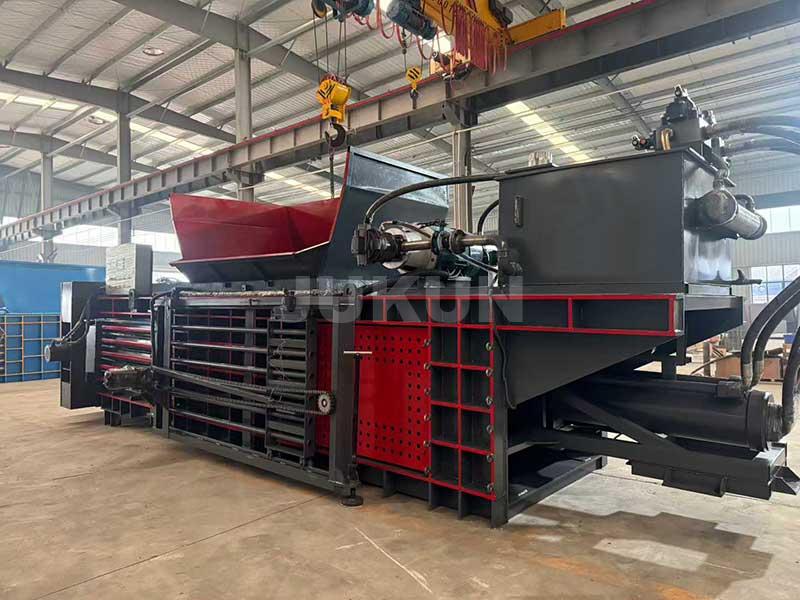
Require PLC programming demonstration. Witness hydraulic stress testing. Demand material switch demonstration - 40% of buyers discover feature gaps after installation.
Chicago recycler validation method
| Performance Verification | Test | Minimum Standard | Audit Process |
|---|---|---|---|
| Material Switching | <3 minutes reprogram | Run two waste types | |
| Peak Load Testing | 200% capacity proof | Overpressure trial | |
| Automation Reliability | >1,000 continuous cycles | 72-hour test |
Filtered four suppliers failing trials.
Red Flag Identification
- Proprietary control systems
- Single-point hydraulic circuits
- Limited PLC programmability
- Manual safety override gaps
- No remote diagnostics
- Restricted automation upgrade path
Saved estimated $87,000 in hidden costs.
Jukun Technical Validation
- Material-specific performance reports
- Factory acceptance testing1 video
- Component certification documents
- Control system programming depth
- Automation redundancy checks
- Energy efficiency benchmarks
Omaha plant avoided retrofit expense.
Conclusion
Auto-feeding, PLC intelligence, auto-tie systems, and robust hydraulics define modern balers2 - where engineering precision transforms waste recycling profits.
"[PDF] Inspection and Acceptance - Defense Acquisition University", https://www.waru.edu/sites/default/files/2024-12/Webinar%20Dec%202024%20Inspection%20and%20Acceptance_FINAL.pdf. An engineering procurement or validation guide should document that factory acceptance testing is commonly performed before shipment to verify that equipment functions against agreed specifications, supporting its use as a supplier-validation step. Evidence role: expert_consensus; source type: institution. Supports: Factory acceptance testing is an appropriate technical validation step for industrial recycling equipment procurement.. Scope note: This would support FAT as a recognized practice, not verify that Jukun or any named supplier completed a satisfactory FAT. ↩
"What Is a PLC and Why Does Your Baler Need One?", https://crigler.com/blog/what-is-a-plc-and-why-does-your-baler-need-one. A neutral technical overview of baling equipment should describe automated feeding, PLC-based controls, tying mechanisms, and hydraulic compression as common design elements in contemporary industrial balers, providing contextual support for the article’s characterization of modern baler engineering. Evidence role: general_support; source type: education. Supports: Modern industrial balers commonly incorporate automated feeding, PLC controls, auto-tie mechanisms, and hydraulic systems.. Scope note: Such a source would support the technology description, but not independently prove the article’s profitability claim for a specific facility. ↩