
Waste disposal costs drain your profits. Overflowing cardboard and plastic clutter your workspace. A vertical baler compresses waste into manageable bales that save space and money.
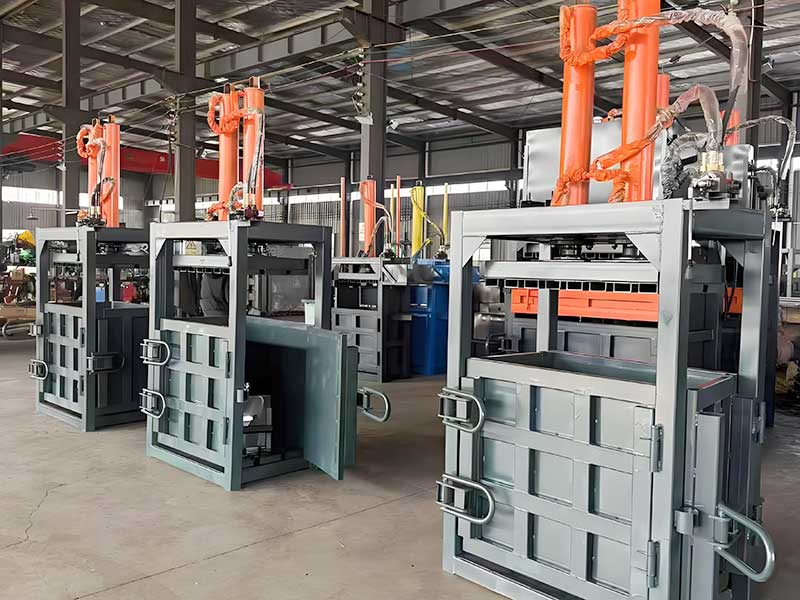
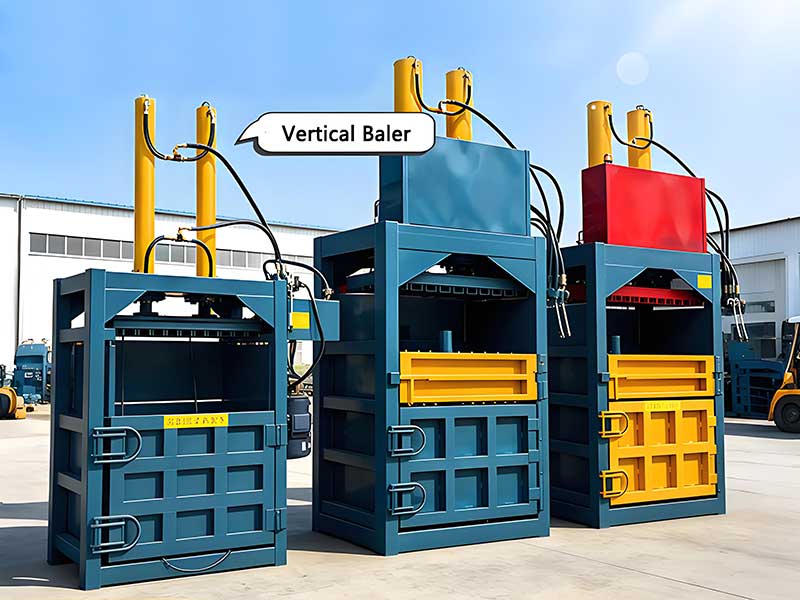
A vertical baler uses hydraulic pressure to compact recyclables like cardboard, plastics, and textiles into dense bales. Choosing the right model cuts waste handling costs by 40-60% through reduced hauling fees and increased recycling revenue.
You need practical solutions that pay for themselves quickly. This guide answers the key questions business owners ask about vertical balers. You'll learn how to match machine features to your needs and maximize savings.
What Is a Vertical Baler Machine and How Does It Work?
Waste piles up daily. You pay high fees for disposal trucks. Manual compaction is slow and ineffective. You need a space-efficient solution now.
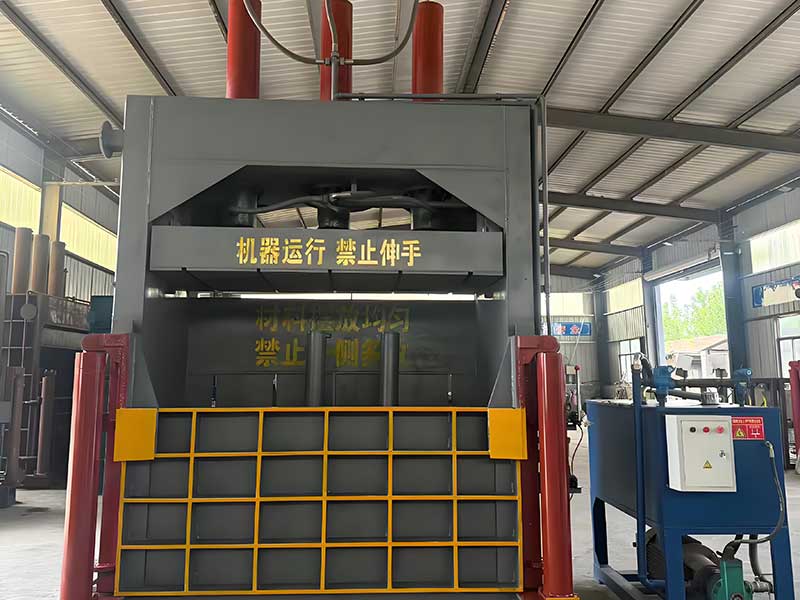
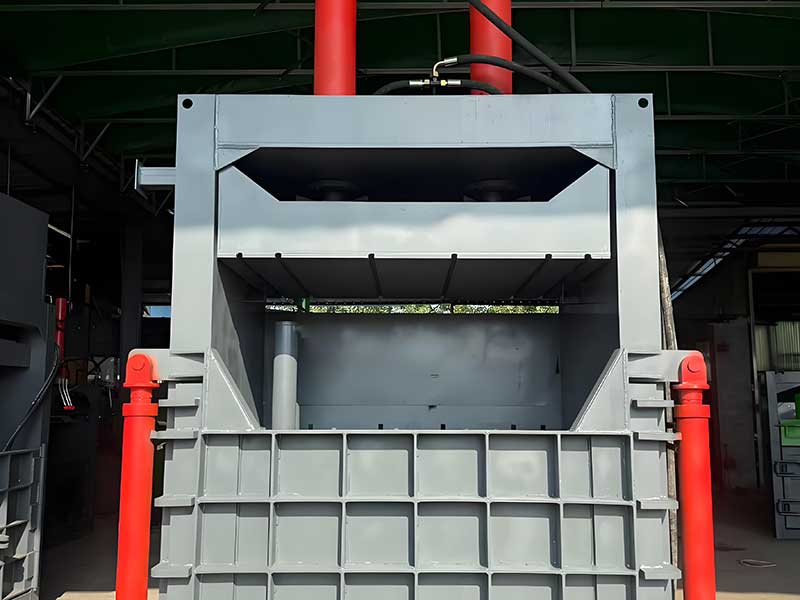
A vertical baler compresses materials using a hydraulic ram moving downward in a steel chamber. Recyclables are loaded at the top, compacted into dense bales, then tied and ejected through a side door. It fits in small spaces and reduces waste volume by 90%.
Small businesses are buying more vertical balers than ever. Why? Because modern operations cannot afford waste inefficiencies. Understanding how these machines work shows their real value.
1. The Compression Process Step-by-Step Vertical balers turn loose waste into valuable bales through simple mechanics:
- Loading: Workers feed recyclables through the top opening
- Compression: A hydraulic ram descends with up to 80 tons of force
- Baling: Material compresses until reaching preset density
- Ejection: Side door opens to remove the finished bale
2. Hydraulic System Mechanics The power comes from an electric motor driving hydraulic components:
| Component | Function | Business Impact |
|---|---|---|
| Pump | Creates fluid pressure | Quality pumps last 10,000+ hours |
| Cylinder | Powers ram movement | Seal quality determines lifespan |
| Valves | Control ram direction | Precision affects safety |
| Tank | Stores hydraulic oil | Capacity affects cooling |
3. Why Small Businesses Prefer Vertical Balers Retailers and factories gain immediate benefits:
- Payback in 6-18 months from disposal savings
- No dedicated operator needed - staff bales during downtime
- Creates new revenue streams by selling recyclable bales
- Simplifies compliance with recycling regulations
What Materials Can a Vertical Baler Compress?
Not every material compresses well. You don't want jams or low-density bales that waste space. Different recyclables need different handling.
Vertical balers effectively handle cardboard, paper, plastic film, PET bottles, aluminum cans, and textile waste. Material characteristics determine required pressure: cardboard needs 50-70 tons while PET bottles require 80+ tons for maximum compaction.
Material type matters more than daily volume. Light plastic film behaves differently than rigid cardboard. Choosing the wrong pressure creates inefficient bales that cost you money.
1. Material-Specific Compression Tips Each recyclable has unique baling requirements:
| Material | Recommended Pressure | Special Features Needed |
|---|---|---|
| Cardboard/OCC | 40-50 tons | Extra ejector for sticky bales |
| Plastic Film | 60+ tons | Slow compaction cycle |
| PET Bottles | 80+ tons | Pre-crush attachment |
| Textiles | 70-80 tons | Two-stage compression |
| Aluminum Cans | 30-40 tons | Heavy-duty chamber |
2. The Density-Profit Connection Higher density means more revenue:
- Transport savings: Trucks carry 300% more material
- Better pricing: Mills pay premiums for dense, uniform bales
- Less storage space: 4:1 volume reduction on average
- Faster processing: Tight bales speed sorting
3. Overcoming Material Challenges
- Crush blocks break rigid plastics faster
- Tapered chambers prevent material springback
- Lubrication ports help eject sticky bales
- Programmable cycling optimizes different materials
How Much Does a Vertical Baler Machine Cost?
You compare prices online and see huge differences. The cheapest model worries you. The most expensive strains your budget. True cost goes beyond the price tag.
Entry-level vertical balers start near $10,000, while heavy-duty models cost up to $50,000+ with automation. Consider total ownership: electricity ($200/month), maintenance ($1,000/year), and lifespan (3,000-5,000 operating hours). Quality machines save more long-term.

The purchase price is just your starting investment. Smart buyers calculate cost per bale over the machine's life. Better construction and features often pay back quickly.
1. Price Determinants Explained What changes the cost:
| Feature | Price Impact | ROI Consideration |
|---|---|---|
| Pressing Force | +$15K per 20-ton increase | Higher force = denser bales |
| Chamber Size | +$8K per 12" increase | Room for growth |
| Auto-Tie Systems | +$12K | Eliminate manual labor |
| Stainless Steel | +25% cost | Essential for food facilities |
| Dual-Ram Systems | +$20K | Faster cycling |
2. Operating Cost Analysis Estimate your 5-year expenses:
- Energy: 7.5kW motor × 5hr/day = $1,500/year
- Maintenance: Seals, wires, hydraulic oil = $1,000-$2,000/year
- Downtime: Poor reliability = $500+/day in disruptions
- Labor: Manual tying = $20/hour versus $0 with auto-tie
3. The Value of After-Sales Support Good suppliers reduce lifetime costs:
- Warranty (2-5 years covers major repairs)
- Spare parts stock for next-day shipping
- Video troubleshooting saves $300/hour service calls
- Operator training prevents damage
Vertical Baler vs Horizontal Baler: Which One Is Right for Your Business?
Your space is tight but volumes grow. Should you pay more for horizontal automation? Or stick with affordable vertical compression? The choice impacts workflow.
Vertical balers fit limited spaces with lower start-up costs ($10-50K). Horizontal balers handle bigger volumes but require $70-150K+ investment. Buy vertical if: you have <1000 sq ft, process under 5 tons daily, or need under 5 bales/hour.
Think about growth. If your waste volume will double in 2 years, a larger vertical or entry-level horizontal may serve you longer without replacement costs.
1. Space and Installation Differences Critical comparison points:
| Requirement | Vertical Baler | Horizontal Baler |
|---|---|---|
| Floor Space | 100-400 sq ft | 500-1500+ sq ft |
| Ceiling Height | 10-12 ft | 14-22 ft |
| Foundation Needed | None | Reinforced concrete |
| Power Supply | 220V standard | Often 480V industrial |
2. Operation Efficiency Comparison Labor and throughput analysis:
| Metric | Vertical Baler | Horizontal Baler |
|---|---|---|
| Average Cycles/Hour | 5-10 | 20-50 |
| Operator Attention | 80% of cycle | 15% of cycle |
| Typical Daily Output | 2-5 tons | 10-30+ tons |
| Automation Level | Basic | Advanced conveyors |
3. Making the Scalability Decision Choose based on your roadmap:
- Today's Volume: Start with what fits current needs
- Future Expansion: Add a machine not replace it
- Growth Plan: 20% growth = larger vertical 50%+ growth = horizontal model
- Hybrid Solution: Run vertical for cardboard, horizontal for PET
What Are the Top Safety Features to Look For in a Vertical Baler?
No safety incident has ever been worth savings. Workers can be injured by moving rams or accidental startups. Protection matters immediately.
Essential safety features include dual palm buttons, mechanical door locks, safety light curtains, keyed main switches, and emergency stop buttons. These prevent cycle starts with chambers open and protect hands during operation.

Safety failures cause expensive shutdowns. Regulatory fines can exceed $100,000 per incident. A properly designed baler prevents accidents and liability risks.
1. Required Safety Mechanisms Non-negotiable protections:
| Feature | How It Protects | Compliance Standard |
|---|---|---|
| Two-Hand Control | Both hands occupied away from chamber | OSHA 1910.147 |
| Door Lock System | Physically blocks ram with open door | EN 16252 |
| Light Curtains | Halts ram when breached | ANSI B11.19 |
| Hazard Signage | Clear warnings for operators | ISO 3864-2 |
2. Maintenance and Documentation Protect your team post-installation:
- Training Manuals: In local languages
- LOTO Support: Lockout tagout equipment
- Safety Certifications: CE, OSHA compliant
- Alert Systems: Warning indicators for faults
3. Cost of Safety Failure Consequences beyond injuries:
- Work stoppages averaging $1,200/day
- Fines exceeding machine cost
- Increased insurance premiums
- Loss of business licenses
- Reputational damage to your brand
Conclusion
Vertical balers deliver fast cost savings for small-medium businesses by compressing waste into valuable bales. Choose the right pressure, size, and safety features to maximize your return.