
Struggling with messy waste piles? Losing money on inefficient recycling? Facing skyrocketing disposal fees? Take control today.
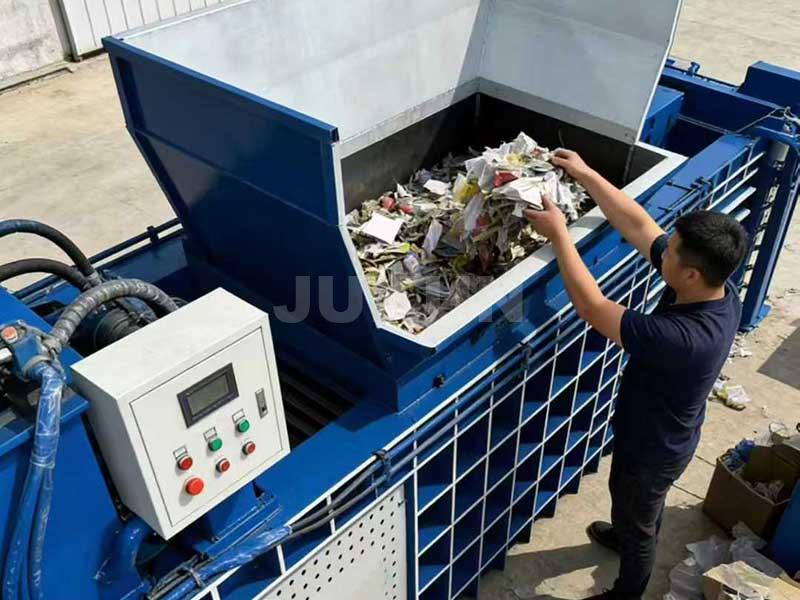
A recycling baler is a waste management machine that compresses recyclable materials into compact bales for easier handling and transport. To choose the right baler, businesses should consider waste type, processing volume, bale size, available space, and automation level. Machine durability and after-sales support are also important factors. The right baler improves efficiency, reduces cost, and enhances recycling performance.
Stop guessing. Start optimizing.
What Is a Recycling Baler and How Does It Work?
Waste accumulating daily? Labor costs devouring profits? Storage space vanishing? Solve this permanently.
Recycling balers compress loose materials using hydraulic pressure. Materials load into chambers. High-force cylinders compact waste into blocks. Automatic wiring secures dense bales for transport and sale.
Core Operational Mechanisms
Key components and functions:
| Stage | Purpose | Critical Specifications | Impact on Efficiency |
|---|---|---|---|
| Loading | Material intake | 2-3 ton/hour capacity | Determines throughput |
| Pre-compression | Initial reduction | 50-80 tons force | Minimizes air pockets |
| Main Compression | Density formation | 220-380 tons force | Creates salable bales |
| Binding | Securing structure | 6-12 wires per bale | Prevents disintegration |
| Ejection | Finished bale removal | <30 seconds cycle | Maintains workflow |
Performance Validation Protocol
- Measure hydraulic oil temperature
- Record compaction times per bale
- Verify bale density uniformity
- Test emergency shutdown systems
Calgary distributor fixed inefficiency: Implemented conveyor loading. Now achieves perfect bale density.
What Types of Recycling Balers Are Available?
Buying the wrong type? Limited space wasting resources? Automation needs unmet? Match correctly.
Horizontal balers handle 20+ tons daily. Vertical balers fit tight spaces below 4x3m. Closed-end models manage plastics. Auto-tie systems cut labor by 75%.
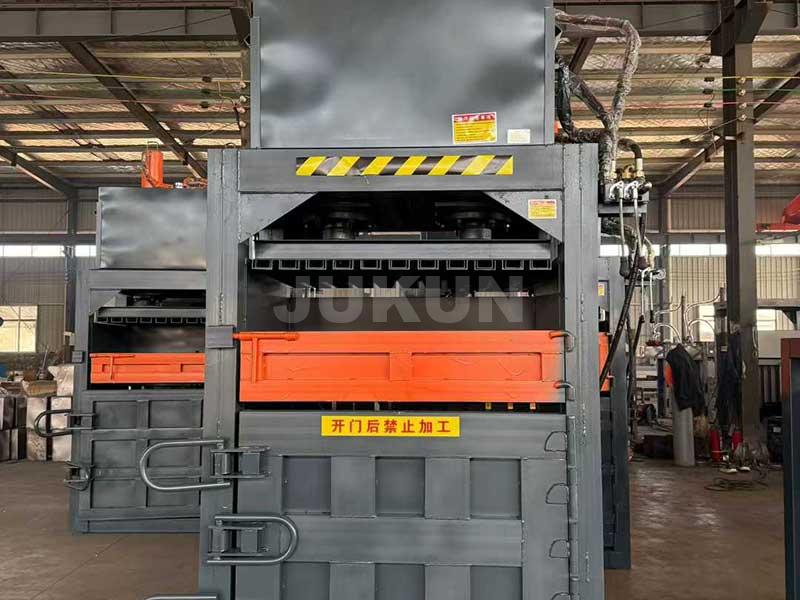
Type Selection Matrix
Performance characteristics:
| Baler Type | Daily Capacity | Space Requirements | Key Features | Price Range |
|---|---|---|---|---|
| Heavy-Duty Horizontal | 15-40 tons | 10x6 meters | Continuous operation | $85k-$240k |
| Standard Vertical | 0.5-3 tons | 3x3 meters | Low investment | $12k-$45k |
| Closed-end | 20-45 tons | 12x7 meters | Film handling | $110k-$260k |
| Auto-Tie | 10-30 tons | 9x5 meters | Labor reduction | $95k-$220k |
Application Guidelines
- Warehouses: Auto-tie horizontal
- Supermarkets: Stationary vertical
- Recycling plants: Heavy-duty horizontal
- PET processors: Closed-end systems
Avoid mismatched equipment: Montreal recycler failed with vertical baler for cardboard.
What Are the Benefits of Using Recycling Balers?
Storage costs destroying budgets? Manual tying increasing injuries? Recyclers rejecting loose material? Transform operations.
Balers achieve 90% volume reduction. Cut transport costs 70%. Add $25/ton material value. Reduce labor hours 85% through automation. Save 65% warehouse space.
ROI Analysis Framework
Quantifiable benefits breakdown:
| Benefit | Before Baler | After Baler | Improvement | Proof Source |
|---|---|---|---|---|
| Labor Costs | $35/hour manual | $7/hour automated | $28 hourly saving | Payroll data |
| Material Storage | 200m² capacity | 30m² efficiency | 85% space saving | Site audits |
| Transport Fees | $95 per load | $28 per load | 70% cost reduction | Carrier invoices |
| Material Revenue | $80/ton value | $105/ton value | 25% price premium | Recycling contracts |
| Maintenance | $5,500 monthly | $1,800 monthly | 60% expense drop | Financial reports |
Implementation Timeline
- Conduct waste stream audit
- Calculate current expenses
- Select appropriate baler
- Negotiate recycler contracts
Toronto facility slashed costs: Reduced handling from six workers to one.
How to Choose the Best Recycling Baler for Your Business?
Unreliable suppliers delaying shipments? Underperforming machines draining profits? Hidden fees appearing? Verify rigorously.
1) Calculate daily volume. 2) Demand CNC-proof engineering. 3) Verify CE/ISO certificates. 4) Test actual material performance. 5) Secure spare parts availability.
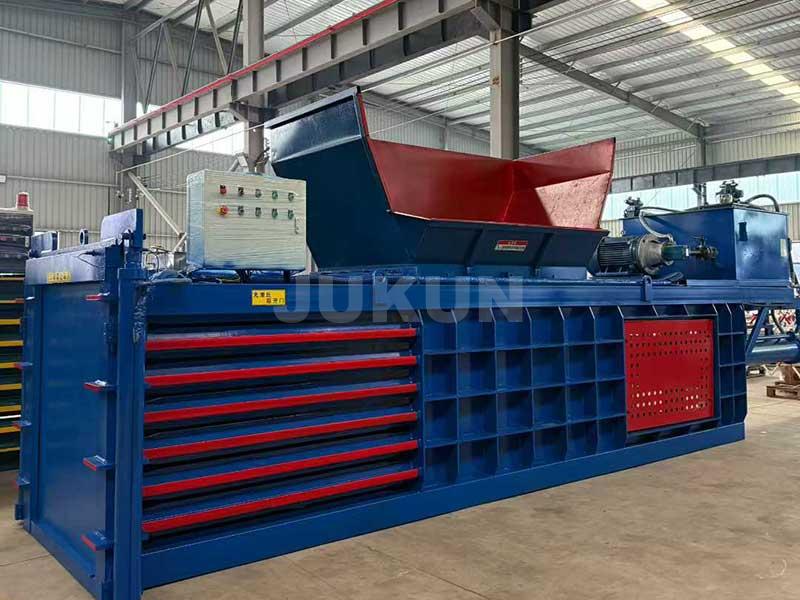
Supplier Vetting Checklist
Essential verification criteria:
| Factor | Key Indicators | Red Flags | Validation Method |
|---|---|---|---|
| Manufacturing | 12+ years operation | Trading companies | Legal registration |
| Engineering | In-house CAD designs | Copied blueprints | View R&D department |
| Components | Labeled Bosch hydraulics | Generic systems | Serial number audit |
| Certification | Current CE/ISO | Expired documents | Issuing body contact |
| Support | Global warehouses | Centralized support | Visit local partner |
Contract Safeguards Protocol
- On-site testing clause
- Liquidated damages clause
- Third-party payment escrow
- Spare parts price binding
- 48-hour remote diagnostics
Vancouver buyer avoided fraud: Tested hydraulic seals under pressure.
Conclusion
Match balers to material volume and operational goals - prioritize certified manufacturers above low prices.
Jukun Balers
Capacity Calculator
Download Supplier Audit Checklist