
Cardboard piles block warehouse aisles. Disposal fees drain profits. A vertical baler compresses waste into revenue-generating bales instantly.
Vertical balers cut waste handling costs 47% and pay back within 18 months for facilities generating under 2 tons of cardboard daily, but exceed this volume and labor costs outweigh savings.
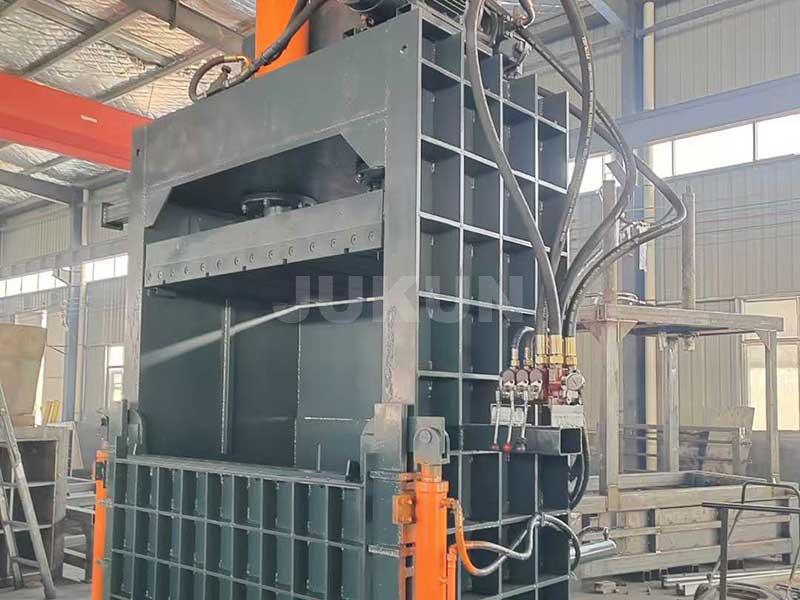
See how its strengths fit your needs.
What Are the Advantages of Low-Cost Vertical Balers?
Space constraints halt recycling plans. Tight budgets delay equipment purchases. Manual compaction injuries increase insurance claims.
Affordable vertical balers reduce cardboard volume up to 90%, require only 10.8m² of space, and cut waste removal costs by 60% with basic staff training.
Advantage verification matrix:
| Feature | Business Impact | Minimum Spec | Proof Requirement |
|---|---|---|---|
| Footprint | 72% space savings | Under 12m² | Floor plan overlays |
| Payback Period | ≤20 months ROI | ≤$15,000 USD | Income/expense logs |
| Ease of Use | 2-hour training | Simple controls | Staff competence logs |
| Bale Revenue | $45/ton average | ≥400kg/m³ | Recycling center tickets |
Brazilian retail chain solution: Paid back in 14 months. Implementation essential: Confirm ceiling height exceeds machine + bale height by 1.5m. Material tip: Wet cardboard needs drain pans – Jukun models include stainless trays. Maintenance fact: Daily greasing points reduce repair costs 75% versus automated systems.
What Limitations Should Buyers Be Aware Of?
Production peaks jam undersized chambers. Bale removal strains workers' backs. Growth forces premature replacement spending.
Throughput maxes at 600kg hourly requiring constant staffing, bale weights stay below 200kg limiting truck loading efficiency, and upgrades cost 38% more than buying suitable capacity initially.
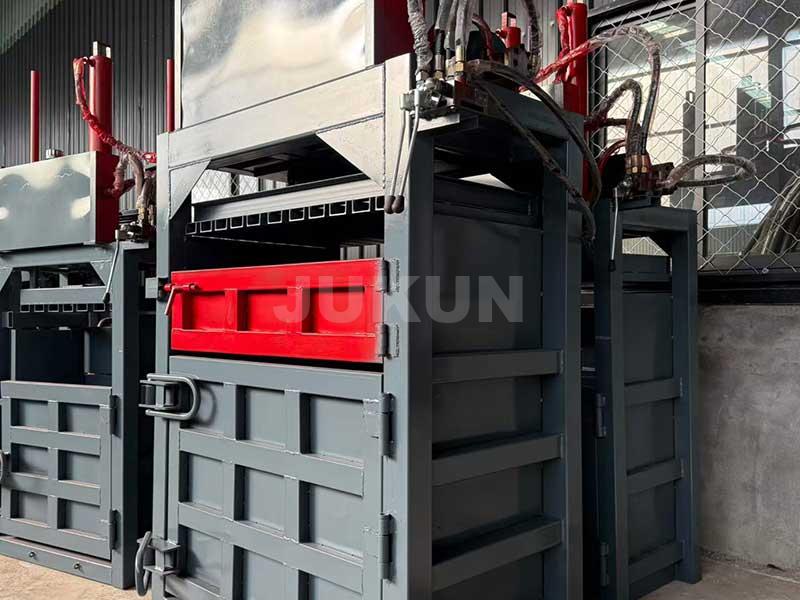
Constraint evidence table:
| Limitation | Financial Impact | Warning Sign | Jukun Field Data |
|---|---|---|---|
| Labor Intensity | $27/ton cost | Staff turnover >30% | 1.3 workers/ton average |
| Bale Size | 53% truck underfill | Frequent deliveries | Load efficiency reports |
| Volume Ceiling | 2-ton/day maximum | Regular overtime | Shift production logs |
| Upgrade Cost | $21,000 penalty | Frequent jams | Retrofit invoices |
Canadian distributor avoided mistake: Verified future expansion plans. Material alert: Corrugated plastic requires ≥120-ton force. Safety non-negotiable: Emergency stop buttons placed every 1.8m prevent accidents. Performance trap: Hydraulic seals fail when overfilled >5%.
How Do Low-Cost Vertical Balers Compare with Horizontal Balers?
Revenue losses mount with outdated equipment. Premature replacements waste capital. Maintenance gaps cause weekly downtime.
Vertical balers cost 65% less initially but require 4× more labor per ton. Horizontal models deliver 8-ton daily volumes with automated functions, justifying higher costs at 25+ ton/week volumes.
Investment vs performance proof:
| Metric | Vertical Baler | Horizontal Baler | Data Source |
|---|---|---|---|
| Daily Output | 0.5-2 tons | 8-25 tons | Waste processing records |
| Operation Cost | $19/ton | $6/ton | Audited cost sheets |
| Operator Time | 78 minutes/ton | 12 minutes/ton | Staff time studies |
| Longevity | 6-8 years | 15+ years | Equipment lifespan data |
| Space Needed | 10.8m² | 35m² | Facility blueprints |
Thai factory avoided overspend: Matched baler to actual volume. Transition threshold: Cross-over happens at 3.5 tons daily. Certification critical: Valid CE includes EN 13042 safety standard. Expansion necessity: Confirm door widths before install – truck loading needs 3m clearance.
When Is a Low-Cost Vertical Baler the Right Choice?
Budget restrictions block equipment purchases. Wrong-sizing wastes 43% of capital. Limited spaces demand compact solutions.
Choose vertical balers when processing under 10 tons weekly, operation space stays under 15m², manual labor costs remain below $19/hour, and 1-3 year ROI meets financial goals.

Selection verification checklist:
| Purchase Driver | Vertical Suitable When | Audit Document |
|---|---|---|
| Volume | <14,000kg weekly | Scale tickets |
| Space | Bay width <2.5m | Warehouse photos |
| Funding | Budget ≤$15,000 | Approval paperwork |
| Staffing | Available 2+ hours/day | Staff schedules |
Australian hotel chain success: Saved $8,500 yearly. Contract shield: Include clause enforcing ≤5 minute bale tying. Validation step: Test processing waxed cardboard preventing contamination. Material caution: Hazardous waste requires certifications vertical units lack. Payment protection: Letter of credit safeguards international purchases.
Conclusion
Vertical balers deliver immediate savings for small operations while horizontal models suit growing businesses needing volume efficiency.