
You need more baling capacity to grow your business. But choosing the wrong type of baler can trap you with high costs and low efficiency.
The better choice depends on your material volume, space, and budget. High-volume operations with good floor space need a horizontal baler. Smaller operations with limited space are better with a vertical baler for its lower cost and simple operation.
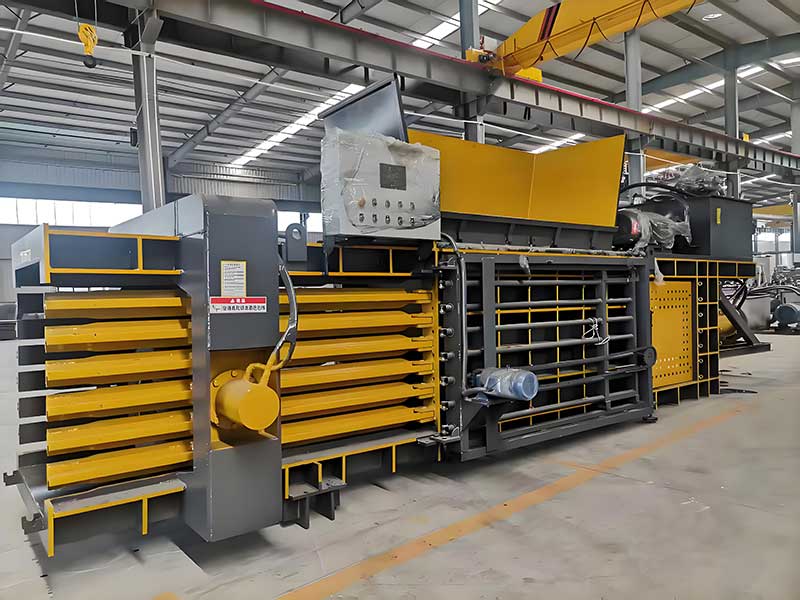
This is a common and important question for recyclers. The wrong machine hurts your productivity and profits. I see this confusion often. The answer is not about which machine is best. The answer is about which machine is best for YOU. Let us look at the real factors that should guide your decision.
What is the Real Cost Difference Between Horizontal and Vertical Balers?
You see a big price gap. The vertical baler price looks very attractive. But the cheap machine can become expensive in the long run.
The upfront price difference is significant, with vertical balers often costing 40-60% less. However, horizontal balers offer far lower cost per bale over time due to higher automation, faster cycles, and less manual labor.
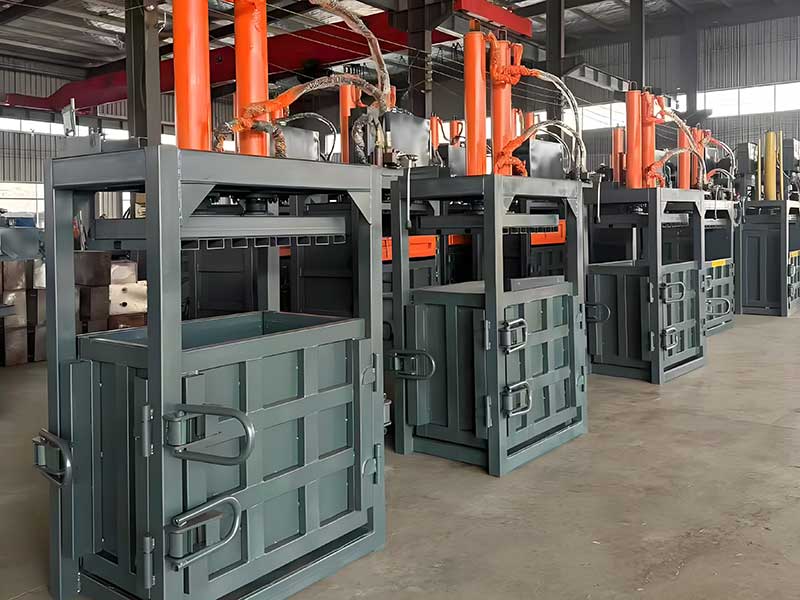
You must think about total cost, not just purchase price. The purchase price is just the first payment. The real cost is how much you pay for every bale you make. Let us break down the numbers.
1. Purchase Price and Installation A vertical baler is simpler. It has a smaller hydraulic system. It often works on a standard electrical supply. This makes it much cheaper to buy and install. A horizontal baler is a large, complex system. It needs a bigger foundation. It needs a more powerful electrical setup. Its initial cost is much higher. Here is a simple comparison:
| Cost Factor | Typical Vertical Baler | Typical Horizontal Baler | Notes |
|---|---|---|---|
| Machine Price | $10,000 - $30,000 | $50,000 - $150,000+ | Depends on size and features. |
| Installation | Minimal, often plug-and-play | Requires concrete foundation, heavy wiring | Big hidden cost for horizontal. |
| Space Needed | Small footprint | Large floor space and height clearance | Horizontal needs more room. |
2. Operating Cost: Labor and Efficiency This is where the picture changes. A vertical baler needs an operator for every cycle. The worker feeds material. The worker ties the bale. The worker removes the bale. This is slow and labor-intensive. A horizontal baler is often semi-automatic or fully automatic. One worker can manage multiple machines. The bale tying is automatic. The bale ejection is automatic. Cycle times are faster. Your cost per bale goes down. Over one year, the labor savings from a horizontal baler can pay for itself.
3. Maintenance and Durability Vertical balers work well for light to medium duty. Heavy, constant use wears them out faster. Their simpler design makes repairs easier and cheaper. Horizontal balers are built for heavy industry. Their components are stronger. Their design handles constant pressure. Maintenance is more specialized but less frequent. A good horizontal baler from a quality factory will run for 10-15 years with proper care. You are investing in long-term durability.
How Much Manual Labor Does Each Baler Type Require?
Your labor costs keep rising. You cannot find reliable workers. A machine that needs less help saves you money and headaches every day.
A vertical baler requires constant manual labor for every bale cycle, including feeding, tying, and removal. An automatic horizontal baler requires minimal manual intervention, mainly for feeding and monitoring, allowing one operator to manage multiple machines.
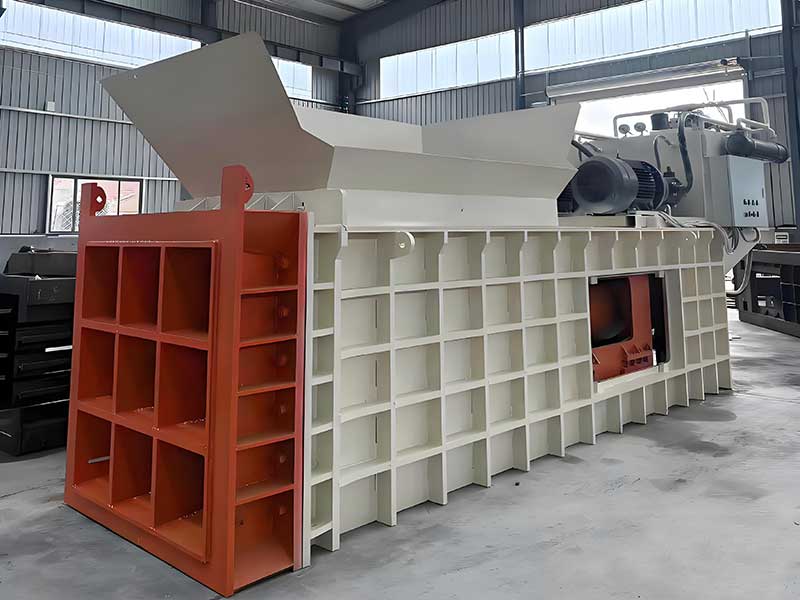
Labor is your biggest ongoing expense. The baler you choose directly decides your staffing needs. Let us compare a typical workday for each machine type.
1. The Vertical Baler Work Cycle The process is hands-on from start to finish. First, a worker opens the top door and throws material in. The worker closes the door and starts the compression cycle. After compression, the worker must open the side door. The worker must manually tie the bale with wires or straps. This is hard physical work. Then the worker must remove the heavy bale, often using a pallet jack. The cycle repeats. The worker is tied to the machine. They cannot do other tasks. For medium-volume recycling, you may need one or two workers just for baling.
2. The Horizontal Baler Work Cycle Modern horizontal balers have a conveyor feeding system. A worker simply loads material onto the conveyor. Or a forklift dumps material into a pre-feeding hopper. The rest is automatic. The machine feeds material into the main chamber. It compresses the material. An automatic wire-tying system wraps the bale. A hydraulic ejector pushes the finished bale onto a waiting forklift. The operator's job is to monitor the process and clear any jams. One person can feed several machines or handle other tasks in the yard. The labor saving is massive.
3. Impact on Business Growth Your choice affects your ability to scale. A vertical baler system scales by adding more machines and more workers. This increases your management complexity and cost. A horizontal baler system scales by running longer hours or adding a larger machine. Your labor cost stays almost the same. Your output increases greatly. For a business owner who wants to grow, the horizontal baler's lower labor need is a key strategic advantage.
What Kind of Materials and Bale Sizes Can Each Baler Handle?
You process different materials. Cardboard one day, plastic film the next. You need bales that meet mill specifications to get the best price.
Vertical balers handle light to medium-density materials like cardboard, paper, and non-woven fabrics, producing smaller bales (often under 500kg). Horizontal balers handle all materials, including tough items like plastic bottles and clothing, producing large, dense, mill-grade bales (often 500kg to 1000kg+).
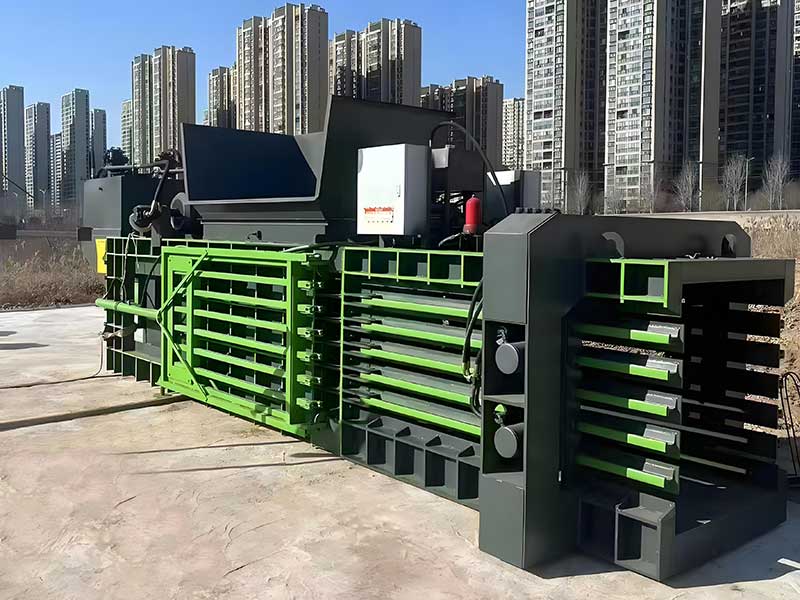
The type of material you have and the bale size the market wants are critical. Choosing wrong means you cannot process certain materials. Or your bales get price penalties at the mill.
1. Material Suitability and Density Not all materials compress the same way. Corrugated cardboard (OCC) compresses well. Light plastic film is tricky. Old clothes (textiles) are springy. A vertical baler uses a simple top-down press. It works for uniform, compressible materials. Horizontal balers use a powerful, multi-stage compression system. They have a pre-press chamber. They can handle mixed, stubborn, or low-density materials. They create very high pressure to make dense bales even from fluffy textiles or plastic bottles. Look at this table:
| Material Type | Vertical Baler Suitability | Horizontal Baler Suitability |
|---|---|---|
| Cardboard & Paper | Excellent | Excellent |
| Plastic Bottles (PET) | Poor, bale falls apart | Excellent, makes dense bales |
| Plastic Film | Fair, can be difficult | Excellent with special system |
| Old Clothes (Textiles) | Poor, very low density | Excellent, high-density bales |
| Non-Ferrous Metals (e.g., cans) | Good for loose cans | Excellent, extreme density |
2. Bale Size, Weight, and Market Value Recycling mills and buyers want standardized, dense bales. They pay more for them. Vertical balers make small bales. These bales are easy to handle but often too light. They take up more space in a truck. This increases your shipping cost per ton. Horizontal balers make large, uniform bales. A standard mill-size bale is about 1.1m x 1.3m. It weighs over 500kg. This size fits perfectly in shipping containers and mill processing lines. You get a better price per ton. You also save on transportation.
3. Flexibility for Future Changes Your business may change. Maybe you start collecting plastic bottles next year. A vertical baler cannot handle this new material well. You must buy another machine. A horizontal baler is more flexible. With some adjustment, it can bale many different materials. Your initial investment is protected. You can adapt to market changes without buying a completely new machine. For a forward-thinking business owner, this flexibility is valuable.
Conclusion
Choose a vertical baler for low volume, limited space, and a tight budget. Choose a horizontal baler for high volume, lower labor costs, and handling diverse, mill-grade materials.