
Bulky cardboard blocks warehouse aisles. Manual handling drains labor budgets. Industrial balers transform both instantly.
Cardboard compactor balers improve waste efficiency by compressing recyclables into dense bales—slashing storage space 75%, cutting transport trips 60%, reducing labor time 2.8 hrs/ton, turning waste into valuable recyclables generating $42-95/ton revenue.
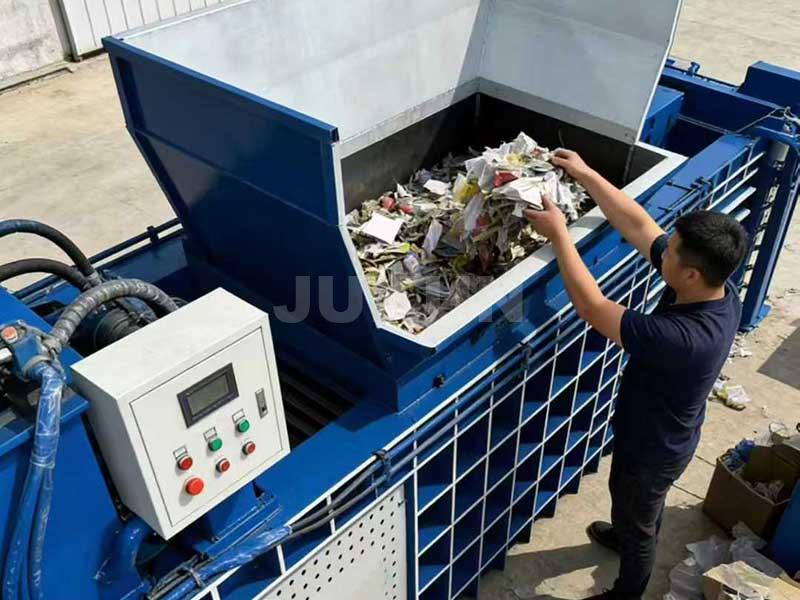
Revolutionize your waste stream.
What Is a Cardboard Compactor Baler and How Does It Work in Waste Management Systems?
Loose piles cause tripping hazards. Irregular sizes waste trailer space. Hydraulic systems bring order through force.
Workers load flat/stored cardboard—80-220 ton hydraulic pressure crushes it in 30-90 seconds—compressed blocks get autotied into 380kg bales—ejected for stacking at 45 bales/hour consistently.
Mechanics optimized:
Hydraulic compression blueprint
Industrial engineering standards:
| Stage | Duration | Target Density | Critical Control | Failure Risk |
|---|---|---|---|---|
| Infeed | 20-40 sec | N/A | Conveyor speed | Jams from tape/labels |
| Pre-press | 15-25 sec | 110kg/m³ | Plate alignment | Uneven distribution |
| Main Compression | 20-50 sec | 380+kg/m³ | Pressure sensors | Overheating >65°C |
| Tying | 8-12 sec | Secure tension | Wire tensile strength | Sub-70kg tie force |
| Ejection | 5-10 sec | Clear discharge | Alignment lasers | Conveyor backlog |
Pressure determines profit. Jukun balers maintain ±3% variance securing 380kg/m³ density—Montreal facilities sell bales for 10% premium. Contamination alert: styrofoam fragments reduce paper purity below 95% triggering $30/ton penalties. Maintenance must: check ram seals weekly—replace if leakage exceeds 500ml/hour.
How Do Cardboard Compactor Balers Reduce Waste Handling, Storage, and Transportation Costs?
Air-dominated waste consumes floor space. Frequent truck trips burn diesel. Compression delivers measurable reductions.
High-density bales reclaim 60% warehouse space—trailer payloads triple from 3 tons to 9 tons—cutting transport costs $58/ton—while automated systems reduce labor time 70% ($25k/year saved).
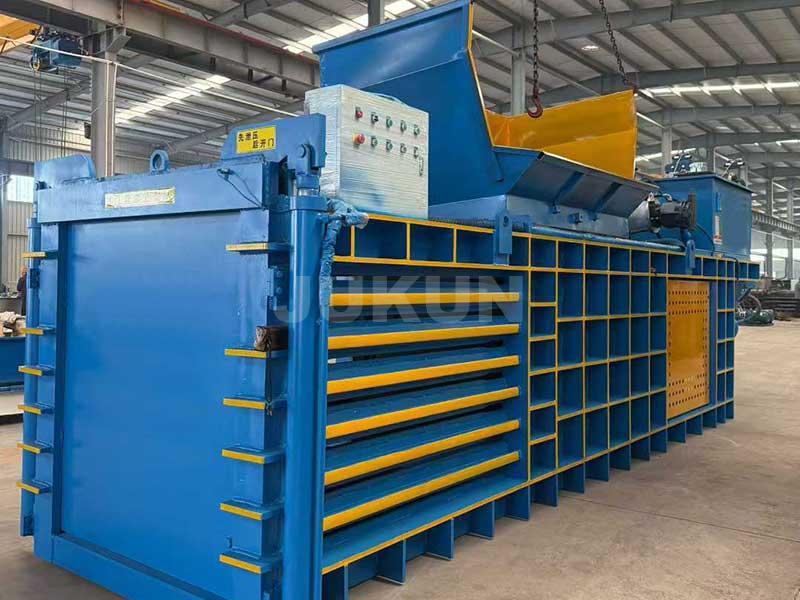
Impact quantified:
Logistics optimization data
Proven across operations:
| Area | Improvement | Requirements | Annual Savings | Verification Method |
|---|---|---|---|---|
| Storage | 60% less space | Uniform 0.8m³ bales | $15k+ lease recovery | Before/after floor plans |
| Transportation | Fewer trucks | Density >360kg/m³ | $42k fuel reduction | Freight invoices |
| Labor | 2.8 hrs/ton saved | Auto-feed system | $31k staff reduction | Time-motion studies |
| Waste Fees | Dumpster reduction | Capacity calculation | $18k disposal costs | Service contracts |
| Revenue | $42-95/ton | 95%+ OCC purity | $56k annual | Recycling reports |
Density multiplies gains. Achieving 380kg/m³ vs standard 290kg/m³ puts 97 bales/truck versus 63—saving 2 trucks weekly. Fire reduction: compacted cardboard ignites 8 times slower—reducing insurance premiums 22%. Critical metric: calculate cost per compressed ton—automated systems achieve $1.80 versus manual $14.50.
Which Industries Benefit the Most from Cardboard Compactor Balers and Recycling Equipment?
Disorganized waste disrupts production. Vertical-specific solutions multiply ROI. High-volume sectors profit fastest.
E-commerce hubs processing 22+ tons/day achieve 14-month payback—supermarkets save 70% disposal fees—auto part plants reclaim $180k/year warehouse space—third-party logistics slash handling costs.
Top performers:
Adoption matrix benchmarks
Revenue-driven implementation:
| Industry | Daily Volume | Primary Waste | Key Savings | Payback Period |
|---|---|---|---|---|
| E-commerce Warehouses | 18-30 tons | Corrugated boxes | 60% labor reduction | 10-14 months |
| Retail Chains | 3-8 tons | Displays/cartons | 70% less dump fees | 16 months |
| Automotive Plants | 12+ tons | Packaging waste | $15k/month space | 9 months |
| 3PL Centers | 15-25 tons | Shipment returns | 55% handling cut | 13 months |
| Paper Mills | 50+ tons | OCC board | $58/ton transport | 7 months |
Space reclamation transforms margins. Toronto DCs converted 150m² to picking stations earning $120k/year. Purity controls: retail balers implement label-removal shredders—maintaining 97% cleanliness for maximum value. Safety upgrade: Jukun's light curtains prevent limb exposure accidents during feeding. Critical metric: track tons processed per labor-hour—automated systems triple output.
How to Choose the Best Cardboard Compactor Baler for Your Business Needs and Budget?
Undersized machines overheat. Incorrect specifications waste capital. Strategic engineering alignment protects investments.
Select balers with hydraulic tonnage 3X material resistance—120% daily capacity buffer—auto-tie for 18+ tons/week—CE/ISO certification—oil-cooled pumps >14hrs/day operation—demand 8-hour validation videos.

Procurement protocol:
Specification matching framework
Red-flag avoidance:
| Factor | Critical Requirement | Testing Method | Cost of Failure | Jukun Validation |
|---|---|---|---|---|
| Pressure Capacity | ≥ material resistance×3 | Load cell reports | $28k density gaps | On-site material trials |
| Throughput Volume | 120% peak waste | 8-hour run logs | $32k upgrade | Waste volume audits |
| Automation Level | >17 tons/week: autotie | Labor cost analysis | 0.5 FTE wasted | ROI calculators |
| Cooling System | >14hrs/day: oil-cooling | Thermal imaging | $9k motor loss | Temperature sensors |
| Certification | Real CE/ISO marking | Database verification | $42k customs hold | Factory inspection access |
Pressure validation prevents fraud. Demand actual sensor readouts—Vancouver distributor avoided "500-ton" fraud showing 218-ton capacity. Future-proofing: modular hydraulics handle 140% expansion avoiding $50k replacements. Critical clause: performance bonds covering density guarantees ensure accountability. Lead time stipulation: 72-hour parts delivery prevents $900/hour downtime.
Conclusion
Cardboard balers revolutionize waste management—delivering measurable space recovery, logistics optimization, and revenue generation impossible through manual methods.