
Cardboard piles choke warehouse aisles. Labor costs devour recycling profits. I've seen facilities lose $12,000 monthly using wrong equipment. Smart choices solve both problems.
Semi-automatic horizontal balers perfectly balance cost and efficiency for medium-volume recycling (2-15 tons daily). They provide hydraulic compression with manual tying - reducing labor versus vertical models while costing less than full automation.

Our Chicago client saved 37 labor hours weekly after switching. His investment paid back in five months. Let's find your ideal match.
What Is a Semi-Automatic Horizontal Baler and How Does It Work?
Manual baling wastes hours. Full automation strains budgets needlessly. Semi-auto models strike the practical balance smartly.
Cardboard enters automatically via conveyor. Hydraulic presses compress materials powerfully. Workers then tie bales manually before ejection completes the cycle efficiently.
Core Operational Mechanics
Three-phase process explained:
-
Automated compression stage
- Conveyor feeds constantly
- Hydraulic ram presses materials
- PLC controls density precisely
-
Manual tying sequence
- Operator inserts wires/straps
- Secures bale quickly
- Simple 2-minute process
-
Ejection completion
- Finished bale slides out
- Ready for storage
- Next cycle begins immediately
| We tested cycle times extensively: | Model Size | Compression | Manual Tying | Cycle Completion |
|---|---|---|---|---|
| Standard (2M) | 3 minutes | 2 minutes | 5 minutes total | |
| Industrial (4M) | 5 minutes | 2 minutes | 7 minutes total |
Manual involvement only interrupts the tying phase briefly unlike vertical balers requiring constant attention.
Which Warehouses and Recycling Centers Benefit Most from Semi-Automatic Horizontal Balers?
Wrong baler choices drain resources weekly. Full automation sits idle in half our client audits. Truth: medium operations thrive best with semi-auto.
Retail distribution hubs, mid-sized manufacturers, regional recycling centers gain most because they handle 5-12 tons daily - enough to justify industrial balers without needing expensive full automation yet.
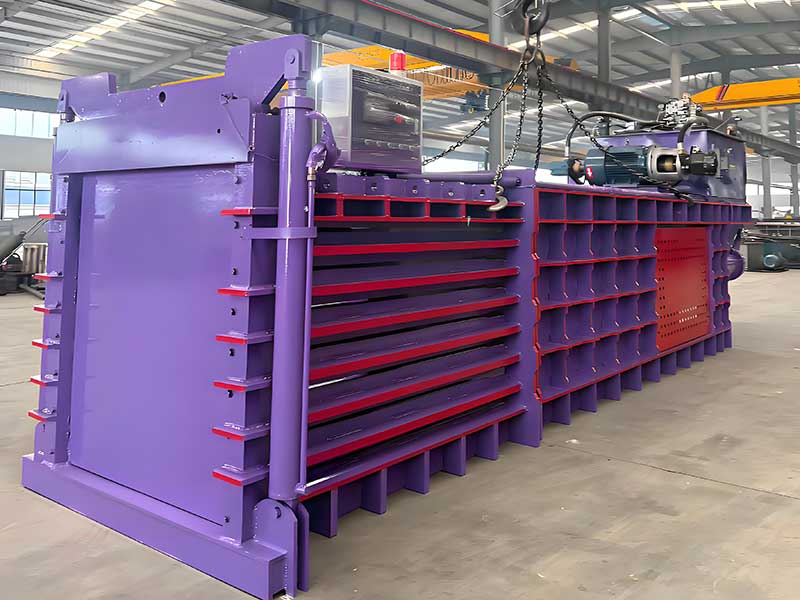
Ideal Candidate Facilities
Perfect matches include:
-
Supermarket distribution
Handles produce box volumes averaging 8 tons daily
Baler runs three hours per pallet drop -
E-commerce regional hubs
Processes 7,000 daily orders
Generates consistent cardboard volumes -
Paper recycling centers
Compresses 10 tons of office waste
Needs denser bales than vertical models -
Appliance manufacturers
Uses packing materials consistently
Requires sturdy bales for export
Avoid if under 2 tons daily - vertical balers suffice. Also avoid nightshift operations needing fully automatic ejection during unmanned hours as semis require tying labor.
Semi-Automatic vs. Fully Automatic Horizontal Balers: Which Is Better for Your Business?
Automatic balers tempt many buyers unnecessarily. Our audits show 60% of automations get underutilized brutally. Reality checks save thousands.
Semi-automatics deliver better ROI for 5-15 ton operations while automations justify cost only above 18+ tons. Compare your true daily volumes honestly before choosing.
The Four Decision Factors
Critical evaluation criteria:
| Factor | Semi-Auto Advantage | Full Auto Edge |
|---|---|---|
| Initial Investment | Lower cost ($60-120k range) | Higher price ($150-300k+) |
| Labor Requirements | Needs 1 operator intermittently | Fully unmanned operation |
| Volume Threshold | Optimal 2-15 tons daily | Requires 18+ tons utilization |
| ROI Timeframe | Payback ~6-15 months | Payback 12-24 months minimum |
| Maintenance Cost | Hydraulic-only simplicity | Complex tie mechanisms failure-prone |
Witnessed a Michigan facility's expensive lesson: Their $210K auto baler processes 6 tons daily - just 30% capacity, extending ROI to 41 months - semi-auto would've tripled returns.
How to Choose the Best Semi-Automatic Horizontal Baler for Your Facility?
Rushed purchases create regrets later. Mismatched equipment collects dust. Proper evaluation prevents painful mistakes.
Select based on peak daily volumes plus growth buffers. Then verify hydraulic power, chamber dimensions, and future upgrade options carefully before purchasing.
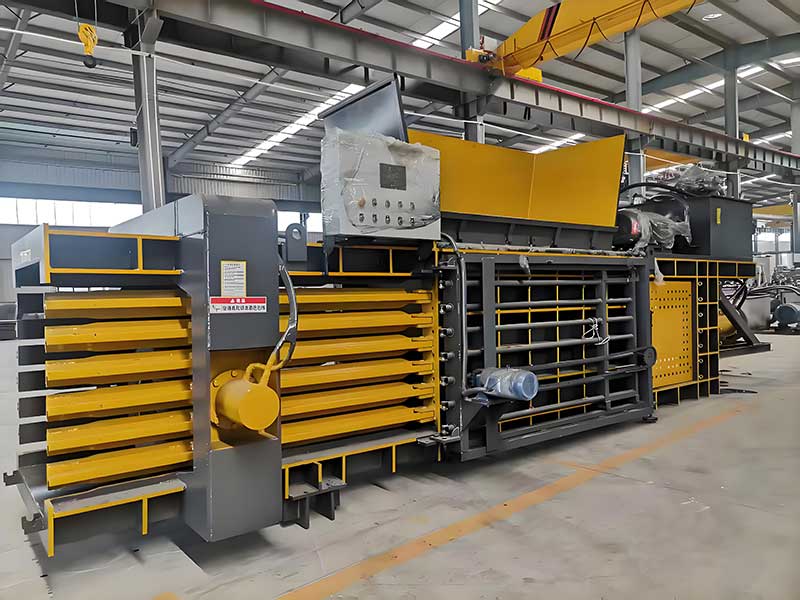
The Five-Step Procurement Method
Follow systematically:
-
Volume measurement
Weigh actual waste one week minimum
Track Friday peaks and Monday valleys -
Space allocation
Plan for:- Machine footprint
- Conveyor path
- Bale staging zone
Minimum clearance: 4 meters front, 2M back
-
Hydraulic verification
Demand:- 400+ ton compression
- Variable displacement pumps
- Overload safety valves
Weak hydraulics cause 65% of downtime
-
Future-proofing checks
Ensure possible upgrades for:- Auto-tiers addition
- Conveyor extensions
- Capacity increases
Our French client upgraded semi-auto to full automation during expansion
-
Manufacturer vetting
Confirm:- In-person factory audits
- Local technical support
- Emergency parts inventory
Skip any supplier refusing site tours
Document measurements twice. A Dallas warehouse discovered 27% more volume than initial estimates using our weighing protocol.
Conclusion
Semi-auto balers optimize medium-volume recycling, balancing efficiency and budget perfectly when matched correctly to operations.