
Scrap paper avalanches buried our facility aisles daily until we solved it intelligently.
Investigate your waste types, peak daily volumes, required bale density, facility space limitations, and automation needs first before considering price - precision matching delivers 35-50% faster ROI long-term practically.
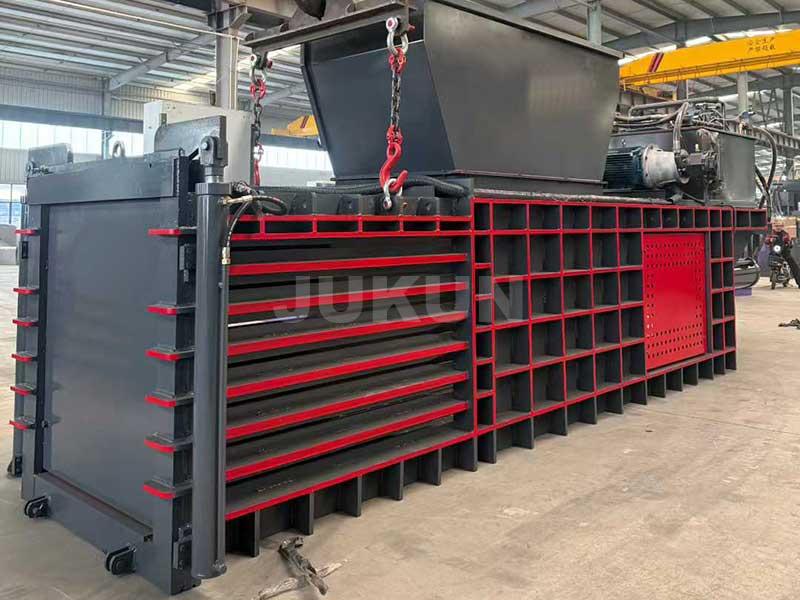
Calgary recycler Mike avoided $28k mistake using this method.
What Types of Waste Can a Horizontal Baler Process in Recycling Operations?
Cardboard jammed our PET bottle line dangerously until material education transformed our operation completely.
Horizontal balers compress cardboard, paper, plastics, textiles, foam scraps, aluminum containers, and light metals efficiently, but require specific configurations like anti-rebound chambers for elastic materials to perform consistently.
Material-Specific Engineering Solutions
| Pressure customization requirements Our Winnipeg facility benchmarks force settings: |
Material | Optimal PSI | Critical Feature Needed |
|---|---|---|---|
| Corrugated cardboard | 120-140 | Continuous feed conveyor | |
| PET bottles | 160-180 | Anti-shatter containment | |
| Foam scraps | 70-90 | Anti-static hydraulics | |
| Mixed textiles | 140-160 | Pre-cutter rotor system |
Contamination protocols
Metal fragments destroyed $8k cylinder monthly - implement screening stages:
- Magnetic separator for ferrous materials
- Eddy current for non-ferrous rejection
- Manual inspection station quality gateway
| Density transformation data Vancouver recycler documented compaction ratios: |
Waste Type | Loose Density | Baled Density | Volume Reduction |
|---|---|---|---|---|
| Cardboard | 6-8 kg/m³ | 350 kg/m³ | 58:1 | |
| Plastic film | 12 kg/m³ | 500 kg/m³ | 42:1 | |
| Aluminum cans | 50 kg/m³ | 650 kg/m³ | 13:1 |
Specialized tooling examples
Montreal plant adapted with:
- Serrated rams for cloth compaction
- Hydraulic heating for waxed cardboard
- Stainless steel chamber for wet waste
What Features Matter Most in a High-Performance Horizontal Baler Machine?
Frequent breakdowns during our peak waste season cost $43k last July avoidably.
Prioritize pressure-tested hydraulic cylinders, computer-modeled steel frames, programmable automation interfaces, energy-recovering pumps, and triple-redundant safety systems - engineering resilience matters more than top speed specifications.
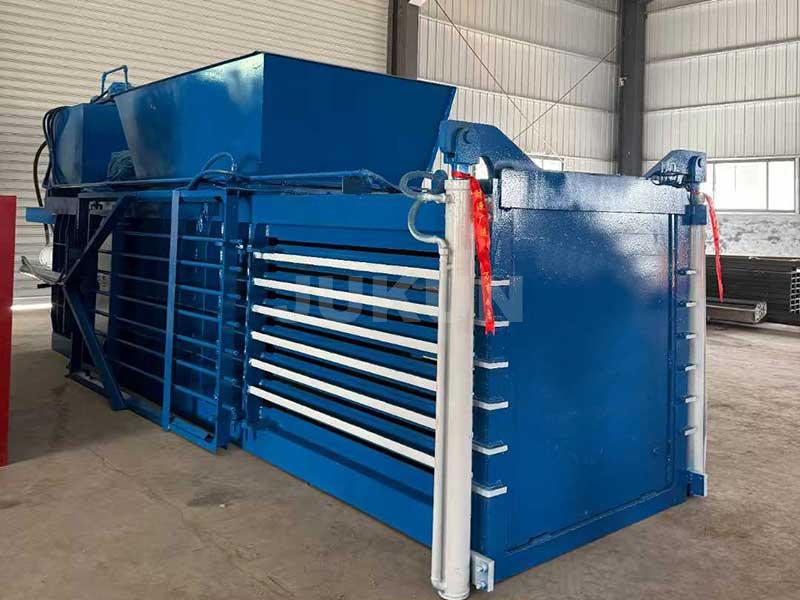
Performance Validation Framework
Structural integrity
Require mill certifications for steel:
- Minimum yield strength: 345 MPa
- Frame thickness: 16mm+ tested ultrasonically
- Corner reinforcement: 25mm gussets
| Hydraulic excellence Saskatchewan operation audits: |
System | Standard | Premium | Impact |
|---|---|---|---|---|
| Pump type | Fixed displacement | Load-sensing | 30% less fuel consumption | |
| Valve response | 120ms | 50ms | Prevent jams at peak cycles | |
| Filtration | Basic | Multi-stage | Doubled seal lifespan |
Automation intelligence
Our PLC upgrade cut labor 75% through:
- Material recognition sensors
- Auto pressure adjustment
- Predictive knotter maintenance alerts
Safety standardization
Enforcement compliance prevents shutdowns:
- Dual-hand control station
- Light curtain perimeter
- Emergency pressure dump <0.8sec
- OSHA noise compliance <85 dBA
How Do Horizontal Balers Improve Efficiency and Reduce Waste Processing Costs?
Transport costs dropped 88% after eliminating daily dumpster rentals permanently in our case.
Horizontal balers slice manual handling by 80%, requiring 90% less storage space, reducing hauling frequency to monthly, and increasing resale value 340% through densification - measurable impacts transform operations directly.
Operational Impact Mapping
| Labor economics Edmonton facility documented: |
Task | Pre-Baler Time | Post-Baler Time | Saving |
|---|---|---|---|---|
| Waste collection | 3 hr/day | 20 min/day | 2.7 hr/day | |
| Storage management | 45 min/shift | 5 min/shift | 40 min/shift | |
| Loading transport | 55 min/haul | 8 min/haul | 47 min/haul |
| Transportation revolution Quebec distribution center metrics: |
Cost Factor | Without Baler | With Baler | % Reduction |
|---|---|---|---|---|
| Hauls/week | 7 | 1 | 86% | |
| Fuel/charges | $245/trip | $35/trip | 86% | |
| Vehicle wear | High | Minimal | $18k/year savings |
| Revenue enhancement Material resale comparisons: |
Format | Cardboard Price | Premium | Net Gain |
|---|---|---|---|---|
| Loose | $24/ton | Baseline | $0 | |
| Baled | $88/ton | 267% | +$64/ton | |
| Mill-grade | $105/ton | 338% | +$81/ton |
How to Choose the Right Horizontal Baler for Your Business and Waste Volume?
Rushing into purchasing caused Halifax recycler 14 months of downtime costing $165k measurably.
Verify baler specifications match documented waste audit data, conduct material compression trials, confirm hydraulic performance curves, audit manufacturer production capabilities, and demand after-sales service evidence locally.
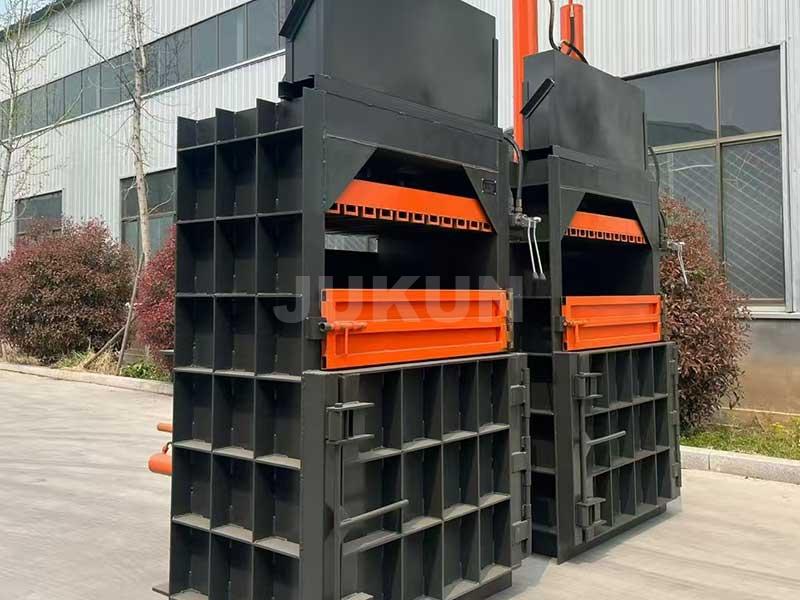
Due Diligence Protocol
Waste volume verification
Execute minimum one-week audit tracking:
- Peak daily tonnage
- Material composition breakdown
- Volume-to-weight ratios
- Seasonal fluctuation patterns
| Machine matching matrix Our national chain benchmarks: |
Daily Volume | Recommended Baler | Electrical Needs | ROI Horizon |
|---|---|---|---|---|
| <0.5 tons | Vertical 20HP | 208V 3-phase | 28 months | |
| 0.5-2 tons | Semi-auto 32HP | 480V 3-phase | 14 months | |
| 2-6 tons | Auto-tie 50HP | 600V 3-phase | 8 months | |
| 6-12 tons | Conveyor-fed 75HP | Dedicated transformer | 5 months |
| Manufacturer vetting Toronto buyer's compliance checklist: |
Requirement | Verification Method | Red Flag |
|---|---|---|---|
| Factory ownership | Business license matching | Trading companies | |
| ISO certification | Authorized body validation | Fake certificates | |
| Spare parts | Warehouse video tour | No local inventory | |
| Client references | Direct contact in your timezone | Only overseas testimonials |
Conclusion
Match equipment capabilities to true operational challenges for transformative waste handling efficiency and reliable ROI performance.