
You're excited to upgrade your operation, but the wide range of baler prices is confusing. Buying too cheap costs you more later. Buying too expensive hurts your budget now.
The real cost of a baler machine goes far beyond the purchase price. True cost includes electricity, maintenance, labor, and machine lifespan. Focusing solely on the initial price can lead to much higher expenses from downtime and repairs later.
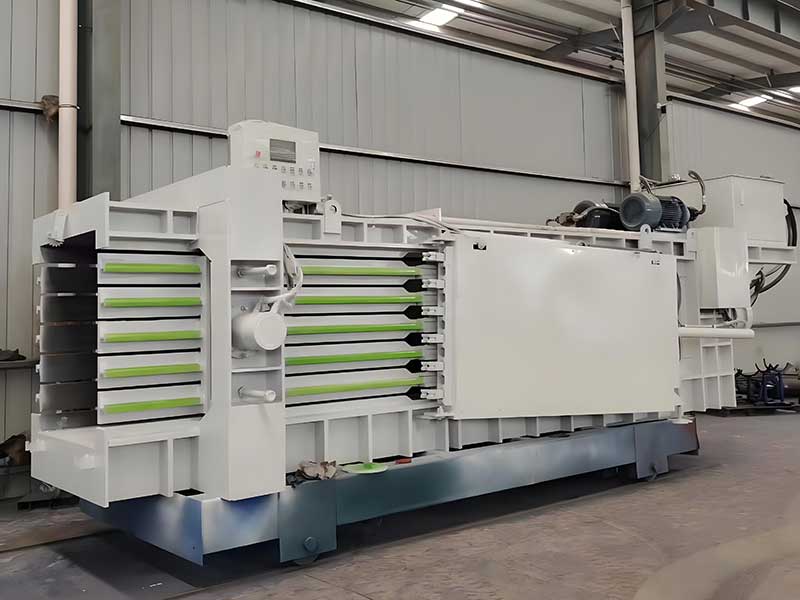
You see a price tag, but you need to understand the investment. Every dollar you spend must work for your business for years. Let's move past the sticker price and look at what truly impacts your bottom line over the life of the machine. This detailed guide breaks down all the cost factors you must consider.
How Much Does a Baler Machine Cost?
You find a Chinese baler online for $20,000. Another one costs $80,000. Both seem to do the same job. The big price difference makes you question what you're really paying for.
Baler machine prices vary from about $10,000 for a small vertical baler to over $150,000 for a large, automated horizontal baler. The price depends on size, automation level, brand, and custom features. Cheap balers are widely available, but they often have poor ROI due to operating costs and downtime.
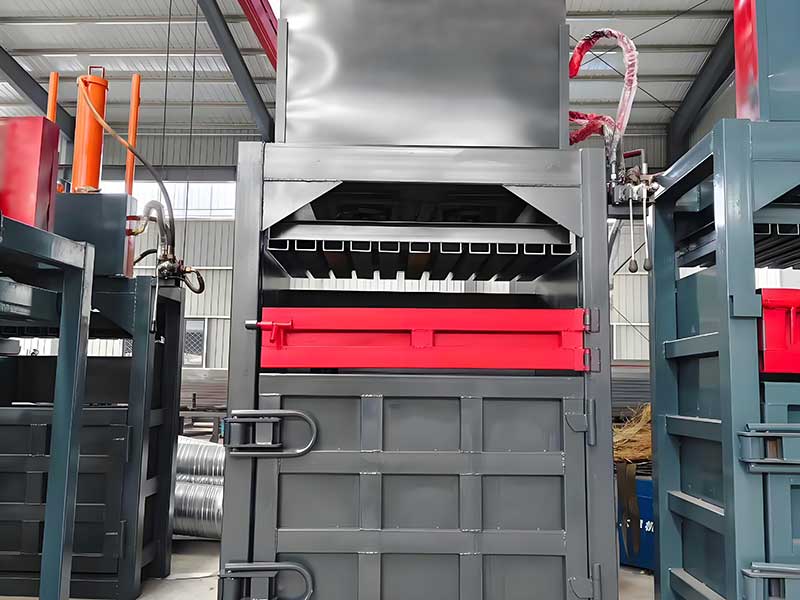
The cheapest machine is rarely the most cost-effective. You must think in terms of Total Cost of Ownership (TCO). TCO is the total amount you pay from the moment you buy the machine to the day you replace it. It has several major parts.
1. The Purchase Price Breakdown (Capital Cost) The price you negotiate is the capital cost. But this number itself has layers. It includes the core machine, the control system, basic automation, and standard features. Optional extras add cost. Let's break it down clearly.
| Cost Component | What It Is | Impact on Price |
|---|---|---|
| Machine Frame & Structure | The steel body, chamber, and doors. | Determines durability and size capacity. |
| Hydraulic System | Pumps, valves, cylinders, and hoses. | The heart of the machine; quality defines reliability. |
| Electrical & Control Panel | Motors, PLC, switches, and wiring. | Affects automation, safety, and ease of use. |
| Optional Automation | Conveyors, auto-tiers, ejectors. | Can increase price 20-40% but reduces labor. |
| Brand & Origin | Reputation and manufacturing location. | Premium European brands cost more than quality Chinese factories. |
2. The Ongoing Operating Costs This is where cheap machines become expensive. After the machine runs, you pay for its life every day.
- Electricity: A 30-ton horizontal baler might use a 30-40 kW motor. If it runs 8 hours a day, electricity is a major monthly bill. Inefficient pumps or constant jams run up this cost.
- Labor: This is your biggest cost. A manual baler needs a full-time operator. An automated horizontal baler might only need a part-time monitor. The labor savings from automation often pay for the machine itself in 1-2 years.
- Maintenance & Repairs: Seals wear out. Hydraulic hoses fail. Cheap parts fail faster. A good supplier provides a maintenance schedule and fair-priced, genuine spare parts. Unexpected downtime is a huge hidden cost.
3. The Final Cost: Depreciation and Lifespan How long will the machine last? A well-built horizontal baler from a quality factory can last 15-20 years with proper care. A low-cost baler might struggle after 5-7 years of heavy use. You must spread the purchase price over the machine's working life to see its true annual cost. A $100,000 machine lasting 20 years costs $5,000 per year in capital. A $40,000 machine lasting 7 years costs about $5,700 per year, plus more downtime and repairs. The math is clear.
What is the Difference Between a Horizontal and Vertical Baler?
You need to bale material, but you're not sure which machine type fits your process. Choosing wrong means wasted money and constant headaches.
The core difference is in operation and automation. Vertical balers compress material vertically, require manual loading and tying, and are best for low-volume sites. Horizontal balers compress material horizontally, can be fully automated with conveyors and auto-tiers, and are built for high-volume, continuous operation.
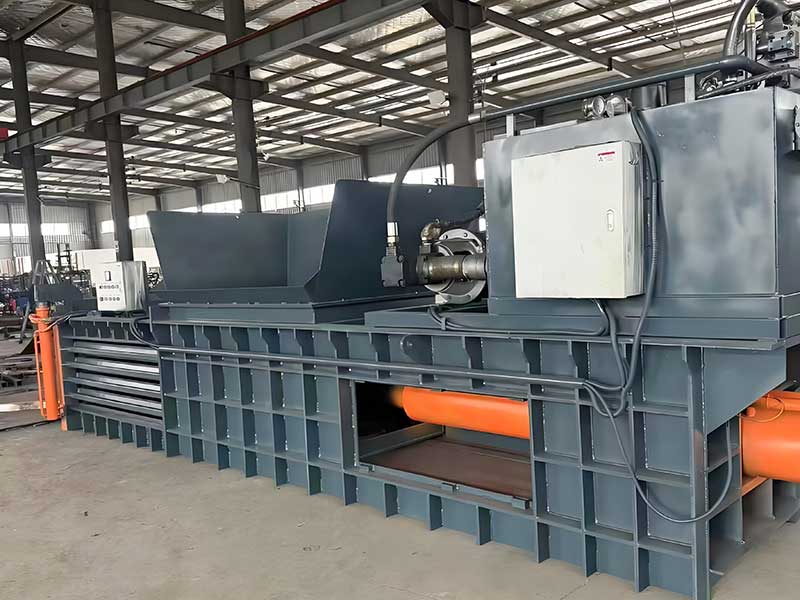
This is not just a matter of the machine standing up or lying down. The difference changes your entire workflow, staffing, and profitability. More and more facilities are switching to horizontal balers for one reason: labor efficiency.
1. The Workflow and Labor Comparison Imagine a typical day. With a vertical baler, a worker opens a top door, throws in cardboard, closes it, and starts the cycle. After compression, the worker must manually tie the bale with wires, which is hard work. Then they must remove the heavy bale. The worker is tied to the machine. With an automated horizontal baler, material goes onto a conveyor. The machine feeds, compresses, ties, and ejects the bale automatically. One worker can manage feeding and monitor several machines. The labor saving is dramatic. For a site processing over 5-10 tons per day, this automation is essential to scale.
2. Output and Bale Quality Horizontal balers produce what the industry calls "mill-grade" bales. These bales are large, dense, and uniform. They weigh 500-1000 kg. Mills pay more for these bales because they are efficient to transport and process. Vertical balers produce smaller, less dense bales. They are good for in-store recycling or very small operations. Their inconsistent size and lower density can lead to price penalties from buyers. For serious recycling, bale quality is money.
3. Space and Installation Vertical balers have a small footprint. They are easier to install, often just needing a level floor and a power outlet. This is their main advantage. Horizontal balers need more space. They require a solid concrete foundation, more ceiling height, and often a feeding conveyor. The installation is more complex and costly. But the payoff in throughput and labor savings justifies the space and setup effort for growing businesses.
What Size is a Horizontal Mill Baler?
You have a space in your warehouse. You find a baler that fits the space. But will it handle your material volume? This is a common and costly mistake.
Horizontal mill balers come in standard sizes like 60", 72", 84", and 100+", referring to the bale chamber width. The common "mill size" bale is about 110cm x 130cm (43" x 51"). Choose size based on your daily tonnage and desired bale weight, not just available floor space.
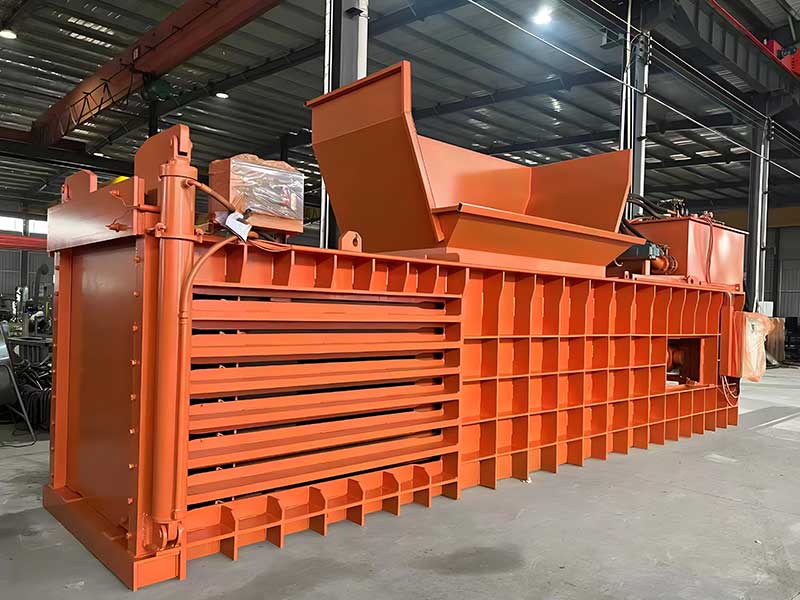
Selecting the right size is critical. An undersized baler creates production bottlenecks. It works too hard, wears out fast, and cannot keep up. An oversized baler is a waste of capital and energy. You must match the machine to your material flow.
1. Understanding Baler Size Specifications Size is typically described by chamber dimensions and pressure. These two factors determine bale weight and density.
| Common Model | Chamber Size (approx.) | Platen Force | Ideal for Daily Volume |
|---|---|---|---|
| Small Horizontal | 60" x 48" x 30" | 20-40 Tons | 2-5 Tons of OCC |
| Standard Mill Size | 72" x 52" x 42" | 50-75 Tons | 5-15 Tons of OCC |
| Large Mill Size | 84" x 60" x 48" | 80-120 Tons | 15-30+ Tons of OCC |
| High-Density | 110" x 72" x 60" | 150+ Tons | 30+ Tons, Plastic, Textiles |
The "platen force" (in tons) is key. Higher force makes denser bales from tough materials like plastic bottles or clothing.
2. The Consequences of Wrong Sizing Let's say you buy a baler sized for 5 tons per day, but your business grows to 10 tons. The machine will run constantly. The hydraulic oil will overheat. Seals will fail quickly. You will face constant downtime. Your workers will wait for the machine. Your profitability will drop. Conversely, a baler sized for 20 tons running at 5 tons is inefficient. It uses more electricity per bale. It cycles less often, which can actually be harder on the hydraulics. It ties up capital you could use elsewhere.
3. Planning for Future Growth Smart business owners plan ahead. If you expect to grow, choose a baler one size larger than your current needs. A quality baler can run at 50-70% capacity efficiently. This gives you room to grow for 3-5 years without a new equipment investment. When discussing with a supplier like us, share your 1-year and 5-year volume forecasts. We can recommend a model that grows with you.
What Are the Common Baler Problems?
Your new baler arrives. It works great for six months. Then problems start. Downtime kills your schedule and costs you money. Most of these problems are preventable.
Common baler problems include hydraulic oil leaks, cylinder seal failure, electrical control issues, sensor malfunctions, and feeding system jams. Most stem from lack of preventive maintenance, improper operation, or using low-quality replacement parts.
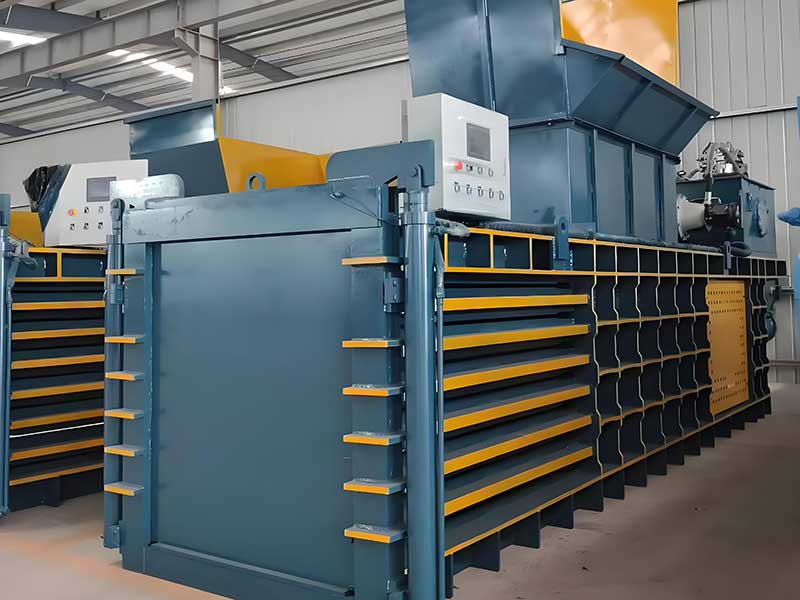
Unexpected downtime is a recycling plant's worst enemy. Knowing the common issues helps you prevent them. A reliable supplier doesn't just sell you a machine; they give you the knowledge and support to keep it running.
1. Hydraulic System Failures The hydraulic system is the baler's heart. Most problems start here.
- Oil Contamination: Dirt or water in the oil damages pumps and valves. Change filters regularly.
- Seal Leaks: Worn cylinder seals cause slow operation and oil leaks. Seals are wear items; plan to replace them.
- Overheating: Running the baler constantly without breaks overheats the oil. This thins the oil and damages components. Ensure cooling systems work.
2. Electrical and Control Issues Modern balers use PLCs and sensors. Problems include:
- Loose Connections: Vibration loosens wires. Regular checks are needed.
- Sensor Failure: Limit switches or photo-eyes get dirty or misaligned, stopping the cycle.
- Operator Error: Pushing buttons in the wrong sequence can cause faults. Proper training is essential.
3. Mechanical Wear and Feeding Problems Moving parts wear out. The feeding system sees abuse.
- Worn Feeding Ram Guides: This causes the ram to jam or run crooked.
- Improper Feeding: Putting in oversized metal or rocks can bend rods or damage the chamber. Train staff on what NOT to feed.
- Lack of Lubrication: All grease points must be served weekly or monthly as per the manual.
The Role of Your Supplier: When you buy a baler, you also buy the support. Ask about spare parts availability, warranty, and remote troubleshooting. Can they guide you through a fix via video call? Do they keep common parts in stock? Good after-sales service is as valuable as the machine itself.
Is a Horizontal Baler Worth the Investment?
The price tag is high. You need to justify this large expense to yourself or your partners. You need to see a clear path to earning this money back.
Yes, a horizontal baler is worth the investment for businesses processing more than 5 tons of material per day. The higher initial cost is offset by major labor savings, higher throughput, better bale prices, and long-term reliability, leading to a faster ROI and greater profitability.
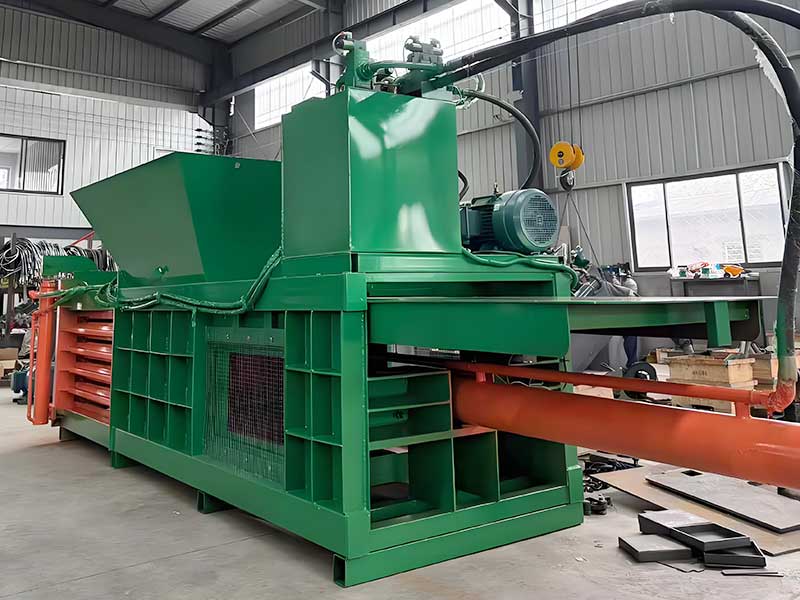
This is the final question. Let's look at it as a business calculation, not just an equipment purchase. Rising labor costs and the need for efficiency make automation a strategic move.
1. The ROI Calculation You need to run the numbers. Let's take an example:
- Machine Cost: $80,000 (automated horizontal baler)
- Labor Saving: An automatic baler saves 1.5 full-time workers. If a worker costs $40,000/year (wage+benefits), that's $60,000 saved annually.
- Increased Revenue: Better, denser bales may get you $5-$10 more per ton. At 10 tons/day, that's significant. In this simple view, the machine pays for itself in well under two years from labor savings alone. After that, the savings go straight to your profit.
2. The Strategic Advantages Beyond direct savings, a horizontal baler gives you capabilities a vertical baler cannot.
- Scalability: You can increase output without hiring more people.
- Consistency: Automated, mill-grade bales build a strong reputation with buyers.
- Safety: Automated systems reduce worker interaction with moving parts.
- Business Value: A modern, efficient operation is more valuable if you ever sell your business.
3. Making the Decision Ask yourself these questions: Is my volume growing? Is finding reliable workers difficult? Do I want to be more competitive? If the answer is yes, then a horizontal baler is not an expense. It is an investment in the future of your business. It is a tool that lets you work smarter, not harder.
Conclusion
The real cost of a baler is measured in total ownership, not purchase price. For growing recyclers, investing in the right-sized, reliable horizontal baler delivers the fastest return through labor savings and operational efficiency.