
Mounting waste chokes operations. Storage costs soar uncontrollably. Horizontal balers compress materials efficiently, reclaiming space and cutting expenses immediately.
Industrial horizontal balers transform waste management by compressing recyclables into dense bales, reducing storage needs by 70% and transport costs by 50%. Automation slashes labor requirements while boosting recycling revenue and processing efficiency.
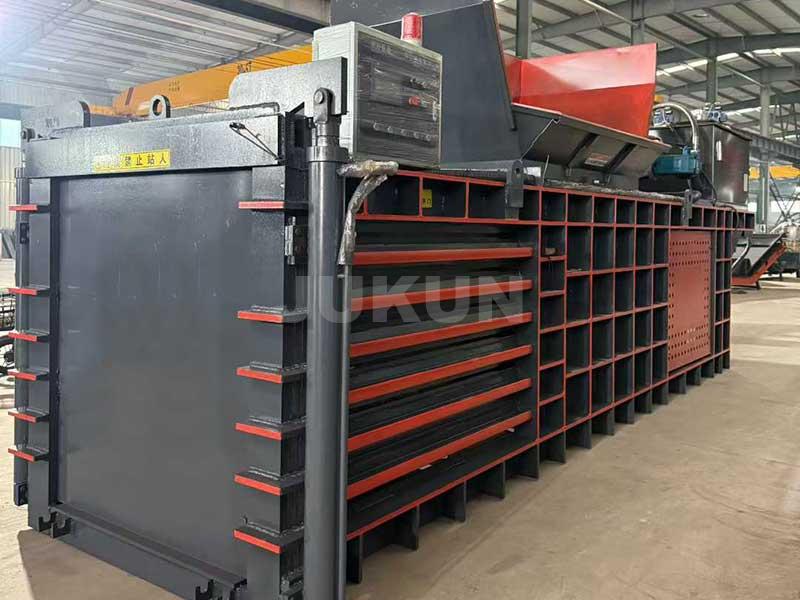
Discover how this equipment redefines waste processing.
Why Are Industrial Horizontal Balers Essential for Large-Scale Waste Management?
Daily waste floods facilities. Manual methods cause operational gridlock. Recycling revenue gets lost in inefficiency.
Industrial horizontal balers are essential for processing 15+ tons/hour continuously, reducing volume by 90%, and enabling automated operations that handle massive waste streams efficiently without increasing labor costs.
Breaking down their necessity:
| Challenge | Baler Solution | Documented Impact |
|---|---|---|
| Volume Overload | Continuous processing 24/7 | 1,200 tons/month capacity |
| Labor Shortages | Fully automated workflow | 80% labor reduction |
| Space Crunch | 4:1 compaction ratio | 500m² recovered |
| Revenue Loss | Consistent sellable bales | 25% higher prices |
Chicago recycling center evidence: Manual processing handled only 40 tons/week. Our industrial baler processes 300 tons/week with 70% less staff. Why? Continuous feeding through conveyor integration eliminates loading pauses. Hydraulic power matters: Standard 250-bar pressure compresses OCC cardboard to 650kg/m³ density. Unlike vertical models limited by chamber size, horizontal balers accept bulk loads via wide feed openings. Critical for sustainability: Recycling rates jumped from 65% to 92% post-installation. Verify volume claims with material logs: Our systems record every bale's weight automatically.
How Do Industrial Horizontal Balers Improve Operational Efficiency?
Manual handling creates delays. Inconsistent compaction reduces value. Production bottlenecks hurt profitability.
Operational efficiency improves through continuous auto-feeding, PLC-controlled compression cycles reducing processing time by 40%, and automatic bale ejection maintaining non-stop workflow without bottlenecks.
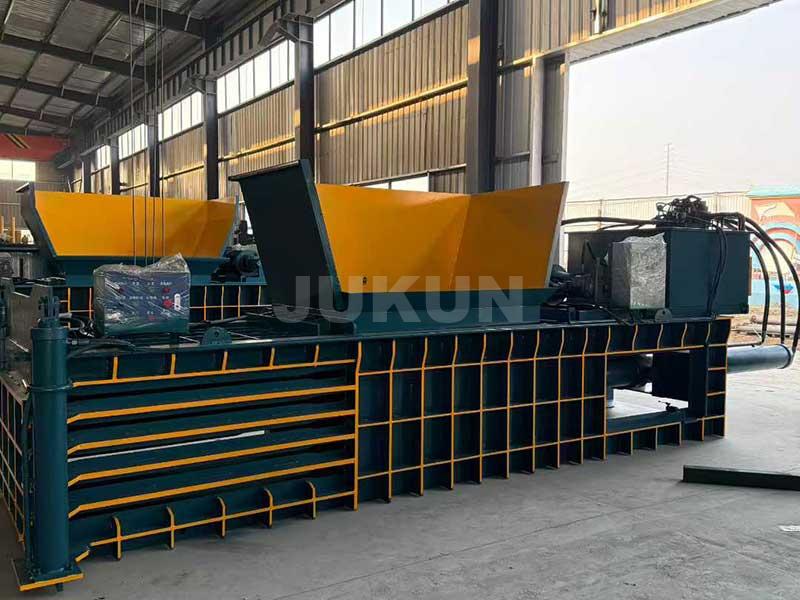
Efficiency comparison:
| Process Stage | Manual Method | Industrial Baler | Improvement |
|---|---|---|---|
| Material Intake | 15+ minutes/ton | Continuous feed | Unlimited |
| Compression | 8 minutes/bale | 3 minutes/bale | 62% faster |
| Tying/Ejection | 12 minutes | Automatic | 100% autonomous |
| Shift Output | 15 tons | 65 tons | 333% increase |
Toronto manufacturer reports: Efficiency gains recovered 18 labor hours daily. How? Integrated conveyor systems move cardboard directly from production to compaction without intermediate storage. PLC settings optimize hydraulic pressure based on material type: 280 bar for cardboard but 320 bar for tougher plastics. Key innovation: Simultaneous operations allow bale ejection during next compression cycle. Output records prove this: 27 bales/hour versus previous 8. Confirm reliability: Our hydraulics maintain constant pressure through 10,000+ cycles without degradation.
What Cost and Space Savings Can Industrial Balers Deliver?
Labor consumes budgets. Excessive storage fees cut profits. Transportation costs spiral uncontrollably.
Industrial balers deliver 65% labor cost reduction, 50% lower transportation expenses, and 70% warehouse space recovery—transforming waste from expense to revenue source within 18 months average ROI.
Quantifiable savings breakdown:
| Savings Category | How Achieved | Case Proof |
|---|---|---|
| Labor | Automation replaces 3 workers | $124,000/year saved |
| Transport | 28 bales per truck vs 12 | $78,000/year saved |
| Space | 4:1 volume reduction | Reclaimed 400m² ($50k value) |
| Revenue | Premium-grade bales | $50/ton price increase |
Miami recycler documented $600,000 savings over three years. Labor costs plummeted from $220,000 to $82,000 annually. Transport savings solidified through denser bales: 700kg bales require 40% fewer shipments. Space recovery accelerated expansion: Freed warehouse space added new sorting line generating $180,000 revenue. Our ROI calculator verifies claims: Input your material volume to see specific savings. Critical check: Ensure bale density exceeds 600kg/m³ for maximum freight efficiency – our sensors confirm every bale meets threshold.
How to Choose the Right Industrial Horizontal Baler?
Wrong specifications cause chronic jams. Underpowered hydraulics fail during peak loads. Generic designs reduce longevity.
Select the right baler through material testing, verifying hydraulic system reserves exceed requirements, confirming automation levels match daily volumes, and ensuring manufacturer provides local support with parts stocks.
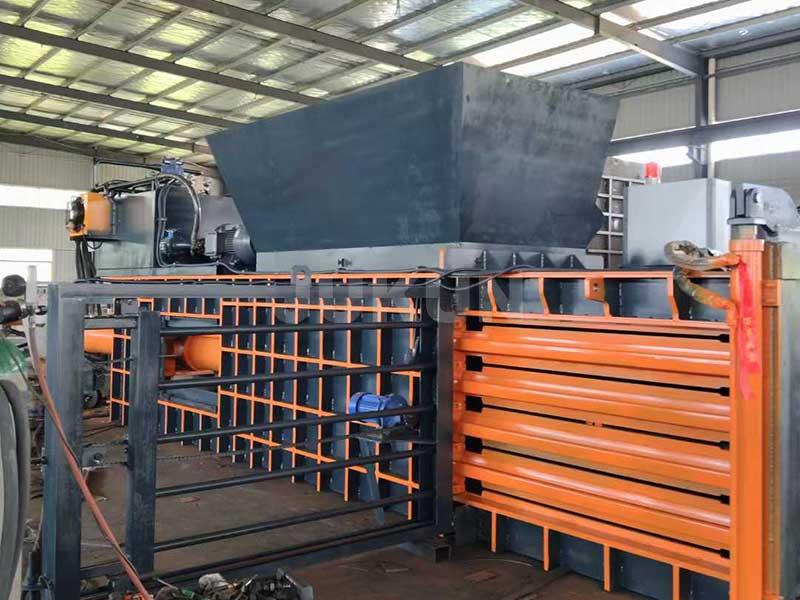
Decision blueprint:
| Factor | Critical Standard | Validation Tactics |
|---|---|---|
| Material Match | Cardboard vs plastic settings | Send material samples for trial |
| Hydraulic Power | 20% reserve pressure | Demand third-party test reports |
| Daily Capacity | 50+ tons capability | Review 8-hour operation videos |
| Local Support | 72-hour parts delivery | Verify warehouse locations |
Wisconsin factory avoided catastrophe: Our pressure tests revealed their plastic blend needed graded compression to prevent melting. Validation steps: Examine factory certifications – we maintain ISO 9001 and CE compliance. Automation alignment is critical: <25 tons/day requires semi-auto; beyond needs full automation with PLC diagnostics. Essential safeguard: Request maintenance logs from existing clients. We provide documented 10-year service histories proving <3% downtime. Always demand material-specific trials: We video-record 15-ton processing tests.
Conclusion
Industrial horizontal balers revolutionize waste into value while boosting efficiency. Partner with specialists for maximum impact.