
Mountains of fabric scraps waste space. Manual handling drains labor budgets. Disposal fees skyrocket. A vertical baler solves this.
Vertical balers compress lightweight textile scraps into dense, stackable bales. This reduces waste volume by 80%, cuts transportation costs 40%, enables efficient recycling, and frees valuable factory space.

Discover how this machinery rewrites textile economics.
What Challenges Do Textile Manufacturers Face in Waste Handling?
Loosely piled scraps swallow workspace. Labor costs climb relentlessly. Storage limits halt production lines. Overflowing bins summon rodents.
Bulky textile waste strains storage, demands 30% extra labor, complicates transport, causes OSHA violations, and prevents profitable recycling due to contamination risks.
Untenable situations demand urgent action.
Textile Waste Burden Analysis
| Challenge | Impact | Cost Penalty | Solution Approach |
|---|---|---|---|
| Volume Expansion | 1m³ scraps → 4m³ floor space | $18/sq ft warehouse cost | 5:1 compaction ratio |
| Manual Labor | 2 hr/day handling per worker | $12,000 annual wages | Single-operator system |
| Disposal Fees | Weekly 40yd dumpster pickup | $800/month minimum | Monthly baler shipments |
| Recycling Rejection | >15% contamination rate | Zero material revenue | Segregated baling workflow |
Delhi textile factory case study:
- Wasted 300m² for scrap storage - rent: $4,500/month
- Hired 3 workers daily to bag cotton scraps - cost: $39,000/year
- Recyclers rejected 30% for oil contamination
Jukun’s textile-first redesign: Wider feed openings prevent shred damage. Dual-sensor chamber stops protect delicate fibers. Request scrap samples for tailored testing.
How Do Vertical Balers Simplify Textile Waste Management?
Tangled fabric chokes conveyors. Sorting areas become chaos. Shipping loose scraps triples truckloads. Baling streamlines everything.
Vertical balers automate textile compaction into uniform bales using pressure plates. Workers load scraps through safety gates then retrieve manageable blocks for stacking, achieving 70% faster turnaround.
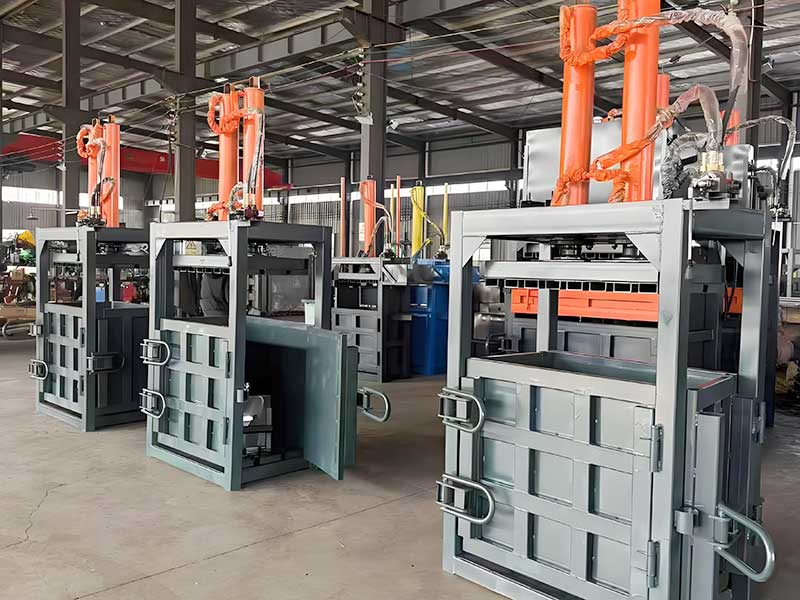
One machine replaces four workers.
Baling Workflow Efficiency
| Step | Manual Handling | Baling System | Time Saved |
|---|---|---|---|
| Collection | 5 workers bagging | 1 worker feeding baler | 80% reduction |
| Sorting | Shaking tables/magnets | Pre-sort conveyor belts | 40 minutes daily |
| Compression | Stamping treadle machines | Automatic hydraulic press | Consistent density |
| Storage | Bulky sacks in corners | Neat bale stacks | 75% space gain |
Key mechanisms transforming workflows:
- Our textile-specific balers feature extra-wide 120cm chambers
- Low-pressure start mode gradually compresses fragile synthetics
- Automatic tying eliminates manual knotting risks
Jukur Pro Tip: For polyester blends, select 30-ton minimum force. Cotton requires moisture-resistant liners. Download our fabric-specific presets.
What Cost and Storage Benefits Can Textile Businesses Gain?
Rented storage inflates overheads. Dumpster contracts drain profits. Labor turnover cripples productivity. Revenue hides in discarded scraps.
Textile balers generate 40% storage recovery, slash transport fees through bale density, reduce labor needs by 66%, and can increase recycling revenue by monetizing 'waste' streams.
Hidden profits inside every scrap.
Savings Breakdown (Annual $120K Waste Volume)
| Category | Pre-Baler Cost | Post-Baler Impact | Savings |
|---|---|---|---|
| Storage Space | $24,000 warehouse rent | Space reclaimed → production use | $24,000 gain |
| Transportation | $33,600 (28 shipments) | $11,200 (10 bale shipments) | $22,400 saved |
| Labor | $60,000 (3 workers) | $20,000 (1 operator) | $40,000 saved |
| Recycling Revenue | $0 (landfill fees) | $18,000 (150 tons sold) | $18,000 profit |
| Total | $117,600 cost | $69,200 income | $186,800 swing |
Implementation pathway:
- Conduct waste audit to identify reclaimable materials
- Map current logistics pain points
- Choose chamber size matching scrap profile
- Train workers using Jukur video modules
Real results: Bangladesh denim factory recovered $62,000 storage costs within 6 months. Download ROI calculator.
How to Choose the Right Vertical Baler for Textile Waste Recycling?
Undersized balers jam constantly. Weak hydraulics crumble under synthetics. Incorrect bale sizes frustrate recyclers. Safety gaps endanger workers.
Measure daily waste volume first. Analyze scrap composition (cotton vs blends). Select chamber dimensions matching recycler specs. Confirm minimum safety includes dual emergency stops and interlock doors.

Precision matching prevents regrets.
Specification Matrix
| Waste Profile | Machine Model | Compression | Features | Price Range |
|---|---|---|---|---|
| Light (500kg/day fabrics) | VX-18 | 18 tons | Programmable cycles | $13,199 |
| Medium (1.2 ton/day trimmings) | TX-30 | 30 tons | Automatic lubrication | $21,900 |
| Heavy (3+ ton blends) | HD-45 | 45 tons | PLC bale counter | $37,500 |
Validation checklist:
- Request material test with your scraps
- Verify steel thickness >12mm
- Confirm cylinder rod protection against fibers
- Ensure warranty covers synthetic polymer residues
Jukur assurance: All textile balers include dust-proof PLCs. Recycler acceptance guarantee - or we re-engineer free. [Submit fabric samples].
Conclusion
Vertical balers convert textile waste burdens into revenue streams. Choose machine specs matching scrap profiles and recycler requirements for maximum gains.