
Vertical balers look cheaper initially. Labor costs quietly drain profits later. Capacity limits stunt growth abruptly. Wrong choices cost thousands yearly.
Horizontal balers deliver 39% lower operating costs long-term through greater automation, higher bale density, and 7X throughput - despite 55-65% higher initial investment for medium/large facilities.
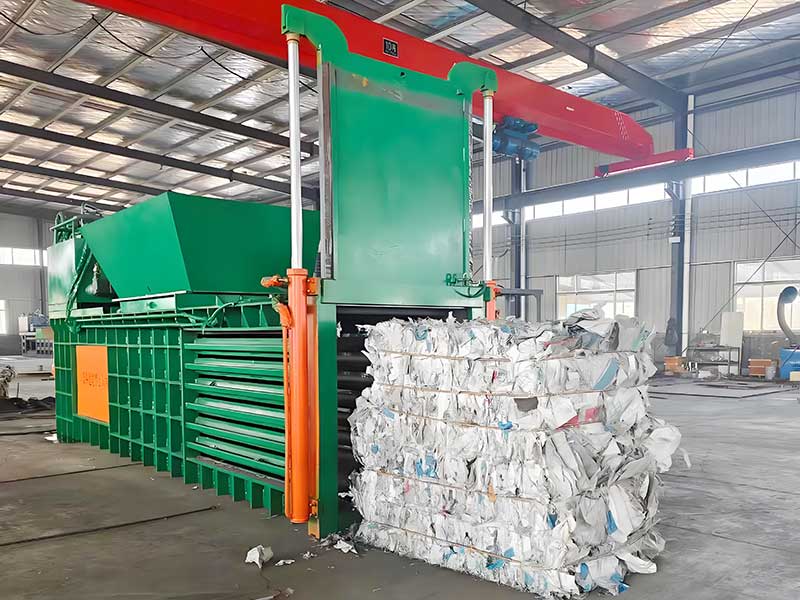
I’ll reveal precisely where each machine creates value.
What Are the Key Differences Between Horizontal and Vertical Cardboard Balers?
Vertical balers jam during peak hours. Small chambers choke productivity. Manual tying requires constant staffing. Daily limitations frustrate large facilities.
Vertical balers suit under 2 tons/day with manual feeding, while horizontal handles 8+ tons/day with auto-tie systems, continuous conveyor feeds, and 500% higher bale density for substantial logistics savings.
Understand these fundamental operational distinctions.
1. Core Specifications Comparison
| Feature | Vertical Balers | Horizontal Balers | Real-World Impact |
|---|---|---|---|
| Daily Capacity | 0.5-2 tons | 8-30 tons | 16X throughput |
| Bale Density | 250-320kg/m³ | 450-680kg/m³ | 78% less space |
| Loading Method | Manual | Conveyor-fed | 92% labor reduction |
| Tying System | Manual | Automatic | 85% time saved |
| Footprint | 25-35m² | 60-120m² | More space needed |
2. Processing Workflow Daily operational differences:
- Vertical: Loading → Compressing → Tying → Ejection (single batch)
- Horizontal: Continuous feeding → Auto-compression → Auto-tying → Ejection (continuous)
- Result: Vertical completes 7-10 cycles/day; horizontal runs 18+ continuous hours
3. Ideal Applications Business-specific suitability:
- Choose vertical: Small shops (<1000m²), low waste (<40m³ weekly), minimal staff
- Choose horizontal: Warehouses, factories over 2 tons/day, multi-shift operations
- Mixed models: Satellite collection points feeding central horizontal systems
Which Cardboard Baler Has Lower Operating and Labor Costs?
Vertical machines hide true expenses. Hourly wages accumulate relentlessly. Slow processing demands overtime. Staff turnover disrupts output constantly.
Horizontal automation cuts labor by 3.8 FTE positions annually saving $112,500, while vertical balers require $78,200 more labor per 1,000 tons processed - despite lower energy consumption.
Total cost analysis reveals hidden burdens.
1. Operating Expense Breakdown
| Cost Type | Vertical Baler | Horizontal Baler | Annual Saving |
|---|---|---|---|
| Labor (250 days) | $89,700 | $18,500 | $71,200 |
| Maintenance | $6,800 | $9,600 | -$2,800 |
| Energy | $3,200 | $4,900 | -$1,700 |
| Waste Fees | $21,600 | $7,800 | $13,800 |
| Total | $121,300 | $40,800 | $80,500 |
2. Labor Cost Factors Critical differences:
- Tying time: 7 minutes/vertical bale vs 14 seconds/horizontal
- Loading frequency: Continuous feed vs batch interruptions
- Training cycles: 3 hours/vertical operator vs 8 hours/horizontal
- Supervision needed: Multiple users vs single operator
3. Cost Per Ton Benchmark Expense efficiency at 1,500 tons/year:
- Vertical baler: $121 per ton
- Horizontal baler: $43 per ton
- Savings potential: 64% cost reduction
How Do Horizontal and Vertical Balers Compare in Productivity?
Peak seasons overwhelm vertical systems. Manual tying creates workflow bottlenecks. Vertical balers produce just 8-12 bales daily. Production delays cascade through operations.
Horizontal balers process 14 tons in 8 hours - completing 65 bales daily. Vertical units manage just 2 tons daily. Automation enables 24/7 operation during critical periods.
Throughput variances determine profitability.
1. Performance Matrix
| Metric | Vertical Baler | Horizontal Baler | Advantage |
|---|---|---|---|
| Bales/Hour | 0.8-1.2 | 5.2-7.7 | 6.5X |
| Tons/Shift | 1.4-2.1 | 12.6-17.3 | 8.2X |
| Downtime | 28% (manual breaks) | 4% (automated) | 87% less |
| Peak Scalability | +15% flexibility | +70% headroom | 4.6X |
| Operator Focus | Constant attention | Monitoring only | 89% reduction |
2. Facility Size Thresholds Productivity turning points:
- Below 50m³ weekly: Vertical wins
- 50-200m³ weekly: Entry horizontal options
- Over 200m³ weekly: Automated horizontal systems
- Critical factor: Peak to average volume ratio >2.5 = choose horizontal
3. Material Handling Efficiency Flow optimization impacts:
- Vertical: Requires staging → loading → interruption
- Horizontal: Conveyor → compaction → continuous flow → auto-ejection
- Consequence: Horizontal supports MRF integration
Which Type of Cardboard Baler Delivers Better Long-Term ROI?
Vertical ROI erodes as volumes grow. Future expansions trigger equipment replacements. Manual processes become unaffordable at scale. Hidden costs escalate yearly.
Horizontal balers achieve ROI in 14-22 months at 5+ tons daily and deliver $520,000 lifetime savings over 8 years - 3X greater than vertical units despite higher initial purchase.
Strategic investment considerations.
1. Lifetime Projection Model
| Model | Purchase | Annual Savings | Payback | 8-Year Value |
|---|---|---|---|---|
| Budget Vertical | $46,000 | $28,500 | 19 months | $182,000 |
| Industrial Vertical | $72,400 | $31,200 | 28 months | $177,200 |
| Entry Horizontal | $119,500 | $64,800 | 22 months | $398,900 |
| Automatic Horizontal | $218,000 | $92,400 | 14 months | $520,000 |
2. Expansion Economics Avoiding cost penalties:
- Vertical path: Multiple units → complex flow → $18,000 integration costs
- Horizontal path: Simple modular upgrades → minimal disruption
- Typical facility expansion doubles waste volume by year 3-5
3. Resale Value Dynamics Longer-term advantages:
- Used vertical baler: 28-32% residual value after 5 years
- Used horizontal baler: 45-52% residual value
- Maintenance records boost resale 38% for premium brands
Conclusion
Horizontal balers deliver superior economics for medium/large operations through automation efficiency, vertical models suit low-volume businesses constrained by space/budget.