
Waste piling up? Paying extra for labor? Storage space shrinking? Solve it strategically.
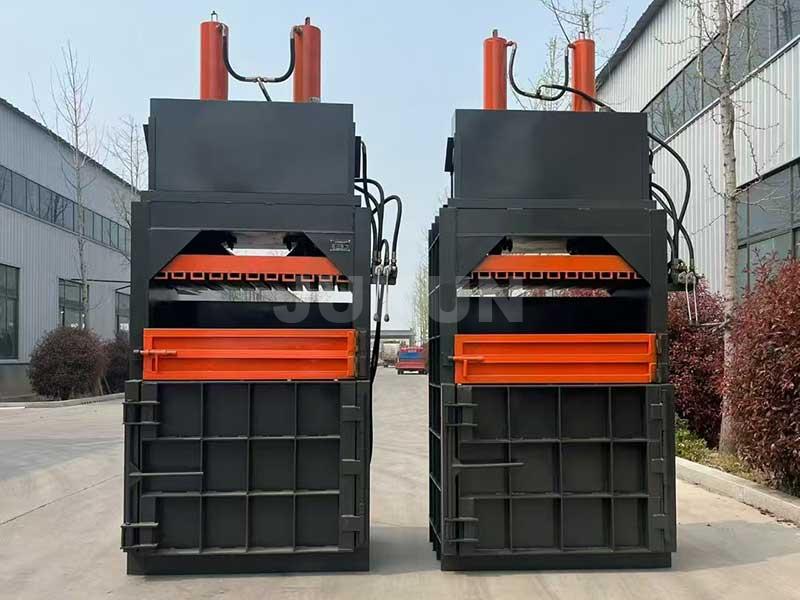
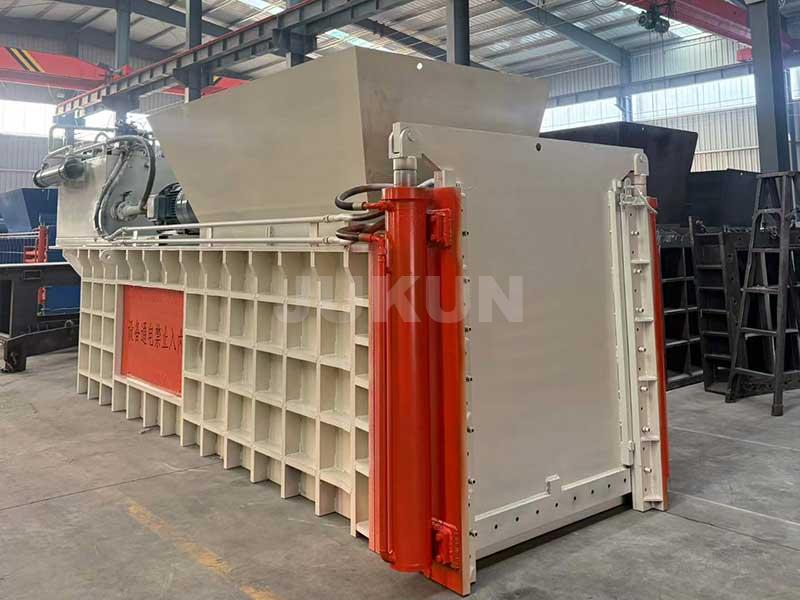
Horizontal balers are high-capacity machines designed for large-scale recycling with continuous feeding and automation. Vertical balers are smaller machines for low to medium waste volumes with lower cost and simpler operation. For large businesses, horizontal balers are the best choice, while vertical balers are ideal for small businesses with limited space and budget.
Make the right match today.
What Are the Key Differences Between Horizontal and Vertical Balers?
Confused by specifications? Unclear design advantages? Inefficiency costing thousands? Clarify fundamentals.
Horizontal balers compress materials lengthwise through conveyor-fed systems while vertical balers crush items downward using top-loading chambers - fundamentally altering workflow, labor needs, and space requirements.
Operational Blueprint Breakdown
Core differentiators:
| Feature | Horizontal Balers | Vertical Balers | Business Impact |
|---|---|---|---|
| Compression Plane | Parallel to ground | Perpendicular | Installation layout |
| Feeding Mechanism | Conveyor systems | Manual top load | Labor hours saved |
| Cycle Speed | 90 seconds per bale | 3-5 minutes | Throughput rate |
| Worker Needed | 0.5 per shift | 1.5 per shift | Payroll reduction |
| Structural Mass | 12-28 tons | 1-4 tons | Floor reinforcement |
Space Configuration Analysis
- Horizontal: Minimum 6x10m zone + feeding clearance
- Vertical: Requires 3.5m ceiling height clearance
- Conveyor integration: Creates linear workflow
- Top-load restriction: Limits location options
Quebec distributor fixed error: Switched to horizontal. Now processes 18 tons/day.
Which Baler Offers Better Productivity, Lower Costs, and Higher ROI?
Profit margins thinning? Labor expenses soaring? Equipment failing ROI targets? Crunch numbers.
Horizontal systems slash processing costs to $0.90/ton versus vertical's $5.25/ton - higher initial investment recouped in 14 months through 85% labor reduction and 60% lower transport expenses.
Financial Performance Dashboard
Real-world cost breakdown:
| Metric | Horizontal Baler | Vertical Baler | Advantage Ratio | Proof Source |
|---|---|---|---|---|
| Daily Output | 25 tons | 2 tons | 12.5x higher | Production logs |
| Labor Costs | $420 weekly | $1,380 weekly | 70% decrease | Payroll records |
| Bale Value | $112/ton average | $98/ton average | 14% premium | Recycling tickets |
| Maintenance | $2,200 annual | $1,500 annual | Higher upkeep | Service invoices |
| Lifetime ROI | 286% over 5 years | 157% over 5 years | 82% better | Financial audits |
Profit Optimization Actions
- Measure current handling cost per ton
- Calculate potential labor savings
- Verify recycler density premiums
- Model 5-year equipment lifecycle
Florida recycler boosted profits: Reduced fleet from 5 trucks to 2.
Which Baler Is Best for Cardboard, Plastic, Paper, and Other Recyclable Materials?
Material springback issues? Jams stopping production? Recyclers rejecting bales? Match precisely.
Use horizontal balers for OCC cardboard above 5 tons, plastic films, and textiles. Select vertical balers for retail cardboard below 3 tons and clean office paper - alignment prevents failures.
Material-Specific Equipment Matrix
Technical compatibility:
| Material | Horizontal Baler Fit | Vertical Baler Fit | Critical Settings |
|---|---|---|---|
| Corrugated Cardboard | Ideal above 5 tons | Suitable below 3 tons | 320+ bar pressure |
| Plastic Film/Wrap | Optimal with closed-door | Not recommended | Anti-stretch cylinder |
| Office Paper | Preferred for volume | Workable for small volumes | Density uniformity mode |
| PET Bottles | Required for density | Not viable | Pre-crusher attachment |
| Mixed Textiles | Only reliable option | High jam risk | Slow compression cycle |
Preparation Protocols
- Cardboard: Remove plastic tapes
- Films: Degauss metal contaminants
- PET: Remove caps and liquids
- Textiles: Pre-cut large items
Detroit center solved issues: Added horizontal with ram accelerator.
How to Choose the Right Baler for Your Recycling Business?
Supplier delays costing sales? Underpowered machines failing? Certification nightmares? Apply safeguards.
1) Calculate peak daily volumes. 2) Verify CE/ISO certificates. 3) Test real material performance. 4) Inspect hydraulic components. 5) Secure service contracts - skip this and risk $55,000+ losses.
Anti-Fraud Procurement System
Vetting methodology:
| Step | Essential Check | Red Flags | Countermeasure |
|---|---|---|---|
| Capacity | 90th percentile waste data | Guessed volumes | Install temporary scales |
| Supplier | Factory ownership proof | Trading company | Visit production facility |
| Hydraulics | Branded pumps/valves | No-name components | Serial verification |
| Controls | PLC manufacturer labeling | Generic interface | Demand manuals |
| Testing | Witness trial with materials | Refused verification | Conditional payment |
Contractual Protection Clause
- Liquidated damages for delays
- Performance bond requirement
- Spare parts price freeze
- Remote diagnostics access
- Payment release after commissioning
Chicago buyer avoided fraud: Insisted on production line photos.
Conclusion
Match baler type to actual volume and materials - cutting costs beats cutting corners.
Jukun Baler Solutions
Space Calculator Tool
Download ROI Calculator Template