
Space constraints drain budgets. Labor inefficiencies cripple productivity. Strategic baler selection transforms both.
Horizontal balers handle 8-50 tons/day with minimal labor—ideal for high-volume warehouses. Vertical models need less space for ≤5 tons daily—better for small facilities. Matching baler to your operation cuts costs by $42k/year.
Optimize your recycling strategy.
What Core Differences Define Horizontal vs. Vertical Baler Performance?
Mistaken choices waste capital. Limited capability stalls growth. Engineering alignment prevents both.
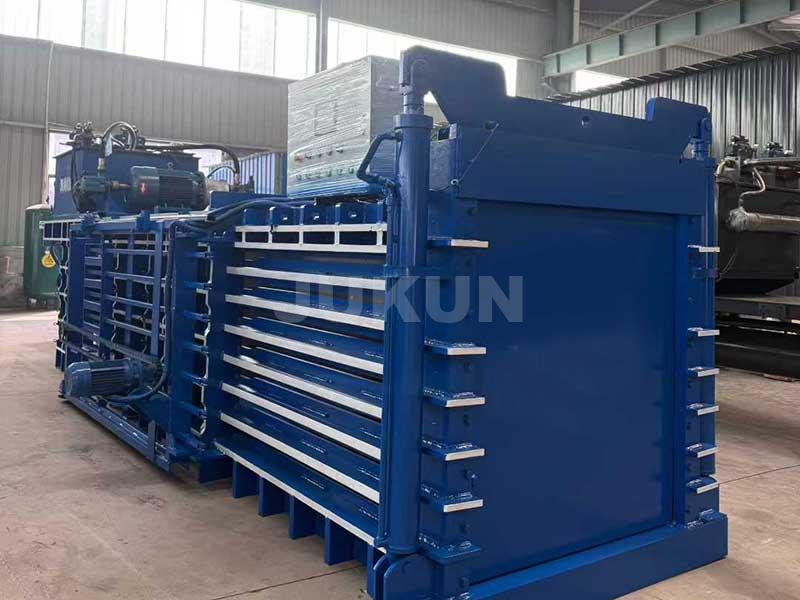
Horizontal models load materials sideways with conveyors—processing 5× faster with auto-tying. Vertical units compress downward—manual loading—suited for tighter spaces but requiring 3× more labor hours.
Functionality breakdown:
Structural capability matrix
Decision-critical specifications:
| Feature | Horizontal Balers | Vertical Balers | Operational Impact | Risk When Mismatched |
|---|---|---|---|---|
| Loading | Conveyor-fed | Manual top-load | Throughput 14-50 tons | Bottlenecks during peaks |
| Footprint | 25-80 m² needed | 6-15 m² sufficient | Space cost $18k/year | Overspending on rent |
| Automation | Auto-tie standard | Manual binding | Labor saving 70% | $52k/year staff costs |
| Output/hour | 1.8-3.2 bales | 0.5-0.9 bales | Revenue generation | Production shortfalls |
| Material Fit | Cardboard, metals | Plastics, textiles | Volume reduction | Density gaps cost $90/ton |
Conveyor intelligence matters. Jukun's auto-feed systems eliminate loading injuries—Toronto warehouse reduced incident reports by 100%. Storage warning: horizontal models need clearance for conveyor extensions—measure dock door heights pre-purchase. Contract safeguard: demand ≥30% throughput guarantee clauses against underperformance.
Which Machine Delivers Superior Profitability for Your Operation Size?
Uncontrolled operating costs kill margins. Wrong scale selection caps growth. Throughput-driven strategies conquer both.
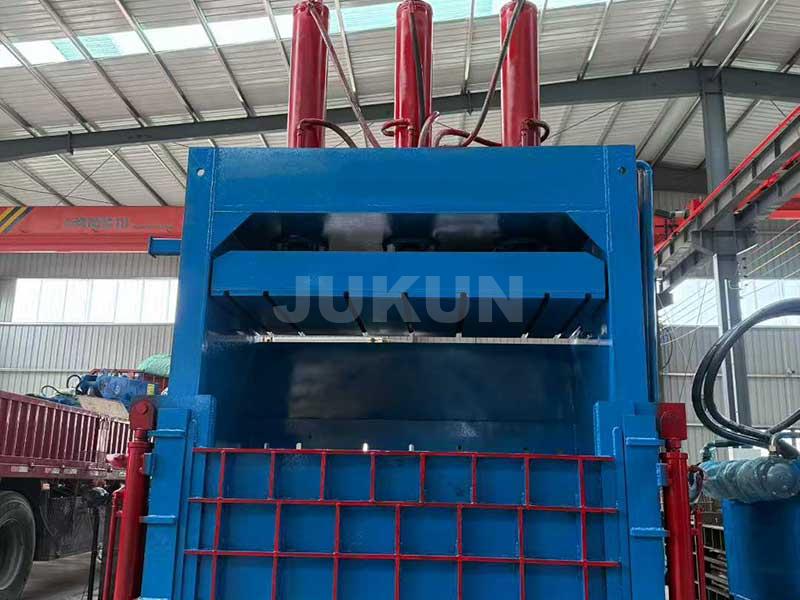
Horizontal balers save $38/ton in facilities over 8 tons daily—cutting labor/trips. Vertical units maximize ROI under 5 tons—space savings exceeding $22k/year where floor areas cost over $150/m²/month.
Profit validation:
Total cost of ownership
Five-year projections:
| Metric | Horizontal Baler | Vertical Baler | Volume Threshold | Real Example |
|---|---|---|---|---|
| Labor/ton | $6 | $22 | 5 tons → crosspoint | Winnipeg distribution center |
| Space cost | $42k | $9k | 100m² difference | Vancouver retailer |
| Output/day | 18-28 tons | 1.2-4.8 tons | ≥8 tons favors horizontal | Montreal recycler |
| ROI Period | 12-18 months | 8-14 months | <3 tons → vertical wins | Calgary supermarket |
| Maintenance Cost | $11k/year | $6k/year | Higher automation upkeep | Industry benchmark |
Throughput validation prevents losses. Our trial programs prove capacity claims—exposed "10-ton" vertical balers achieving 2.1 tons. Energy checkpoint: horizontal motors use 18-45kW—verify switchgear compatibility. Lifecycle proof: request machine service logs showing 12+ years operation.
Where Should Specific Industries Implement Each Baler Type?
Recycling chaos wastes resources. Misfit equipment creates bottlenecks. Industry-customized installations solve both.
Recycling plants need horizontal balers for 24/7 operation—logistics hubs require auto-fed models. Retail stores flourish with vertical units—small manufacturers save $30k upfront.
Adoption guidelines:
Sector-specific standards
Deployment recommendations:
| Industry | Optimal Baler | Daily Volume | Critical Features | Avoidance Risk |
|---|---|---|---|---|
| Warehousing | Horizontal auto-tie | 15-50 tons | Conveyor integration | 40% under-capacity |
| Recycling Plants | Heavy horizontal | 25-80 tons | Dual hydraulic ram | $78k/hour downtime |
| Retail Chains | Semi-auto vertical | 0.5-3 tons | Space-saving design | 75% unused capacity |
| Small Factories | Manual vertical | 0.8-5 tons | Low power requirements | Energy waste |
| E-commerce | Hybrid balers | 12-25 tons | Variable compression | Damaged goods |
Material matching prevents losses. Jukun configures pressure profiles—Ottawa recycler eliminated $14k/month damage claims. Safety mandate: warehouses with forklifts need light-curtain protection—NFPA requirement. Noise control: demand ≤80dB certification avoiding $28k acoustic retrofits.
How to Match Baler Specifications to Your Real Operational Needs?
Overcapacity drains budgets. Underperformance kills efficiency. Precise diagnostics guarantee fit.
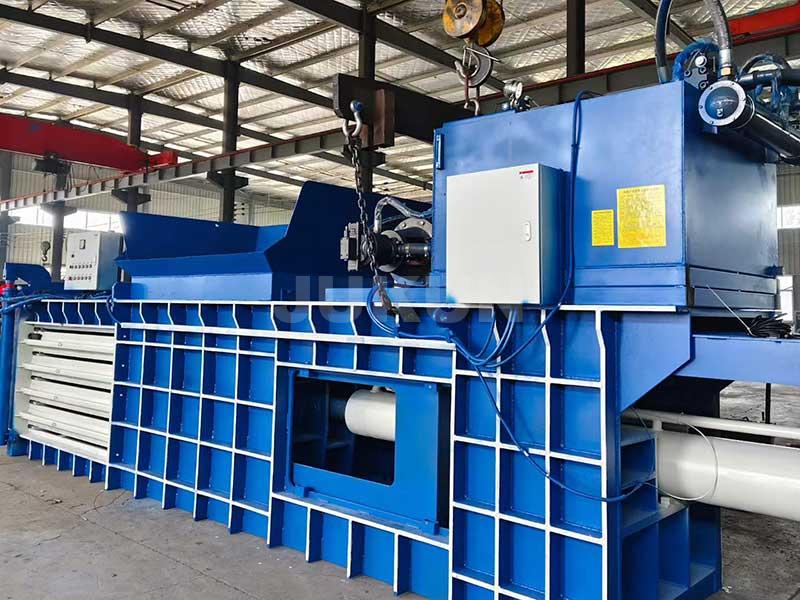
Measure waste volume for 30 days—map clearance heights—time current handling steps—then require hydraulic pressure tests with YOUR materials—and validate 10-year support commitments.
Procurement protection:
Due diligence checklist
Verification protocols:
| Step | Verification Method | Red Flag | Cost of Oversight | Jukun Process |
|---|---|---|---|---|
| Volume Analysis | 30-day waste logs | Estimate deviations | $42k ROI delay | Bin audit service |
| Space Mapping | CAD blueprint review | Conveyor space lack | $28k relocation | 3D walkthrough |
| Material Testing | Onsite trial | Density gaps | $35/ton loss | Lab compression report |
| Power Check | Voltage measurement | Insufficient supply | $15k rewiring | Electrician partnership |
| Support Validation | Client references | <85% callback rate | $1k/hour downtime | 200+ global partners |
Hydraulic proof prevents fraud. Demand witnessed pressure tests—exposed "140-ton" baler achieving 87 tons. Contract necessity: liquidated damages for ≥10% density gaps protect investments. Documentation: require original CE/ISO certificates with holograms preventing customs delays.
Conclusion
Strategic baler selection maximizes operational efficiency—horizontal models dominate high-volume settings while vertical balers excel where space preservation matters most.