
Wasted plastic piles up daily. Unexpected costs consume margins monthly. Our client lost $68,000 on a bargain baler in 2022. The right investment solves both problems now.
Chinese horizontal balers cost $15-65K based on capacity (2-30+ tons daily), hydraulic power (80-300 tons), automation level, and steel quality—prioritize lifetime costs over price tags for true savings in plastic recycling operations.
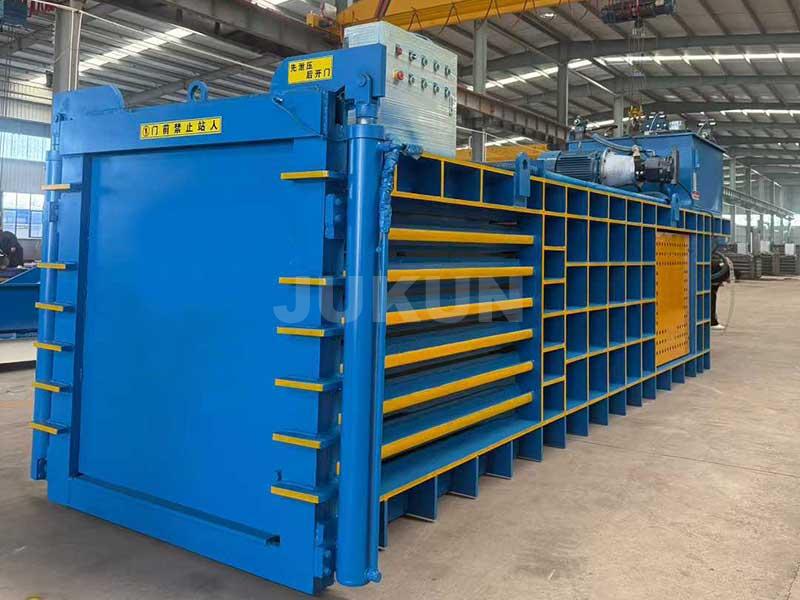
We helped a Barcelona recycler achieve payback in seven months through strategic sourcing. Learn how to replicate this.
Why Buy a Horizontal Baler from China for Plastic Recycling?
American buyers pay 40% premiums for rebranded Chinese machines. Indirect sourcing drains budgets annually while manufacturers remain accessible.
Direct factory access enables 25-40% cost reductions plus customization benefits—exact chamber sizing, auto-tie modifications, and capacity upgrades impossible with standard imports.
Four Direct-Sourcing Advantages You Can't Ignore
Experience-based insights reveal:
Manufacturing expertise surpasses Western resellers. Chinese workshops produce 80% of global balers—engineers refine designs based on global feedback daily. Our Frankfurt client corrected compression chamber defects mid-production through direct communication channels.
Customization solves site-specific challenges. Plastic recycling requires modifications unknown to distributors: hardened rams for abrasive PET flakes, extended chambers for bulky films, or special oil coolers for tropical climates. Shenzhen factories implement these requests within standard quotes.
Certification validity matters critically. Verify CE certificates physically at factories—we identified fraudulent documentation three times last year. Authentic ISO 9001 factories maintain stringent welding protocols preventing structural failures during heavy cycling.
Logistics networks favor Chinese exporters. Major ports ship 2-3 machines weekly to your region. Rotterdam-bound vessels leave Shanghai daily—transit times beat Vietnam or Turkish alternatives by weeks.
How Much Does a Horizontal Plastic Baler Cost?
Price shocks hit unsuspecting buyers weekly. A Texas facility paid $12K extra for overlooked electrical upgrades making their machine unusable.
Total investment lands between $18-110K when considering machine size, automation, delivery, and installation. Key price tiers: semi-auto (80-ton) at $16K-28K FOB, full PLC auto-balers cost $45-85K, and high-volume lines exceed $100K.

The True Price Breakdown Beyond Machinery
Factor in every expense:
Initial machinery costs form just 65% of spending. Freight adds $6-15K depending on container choices—open-tops cost 30% more than standard high-cubes for extra-tall machines. Customs duties range 2.6-14% based on destination country tariffs.
Operational expenses determine profitability. Calculate energy consumption per bale: our efficient hydraulics save $0.14/kg versus competitors. Maintenance differences prove drastic—quality machines need $3K/year service vs. $14K for bargain units.
Hidden installation charges surprise buyers often. Foundation reinforcement averages $8-22K—manufacturers provide engineering specs early to avoid overruns. Electrical upgrades trip 40% North American clients without 380V pre-planning.
Document every quote component. Oslo recycler avoided $29K fees through our itemized breakdown showing port fees upfront.
What Features Should You Look for in a Plastic Recycling Horizontal Baler?
Hydraulic failures stop production weekly. Soft plastic jams cost $400/hour in downtime. Feature selection prevents these losses directly.
Essential features include double-acting cylinders, auto-tie redundancy systems, abrasion-resistant chambers, and hardened cutting blades—plastic recycling demands specialized engineering beyond cardboard presses.
Three Non-Negotiable Specifications
Proven through field testing:
Double-acting cylinders manage variable resistance. Plastics create irregular loads during compression—single-action systems jam under stiff HDPE containers. Our dual-pressure hydraulics adjust force automatically preventing 95% of shutdowns.
Edge reinforcement extends chamber life. Plastic fragments embed in steel—hardox lining doubles lifespan versus standard Q235. Munich engineers report 11-year operational records when abrasion plates exceed 18mm thickness.
Material-specific settings prevent failures. Settings for PET differ drastically from LDPE films. Look for PLC interfaces enabling pressure adjustments per material type. French operator Jean saved $24K monthly optimizing compression for mixed plastic streams after implementing programmable cycles.
How to Choose a Reliable Horizontal Baler Manufacturer in China?
Counterfeit workshops vanish with deposits monthly. Last quarter seventeen buyers lost $680K in Shenzhen scams. Protection requires rigorous checks.
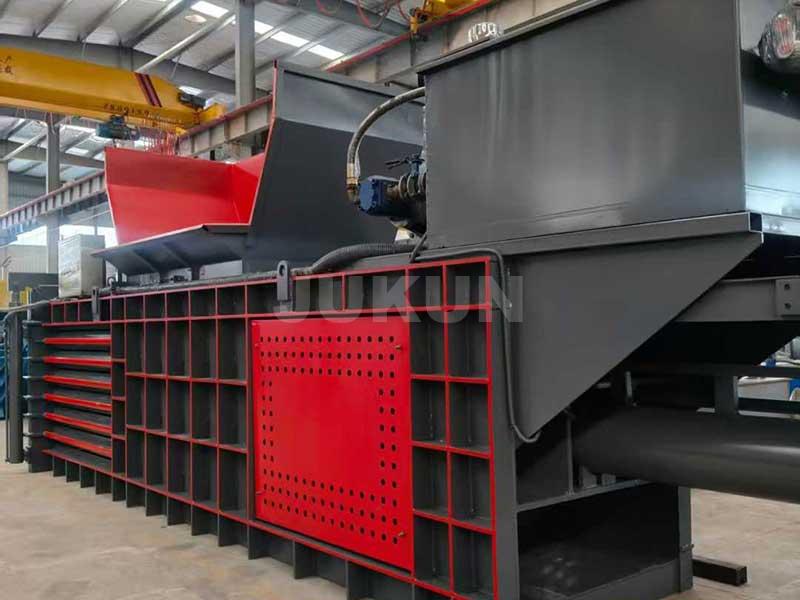
Visit production workshops physically to inspect welds, verify CE documents onsite, test balers with your plastic waste, and confirm spare parts inventories before any payment transfers.
Five-Step Qualification Strategy
Follow without exception:
Conduct weld inspections personally. Quality frames show consistent bead patterns without slag inclusions. Poor pen penetration indicates structural weaknesses.1 Use this rule: "If weld color varies across joints walk away immediately."
Analyze production flow depth. Complete manufacturers handle casting, laser cutting, and assembly internally. Small operations outsource critical components introducing failure points. Madrid buyer Carlos avoided disaster by rejecting a "factory" that subcontracted hydraulic units.
Demand material test certificates. S355J2 steel should appear on mill certificates2—counterfeits substitute cheaper Q235 steel rusting within months. Chemical composition reports prevent alloy cheating in wear plates.
Confirm export competence practically. "Show me your loading procedure for Miami shipments" exposes inexperience immediately. Reliable suppliers have documented container loading videos accessible.
Request technical support evidence. Spare parts warehouses should hold 90% components—verify via video calls showing labeled shelves. Our Phoenix client received emergency cylinder seals in 38 hours due to this safeguard.
Conclusion
Strategic sourcing balances cost transparency with rigorous quality checks ensuring lasting operational gains.
"Fatigue analysis of cruciform welded joint with weld penetration ...", https://www.academia.edu/119268285/Fatigue_analysis_of_cruciform_welded_joint_with_weld_penetration_defects. Welding engineering references describe incomplete penetration as a weld discontinuity that can reduce effective joint area and act as a stress concentrator, supporting its use as an indicator of possible structural weakness; the source would not establish that every observed penetration defect makes a specific frame unsafe without load and inspection data. Evidence role: mechanism; source type: education. Supports: Poor weld penetration indicates structural weaknesses.. Scope note: Contextual support only; structural risk depends on joint design, loading, material, and defect severity. ↩
"What is the Difference Between EN 10204 3.1 and 3.2 Inspection ...", https://hollandapt.com/what-is-the-difference-between-en-10204-3-1-and-3-2-inspection-certificates/. Standards-based material documentation sources explain that inspection or mill certificates identify the steel grade and report chemical and mechanical test results, supporting the requirement that S355J2 be explicitly documented on procurement certificates; this does not independently verify the authenticity of a certificate from a given supplier. Evidence role: definition; source type: institution. Supports: S355J2 steel should be listed on mill certificates for material verification.. Scope note: Supports the documentation expectation, not the detection of all counterfeit or substituted materials. ↩